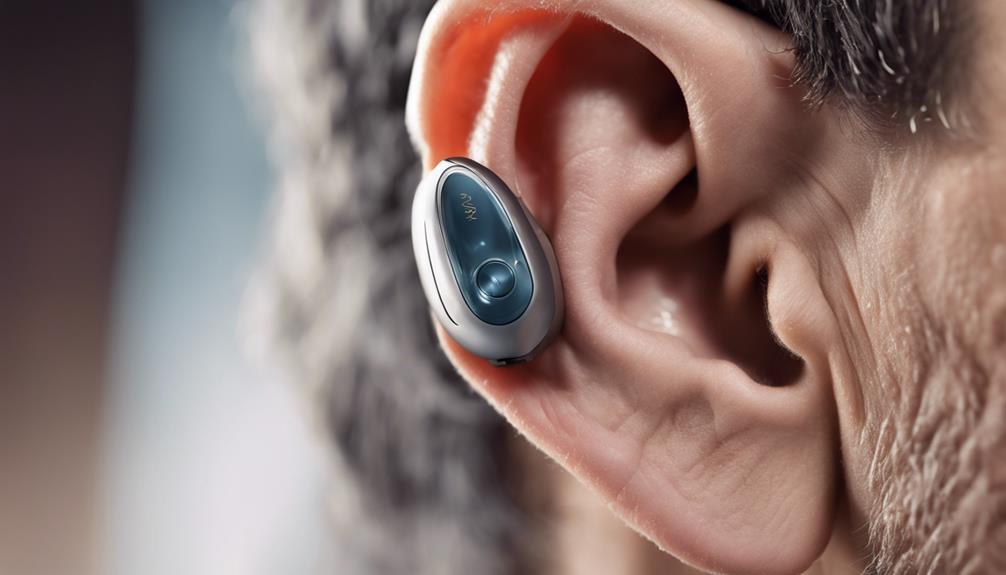
Let’s explore the ins and outs of bilateral cochlear implants – these remarkable devices are like a symphony for the ears.

Get everyday helpers delivered free with Prime
- Fast, free delivery on millions of items
- Prime Video, Amazon Music and more included
- Member-only deals all year
Ever wondered how two tiny implants can revolutionize the way we perceive sound? Well, the intricate dance they perform within the ear canal may surprise you.
Let's unravel the mystery behind their harmonious operation and discover how they orchestrate a world of sound for those in need.
Key Takeaways
- Bilateral implants restore hearing in both ears for enhanced auditory experiences.
- They independently process sound signals to improve speech recognition and localization.
- These implants offer balanced sound processing, reducing listening effort.
- Bilateral implants lead to better outcomes in noisy environments and overall speech perception.
As an affiliate, we earn on qualifying purchases.
Overview of Bilateral Cochlear Implants
Bilateral cochlear implants are sophisticated devices that function in tandem to restore hearing in both ears, offering a range of significant advantages for individuals with hearing loss. By utilizing two implants, bilateral cochlear implants enhance speech understanding and sound localization, crucial for navigating various listening environments. These implants not only improve hearing in noisy settings but also contribute to an overall enhanced quality of life.
The ability to hear more clearly with bilateral cochlear implants leads to improved social interactions, as individuals can actively participate in conversations and engage with others more effectively. Moreover, the combination of two implants allows for a more natural auditory experience, enabling users to better discern speech and sounds in challenging scenarios.
Research supports the efficacy of bilateral cochlear implants over unilateral implantation, highlighting the importance of considering this option for those seeking comprehensive hearing rehabilitation.
Benefits of Bilateral Implantation
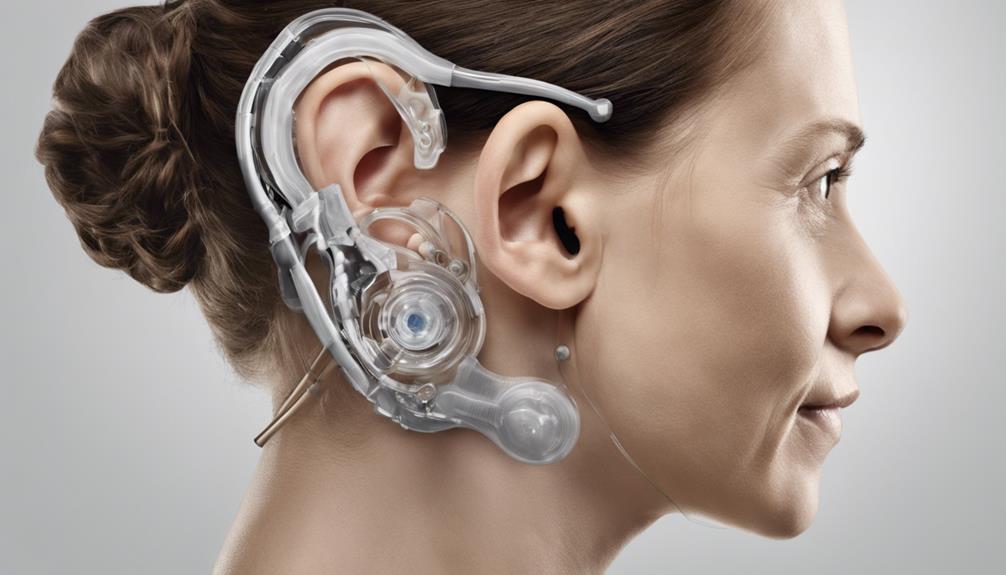
When considering the advantages of dual cochlear implants, it becomes evident that these devices offer a significant improvement in speech recognition and sound localization abilities for individuals with hearing loss. Bilateral cochlear implants provide enhanced localization abilities, allowing individuals to better identify the source of sound in various environments.
For children with bilateral severe hearing loss, having two cochlear implants leads to improved speech perception in noise, crucial for educational settings and social interactions. Studies have shown that speech in noise is better understood with bilateral implantation, aiding individuals in distinguishing sounds accurately.
Moreover, the enhanced auditory input from bilateral implants results in improved speech and hearing, meeting the auditory needs of individuals in both quiet and noisy situations. Overall, the benefits of bilateral cochlear implants extend beyond improved speech perception to include enhanced sound localization abilities, making them a valuable option for individuals with hearing loss.
How Bilateral Implants Function
Utilizing two devices, each implanted in an ear, bilateral cochlear implants function by independently processing sound signals to enhance speech recognition and sound localization abilities. These implants work together to provide a more natural hearing experience by stimulating both auditory nerves simultaneously. By integrating information from both implants, the brain can better decipher sound in various environments, even noisy ones. The binaural hearing benefits of bilateral cochlear implants include improved sound quality and reduced listening effort, making it easier for individuals to engage in conversations and perceive sound direction accurately.
| Aspect | Description | Benefits |
|---|---|---|
| Speech Recognition | Enhances the ability to understand and interpret speech, leading to improved communication skills. | Improved communication |
| Sound Localization | Enables individuals to determine the direction of sound sources, enhancing spatial awareness and safety. | Better understanding of the environment |
| Auditory Nerve Stimulation | Stimulates both auditory nerves simultaneously, providing a more balanced approach to hearing restoration. | Comprehensive restoration of hearing |
Comparison With Unilateral Implants
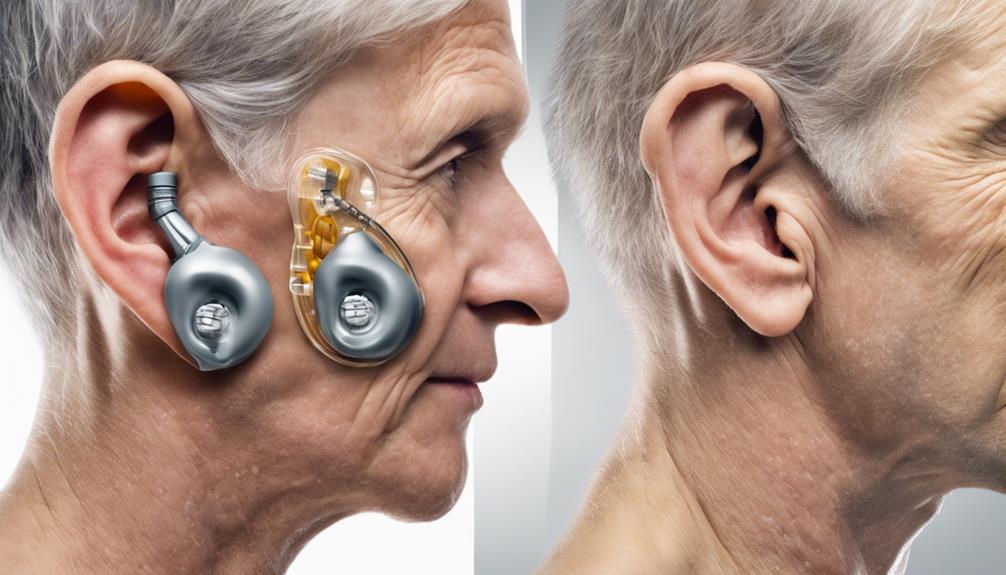
In comparison to unilateral implants placed in one ear, bilateral cochlear implants in both ears offer significant advantages in improving sound localization and speech understanding across various listening environments. When considering the benefits of bilateral cochlear implants over unilateral implants, here are some key points to keep in mind:
- Bilateral cochlear implants involve implanting devices in both ears, providing a more balanced auditory experience.
- Having implants in both ears allows for enhanced sound localization, crucial for spatial awareness in daily activities.
- Speech understanding is improved with bilateral implants, especially in challenging listening environments with background noise.
- Bilateral implants offer a more natural auditory experience, mimicking how our ears naturally process sound.
- Research indicates that bilateral cochlear implantation can lead to better outcomes in speech perception and sound processing compared to relying on a single implant.
These advantages highlight the importance of considering bilateral cochlear implants for individuals seeking improved hearing abilities and communication skills.
Success Rates and Considerations
Considering the success rates and various considerations surrounding bilateral cochlear implants is crucial for individuals exploring options to enhance their hearing abilities. Research indicates that bilateral cochlear implants lead to significant improvements in speech perception and sound localization compared to unilateral implants. Studies have shown that having two implants can result in better outcomes in speech understanding, particularly in noisy environments. Balanced sound processing in both ears is essential for maximizing the benefits of bilateral cochlear implants.
Patient selection criteria for bilateral cochlear implantation are similar to those for single-sided cochlear implant surgery, emphasizing the importance of a thorough evaluation process. When contemplating bilateral cochlear implants, individuals must also consider factors such as costs, potential risks, and the impact of future technological advancements on device capabilities. By weighing these aspects carefully, individuals can make informed decisions regarding the suitability of bilateral cochlear implants for their unique hearing needs.
Frequently Asked Questions
What Are the Disadvantages of Bilateral Cochlear Implants?
When considering bilateral cochlear implants, it's important to weigh the potential disadvantages. Increased costs for surgery, devices, and maintenance can be a concern. There's also a risk of losing residual acoustic hearing. Future technological advancements may impact this decision.
Atrophy of neural pathways without auditory input is another consideration. Additionally, sporadic insurance coverage can pose a barrier for some individuals. These factors highlight the complexity of choosing bilateral cochlear implants.
What Are Cochlear Implants and How Do They Work?
Cochlear implants are electronic devices that stimulate the auditory nerve to help individuals with severe hearing loss perceive sound. By converting sound signals into electrical impulses, they provide a way for us to hear, even when parts of our ears are damaged.
These devices require training to interpret the signals, but most users experience significant improvement in speech understanding within months. Continuous technological advancements aim to make cochlear implants more effective for better hearing rehabilitation.
Can You Get Cochlear Implants in Both Ears at the Same Time?
Yes, we can get cochlear implants in both ears at the same time. This approach, known as simultaneous bilateral implantation, allows for a more efficient process for those needing implantation in both ears.
It's particularly beneficial for those experiencing sudden deafness from conditions such as meningitis. This method aims to provide the advantages of binaural hearing and improved auditory outcomes, catering to individual needs and preferences.
What Is the Difference Between a Hearing Implant and a Cochlear Implant?
When considering the difference between a hearing implant and a cochlear implant, it's crucial to note that a cochlear implant is a specific type of hearing implant that directly targets the cochlea.
Unlike other hearing implants, cochlear implants focus on stimulating the auditory nerve to provide clearer sound signals for individuals with severe to profound hearing loss.
This distinction highlights the unique purpose and functionality of cochlear implants in restoring access to speech sounds effectively.
Conclusion
In conclusion, bilateral cochlear implants are a remarkable solution for individuals with severe hearing loss. By enhancing speech recognition, sound localization, and overall quality of life, these implants provide a more natural hearing experience.
Picture yourself effortlessly navigating conversations and enjoying the world of sound with clarity and precision. With bilateral cochlear implants, the future is filled with endless possibilities for those seeking improved hearing outcomes.
Halloween Picks
halloween
As an affiliate, we earn on qualifying purchases.