
To plan a wedding with deaf guests in mind, make certain you have a skilled sign language interpreter for clear communication during key moments. Incorporate visual and tactile cues like signs and vibration alerts, and arrange seating for ideal sightlines and easy access. Use written notices and visual aids to share important information. Incorporate inclusive entertainment like captioned performances or sign language dancers. If you want to create an accessible, enjoyable experience for all, there’s more to think about—and you’ll find helpful tips ahead.

Get everyday helpers delivered free with Prime
- Fast, free delivery on millions of items
- Prime Video, Amazon Music and more included
- Member-only deals all year
Key Takeaways
- Hire a qualified sign language interpreter for the entire ceremony and coordinate key moments in advance.
- Use large, high-contrast visual signs and cues to communicate important information clearly.
- Arrange accessible seating with unobstructed views and easy pathways for deaf guests.
- Support communication with real-time captioning, visual notices, and clear gestures.
- Incorporate visual entertainment and inclusive activities to engage deaf guests and ensure a welcoming environment.
sign language interpreter for wedding
As an affiliate, we earn on qualifying purchases.
As an affiliate, we earn on qualifying purchases.
Incorporating Sign Language Interpretation
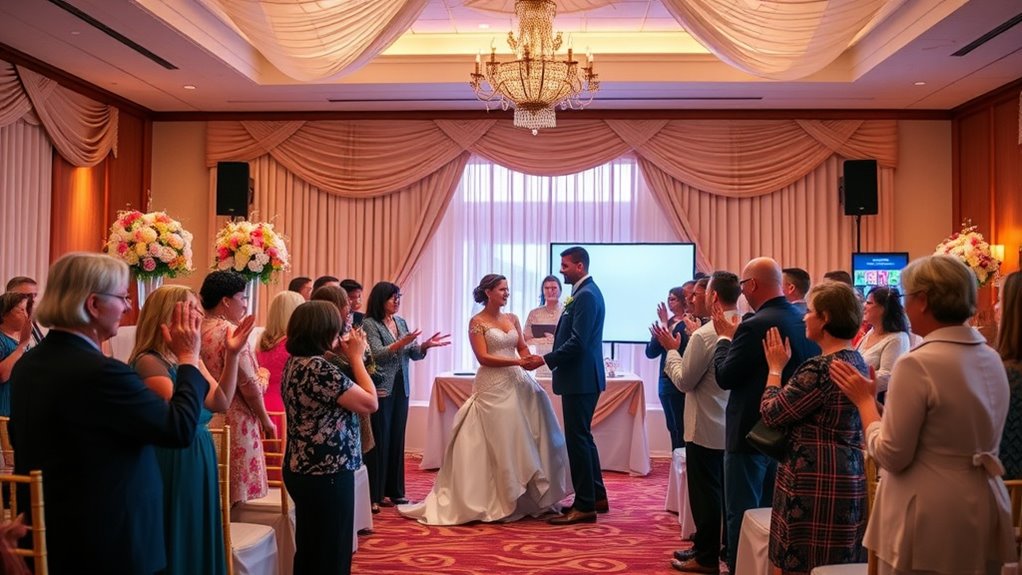
To guarantee your deaf guests feel fully included, incorporating sign language interpretation into your wedding is essential. You’ll want to ensure the interpreter has strong sign language fluency to accurately convey emotions and nuances. Start by coordinating with a skilled interpreter early in your planning process. Discuss the ceremony’s schedule and key moments so they can prepare accordingly. Clear communication with your interpreter ensures they understand the flow and any specific terminology, making the experience seamless for your guests. Confirm their availability for the entire event, including rehearsals and reception. Proper interpreter coordination helps create an accessible atmosphere, allowing deaf guests to fully engage with the ceremony and celebration without missing vital details. Additionally, understanding the role of audio-visual elements can further enhance accessibility for all attendees.
Designing Visual and Tactile Communication Cues
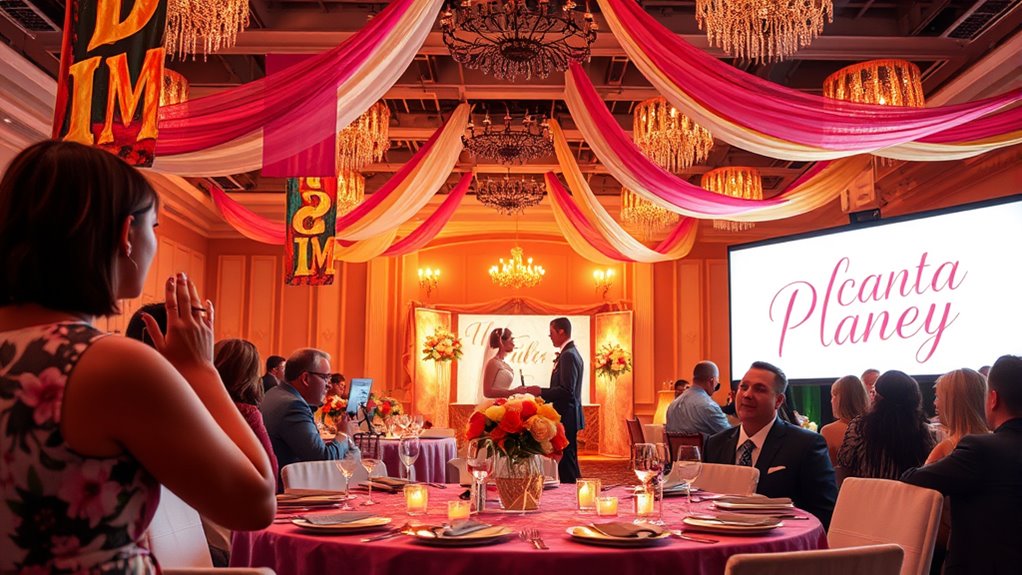
Creating effective visual and tactile communication cues is essential for making your wedding accessible to deaf guests. Use clear visual cues like large, easily readable signs for directions, schedules, and important announcements. Incorporate bright colors and contrasting text to catch attention quickly. Tactile signals, such as vibration devices or textured markers, help guests stay informed without relying on sound. For example, consider providing wristbands or devices that vibrate for call-to-attention notifications. Ensure that all visual cues are positioned where they are easily seen, especially during key moments like the ceremony or speeches. Combining visual cues with tactile signals creates a multi-sensory experience, making your wedding more inclusive and comfortable for deaf guests. Additionally, understanding visual communication principles can enhance the clarity and effectiveness of your cues. Thoughtful design of these cues shows your commitment to accessibility and respect.
Arranging Accessible Seating and Layout
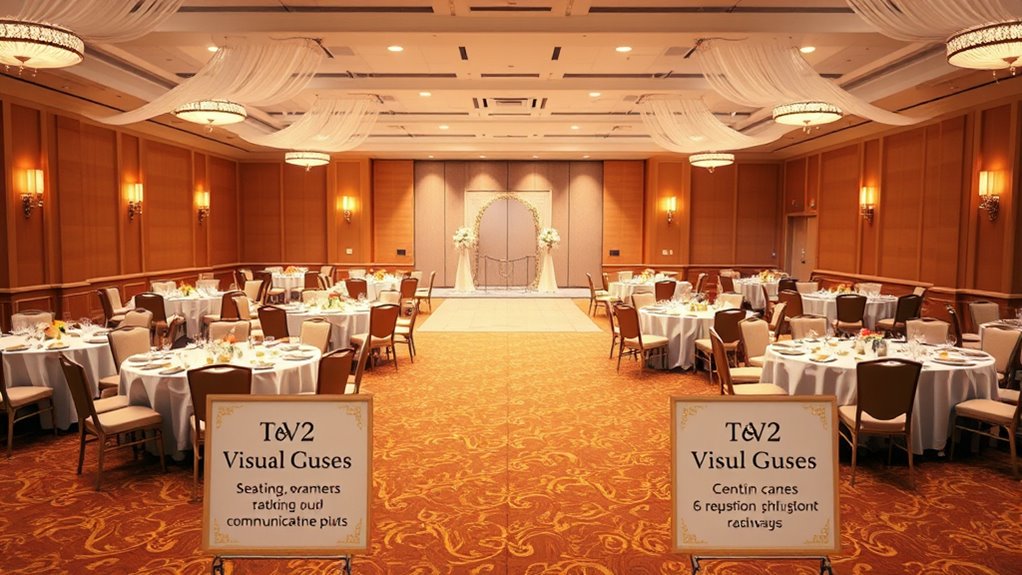
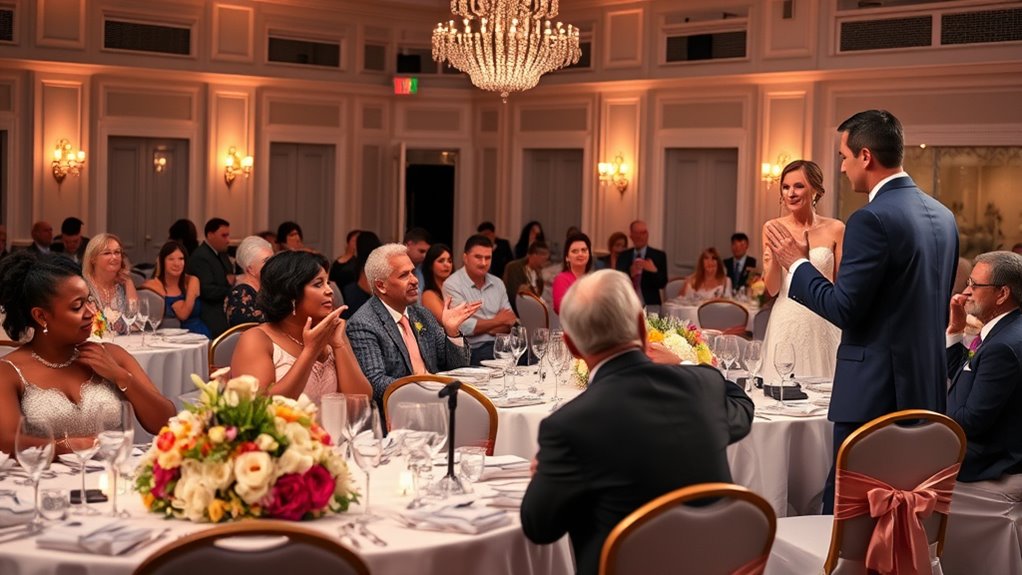
Designing an accessible seating arrangement guarantees that all guests, including those who are deaf or hard of hearing, can comfortably enjoy your wedding. Start by ensuring accessible pathways are wide and free of obstructions, allowing easy movement for everyone, especially those using mobility aids. Arrange seating so that deaf guests have clear sightlines to the main event, such as the ceremony or dance floor, without visual obstructions. Consider grouping seats in close proximity to visual communication cues or signage. Avoid placing seating too far from the stage or focal points, which can hinder visual access. By thoughtfully planning your seating arrangements and pathways, you’ll create an inclusive environment where all guests feel comfortable, valued, and engaged in your special day. Additionally, incorporating visual aids and clear sightlines can significantly enhance communication and understanding for deaf guests.
Communicating Effectively With Deaf Guests
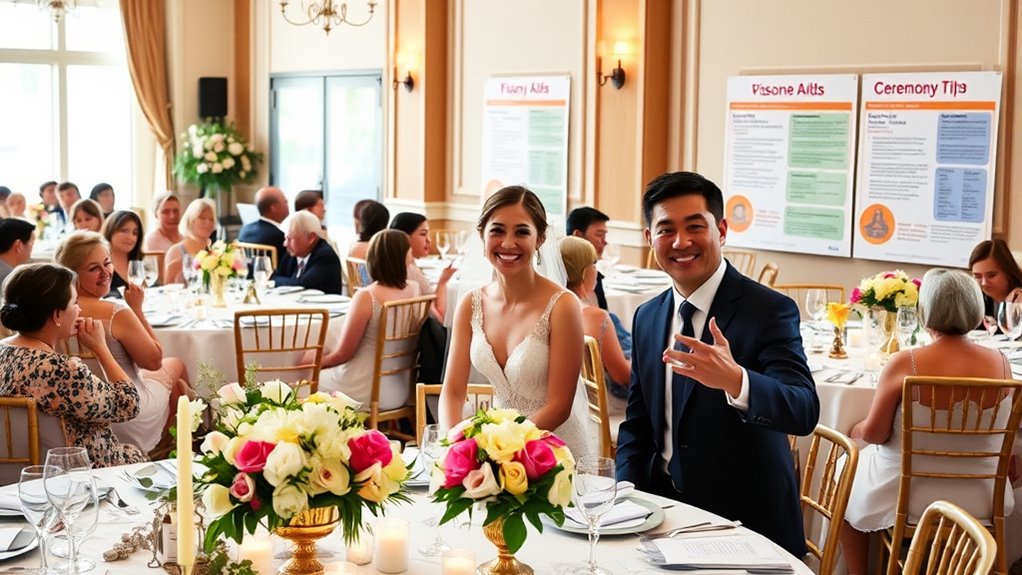
Effective communication is essential to guarantee that deaf guests feel included and engaged throughout your wedding. You can support their understanding by providing clear, visible cues. Encourage guests to use lip reading when possible, but recognize it has limitations, so supplement it with other methods. Written notices or programs placed strategically help convey key information, such as the schedule, speeches, or announcements. Make sure these notices are large, legible, and displayed where everyone can see them easily. Maintain eye contact during conversations to facilitate lip reading and ensure your gestures are clear. If needed, consider having a sign language interpreter available to bridge any communication gaps. Incorporating visual communication tools like real-time captioning or sign language interpretation can significantly enhance inclusivity. By combining these approaches, you create an inclusive environment where deaf guests can fully enjoy your special day.
Planning Entertainment and Activities for Inclusivity
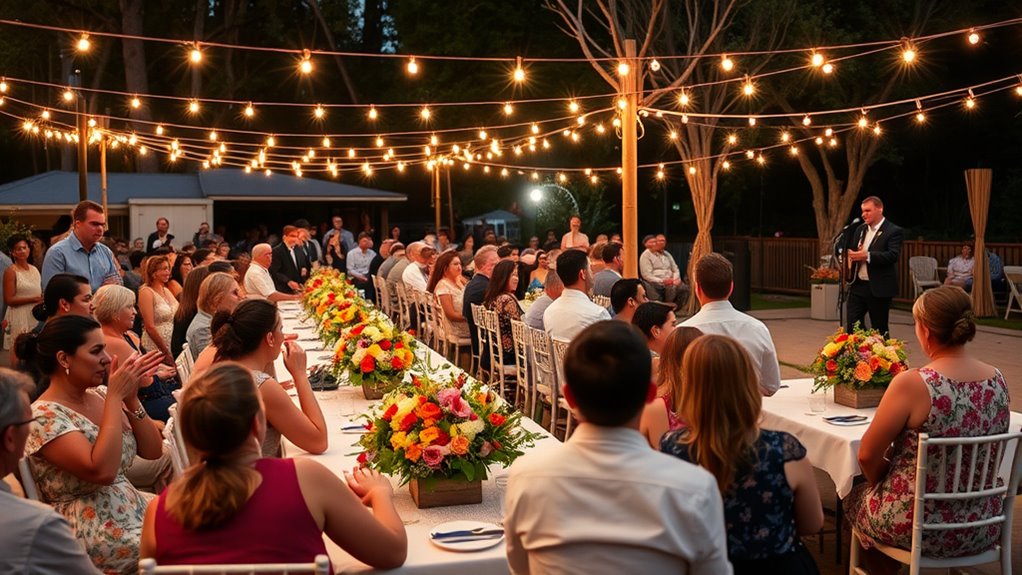
To guarantee all guests feel included and engaged, you should plan entertainment and activities that accommodate diverse communication styles and sensory needs. Focus on selecting inclusive music that features visual elements like sign language performers or captioned lyrics. Consider interactive options such as dance floors with visual cues or silent discos where guests wear headphones. For activities, incorporate options that respect dietary accommodations, like allergen-free food stations, to make certain of everyone’s comfort. Additionally, include visual entertainment like live sign language performances or visual storytelling. Think about sensory-friendly zones for those who need a break from stimulation. Incorporating sensory-friendly accommodations can significantly enhance comfort for guests with sensory sensitivities. By thoughtfully curating your entertainment and activities, you create an inviting environment where every guest feels valued and involved.
Frequently Asked Questions
How Can I Ensure My Deaf Guests Feel Genuinely Welcomed?
You can make your deaf guests feel genuinely welcomed by incorporating sign language inclusion and visual communication techniques. Hire a sign language interpreter or provide real-time captioning to guarantee everyone understands speeches and announcements. Use visual cues, like signs or written messages, to communicate clearly. Creating an accessible environment shows your guests that you value their presence, making them feel comfortable, included, and appreciated throughout your special day.
What Are Cost Considerations for Accessible Wedding Accommodations?
Did you know that accessible wedding accommodations can increase costs by about 10-20%? When budget planning, consider these expenses early, including sign language interpreters, visual aids, and accessible venues. Choosing vendors experienced with accessibility can help manage costs and guarantee quality. Prioritize your needs and get detailed quotes to avoid surprises. Being proactive makes it easier to create an inclusive celebration without overspending.
How Do I Coordinate With Interpreters on the Wedding Day?
You should coordinate sign language interpretation by communicating clearly with your interpreters about the schedule and key moments. Confirm their availability and make sure they understand the event timeline. Use a shared schedule for interpreter scheduling, so everyone stays on the same page. Make sure they’re positioned where deaf guests can easily see them, and check if any additional support or equipment is needed. This proactive approach ensures smooth communication during your wedding.
What Are Some Creative Ways to Include Deaf Guests in Traditions?
You can include deaf guests by incorporating sign language performances during key moments, making the ceremony more engaging. Use visual storytelling techniques, like expressive visuals or slides, to explain traditions and rituals clearly. Consider having a sign language interpreter perform alongside these elements, ensuring everyone feels included and connected. These creative touches make your wedding memorable and accessible, so deaf guests can fully enjoy and participate in your special day.
How Can I Inform Guests About Accessibility Features Beforehand?
Think of your wedding communication plan as a bridge connecting everyone. To inform guests about accessibility features, you should share details early, like providing sign language guides and visual aids in invitations or on your wedding website. Consider posting clear signage at the venue too. This way, all guests feel included and prepared, turning your special day into a harmonious celebration where everyone can truly connect.
Conclusion
By planning with deaf guests in mind, you create a wedding that’s truly unforgettable—like a world where everyone hears the music of love and feels the heartbeat of connection. Your thoughtful touches turn an ordinary event into an extraordinary celebration of inclusivity and joy. When you prioritize accessibility, you’re not just accommodating guests—you’re opening the floodgates to pure, unfiltered happiness for everyone present. It’s a small change that can change everything forever.
Fall Picks
fall essentials
As an affiliate, we earn on qualifying purchases.