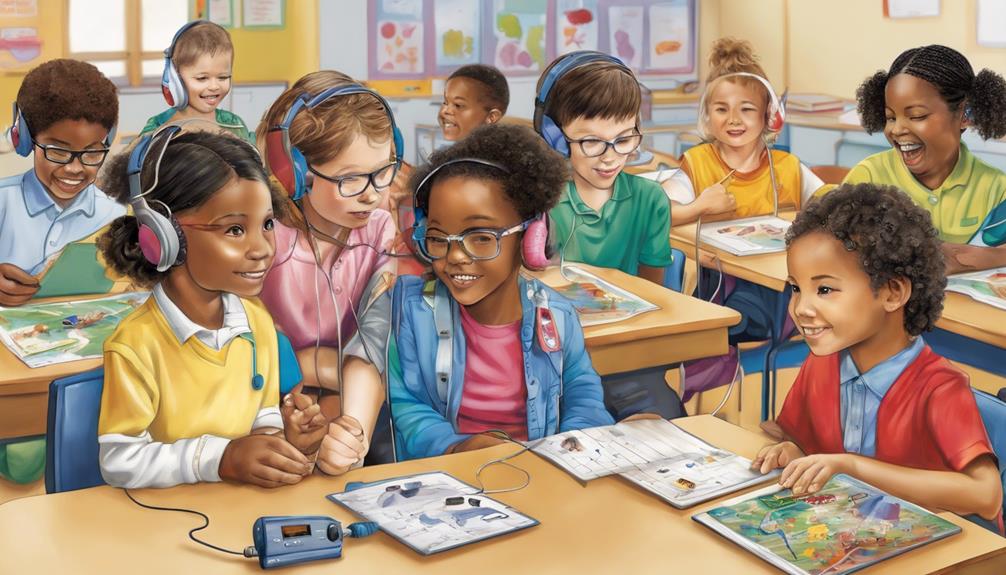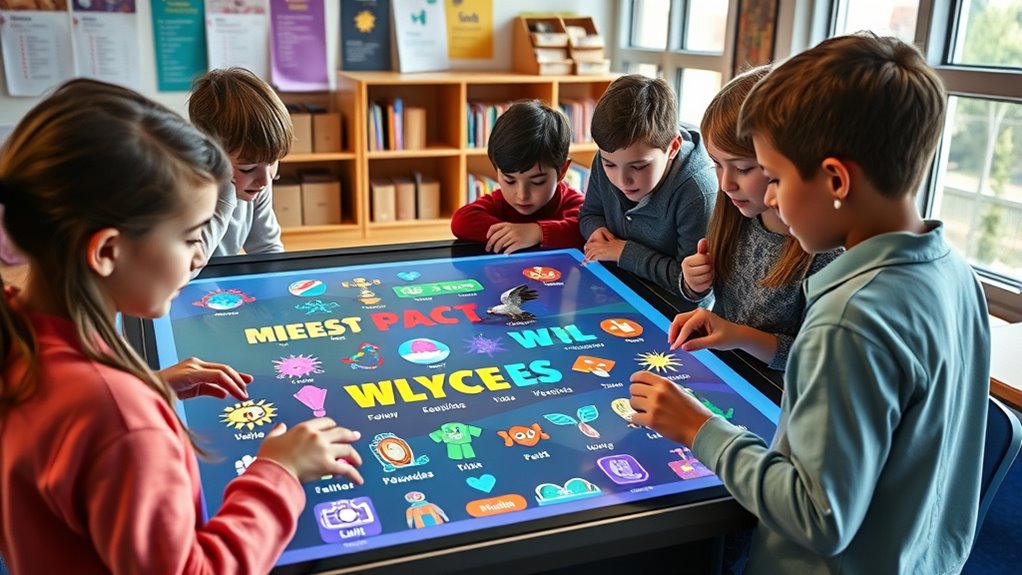

Gamifying vocabulary building with visual tools makes learning more engaging and effective. Instead of passive memorization, you actively participate through interactive flashcards, images, and stories that create vivid mental associations. These multisensory activities boost memory retention, keep you motivated, and make the process fun. By turning vocabulary practice into a game with rewards and levels, you’ll notice faster progress. Keep exploring to discover how these techniques can transform your language learning journey.

Get everyday helpers delivered free with Prime
- Fast, free delivery on millions of items
- Prime Video, Amazon Music and more included
- Member-only deals all year
Key Takeaways
- Incorporate interactive flashcards with images and sounds to actively engage learners in vocabulary practice.
- Use visual mnemonics to create memorable mental associations, enhancing recall of new words.
- Gamify learning with points, badges, and levels to motivate consistent practice and increase engagement.
- Combine multisensory inputs—visual, auditory, and kinesthetic—for more effective memory retention.
- Transform vocabulary learning into an enjoyable, game-like experience to reduce boredom and boost motivation.
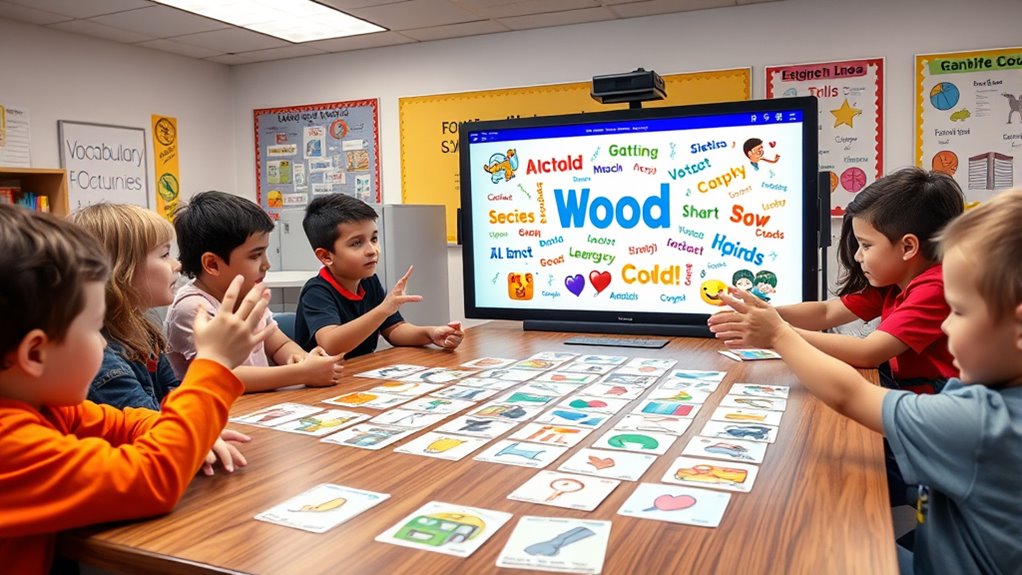
Have you ever struggled to remember new words or felt that traditional memorization methods fall short? If so, you’re not alone. Many people find that simply repeating words or making endless lists doesn’t lead to long-term retention. That’s where gamifying vocabulary building with visual tools can make a real difference. By turning learning into an engaging game, you stay motivated and make the process enjoyable. Two powerful tools in this approach are interactive flashcards and visual mnemonics, which work together to boost your memory and comprehension.
Interactive flashcards are more than just static cards with words and definitions. They involve active participation, such as clicking, dragging, or answering prompts, which keeps you engaged. When you flip through digital flashcards, you can test yourself repeatedly, track your progress, and focus on areas that need improvement. The interactive nature makes the process dynamic rather than passive, helping your brain to form stronger associations with new vocabulary. Plus, many apps allow you to customize flashcards with images, sounds, or example sentences, adding layers of sensory input that reinforce learning.
Visual mnemonics take this a step further by transforming abstract words into memorable images or stories. Instead of just recalling a definition, you create a vivid mental picture or link, making the word stick more effectively. For example, if you’re trying to remember the word “lucid,” you might associate it with a clear, bright light in your mind’s eye. When you pair visual mnemonics with flashcards, you create a powerful combination. You can see the word, engage with an interactive element, and then connect it to an image or story. This multi-sensory approach not only makes learning more fun but also enhances your ability to recall words in real-life situations.
Transform words into vivid images or stories to boost memory and recall effectively.
Gamification adds an extra layer of motivation by incorporating points, badges, timers, and levels. When you see progress and earn rewards, it taps into your natural desire for achievement. This encourages consistent practice, turns learning into a game you want to win, and reduces the boredom often associated with traditional study methods. Using visual tools in this way transforms vocabulary building from a tedious chore into an exciting challenge. Over time, you’ll notice your vocabulary expanding, and words will become more intuitive to recall because of the engaging, multisensory methods you’ve adopted.
In essence, by leveraging interactive flashcards, visual mnemonics, and gamification, you make vocabulary building a compelling experience. You learn faster, retain more, and enjoy the process. It’s a smart, effective way to turn language learning into a game you’re enthusiastic to play every day.
interactive vocabulary flashcards with images
As an affiliate, we earn on qualifying purchases.
As an affiliate, we earn on qualifying purchases.
Frequently Asked Questions
How Can I Assess My Vocabulary Progress Effectively?
To assess your vocabulary progress effectively, focus on learning metrics and progress tracking. Regularly test yourself with quizzes or flashcards to identify areas for improvement. Keep a journal of new words you learn, and review it periodically. Use apps or tools that offer detailed analytics to monitor your growth over time. By consistently measuring your performance, you’ll stay motivated and see tangible evidence of your expanding vocabulary.
Are Visual Tools Suitable for All Age Groups?
Like a painter choosing the right brush, you’ll find visual tools are generally suitable for most age groups, but it’s crucial to select age-appropriate tools. Younger learners benefit from colorful, simple visuals that boost visual engagement, while older students may prefer more complex graphics or interactive features. Tailoring visual aids ensures they support vocabulary growth effectively, making learning engaging and accessible across different ages.
What Are Some Common Challenges When Using Visual Tools?
When using visual tools, you might face challenges like cultural differences affecting interpretation and technology accessibility issues. Some users may not understand symbols or images due to cultural backgrounds, leading to confusion. Limited access to devices or reliable internet can also hinder effective use. To overcome these obstacles, tailor visuals to diverse audiences and guarantee technology is accessible, making your learning experience inclusive and smooth for everyone.
How Do I Choose the Best Visual Tools for My Needs?
Imagine a toolkit filled with vibrant, engaging visuals that make learning come alive. You should choose visual tools offering interactive exercises and customization options, so you can tailor activities to your needs. Look for tools that match your learning style, whether it’s colorful flashcards or dynamic diagrams. This way, you’ll find the perfect fit that keeps you motivated and makes vocabulary building both fun and effective.
Can Gamification Improve Long-Term Vocabulary Retention?
Gamification can definitely improve your long-term vocabulary retention by providing a motivation boost and making learning more engaging. When you turn vocabulary practice into interactive learning experiences, you’re more likely to stay committed and remember words longer. By incorporating game elements like challenges and rewards, you turn studying into an enjoyable activity, encouraging consistent practice and reinforcing memory. This active, fun approach helps solidify vocabulary in your long-term memory.
Conclusion
By gamifying your vocabulary with visual tools, you’ll open a world of words so vast, it’s like having a superpower. You’ll master new words faster than a lightning strike and remember them longer than the stars shine. This approach makes learning so exciting, it’s practically addictive—your vocabulary will grow from tiny seedlings into a towering forest in no time. Embrace these tools, and watch your language skills skyrocket to epic proportions!
Fall Picks
fall essentials
As an affiliate, we earn on qualifying purchases.