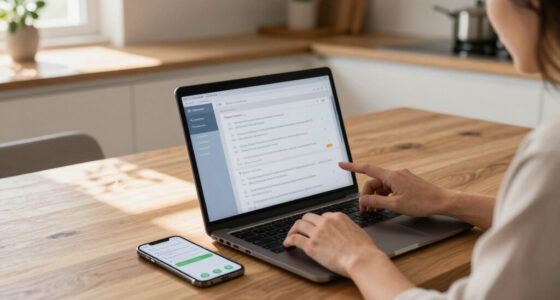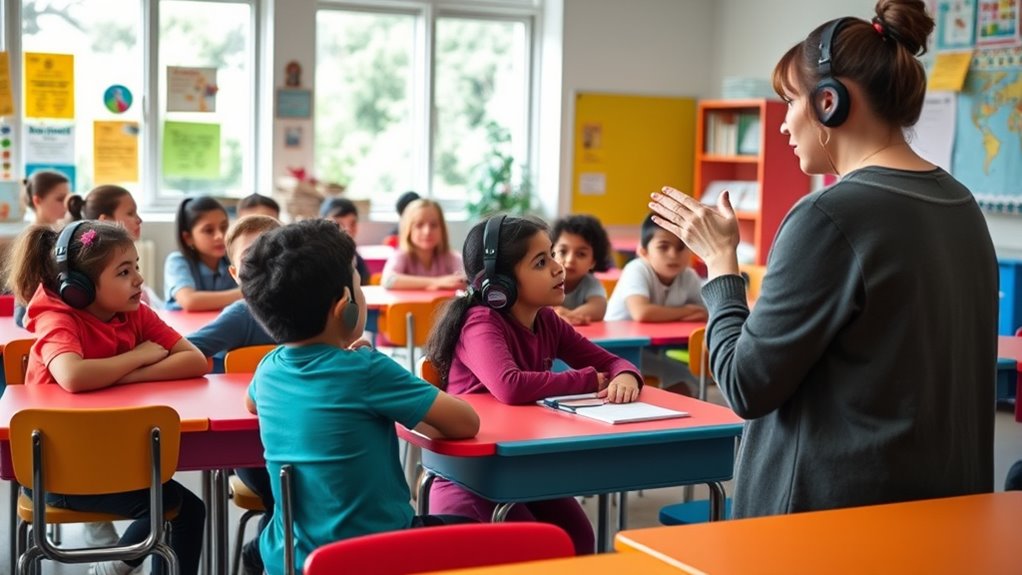

To improve listening comprehension in inclusive classrooms, emphasize visual cues, gestures, and breaking down complex info into manageable parts to support diverse needs. Use assistive technologies like FM systems or speech-to-text apps to enhance clarity. Encourage peer collaboration through activities like discussion and summarizing, which build understanding and social skills. Creating a supportive environment, combining these strategies, and fostering active engagement helps all students thrive. Keep exploring these approaches to open more effective solutions.
Key Takeaways
- Incorporate assistive technologies like FM systems and speech-to-text apps to enhance speech clarity and reduce background noise.
- Foster peer collaboration through group discussions and summarization activities to reinforce attentive listening and understanding.
- Use visual cues, gestures, and multimedia resources to support comprehension and break down complex information.
- Regularly check for understanding and encourage questions to ensure students are actively engaged and grasping content.
- Create an inclusive classroom culture that promotes support, understanding, and tailored strategies for diverse listening needs.
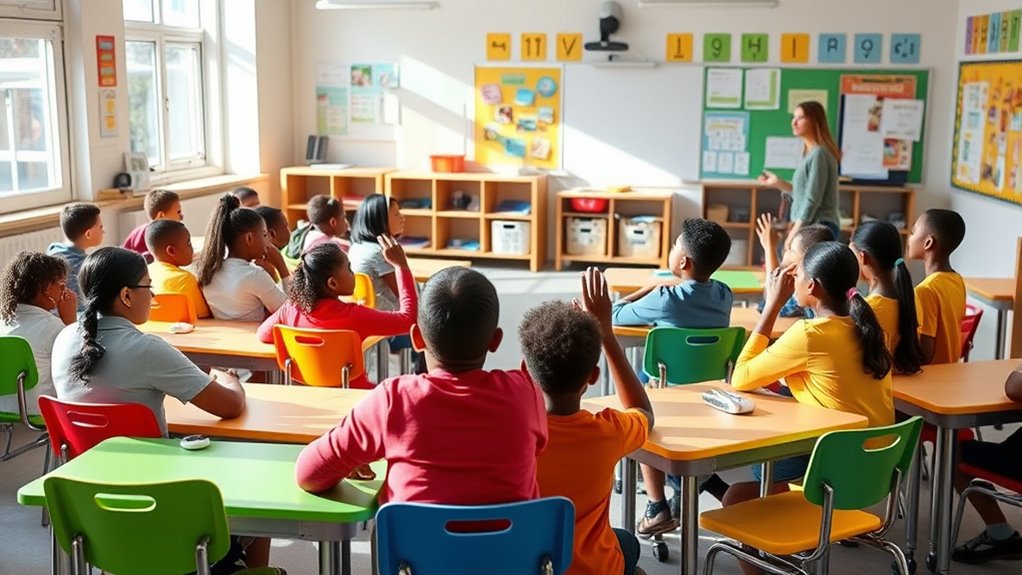
Listening comprehension is vital for student success, especially in inclusive classrooms where diverse needs require tailored support. When students struggle to understand spoken language, it can hinder their ability to participate actively, grasp important concepts, and demonstrate their knowledge. To address this, you can leverage assistive technology that enhances listening skills and promotes engagement. Devices like FM systems, hearing aids, or speech-to-text apps can help students with hearing impairments or auditory processing difficulties access spoken information more clearly. These tools reduce background noise and amplify speech, making it easier for students to focus and comprehend. Exploring various digital platforms designed for hackathons can also inspire innovative solutions for inclusive education. Incorporating assistive technology into your teaching approach not only supports individual learners but also demonstrates a commitment to inclusive practices that value all students’ needs.
Assistive technology like FM systems and speech-to-text apps enhances listening skills in inclusive classrooms.
Peer collaboration is another powerful strategy to improve listening comprehension. When students work together, they can share perspectives, clarify misunderstandings, and reinforce learning through discussion. Encouraging peer interactions helps students develop listening skills by actively engaging with their classmates’ ideas and asking questions. For example, pairing students for activities where they summarize what their partner said or discuss a topic fosters attentive listening. You can facilitate small group discussions or cooperative projects that require students to listen carefully to instructions and to each other’s contributions. This not only improves listening skills but also builds social skills and confidence. When students collaborate, they often become more attentive and motivated, which positively impacts their ability to process spoken language.
Creating a classroom environment that promotes active listening is vital. Use visual cues, gestures, and body language to reinforce spoken instructions. Break down complex information into smaller segments and check for understanding frequently. Encouraging students to ask clarifying questions or paraphrase what they’ve heard ensures they’re processing the information correctly. Incorporate technology like audio recordings or multimedia presentations that allow students to revisit lessons at their own pace. When you combine assistive technology with peer collaboration, you create a supportive atmosphere where students feel empowered to develop their listening skills. This approach makes learning more accessible and engaging, fostering a sense of inclusion and encouraging all students to succeed.
Ultimately, improving listening comprehension in inclusive classrooms requires intentional strategies that address individual needs. By integrating assistive technology and promoting peer collaboration, you provide multiple pathways for students to develop their listening skills. These methods help create a classroom culture where every student feels supported, understood, and capable of achieving their academic goals. Your efforts will not only enhance listening comprehension but also cultivate a more inclusive and dynamic learning environment where all students can thrive.

Williams AV FM 557 Large-Area Dual FM Plus and Wi-Fi Assistive Listening System with FM T55 Transmitter, (4) PPA R37N Receivers, (4) EAR 022 Earphones, (2) NKL001 Neckloops and IDP 008 ADA Wall Plaque
- Includes Transmitter and Receivers: FM T55, 4 Receivers, Earphones, Neckloops, Wall Plaque
- Wide Operating Frequencies: 72.1-75.9MHz, 17 channels
- Low Total Harmonic Distortion: Less than 0.25% at 1kHz
As an affiliate, we earn on qualifying purchases.
As an affiliate, we earn on qualifying purchases.
Frequently Asked Questions
How Do Cultural Differences Affect Listening Comprehension Strategies?
Cultural differences considerably influence listening comprehension strategies by shaping how you interpret and respond to information. Cultural biases may cause misunderstandings or misinterpretations, while language barriers can hinder your ability to grasp nuances or context. To improve, you should be aware of these differences, adapt your strategies accordingly, and remain open-minded. Recognizing and addressing cultural biases and language barriers helps you become a more effective listener across diverse contexts.
What Role Does Technology Play in Enhancing Listening Skills?
Your ears would be overwhelmed by the universe of sound without technology! Assistive listening devices and multimedia tools dramatically boost your ability to understand speech, especially in noisy environments. These tools filter out background noise, amplify voices, and provide visual cues, making listening more accessible and less stressful. Technology plays a vital role in sharpening your listening skills, helping you focus, comprehend, and engage more confidently in conversations and learning situations.
How Can Teachers Assess Individual Listening Progress Effectively?
You can assess individual listening progress effectively by using formative assessments like listening journals or quick quizzes to gauge understanding. Incorporate peer feedback by encouraging students to share insights and evaluate each other’s listening skills. This approach helps identify areas needing improvement and tracks growth over time, ensuring you get a clear picture of each student’s progress and can tailor your support accordingly.
What Accommodations Benefit Students With Auditory Processing Disorders?
When considering accommodations for students with auditory processing disorders, you should focus on assistive technology like FM systems and visual aids. Classroom modifications such as preferential seating near the teacher, reducing background noise, and providing written instructions also help. These strategies actively support their listening skills, ensuring they can follow lessons more effectively. By implementing these accommodations, you create a more inclusive learning environment that addresses individual needs.
How Do Classroom Environment Factors Influence Listening Engagement?
Imagine a quiet, well-organized classroom versus a noisy, chaotic one. Your classroom environment greatly impacts listening engagement. Good acoustics reduce background noise, helping students focus. Thoughtful seating arrangements ensure everyone faces the teacher and minimizes distractions. When you optimize acoustics and seat students strategically, you create a space where students stay attentive, process information better, and actively participate, making learning more effective and inclusive for all learners.
Conclusion
By applying these strategies, you create a space where every student’s voice can be heard, much like the phoenix rising from ashes. Your efforts foster a classroom where listening becomes a bridge, not a barrier—transforming challenges into opportunities for growth. Remember, as in the story of Echo, true understanding echoes beyond words. Keep nurturing those connections, and you’ll unseal the potential within each student, guiding them toward a future of confident, meaningful communication.