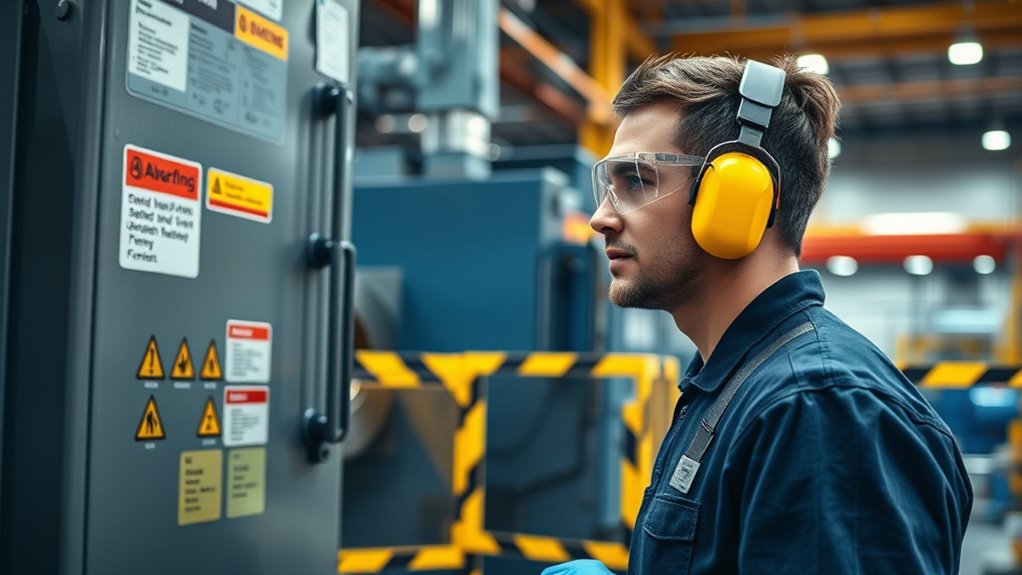

To guarantee safety for workers with hearing loss on industrial sites, your employer should implement visual alert systems like flashing lights and signals that replace or supplement alarms. Use vibration devices or wearable alerts for immediate communication, and adopt standardized hand signals and clear signage for safety instructions. Ensuring proper sleep and alertness also helps improve response times. If you stay alert to these protocols, you’ll discover more effective ways to stay safe on the job.

Get everyday helpers delivered free with Prime
- Fast, free delivery on millions of items
- Prime Video, Amazon Music and more included
- Member-only deals all year
Key Takeaways
- Implement visual alarm systems like flashing lights and strobe indicators to alert workers of hazards.
- Use vibrating alert devices and wearable signals for real-time safety communication.
- Incorporate standardized hand signals and visual signage to facilitate clear non-auditory communication.
- Provide specialized training on alternative alert mechanisms and communication protocols.
- Promote sleep and alertness strategies to improve decision-making and hazard response among workers with hearing loss.

Workers with hearing loss face unique safety challenges on industrial sites, where being aware of hazards often depends on auditory cues. In environments filled with loud machinery, alarms, and verbal instructions, relying solely on hearing can make it harder to detect danger or respond quickly. This creates significant communication barriers that can compromise safety if not addressed properly. Fortunately, there are assistive technologies designed to bridge these gaps, ensuring you stay informed and protected.
One of the most effective solutions involves using visual alert systems. These systems translate auditory alarms into visual signals, such as flashing lights or strobe indicators, which alert you to potential dangers without relying on sound. For example, instead of hearing a siren, you might see a flashing light that signals an emergency or equipment malfunction. Wearing personal alert devices that sync with factory alarms can also help you stay aware of critical notifications in real time. These devices are tailored to enhance your safety by providing immediate visual cues that compensate for hearing limitations.
In addition to visual aids, communication tools like vibrating pagers or wearable alert systems can be invaluable. These assistive technologies allow supervisors or coworkers to communicate safety instructions directly through vibrations or visual displays, reducing misunderstandings or missed messages. It’s essential to establish clear protocols for using these devices, so everyone on site understands how and when they should be employed. Proper training on their operation ensures you can respond swiftly to instructions or alerts, minimizing risk.
Your safety also depends on proactive communication strategies. For instance, your employer might implement standardized hand signals or visual signage to convey important information. These methods create a consistent, accessible way to communicate safety instructions without relying on sound. You should be encouraged to participate in safety meetings and drills, which can be adapted with visual components to ensure you’re fully engaged and understand all safety procedures. Additionally, research shows that sleep quality affects decision-making and alertness, which are crucial for maintaining safety awareness on the job.
visual alert system for industrial safety
As an affiliate, we earn on qualifying purchases.
As an affiliate, we earn on qualifying purchases.
Frequently Asked Questions
How Do Safety Protocols Differ for Workers With Partial Hearing Loss?
When considering safety protocols for workers with partial hearing loss, you need to recognize that they rely more on visual alert systems and tactile feedback. You should guarantee alarms are visual, like flashing lights, and incorporate tactile cues, such as vibrations, to alert them effectively. By doing so, you help create a safer environment where these workers can respond quickly to hazards without relying solely on auditory signals.
Are There Specific Training Programs for Workers With Hearing Impairments?
You can find specific training programs designed for workers with hearing impairments that address communication barriers effectively. These programs often incorporate assistive devices like hearing aids or visual alert systems, making safety instructions clearer. You’ll benefit from tailored communication methods, such as visual cues or written materials, which help you stay informed and safe on the job. These initiatives guarantee you’re equipped with the tools and knowledge necessary for a secure work environment.
What Technology Assists Hearing-Impaired Workers in Noisy Environments?
Imagine a world where silence isn’t your limit. Assistive devices and communication aids help you thrive in noisy environments, turning chaos into clarity. Technologies like personal amplifiers, vibrating alert systems, and real-time captioning give you an edge, ensuring you stay aware and connected. These tools act as your voice and ears, transforming the workplace into an inclusive space where your safety and communication are prioritized, no matter the noise level.
How Can Employers Assess Hearing Loss Risks in Industrial Settings?
You should conduct thorough risk assessments to identify hearing loss risks in your industrial setting. Incorporate hearing conservation strategies by evaluating noise levels regularly with sound level meters and listening to worker feedback. This helps you pinpoint areas where noise exposure exceeds safe limits, ensuring you implement appropriate controls. Regular risk assessments enable you to adapt hearing conservation measures effectively, protecting workers and maintaining a safer work environment.
What Legal Protections Exist for Hearing-Impaired Workers in Industry?
You have legal rights that protect you as a hearing-impaired worker, ensuring fair treatment and safety. Employers are required to provide workplace accommodations, like hearing aids or modified equipment, to support your needs. These protections come under laws such as the Americans with Disabilities Act (ADA). By understanding your rights, you can advocate for necessary adjustments, creating a safer, more inclusive work environment that respects your abilities and health.
Conclusion
By following these safety protocols, you can guarantee a safer work environment despite hearing challenges. Remember, even in a world where floppy disks once ruled, safety remains timeless. Stay vigilant, communicate clearly, and use available assistive devices to protect yourself. Think of it as your own personal knight’s armor—shielding you from harm. With these steps, you’ll prove that hearing loss doesn’t have to be a barrier to working safely in any industrial setting.
Fall Picks
fall essentials
As an affiliate, we earn on qualifying purchases.