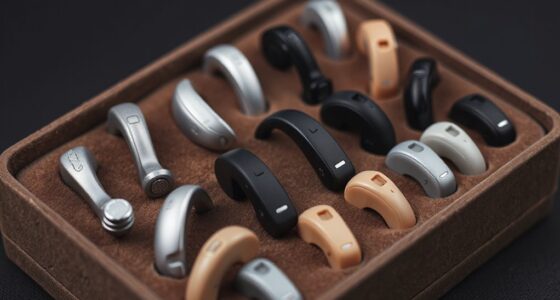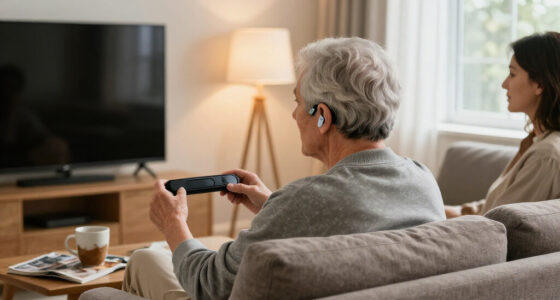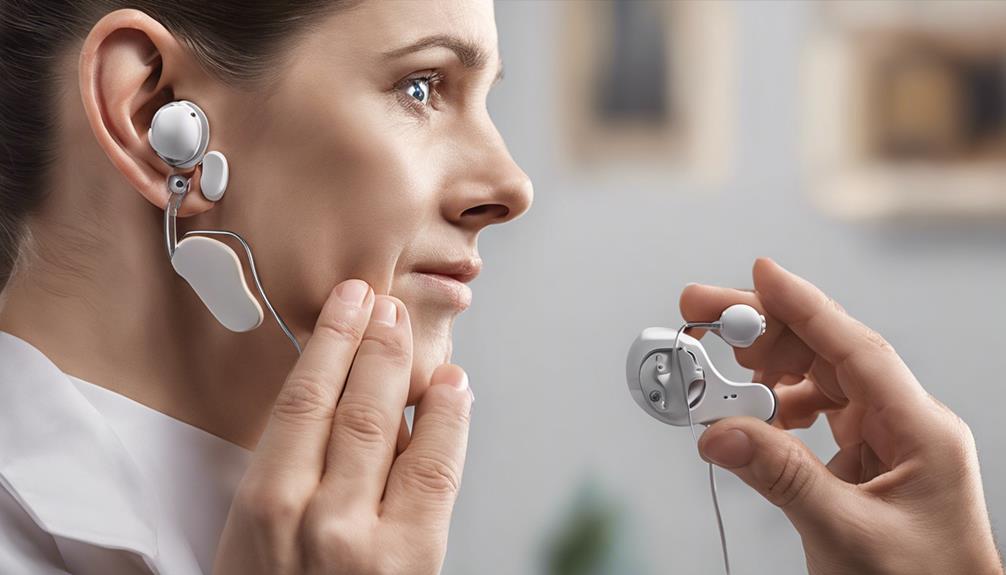

A perforated eardrum changes the buying question: a device that blocks the ear canal or increases sound may not be appropriate, and an online roundup cannot determine what is safe for your injury. I would start with an ear specialist’s advice, then compare fit and listening needs. Of these four options, the bone-conduction open-ear amplifier is the clearest candidate to discuss when avoiding an in-canal device matters; the five-level OTC hearing aids offer more volume adjustment, while the Phonak open domes are only replacement parts for specific existing aids. The tradeoff is between keeping the canal unblocked, getting adjustable amplification, and using equipment that has actually been selected for your hearing loss. None of these listings establishes that a product is medically suitable for a perforated eardrum.

Get everyday helpers delivered free with Prime
- Fast, free delivery on millions of items
- Prime Video, Amazon Music and more included
- Member-only deals all year
Complete the kit


Key Takeaways
- Ask an ENT or audiologist whether amplification is safe while the eardrum is perforated; none of these product listings confirms medical suitability.
- The bone-conduction option avoids placing a device in the canal, but its advertised 20-hour use and sound performance do not establish clinical benefit.
- The five-level OTC aids offer more explicit volume adjustment than the one-button rechargeable model, yet both are in-ear products that need clinician clearance.
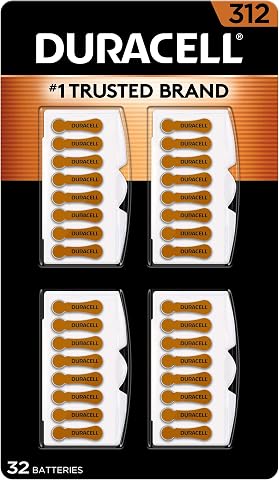
- The Phonak medium open domes are accessories, not hearing aids, and fit only specified Audeo Marvel, Paradise, and Lumity models.
- A perforation’s cause, size, healing status, and the buyer’s hearing test matter more than battery life or noise-reduction claims.
| Bone Conduction Hearing Aids for Seniors and Adults, Open-Ear Hearing Amplifier, Rechargeable, 20H Battery Life |  | Best to discuss when keeping the canal open is the priority | Technology: Bone conduction | Design: Open-ear | Battery life: Up to 20 hours, as listed | VIEW ON AMAZON | See Our Full Breakdown |
| OTC Hearing Aids for Seniors & Adults with Noise Cancelling and 5-Level Volume Control | 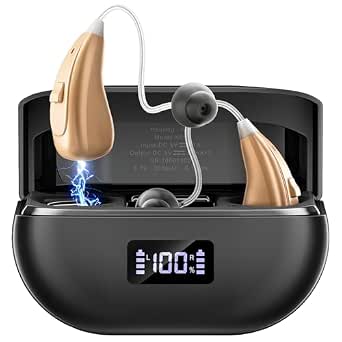 | Best for adjustable volume, if an in-ear aid is cleared | Device type: Rechargeable OTC hearing aids | Volume control: Five levels | Battery life: Over 100 hours with charging case, as listed | VIEW ON AMAZON | See Our Full Breakdown |
| Rechargeable Hearing Aids for Seniors with Noise Cancellation and Auto Cleaning |  | Best for a low-maintenance routine after professional clearance | Device type: Rechargeable OTC hearing aids | Design: Nearly invisible in-ear | Noise reduction: Advanced digital noise reduction, as listed | VIEW ON AMAZON | See Our Full Breakdown |
| Open 4.0 Dome Medium (0.35 inch=9mm) – 10 Pack |  | Best replacement accessory for a compatible Phonak setup | Product type: Open hearing aid domes | Size: Medium, 9 mm | Quantity: 10 domes | VIEW ON AMAZON | See Our Full Breakdown |
| hearing aid for perforated eardrum | Design | Battery life | Device type |
|---|---|---|---|
| Bone Conduction Hearing Aids f | Open-ear | Up to 20 hours, as listed | — |
| OTC Hearing Aids for Seniors & | — | Over 100 hours with charging case, as listed | Rechargeable OTC hearing aids |
| Rechargeable Hearing Aids for | Nearly invisible in-ear | 15–20 hours per charge; up to 120 hours total, as listed | Rechargeable OTC hearing aids |
| Open 4.0 Dome Medium | Open | — | — |
More Details on Our Top Picks
Bone Conduction Hearing Aids for Seniors and Adults, Open-Ear Hearing Amplifier, Rechargeable, 20H Battery Life
Among these four listings, this is the most relevant design to raise with an ear specialist when a perforated eardrum makes an in-canal device a concern. The product sends sound through bone conduction and uses an open-ear design, so it does not rely on an ear tip sitting in the canal. That distinction separates it from both OTC hearing aids in this roundup, which are described as in-ear devices. It does not, by itself, show that the amplifier is safe for a particular perforation or suitable for the person’s hearing profile.
The listing promises 20 hours of rechargeable use and no fitting requirement, which may appeal to someone who finds ear tips uncomfortable or difficult to manage. Yet the description gives little detail about individualized tuning, controls, or how sound behaves across different kinds of hearing loss. It also warns that performance can vary in noisy settings and may not suit severe loss. Compared with the five-level OTC model, this option gives less stated control over amplification; compared with the Phonak domes, it is a complete device rather than a replacement component. I would consider it only after a clinician confirms that bone conduction is an appropriate route.
The open design may reduce direct contact with the canal, but it should not be treated as protection from infection or as treatment for the perforation. Its broad, general-purpose description is the main limitation: it does not specify an audiogram-based fitting or a medical indication. If you need carefully programmed output or have new symptoms, a professionally fitted solution is a better discussion than choosing by convenience alone.
Pros:- Open-ear bone-conduction design avoids an in-canal ear tip.
- Rechargeable operation is listed for up to 20 hours.
- No fitting is required according to the product description.
- A distinct design alternative to both in-ear OTC models.
Cons:- The listing does not establish safety or effectiveness for a perforated eardrum.
- Sound may vary in noisy environments, and severe loss may be outside its intended use.
- The supplied information gives limited detail on adjustment and individualized fitting.
Best for: Adults whose clinician has approved trying bone-conduction amplification and who want a device that does not sit inside the ear canal.
Not ideal for: Anyone seeking a medically verified solution for a perforated eardrum, people with severe hearing loss, or buyers who need detailed fitting controls and individualized programming.
- Technology:Bone conduction
- Design:Open-ear
- Battery life:Up to 20 hours, as listed
- Rechargeable:Yes
- Fitting:No fitting required, according to the listing
- Intended users:Seniors and adults
Our verdict“This is the most relevant design to discuss with a clinician if avoiding an in-canal device matters, but its open-ear construction is not a substitute for medical clearance.”
OTC Hearing Aids for Seniors & Adults with Noise Cancelling and 5-Level Volume Control
This model stands out among the two complete in-ear hearing aids because it specifies five volume levels and supplies several silicone ear-tip sizes. Those details can give a buyer more ways to adjust loudness and fit than the auto-cleaning model, which calls for manual adjustment without stating a level count. A compact case, Type-C charging, and a claimed total of over 100 hours also suit people who want a rechargeable routine for home or travel.
For a perforated eardrum, however, the central issue is not which OTC aid has the better control scheme. It is that this is described as an in-ear device, and the listing does not say that it is designed or cleared for use with a perforation. Tips that can be changed for size are not evidence that they avoid pressure, moisture, or other concerns relevant to an injured ear. Compared with the open-ear bone-conduction model, this offers more explicit volume choices but places a tip in the ear; compared with the auto-cleaning model, it provides more stated adjustment options but lacks the advertised automatic cleaning cycle.
I would not choose it by trial and error while the eardrum is perforated. If an audiologist or ENT approves in-ear amplification, the multiple tips and simple one-button control may make this the more adaptable of the two OTC aids in this list. Without that clearance, the feature advantage is secondary. The product description does not explain how the noise-cancelling function works or provide clinical fitting information, so buyers should not treat those claims as evidence of safe or precise amplification.
Pros:- Five stated volume levels offer more explicit adjustment than the auto-cleaning model.
- Includes small, medium, and large silicone ear tips.
- Type-C charging and a case are intended for regular use and travel.
- One-button control keeps operation simple.
Cons:- In-ear fit may be unsuitable unless a clinician specifically approves it.
- The listing provides no perforation-specific safety or clinical fitting information.
- First-time users may need time to learn the controls and fit.
Best for: A buyer whose audiologist has approved an in-ear OTC aid and who values several volume steps, interchangeable tips, and rechargeable use.
Not ideal for: People who have not had a perforation evaluated, anyone advised to keep objects out of the ear canal, or those who need clinician-programmed amplification.
- Device type:Rechargeable OTC hearing aids
- Volume control:Five levels
- Battery life:Over 100 hours with charging case, as listed
- Ear tips:Small, medium, and large silicone tips
- Charging port:Type-C
- Noise control:Noise cancelling, according to the listing
- Control:One button
Our verdict“If an in-ear OTC aid has been cleared for you, its five volume levels make it the more adjustable OTC pick here, but the listing does not establish suitability for a perforation.”
Rechargeable Hearing Aids for Seniors with Noise Cancellation and Auto Cleaning
The most distinctive feature here is not its near-invisible in-ear shape; it is the automatic one-minute cleaning cycle when the aids go into their case. The listing also includes replacement wax guards and claims 15–20 hours per charge, with up to 120 hours total and six case recharges. For a buyer who has already been told an in-ear device is acceptable, those details may make daily storage and charging easier than with the five-level OTC model, which emphasizes volume adjustment and multiple tips instead.
That convenience does not resolve the main question raised by a perforated eardrum. This aid sits in the ear, and the description does not mention perforations, clinical assessment, or a protective fit. An automatic cleaning cycle is not a treatment for an ear condition, while wax guards are not a medical barrier. Compared with the bone-conduction pick, this design depends on in-ear placement; compared with the five-level OTC aid, it has less clearly specified user adjustment because volume must be changed manually. Buyers who want to fine-tune sound without an app or clinician support may find that limitation frustrating.
I would place it behind the five-level model for buyers who need adjustment options, but ahead of the dome pack as a complete hearing device. Its charging case and cleaning feature answer maintenance needs, not perforation-specific safety. Ask a professional whether an in-ear aid is appropriate and whether this particular style can be fitted to your hearing before using it. If the answer is no or uncertain, do not let the nearly invisible design or long advertised runtime outweigh the health question.
Pros:- Automatic cleaning cycle runs when the aids are placed in the case.
- The listing includes replacement wax guards.
- Advertised battery use reaches 15–20 hours per charge, with multiple case recharges.
- Near-invisible in-ear design may appeal to users who prefer a discreet device.
Cons:- In-ear placement may not be appropriate with a perforated eardrum.
- Volume adjustment is manual, with no number of levels stated.
- The cleaning cycle does not establish medical suitability or replace professional care.
Best for: Someone whose clinician has approved an in-ear aid and who prioritizes a charging case, automatic cleaning, and included replacement wax guards.
Not ideal for: Anyone without medical clearance for an in-ear device, buyers who need several clearly specified volume levels, or people who interpret automatic cleaning as protection from ear problems.
- Device type:Rechargeable OTC hearing aids
- Design:Nearly invisible in-ear
- Noise reduction:Advanced digital noise reduction, as listed
- Battery life:15–20 hours per charge; up to 120 hours total, as listed
- Charging case:Battery display and six recharges, as listed
- Cleaning:Automatic one-minute cycle in case
- Wax guards:Replacement guards included
- Volume adjustment:Manual
Our verdict“This is a maintenance-focused OTC option for a user already cleared for in-ear amplification, not a perforation-specific hearing aid.”
Open 4.0 Dome Medium (0.35 inch=9mm) – 10 Pack
This item is not a hearing aid, so I rank it for a much narrower purpose: replacing a worn dome on a compatible Phonak Audeo Marvel, Paradise, or Lumity device. The open design is described as allowing more natural sound perception, and the pack contains ten medium domes measuring 9 mm. Those specifications are useful only if the user already has the stated hearing aid family and has been fitted with this exact size and dome style.
For someone shopping for a first device because of a perforated eardrum, this pack does not solve the problem. It contains no amplifier, charger, controls, or hearing assessment, and it cannot be compared directly with the bone-conduction aid or the two complete OTC devices. Even as an accessory, a dome is an ear-contact part: open construction does not prove that it is safe to insert into an ear with a perforation. The medium-only sizing is another limitation. Unlike the OTC model with several tip sizes, this package offers no alternatives for a different fit.
I would buy it only as a confirmed replacement for an existing compatible Phonak setup, following the fitting advice already given by an audiologist. If the ear has recently been perforated, ask the treating clinician before putting any dome into the canal, even if it is the same style used before. This ranks last as a general answer to the title because it is a component rather than a hearing aid, but it may be the most sensible option for a narrow replacement need after professional approval.
Pros:- Compatible with the specified Phonak Audeo Marvel, Paradise, and Lumity models.
- Ten replacement domes are included.
- Open style is intended to allow a more natural perception of sound.
- The 9 mm medium size is clearly stated.
Cons:- This is an accessory, not a hearing aid or sound amplifier.
- Only one size is supplied.
- The listing does not establish that inserting a dome is appropriate with a perforated eardrum.
Best for: A current Phonak Audeo Marvel, Paradise, or Lumity user who has been fitted for medium 9 mm open domes and needs replacements.
Not ideal for: First-time hearing-aid buyers, users of other device brands or dome sizes, and anyone without clinician guidance on using a dome with a perforated eardrum.
- Product type:Open hearing aid domes
- Size:Medium, 9 mm
- Quantity:10 domes
- Compatibility:Phonak Audeo Marvel, Paradise, and Lumity
- Design:Open
- Included accessories:No additional accessories listed
Our verdict“A useful replacement pack only for a compatible, already-fitted Phonak user; it is not a stand-alone answer for hearing loss or a perforated eardrum.”

How We Picked
I ranked these products by how directly their design can address the specific concern raised by a perforated eardrum: whether the device blocks or enters the ear canal, whether it is a complete hearing aid or merely an accessory, and how much fit and sound control the listing describes. I gave the bone-conduction model the most relevant role because its open-ear design does not require an in-canal tip. That is a design distinction, not a medical endorsement. A clinician must determine whether bone-conduction amplification is appropriate for an individual’s type and degree of hearing loss.
I placed adjustable OTC aids below it because their volume controls and included ear tips can help with ordinary fitting needs, but the products are described as in-ear devices and the listings do not discuss perforated eardrums. The rechargeable auto-cleaning model ranks behind the five-level option because it requires manual volume adjustment, while its cleaning cycle and wax guards do not make it safe for an injured ear. The Phonak domes rank last as a general recommendation: they are not hearing aids at all, and a medium dome cannot be assumed to fit or protect an ear with a perforation.
I used only the supplied product descriptions and specifications. They do not include clinical evidence, hearing-loss fitting data, medical indications, or a stated approval for perforated eardrums. I treat claims such as noise cancellation, comfort, and battery duration as listing details rather than proof of hearing benefit or safety. My ranking is a shopping comparison, not diagnosis or treatment advice; readers with pain, discharge, infection symptoms, sudden hearing change, or a known perforation should consult a qualified professional before using any device.
| hearing aid for perforated eardrum | Design |
|---|---|
| Bone Conduction Hearing Aids f | Open-ear |
| OTC Hearing Aids for Seniors & | — |
| Rechargeable Hearing Aids for | Nearly invisible in-ear |
| Open 4.0 Dome Medium | Open |
Factors to Consider When Choosing Hearing Aid For Perforated Eardrum
With a perforated eardrum, I would treat medical clearance as the first buying filter and product features as the second. A perforation can have different causes and may be healing, chronic, or associated with infection or other damage. A hearing device cannot repair it. Ask an ENT or audiologist to assess the ear and hearing before using an amplifier, replacement dome, or ear tip.
Start with an ear examination, not a device
Get guidance from a qualified professional before placing anything in the ear or increasing sound levels. The appropriate advice may depend on the perforation’s location and healing status, the condition of the middle ear, and the type and degree of hearing loss. A hearing test can help distinguish hearing loss related to the perforation from other causes. If you have pain, discharge, fever, dizziness, or a sudden change in hearing, seek medical care rather than trying an OTC product.
Understand open-ear versus in-ear designs
The bone-conduction product is the only complete device here described as open-ear and not requiring an in-canal tip. That may make its form factor more relevant to discuss with a clinician, but it does not guarantee suitability. Both OTC hearing aids are described as in-ear models. Their tips, noise reduction, and rechargeable cases do not show that they are safe for a perforated eardrum. Even open Phonak domes still belong to a device that uses an ear dome, so the word open should not be read as medical clearance.
Match the product to what it actually is
Three listings are complete amplification devices; the Phonak package is only a replacement accessory. If you already use a compatible Phonak model and your clinician approves continued dome use, the ten-pack may meet a straightforward maintenance need. It will not help someone who needs a new hearing aid. For a new device, focus on professional fitting, adjustment range, and whether the device’s placement suits your ear—not just its advertised runtime or discreet appearance.
Treat feature claims as convenience details
Battery life, cleaning cycles, noise reduction, and one-button controls can affect everyday use after a device has been judged appropriate. The five-level OTC model offers the clearest stated volume range; the other OTC model emphasizes cleaning and case recharges. The bone-conduction listing names a 20-hour runtime, while the dome pack has no battery or amplification because it is not powered. These details do not measure hearing benefit, fit accuracy, or safety for a perforation. Ask who will set the device, what changes are possible, and what to do if sound causes discomfort.
Know when an OTC option is not enough
OTC devices are not a replacement for diagnosing an ear problem or tailoring amplification to every hearing pattern. A clinician may recommend treatment first, a different hearing device, or no amplification until the ear has healed. If the hearing loss is marked, one-sided, sudden, or accompanied by other symptoms, seek professional evaluation. Do not increase volume to compensate for poor clarity; excessive loudness can be uncomfortable and may carry risk. A fitting appointment also gives you a chance to check comfort, care instructions, and follow-up needs.
Frequently Asked Questions
Can I use a hearing aid with a perforated eardrum?
Possibly, but the safe choice depends on the cause and status of the perforation and your hearing assessment. Ask an ENT or audiologist before using an in-ear aid, ear tip, or dome. The products in this roundup are not described as medically approved for perforated eardrums, so their listings cannot confirm that they are suitable for you.
Is bone conduction automatically safe for a perforated eardrum?
No. The open-ear bone-conduction model avoids placing a tip in the canal, which is a meaningful design difference from the in-ear OTC aids. That alone does not prove that it is safe or effective for your specific condition. A clinician should confirm whether bone conduction suits your type of hearing loss and whether you can use it while the eardrum is perforated.
Are the Phonak open domes hearing aids?
No. The ten-pack contains replacement domes for specified Phonak Audeo Marvel, Paradise, and Lumity hearing aids. It does not include an amplifier or the hearing aid itself. The 9 mm medium size and stated compatibility make it relevant only to users with the matching device and a fitting that calls for that dome style.
Should I use noise-cancelling OTC hearing aids if I have a perforation?
Do not use one solely because its listing claims noise cancellation or comfortable tips. The two OTC aids here are described as in-ear devices, and neither listing addresses perforated eardrums. Ask a qualified professional whether an in-ear product is appropriate and what sound level or fitting would be safe for your situation.
What symptoms mean I should seek medical help instead of shopping?
Arrange medical evaluation for ear pain, fluid or blood from the ear, fever, dizziness, sudden hearing loss, or worsening symptoms. These can require assessment that a consumer hearing device cannot provide. Avoid inserting an aid, dome, or other object until a clinician advises you, particularly if the perforation is new or its status is uncertain.
Conclusion
My first recommendation is to get an ENT or audiologist’s guidance before buying anything for use with a perforated eardrum. If a professional agrees that bone conduction is suitable and you want to avoid an in-canal tip, the open-ear bone-conduction amplifier is the closest design match in this group. If an in-ear OTC device is specifically approved, the five-level model offers the most clearly stated volume adjustment, while the auto-cleaning model better suits someone who values a cleaning cycle and rechargeable case. Choose the Phonak dome pack only as a replacement for a compatible, already-fitted device. Skip all four as a self-directed fix if the perforation has not been assessed: none is presented as a treatment or a product specifically cleared for this condition.