
Smartphone hearing screening with AI makes checking your ear health quick, easy, and accurate from home. AI enhances test precision by adapting to your responses, filtering out background noise, and providing instant results. It also educates you about your hearing and flags potential issues early. As AI continues to learn and improve, your assessments become more reliable over time. Keep exploring to discover how this technology can help you stay on top of your ear health.
Key Takeaways
- AI-powered smartphone apps enable accurate, at-home hearing screenings without needing a specialist or traditional testing methods.
- Personalized AI algorithms adapt to individual responses, increasing test accuracy and detecting subtle hearing issues.
- Noise-canceling features ensure reliable results by filtering background noise during testing in various environments.
- Educational tools within the apps provide insights, early warning signs, and guidance for seeking professional care.
- Continuous AI learning improves test precision over time, supporting early intervention and better ear health management.
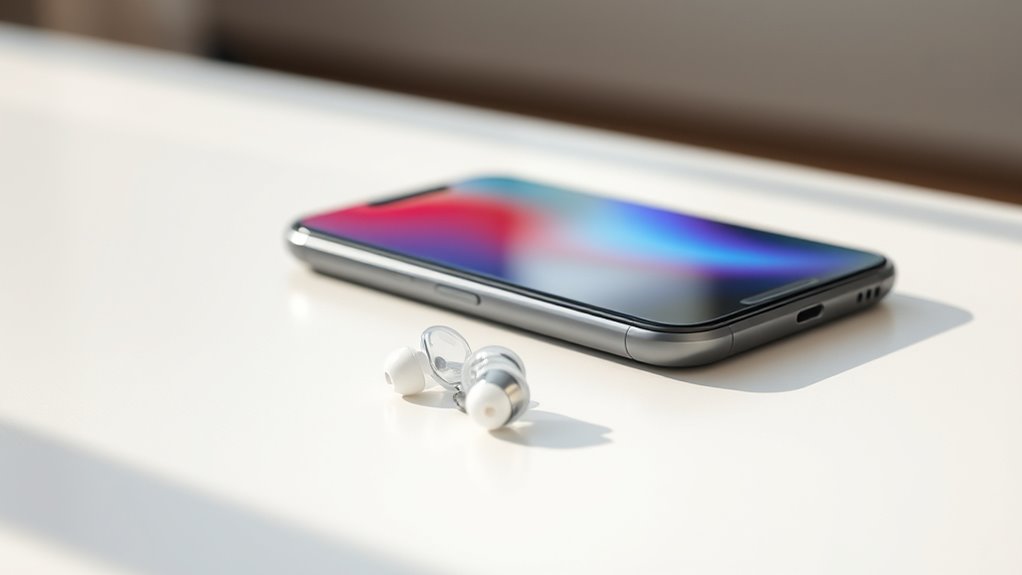
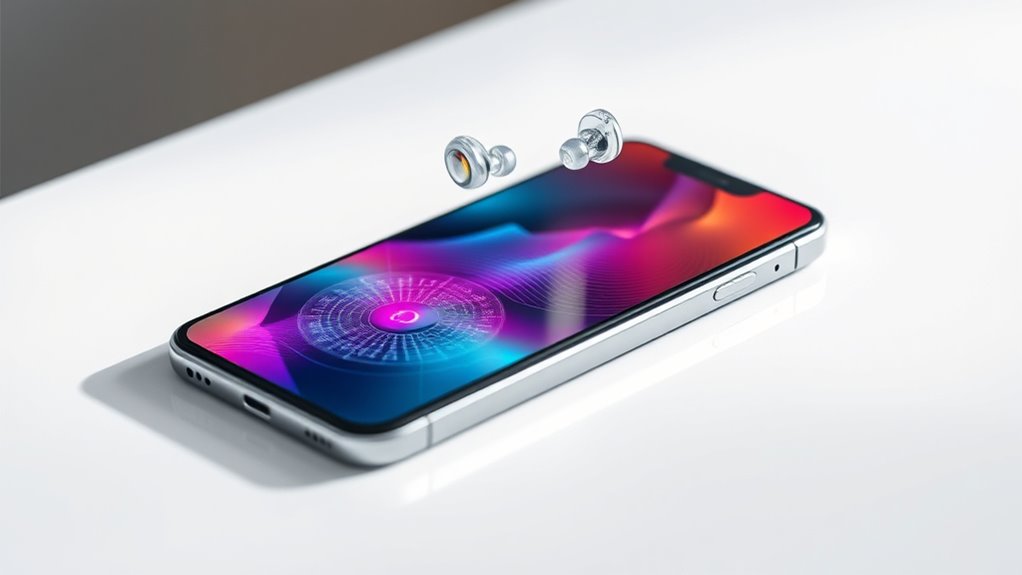
With advances in artificial intelligence, smartphone hearing screening has become more accessible and accurate than ever before. You no longer need to visit a specialist or rely solely on traditional hearing tests to assess your ear health. Instead, you can use an app on your phone to get a reliable snapshot of your hearing ability from the comfort of your home. These AI-powered tools analyze your responses to sound stimuli, providing instant insights into your ear health and flagging potential issues early. The key advantage lies in AI accuracy, which ensures that the results are not only quick but also dependable, helping you identify problems before they worsen.
When you use a smartphone for hearing screening, the AI algorithms adapt to your specific responses, improving the precision of the results. Unlike generic tests, these apps are designed to tailor their assessments based on your hearing profile. They can detect subtle signs of hearing loss or damage that might be overlooked with basic checks. Because AI continuously learns and refines its understanding, the more you use the app, the better its accuracy becomes. This means you get increasingly reliable information about your ear health without needing frequent visits to an audiologist.
Another benefit of AI-driven hearing screening is its ability to incorporate advanced noise-canceling features. Many apps use AI to filter out background noise, ensuring that test sounds are clear and your responses are accurate. This is especially useful if you’re in a noisy environment, as it maintains the integrity of the test and prevents false positives or negatives. Consequently, you can confidently perform screenings in various settings, making ear health monitoring more convenient and less intimidating. Over time, consistent use of these tools can help track changes in your hearing, offering valuable data that can be shared with healthcare providers if needed.
Furthermore, smartphone hearing screening apps often include educational components, guiding you through the process and explaining the results in simple terms. With AI accuracy, you gain not just a score but meaningful insights about your ear health. If the app detects potential issues, it can recommend next steps, such as consulting an audiologist or using hearing aids. This proactive approach empowers you to take control of your ear health, catching problems early before they become more serious. Additionally, understanding how AI improves accuracy can help you appreciate the reliability of these innovative tools. Overall, these innovations are transforming how you monitor your hearing, making it easier, faster, and more precise than traditional methods.
Frequently Asked Questions
How Accurate Is Ai-Based Smartphone Hearing Screening?
AI-based smartphone hearing screening is quite accurate when properly calibrated. It uses AI calibration to adapt to your hearing profile, providing reliable results. However, your data security matters—ensure the app encrypts your data and follows privacy standards. While it’s a convenient tool, it shouldn’t replace professional audiological assessments. Always consult an expert if you suspect hearing issues, and verify that the AI platform prioritizes your data security.
Can This Technology Detect Specific Types of Hearing Loss?
Yes, this technology can help identify specific types of hearing loss by analyzing patterns related to genetic factors and environmental influences. When you use the screening, it detects differences in how your ears process sound, which can indicate whether your hearing loss is sensorineural or conductive. While it provides valuable insights, it’s essential to consult an audiologist for a thorough diagnosis, especially if genetic or environmental factors are involved.
Is the Screening Suitable for All Age Groups?
Imagine a child in a rural area taking a hearing test on a smartphone; this highlights the technology’s age inclusivity and user accessibility. The screening is suitable for all age groups, from children to seniors. Its adaptable design guarantees accurate results across diverse ages, making it a versatile tool. You can confidently rely on it for early detection, regardless of age, improving hearing health for everyone.
What Are Privacy Concerns Related to AI Hearing Tests?
Privacy concerns with AI hearing tests mainly involve data privacy and user consent. You might worry about how your hearing data is stored, shared, or used without your permission. It’s essential that companies obtain your clear user consent before collecting data and guarantee robust data privacy measures. Always read privacy policies carefully, so you understand how your information is protected and who has access to it during and after the screening process.
How Does AI Improve Over Traditional Hearing Screening Methods?
Imagine a clear, sharp echo guiding your steps—AI does this for your hearing. It’s smarter than traditional tests, analyzing your auditory processing with precision, catching subtle issues early. It adapts seamlessly to your needs, ensuring compatibility with hearing aids. This personalized approach makes detection faster and more accurate, helping you hear the world with greater clarity and confidence, much like a trusted guide leading you through life’s vibrant soundscape.
Conclusion
By now, you can see how AI-powered smartphone hearing screenings are a game-changer, making health checks more accessible and convenient. With just a few taps, you could catch hearing issues early, preventing problems from snowballing. This technology puts the power in your hands, turning what once seemed out of reach into a simple, everyday tool. It’s clear that embracing innovation helps you stay ahead—don’t let this opportunity slip through your fingers.