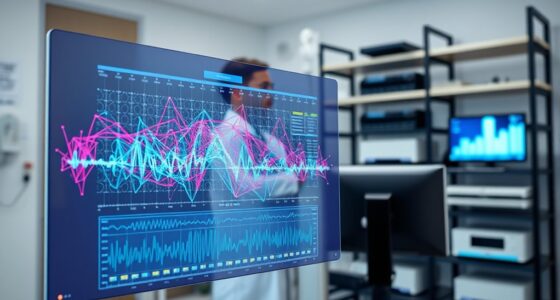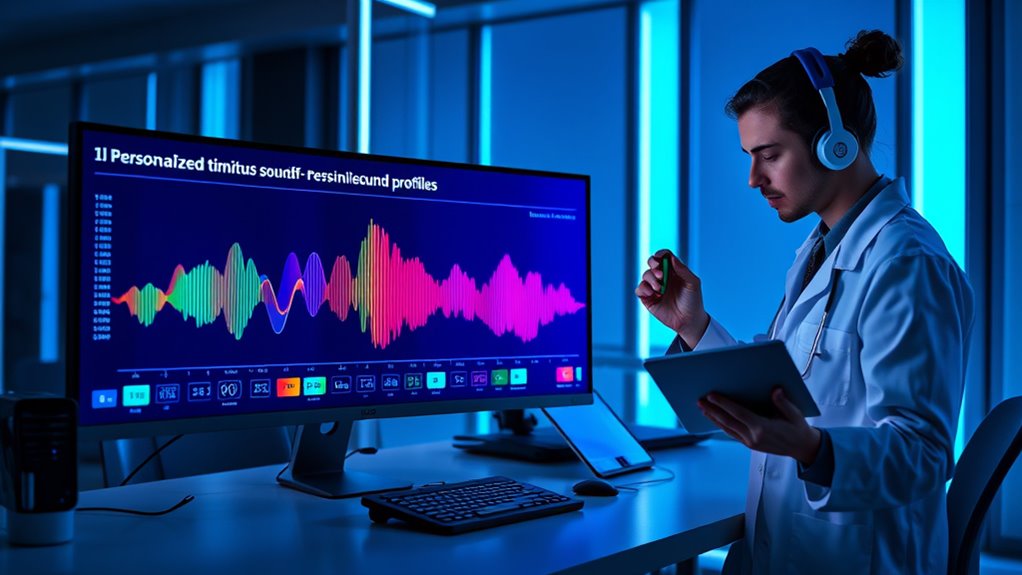

AI for tinnitus sound tailoring personalizes treatment by analyzing your specific tinnitus characteristics, such as pitch and volume. It creates custom sounds aimed at engaging your brain’s neural adaptation process, helping you gradually reduce the perception of ringing or buzzing. This targeted approach adapts over time to your responses, increasing effectiveness. If you keep exploring, you’ll discover how this innovative technology can make a meaningful difference in managing tinnitus.

Get everyday helpers delivered free with Prime
- Fast, free delivery on millions of items
- Prime Video, Amazon Music and more included
- Member-only deals all year
Key Takeaways
- AI analyzes individual tinnitus profiles to create personalized sound therapy targeting specific pitch, volume, and pattern characteristics.
- Neural adaptation mechanisms are leveraged by AI to retrain neural pathways and diminish tinnitus perception over time.
- Continuous AI adjustments optimize sound therapy based on real-time feedback and neural response monitoring.
- Personalized AI-driven treatments outperform generic masking sounds by engaging targeted neural pathways more effectively.
- Data collection and progress tracking enhance treatment precision, leading to improved long-term outcomes for tinnitus sufferers.
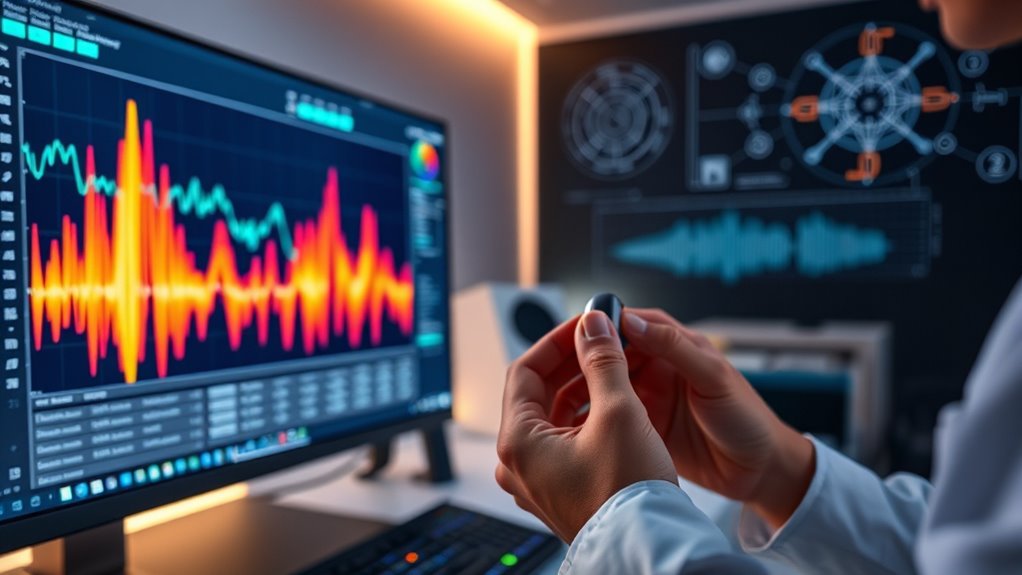
Tinnitus, a condition characterized by ringing or buzzing in the ears, can considerably impact your quality of life. It often feels persistent, making it hard to focus, relax, or sleep. Fortunately, advances in AI are opening new doors for treatment, especially in sound tailoring that targets your unique experience. One key concept behind these innovations is neural adaptation. Your brain continually adjusts to new stimuli, and AI-powered therapies leverage this process to help reduce the perception of tinnitus. By customizing sound therapy based on how your brain responds, these tools aim to retrain your neural pathways and diminish the distress caused by the condition.
When you use AI for tinnitus treatment, you’re not relying on a one-size-fits-all solution. Instead, the technology analyzes your specific tinnitus profile — including the pitch, volume, and pattern of your symptoms — and creates personalized therapy. This tailored approach ensures that the sounds you listen to are *precisely* designed to engage your neural adaptation mechanisms. Over time, this can lead to a decrease in the brain’s response to the tinnitus, making the symptoms less noticeable. The AI continually adjusts the sound therapy based on your feedback and neural responses, creating a dynamic treatment that evolves as your brain adapts.
Personalized therapy is at the heart of these AI solutions. Unlike traditional methods that often offer generic masking sounds, AI-driven sound tailoring considers your individual hearing profile and tinnitus characteristics. This personalization increases the likelihood of success because it directly targets the neural pathways involved in your tinnitus perception. As you engage with the therapy, the AI collects data, monitors your progress, and refines the sound patterns to *maximize* neural adaptation. This iterative process means your treatment becomes more precise and effective over time, offering a more promising outlook than static therapies.
You might find that this approach also reduces the frustration often associated with tinnitus management. Since the therapy is personalized, it feels more relevant and less like a generic fix. The AI’s ability to adapt to your changing neural responses means your treatment stays aligned with your evolving needs. This ongoing customization can lead to better outcomes, helping you regain control over your daily life. With AI-enabled personalized therapy, you’re not just passively listening to sounds; you’re actively engaging in a scientifically driven process designed to retrain your brain and lessen the impact of tinnitus. Additionally, research supporting the psychological benefits of personalized sound therapy suggests that feeling engaged and hopeful can further enhance treatment outcomes.
AI tinnitus sound therapy device
As an affiliate, we earn on qualifying purchases.
As an affiliate, we earn on qualifying purchases.
Frequently Asked Questions
How Does AI Personalize Tinnitus Sound Therapy for Individuals?
AI personalizes tinnitus sound therapy by using advanced personalization algorithms that analyze your specific hearing profile and preferences. It continuously adapts sound customization based on your feedback and real-time responses, ensuring the therapy suits your unique needs. This tailored approach helps reduce tinnitus symptoms more effectively, providing you with a customized experience that evolves as your condition changes, ultimately improving your comfort and quality of life.
What Are the Limitations of AI in Tinnitus Treatment?
Like a ship battling unpredictable storms, AI faces hurdles in tinnitus treatment. Algorithm bias can steer results off course, favoring certain outcomes over others. Hardware constraints act as the vessel’s limited sails, slowing progress and reducing effectiveness. You might find that AI’s ability to adapt is hindered by these issues, making it a helpful guide but not a perfect compass in steering the complex sea of tinnitus therapy.
Can AI Adapt to Changing Tinnitus Symptoms Over Time?
Yes, AI can adapt to changing tinnitus symptoms over time by using symptom tracking and adaptive algorithms. As you log your symptoms regularly, the AI analyzes this data to refine sound therapy tailored to your evolving needs. This continuous learning process helps guarantee that the treatment stays effective, providing personalized relief as your tinnitus fluctuates, making your management more responsive and dynamic.
How Secure Is Patient Data in Ai-Based Tinnitus Solutions?
You wonder if your data stays private in AI tinnitus solutions. Rest assured, your data privacy is a top priority, protected by advanced cybersecurity measures. These systems continually evolve, aiming to outsmart potential breaches. While no system is perfect, developers implement strict protocols and encryption to keep your information secure. So, as you trust AI to tailor your sound therapy, know that your privacy is guarded with cutting-edge technology.
What Future Advancements Are Expected in AI for Tinnitus Management?
In the future, AI will enhance tinnitus management through advanced neural integration and improved auditory processing. You’ll benefit from more personalized sound therapies that adapt in real-time, offering greater relief. Machine learning will analyze your neural signals to tailor treatments uniquely for you, making sound therapy more effective. Expect smarter algorithms that better understand your neural responses, leading to faster, more precise tinnitus relief and improved quality of life.
Conclusion
By now, you can see how AI acts like a skilled tailor, perfectly customizing tinnitus sounds to your unique needs. It’s like having a personal sound designer working just for you, making relief more accessible and effective. With AI’s help, you’re not just hearing better, but reclaiming your peace of mind. Embrace this technology like a trusted friend—ready to transform your journey from struggle to serenity, one tailored sound at a time.
Halloween Picks
halloween
As an affiliate, we earn on qualifying purchases.