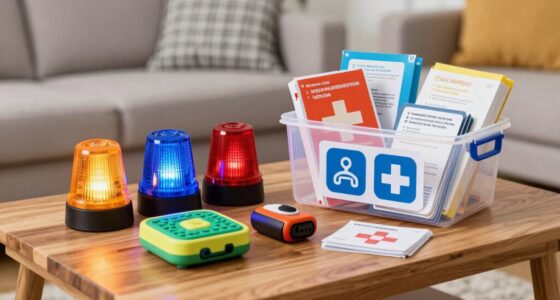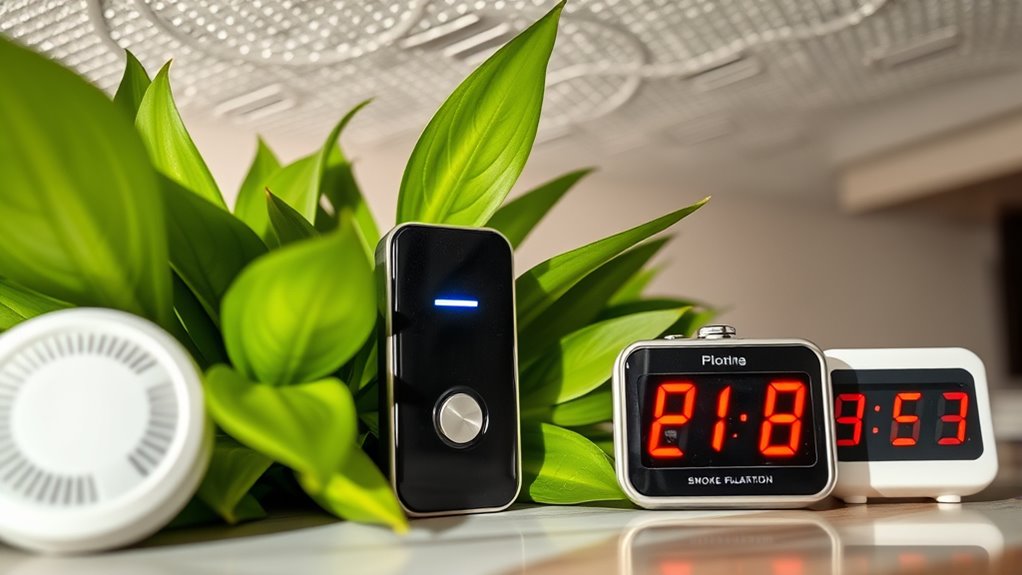

Home alert systems with wireless doorbells, smoke alarms, and timers keep your home safe and convenient. They alert you instantly about visitors, emergencies, or home activity, even when you’re away. Wireless connections mean easy setup and reliable control, while battery backups guarantee they work during power outages. These smart systems improve security, efficiency, and peace of mind. Continue exploring to discover how integrating these devices can make your home safer and smarter.
Key Takeaways
- Wireless doorbells with live video and two-way audio enhance visitor monitoring and communication remotely.
- Smart smoke alarms interconnected and alerting mobile devices improve home safety and early detection.
- Timers enable remote control of appliances and lighting, boosting security and energy efficiency.
- Battery backups in devices ensure continuous operation during power outages.
- Integrated wireless systems provide real-time alerts, remote management, and reliable protection for homes.
Are you looking for a dependable way to safeguard your home and loved ones? Home alert systems like doorbells, smoke alarms, and timers are essential tools that enhance safety and convenience. Modern systems often feature wireless connectivity, allowing you to monitor and control them remotely through your smartphone or other devices. This means you can receive instant alerts if something unusual happens, whether you’re at work or on vacation. Wireless connectivity also simplifies installation since you don’t need to run complicated wiring through your walls. Plus, as technology advances, many alert systems now include battery backup, ensuring they continue functioning even during power outages. This feature is critical because emergencies rarely happen when it’s convenient, and a power failure shouldn’t leave your home vulnerable.
Home alert systems with wireless connectivity and battery backup keep your family safe and connected during power outages.
When it comes to doorbells, wireless models make it easy to keep an eye on visitors without rushing to the door. You can see who’s there through a live video feed on your phone, talk to guests remotely, and even customize alerts for specific visitors. Many wireless doorbells connect seamlessly to your Wi-Fi network, providing real-time updates no matter where you are. With battery backup options, you don’t have to worry if your home experiences a blackout; your doorbell will still alert you to visitors or package deliveries, maintaining security and convenience.
Smoke alarms are another essential component of a home alert system. Modern wireless smoke alarms can communicate with each other and send alerts directly to your mobile device if smoke or carbon monoxide is detected. This interconnected setup ensures that if one alarm detects danger, all alarms will sound, providing a thorough warning system. Many models also come with battery backup, so even if the power goes out, you’ll still be alerted to potential fires or leaks. This dual power source guarantees ongoing protection, which is especially important in emergencies when you need it most. Additionally, high contrast ratios in some advanced models make the detection of smoke or unusual activity more reliable, further enhancing safety.
Timers add another layer of safety and efficiency. You can set timers for various appliances or lighting, helping you simulate occupancy when you’re away, deterring intruders. Wireless timers can be controlled remotely, giving you the flexibility to adjust settings from anywhere, and many include battery backup to keep functioning during outages. This ensures your home remains secure and energy-efficient, even during unforeseen disruptions.
In essence, integrating wireless connectivity with battery backup in your home alert systems provides peace of mind. You get real-time, remote control and continuous operation during power failures, making your home safer and smarter. These features work together to keep you connected and protected, no matter the circumstances.
Frequently Asked Questions
How Do I Choose the Best Home Alert System for My Needs?
To choose the best home alert system, consider your specific needs and how well it integrates with your smart home setup. Look for systems with smart integration features that connect seamlessly with your devices. Also, keep your budget considerations in mind, balancing advanced features with affordability. Research different options, read reviews, and compare prices to find a system that offers reliable alerts and fits your lifestyle.
Are Wireless Alert Systems More Secure Than Wired Ones?
Wireless wonders aren’t necessarily safer than wired options. While wireless systems offer convenience, they face vulnerabilities like hacking and signal interference. Wired reliability, on the other hand, provides a sturdier, more secure solution with fewer vulnerabilities. You should consider your specific needs—if you prioritize security, wired systems tend to be more trustworthy. But for flexibility and ease, wireless can be a good choice, just with extra security measures.
What Is the Average Lifespan of a Home Smoke Alarm?
You should expect your home smoke alarm to last about 8-10 years. During this time, you need to regularly replace the batteries and perform alarm maintenance to guarantee it functions correctly. After about a decade, the sensor may become less reliable, so it’s best to replace the whole unit. Staying proactive with battery replacement and alarms maintenance helps keep you safe and ensures your smoke alarm remains effective.
Can I Install a Home Alert System Myself or Need Professional Help?
You can definitely do a DIY installation if you’re comfortable with basic tools and follow the instructions carefully. Many home alert systems are designed for easy setup, making it a satisfying project. However, for complex systems or if you’re unsure about wiring or safety, professional assistance is a wise choice. This ensures everything is correctly installed and functioning properly, giving you peace of mind and safety at home.
How Often Should I Test or Replace My Doorbell and Alarm Batteries?
You should test your alarm batteries at least once a month to guarantee proper functioning, and replace them annually or if you notice any warning signals like weak sounds or low battery alerts. For doorbells, check the batteries every six months and replace them if they’re weak or dead. Regular battery maintenance helps keep your alert systems reliable, so make it a routine to maintain and test them often.
Conclusion
Home alert systems like doorbells, smoke alarms, and timers keep you safer and more connected. Did you know that homes with working smoke alarms reduce fire-related deaths by 50%? Installing and maintaining these devices is a simple step that can make a big difference in protecting your loved ones. Stay vigilant, keep your systems updated, and enjoy peace of mind knowing you’re doing everything you can to keep your home safe.