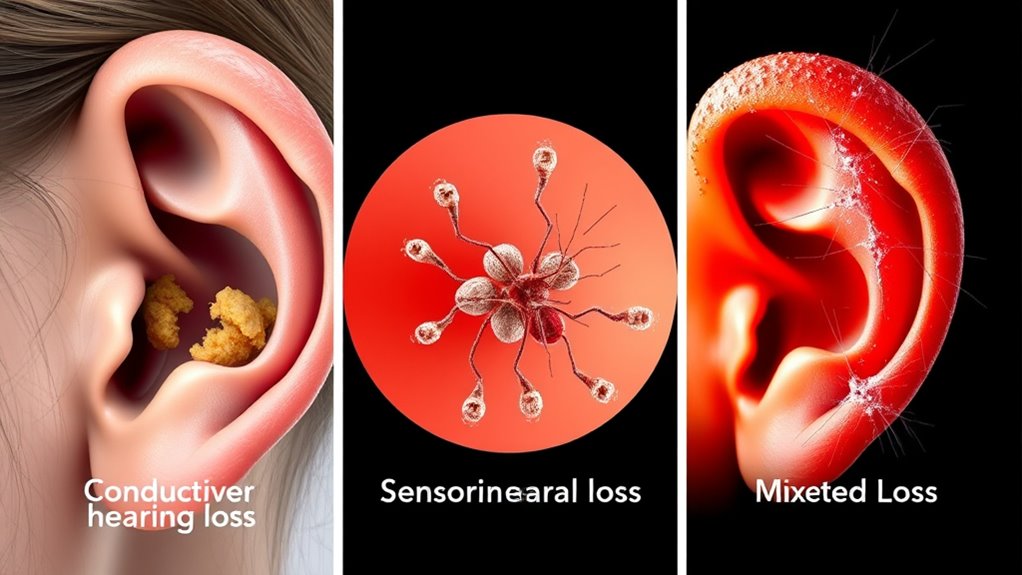

There are three main types of hearing loss that you should know about. Conductive loss happens when something blocks or damages the outer or middle ear, making sound harder to reach the inner ear. Sensorineural loss results from damage to the inner ear or auditory nerve, often from aging or noise exposure. Mixed hearing loss combines both issues. Understanding these types can help you find the right treatment; stay tuned to learn more about each one.
Key Takeaways
- Conductive hearing loss occurs when sound cannot effectively reach the inner ear due to blockages or damage in the outer or middle ear.
- Sensorineural hearing loss results from damage to the inner ear’s hair cells or the auditory nerve, affecting sound processing.
- Mixed hearing loss combines elements of both conductive and sensorineural types, involving issues in multiple ear structures.
- Conductive loss is often treatable with procedures like earwax removal, medication, or surgery, while sensorineural loss typically requires amplification devices.
- Accurate diagnosis of the type of hearing loss is essential for effective treatment and management strategies.
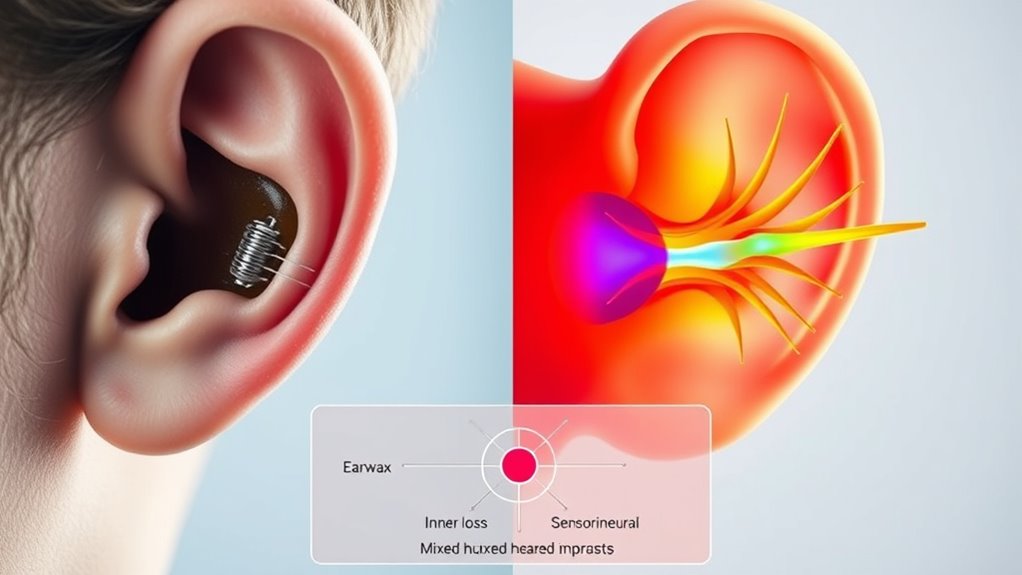
Hearing loss can affect anyone at any age, and understanding the different types can help you better recognize and address these issues. The main categories—conductive, sensorineural, and mixed—each impact your hearing differently, and knowing the distinctions can guide you toward the right treatment. To grasp these differences, it helps to understand basic ear anatomy, including the outer ear, middle ear, and inner ear. Your outer ear collects sound waves and funnels them inward; the middle ear contains small bones that transmit vibrations; and the inner ear converts these vibrations into electrical signals sent to your brain. Depending on where the problem occurs within this system, your hearing loss will fall into one of these categories.
Conductive hearing loss happens when sound can’t effectively reach the inner ear. This often results from blockages or damage in the outer or middle ear, such as ear infections, earwax buildup, or abnormalities in the ear canal or eardrum. Because the issue is mechanical, it usually affects the way sound travels rather than the sensory cells themselves. You might notice a muffled or dull sound, but your inner ear and auditory nerve remain intact. The good news is that conductive loss often responds well to treatments like earwax removal, medication, or surgical procedures. For some, hearing aids can be effective, especially if amplification helps compensate for the reduced sound transmission caused by these obstructions. Advances in robotics integration are also being explored to assist in surgical interventions for complex cases.
Conductive hearing loss results from blockages or damage in the outer or middle ear affecting sound transmission.
Sensorineural hearing loss, on the other hand, involves damage to the inner ear or the auditory nerve itself. This type is more common and can result from aging, exposure to loud noises, genetic factors, or illnesses that affect the inner ear. The delicate hair cells within the cochlea, a part of your inner ear, are essential for converting sound vibrations into electrical signals. When these hair cells or the nerve pathways are damaged, sound isn’t processed correctly. You might experience difficulty understanding speech, especially in noisy environments, even if sounds seem loud enough. Since sensorineural loss involves the inner ear or nerve pathways, hearing aids are typically the primary treatment. They amplify sounds to make up for the damage, but they can’t restore the lost hair cells or nerve function.
Mixed hearing loss combines elements of both conductive and sensorineural types. This means you might have a blockage or issues in the outer or middle ear alongside inner ear damage. It can result from complex medical conditions or injuries affecting multiple parts of the ear anatomy. Treatment usually involves addressing both components—perhaps medication or surgery for the conductive part and hearing aids for the sensorineural aspect. Recognizing which type you have is essential, as it determines the most effective approach to restoring your hearing. Overall, understanding your ear’s anatomy and how different types of hearing loss affect it can empower you to seek appropriate care and improve your quality of life.

Hamilton CapTel 2400iSPNBT Captioned Telephone, Hearing Impaired Phones, Volume Control with up to 40dB Amplification Gain, Large Touch Screen Display, Wi-Fi Capable, Answering Machine & Speakerphone
Unmatched Accessibility and Convenience: Hamilton CapTel empowers people with hearing loss by transforming everyday calls into clear conversations....
As an affiliate, we earn on qualifying purchases.
Frequently Asked Questions
Can Hearing Loss Be Completely Cured?
Hearing loss can’t always be completely cured, but you can improve your hearing with various options. Hearing aid options are effective for many, especially with sensorineural loss, while speech therapy techniques help you adapt and communicate better. If your hearing loss is conductive, medical treatments or surgery might restore hearing. Consult with a specialist to determine the best approach for your specific situation and maximize your hearing potential.
How Does Age Affect Hearing Loss Types?
As you age, age-related decline can cause your hearing to worsen, especially affecting sensorineural hearing loss. Age and hearing are closely linked because the natural aging process damages tiny hair cells in your inner ear, making it harder to hear high frequencies. While some hearing loss may be inevitable, early detection and treatment can help you manage age-related hearing changes effectively and maintain better communication.
Are Certain Hearing Loss Types Hereditary?
Yes, certain hearing loss types can be hereditary. You might not realize it, but genetic factors often play a role. Inherited conditions such as connexin mutations or otosclerosis can pass from parents to children, increasing your risk. This means your family history could influence your hearing health. Staying aware of these genetic links helps you seek early intervention and manage potential hearing issues before they worsen.
What Are the Latest Treatments for Mixed Hearing Loss?
Recent treatment advancements offer innovative solutions for mixed hearing loss, combining medical and technological options. You might consider advanced hearing aids that adapt to your environment or cochlear implants if necessary. Surgery can also address underlying issues. Stay proactive by consulting specialists to explore personalized options, as ongoing innovations continually improve outcomes. These options aim to restore hearing more effectively, helping you stay connected and engaged with your surroundings.
How Do I Know if My Hearing Loss Is Permanent?
Did you know that about 50% of hearing loss cases are permanent? You can’t always tell if your hearing loss is permanent just by your ear health. To find out, schedule a hearing assessment with an audiologist. They’ll evaluate your ear health and determine if your condition is likely to improve or if it’s permanent. Early diagnosis helps you explore the best treatment options and protect your hearing.

Hamilton CapTel 840i Captioned Telephone, Hearing Impaired Phones, Auto/Assisted Captions & Volume Control up to 40dB, Conventional Button Menu Navigation, Wi-Fi, Answering Machine & Speakerphone
Unmatched Accessibility and Convenience: Hamilton CapTel empowers people with hearing loss by transforming everyday calls into clear conversations....
As an affiliate, we earn on qualifying purchases.
Conclusion
Remember, knowledge is power when it comes to hearing health. By understanding the types of hearing loss—conductive, sensorineural, and mixed—you can recognize early signs and seek help promptly. Don’t wait until it’s too late to act; as they say, “A stitch in time saves nine.” Taking care of your ears now can make all the difference in staying connected and hearing the world around you clearly.
Hamilton CapTel 2400iSPNBT Captioned Telephone, Hearing Impaired Phones, Volume Control with up to 40dB Amplification Gain, Large Touch Screen Display, Wi-Fi Capable, Answering Machine & Speakerphone
Unmatched Accessibility and Convenience: Hamilton CapTel empowers people with hearing loss by transforming everyday calls into clear conversations....
As an affiliate, we earn on qualifying purchases.
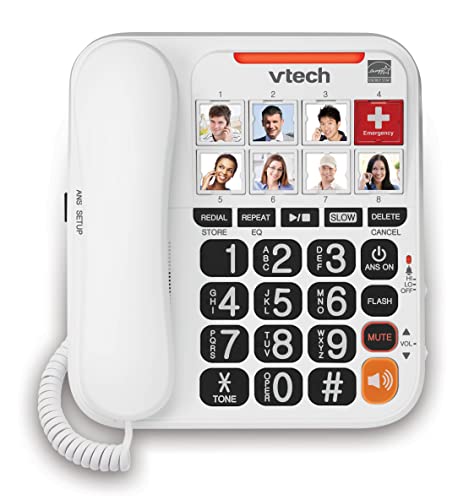
VTECH SN1127 Amplified Corded Answering System. 8 Photo Speed Dial, 90dB Ringer Volume, Big High-Contrast buttons, Audio Booster(+40db), Visual Ringer. Perfect for Seniors, Visually & Hearing Impaired
[8 PHOTO SPEED DIAL Keys] - Program eight frequently dialed phone numbers and attach a photo to each...
As an affiliate, we earn on qualifying purchases.