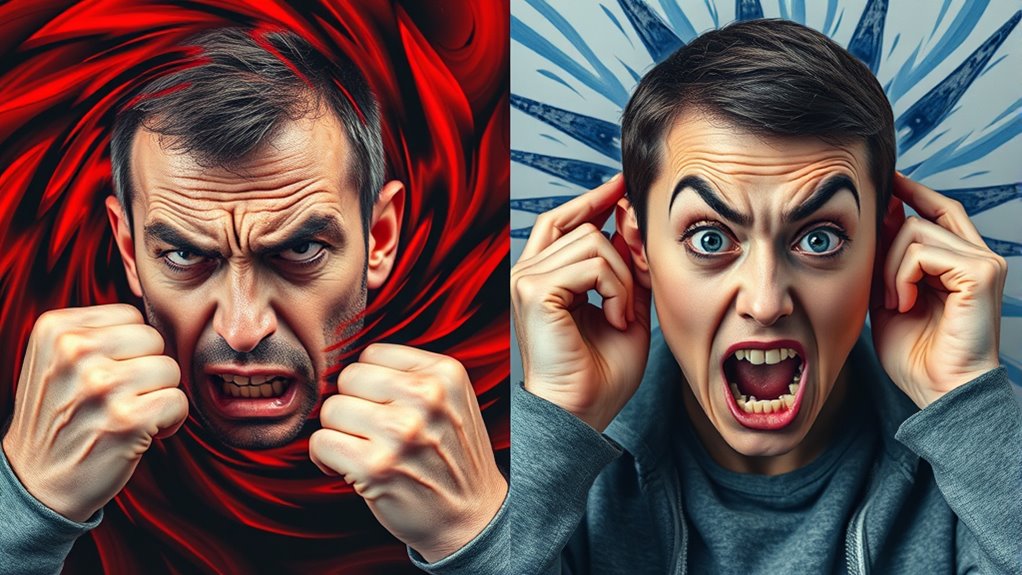
Hyperacusis causes you to perceive everyday sounds as painfully loud or overwhelming due to physical sensitivity or auditory issues, often after loud noise exposure or injury. Misophonia triggers emotional reactions like anger or anxiety to specific sounds such as chewing or tapping, with reactions often tied to personal or social significance. While hyperacusis involves physical perception difficulties, misophonia is rooted in emotional responses. Understanding these differences can help you explore effective ways to manage your experiences; keep exploring to learn more.

Get everyday helpers delivered free with Prime
- Fast, free delivery on millions of items
- Prime Video, Amazon Music and more included
- Member-only deals all year
Key Takeaways
- Hyperacusis involves physical sensitivity to loud sounds, causing discomfort or pain, while misophonia triggers emotional reactions to specific sounds.
- Hyperacusis affects auditory thresholds, making normal sounds seem painfully loud; misophonia elicits strong emotional responses like anger or anxiety.
- Causes of hyperacusis include ear damage and auditory processing issues; misophonia is linked to emotional and neurological factors.
- Management of hyperacusis often involves sound therapy and ear protection; misophonia typically requires cognitive-behavioral therapy.
- Both conditions involve sound sensitivity but differ in physical perception versus emotional response mechanisms.
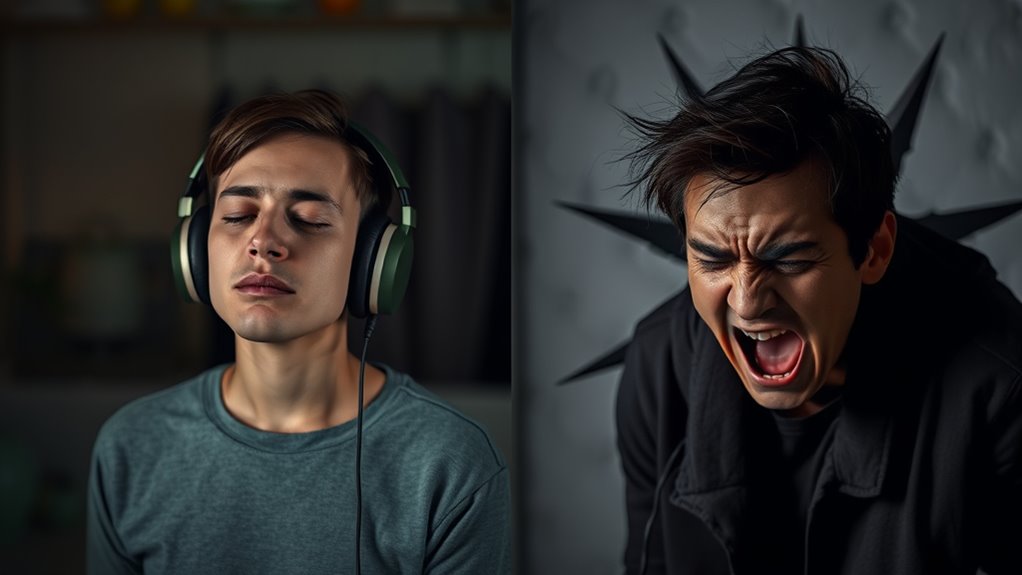
Hyperacusis and misophonia are two conditions that can make everyday sounds feel intolerable, but they differ markedly in their causes and experiences. If you have hyperacusis, you likely experience an abnormal sensitivity to sound, meaning loud noises or certain frequencies feel painfully intense, almost like your ears are under attack. This heightened sound sensitivity isn’t necessarily triggered by emotional responses but is often linked to underlying auditory processing issues, ear damage, or neurological factors. You may notice that ordinary sounds like clattering dishes or sirens seem painfully loud, causing discomfort or even pain. It’s a physical hypersensitivity rooted in how your ears or brain perceive sound intensity, often leading you to avoid noisy environments or carry ear protection. This condition can develop after exposure to loud noise, head injury, or certain medical conditions, but the common thread is that it impacts your auditory threshold, making sounds that others find tolerable feel overwhelming or unbearable. Recognizing the importance of contrast ratio helps in understanding how visual clarity can be affected by image quality, similar to how auditory sensitivity impacts sound perception.
Misophonia, on the other hand, involves a different kind of sound sensitivity—one that’s deeply intertwined with emotional triggers. When you have misophonia, specific sounds can provoke intense emotional reactions such as anger, disgust, anxiety, or irritation. These triggers are often highly individualized, like the sound of someone chewing gum, tapping a pen, or breathing heavily. Unlike hyperacusis, where the problem is rooted in the physical perception of loudness, misophonia is primarily about the emotional response to particular sounds. You might find yourself reacting strongly, even violently, to these triggers, and the reactions can be disproportionate to the sound’s actual volume or intensity. This emotional response can lead to avoidance behaviors, strained relationships, and heightened stress whenever you anticipate encountering the trigger sounds. The triggers often have personal or social significance, and the reactions are rooted in a complex interplay between your auditory system and emotional processing centers in your brain.
While both conditions involve sound sensitivity, their roots and experiences are distinct. Hyperacusis is about the physical perception of sound, often leading to pain and discomfort, driven by auditory processing issues. Misophonia centers on emotional triggers linked to specific sounds, causing emotional distress and behavioral reactions. Recognizing these differences is vital because treatment approaches vary: hyperacusis may require sound therapy or ear protection, whereas misophonia often benefits from cognitive-behavioral therapy (CBT) or sound desensitization techniques. Understanding what’s happening in your ears and brain can help you manage your condition more effectively, improving your quality of life and reducing the distress caused by everyday sounds.
As an affiliate, we earn on qualifying purchases.
Frequently Asked Questions
Can Hyperacusis and Misophonia Occur Together?
Yes, hyperacusis and misophonia can occur together, affecting your sound sensitivity and emotional response. You might find certain loud noises overly painful, while specific sounds trigger strong emotional reactions. These conditions can coexist, making it challenging to distinguish between physical discomfort and emotional distress. Recognizing this overlap helps in managing your reactions better, seeking appropriate treatment, and reducing overall discomfort caused by sound sensitivity.
Are There Specific Treatments Unique to Each Condition?
You’ll find that treatments differ for hyperacusis and misophonia. For hyperacusis, sound therapy helps desensitize your ears, while cognitive strategies teach you to manage your reactions. In misophonia, behavioral therapy targets your emotional responses, and sound therapy may also provide relief. It’s essential to work with a professional who can tailor these approaches to your specific condition, helping you regain control and reduce distress in daily life.
How Do These Conditions Affect Daily Life?
You might find that hyperacusis causes emotional responses to everyday sounds, making you feel anxious or irritated, while misophonia triggers strong emotional reactions to specific noises, leading to sensory overload. These conditions can profoundly disrupt your daily routines, making social interactions challenging and causing you to avoid certain environments. Managing these effects often requires strategies to reduce emotional stress and prevent overwhelming sensory experiences, helping you regain control and comfort in daily life.
Are They Linked to Other Mental Health Issues?
Yes, hyperacusis and misophonia are often linked to mental health issues like anxiety and depression. You might find emotional triggers worsen your reactions, and sensory processing difficulties make sounds feel overwhelming. These conditions can heighten emotional responses, leading to stress and social withdrawal. Recognizing these links can help you seek appropriate support, improve your coping strategies, and manage your symptoms better.
What Is the Typical Age of Onset for Each?
You might notice hyperacusis developing during childhood or early adulthood, often linked to developmental stages or noise exposure. Misophonia typically begins in childhood or adolescence, sometimes triggered by emotional or sensory experiences. The age of onset varies for each condition, but understanding these developmental stages can help you recognize symptoms early. If you suspect either, consulting a healthcare professional can guide you toward effective management and support.
Conclusion
Now, imagine your ears as a delicate garden, each sound a gentle breeze or a sudden storm. With hyperacusis, every noise feels like a thunderclap, overwhelming your peaceful sanctuary. In misophonia, certain sounds become sharp, unwelcome weeds invading your calm. Understanding these differences helps you nurture your inner landscape. By recognizing what disturbs your harmony, you can find ways to restore balance, turning chaos into calm and silence into your sanctuary once more.
Evergreen bestsellers Picks
bestsellers
As an affiliate, we earn on qualifying purchases.