
To communicate effectively as a DeafBlind individual, you can use specialized tools like refreshable Braille displays, tactile smartphones, and Braille note-takers. Policies now support real-time captioning and accessibility standards, making devices more inclusive. Support networks and organizations provide training and resources to help you navigate new technologies and stay informed about updates. Keep exploring these options to enhance your connectivity and independence; there’s plenty more to discover beyond the basics.
Key Takeaways
- Refreshable Braille displays provide real-time text access for DeafBlind individuals during telecommunications.
- Tactile smartphones facilitate messaging, video calls, and social media for seamless communication.
- Captioning services and specialized communication apps support accessible telecommunication options.
- Voice recognition combined with tactile interfaces enables hands-free calling and command control.
- Policy standards promote the integration of accessible features in telecommunication devices and services.
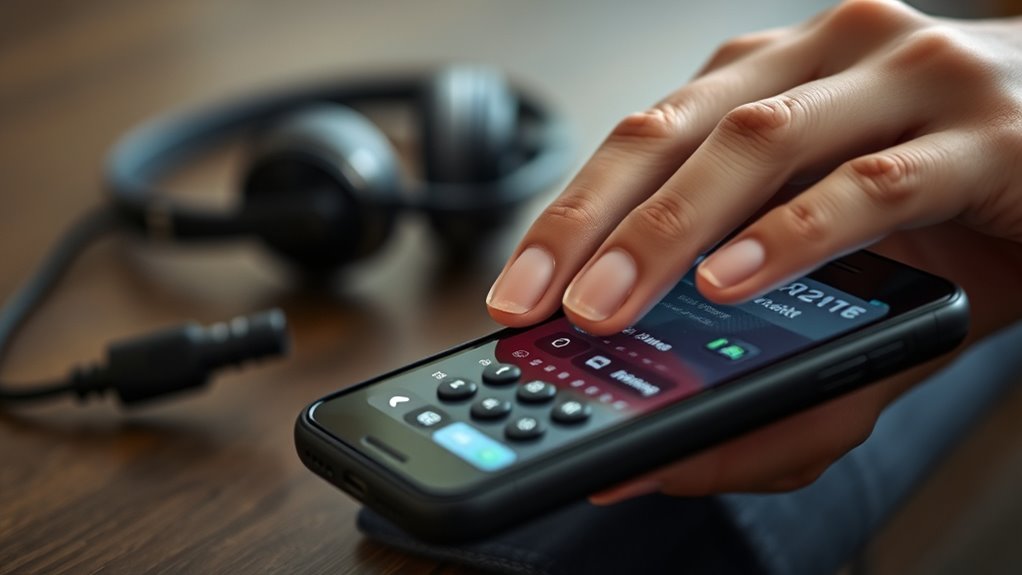
How can people who are DeafBlind stay connected in today’s digital world? The answer lies in the innovative assistive technologies designed specifically for your needs. These tools have revolutionized communication, making it more accessible than ever before. From refreshable Braille displays to specialized smartphones, assistive technologies bridge the gap between you and the digital world, enabling real-time communication with friends, family, and services. Staying informed about policy updates is equally important, as government regulations and funding can influence the availability and development of these essential tools. Regularly checking for new policies ensures you’re aware of any enhancements or changes that could improve your communication options.
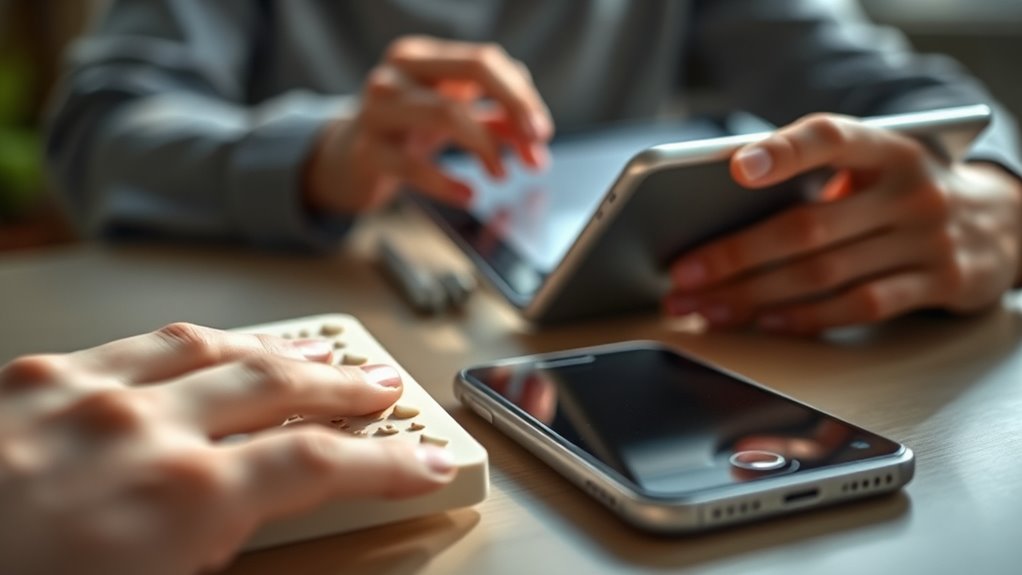
Assistive technologies like Braille note-takers and tactile smartphones are tailored to help you access text messages, emails, social media, and even video calls. Many devices now integrate multiple functions, allowing you to switch seamlessly between different modes of communication. Voice recognition software, combined with tactile input, can facilitate hands-free interaction, making it easier to stay engaged with the digital world without needing to rely solely on sight or hearing. These advancements are often supported by policy updates that promote accessibility standards, funding for assistive tech research, and training programs to help users maximize their devices’ potential. Staying updated on these policies ensures you can access the latest tools and support services.
Braille note-takers and tactile smartphones enhance communication through multi-functionality and voice recognition software, supported by ongoing policy updates.
Moreover, the development of captioning and tactile communication systems has improved considerably thanks to ongoing policy efforts. For example, laws mandating real-time captioning for video calls and public services have made these options more widespread and reliable. These policy updates encourage technology companies to prioritize accessibility features, which directly benefits you by expanding your communication choices. They also foster collaborations between tech developers and advocacy groups, ensuring that new innovations address your specific needs. Additionally, Vetted technology products are increasingly designed with input from users like you, ensuring relevance and usability.
You should also explore community resources and support networks that stay abreast of these policy updates and assistive tech advances. Many organizations offer workshops, training, and updates on new devices or software that can enhance your communication. Participating in these groups can help you discover new solutions, troubleshoot issues, and advocate for policies that further improve your connectivity. Ultimately, by staying informed about assistive technologies and policy updates, you empower yourself to navigate the digital world confidently, maintaining independence and fostering meaningful connections with others. The combination of innovative tools and supportive policies ensures that your ability to communicate remains robust, current, and inclusive.

Compact Easy Braille Labeling Slate and Stylus – The Braille Superstore and Blind in Mind
Our aluminum Labeling Slate writes just one line of 25 cells.
As an affiliate, we earn on qualifying purchases.
As an affiliate, we earn on qualifying purchases.
Frequently Asked Questions
What Emerging Technologies Are Best Suited for Deafblind Communication?
Emerging technologies like haptic feedback devices and sensory substitution systems are ideal for deafblind communication. You can feel subtle vibrations or tactile signals that translate audio or visual information, making interactions more accessible. These tools actively engage your sense of touch, allowing you to interpret messages through tactile stimuli. As these technologies evolve, they provide more intuitive, seamless ways to connect, enhancing independence and communication for deafblind individuals.
How Affordable Are Advanced Telecommunications Options for Deafblind Individuals?
Getting the ball rolling, advanced telecommunications options for deafblind individuals are becoming more affordable. While costs vary, a good cost comparison shows many devices are within reach, especially with funding opportunities like grants and assistance programs. You might find some options pricey at first, but with support, they’re more accessible than ever. Investing in these tools can markedly improve your communication, making the investment well worth it.
Can These Communication Tools Be Customized for Individual Needs?
Yes, these communication tools can be customized for your individual needs. You can explore personalization options and user interface customization to make devices more accessible and user-friendly. Adjust settings like font size, contrast, and tactile feedback, ensuring the technology fits your preferences. By tailoring these features, you enhance your communication experience, making it more efficient and comfortable for your unique requirements.
What Training Is Required to Effectively Use New Deafblind Telecom Devices?
They say practice makes perfect, and that’s true when learning new deafblind telecom devices. You’ll need training that covers device operation and troubleshooting, often provided by manufacturers or specialists. This training helps you understand features, navigation, and accessibility options. Expect hands-on sessions, instructional materials, and ongoing support. Mastering these devices boosts your confidence and independence, making communication smoother and more effective for your unique needs.
Are There Any International Standards for Deafblind Telecommunication Accessibility?
Yes, international standards for deafblind telecommunication accessibility do exist. They emphasize the importance of sign language, tactile feedback, and accessible technology design. These standards aim to guarantee that devices support tactile communication and visual modifications, making communication more effective for deafblind users. By adhering to these guidelines, developers can create more inclusive systems that facilitate smoother, more reliable connections, aligning with global efforts to improve accessibility for deafblind individuals.
tactile smartphone for DeafBlind communication
As an affiliate, we earn on qualifying purchases.
As an affiliate, we earn on qualifying purchases.
Conclusion
In exploring telecommunications options for deafblind communication, you open a world of connection that’s as essential as a heartbeat. These tools act like bridges, seamlessly linking you to loved ones and the world around you. By embracing these technologies, you empower yourself to communicate confidently and independently. Remember, just like a lighthouse guides ships safely home, these options illuminate your path to meaningful interaction and a richer life. Stay connected, stay empowered.
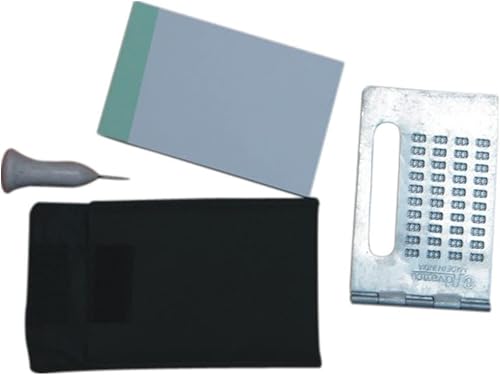
Braille Note-Taker, Easy On-The-Go Small Rectangle Slate with Signature Guide, Stylus, and Note Pad in Cloth Pouch – The Braille Superstore and Blind in Mind
Boasts a business card slate (with stylus) to help you sign your name and write braille notes. Features…
As an affiliate, we earn on qualifying purchases.
As an affiliate, we earn on qualifying purchases.
real-time captioning app for video calls
As an affiliate, we earn on qualifying purchases.
As an affiliate, we earn on qualifying purchases.