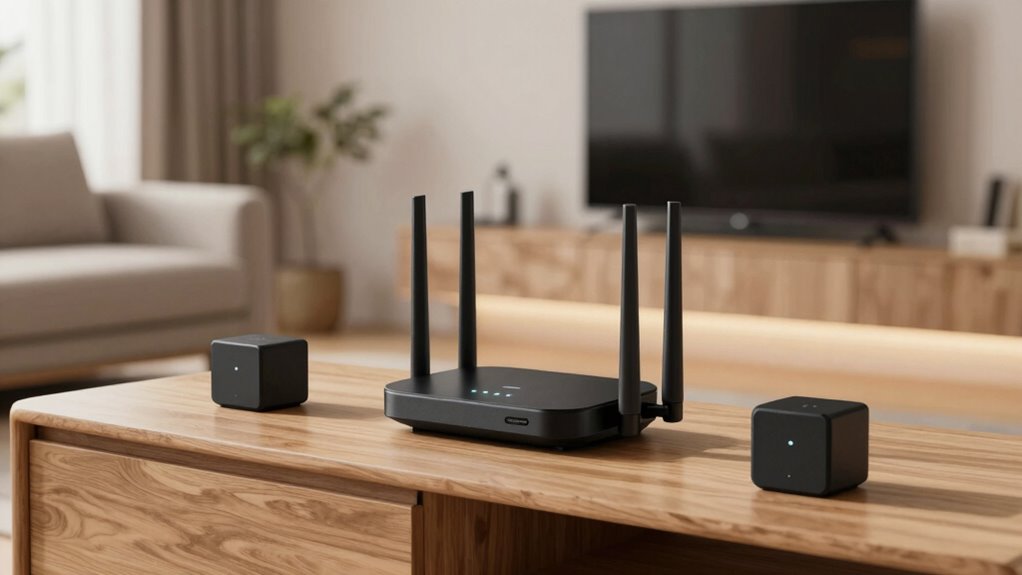

If dropped caption calls are frustrating your home or office, a Wi-Fi mesh system may be the hidden fix. These systems create a seamless network with multiple nodes that improve coverage, stability, and speed. They reduce interference and dead zones, ensuring your devices stay connected for clear calls. By optimizing bandwidth and routing data efficiently, mesh networks can markedly boost call reliability. Keep exploring to find out how setting up a mesh can make a real difference.
Key Takeaways
- Wi-Fi mesh systems provide seamless coverage, reducing dead zones that cause call drops and captioning issues.
- They intelligently route data to enhance signal stability, minimizing disruptions during caption calls.
- Mesh networks prioritize bandwidth for high-demand tasks like video captioning, improving call quality.
- Proper node placement in mesh systems reduces interference and weak signals that lead to dropped calls.
- Upgrading to a mesh system can significantly improve reliability for captioned calls in large or complex homes.

TP-Link Deco X55 AX3000 WiFi 6 Mesh System – Covers up to 6500 Sq.Ft, Replaces Wireless Router and Extender, 3 Gigabit Ports per Unit, Supports Ethernet Backhaul, Deco X55(3-Pack)
Wi-Fi 6 Mesh Wi-Fi – Next-gen Wi-Fi 6 AX3000 whole home mesh system to eliminate weak Wi-Fi for…
As an affiliate, we earn on qualifying purchases.
As an affiliate, we earn on qualifying purchases.
Why Are Your Video Calls Dropping? Understanding Wi-Fi Weaknesses
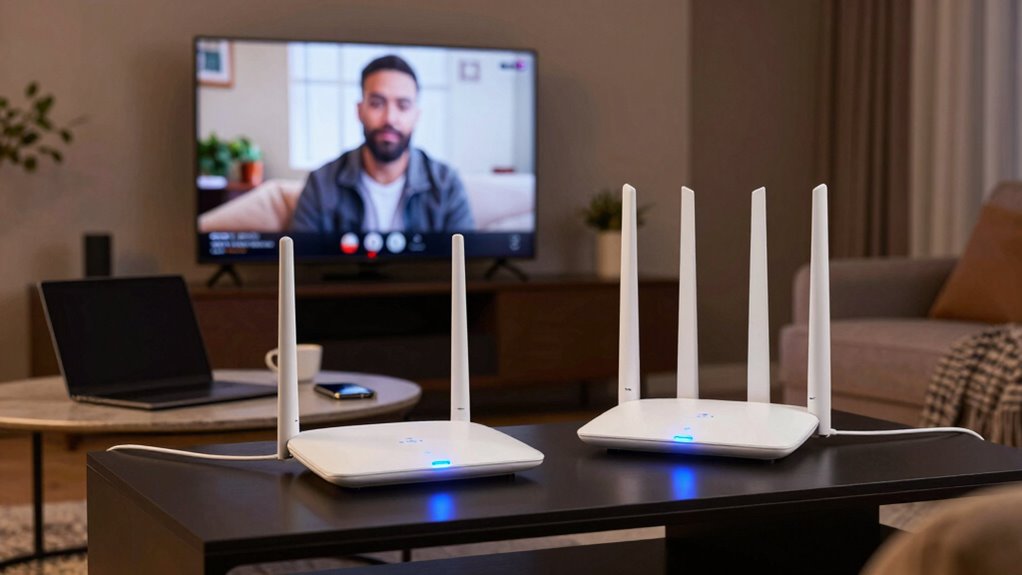
If your video calls keep dropping or lagging, the problem often lies in Wi-Fi weaknesses. One common issue is bandwidth hogging, where devices like streaming services or downloads consume too much bandwidth, leaving little for your call. This overload causes lag and disconnections. Signal interference also plays a big role—devices like microwaves, cordless phones, or neighboring Wi-Fi networks can disrupt your signal, weakening the connection. When your Wi-Fi is congested or interfered with, data struggles to reach your device smoothly, resulting in dropped calls. To improve your experience, identify and limit bandwidth hogs during calls and reduce interference sources. Upgrading your setup with a mesh system can help, but understanding these Wi-Fi weaknesses is the first step toward stable, reliable video calls. Understanding Wi-Fi technology can also help you optimize your network for better performance. Additionally, being aware of router placement and minimizing physical barriers can significantly improve signal strength and stability. Recognizing Wi-Fi congestion as a common cause of dropped calls can lead you to better network management strategies, especially when combined with advanced networking solutions. Moreover, staying informed about Feature Buddies and their impact on network performance can further enhance your connection stability.
TP-Link Deco X55 AX3000 WiFi 6 Mesh System – Covers up to 6500 Sq.Ft, Replaces Wireless Router and Extender, 3 Gigabit Ports per Unit, Supports Ethernet Backhaul, Deco X55(3-Pack)
Wi-Fi 6 Mesh Wi-Fi – Next-gen Wi-Fi 6 AX3000 whole home mesh system to eliminate weak Wi-Fi for…
As an affiliate, we earn on qualifying purchases.
As an affiliate, we earn on qualifying purchases.
What Are Wi-Fi Mesh Systems and How Do They Work?
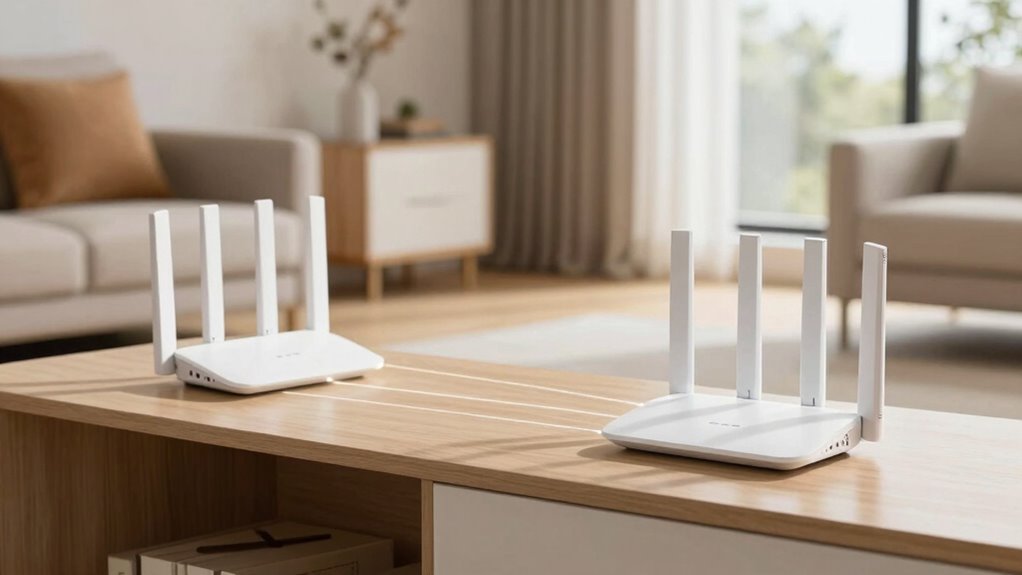
Wi-Fi mesh systems are designed to provide seamless internet coverage throughout your home by using multiple devices called nodes. These nodes work together to create a single, unified network that eliminates dead zones and weak signals, ensuring stable connections for all your devices. When used in a smart home setup, mesh systems help maintain reliable communication between your smart devices, cameras, and voice assistants. They adapt to your home’s layout, dynamically routing data to optimize speed and coverage. Compatibility is key, so choose a mesh system that supports your existing devices and future upgrades. Unlike traditional routers, mesh networks are easy to expand by adding more nodes, making them ideal for homes with complex layouts or increasing device demands.
TP-Link Deco X55 AX3000 WiFi 6 Mesh System – Covers up to 6500 Sq.Ft, Replaces Wireless Router and Extender, 3 Gigabit Ports per Unit, Supports Ethernet Backhaul, Deco X55(3-Pack)
Wi-Fi 6 Mesh Wi-Fi – Next-gen Wi-Fi 6 AX3000 whole home mesh system to eliminate weak Wi-Fi for…
As an affiliate, we earn on qualifying purchases.
As an affiliate, we earn on qualifying purchases.
How Do Mesh Networks Improve Reliability for Video and Caption Calls?

With a mesh network, your connection becomes more stable during video and caption calls. It reduces disruptions caused by weak signals or interference, ensuring clearer communication. Plus, it minimizes latency, so your conversations stay smooth and responsive.
Enhanced Signal Stability
Mesh networks enhance signal stability by intelligently routing data through multiple access points, ensuring a stronger and more consistent connection. This setup helps mitigate interference by dynamically adjusting signals and avoiding congested channels. Additionally, bandwidth allocation is optimized across the network, prioritizing video and caption calls for smoother transmission. To maximize stability, mesh systems:
- Distribute traffic evenly to prevent overloads
- Use interference mitigation techniques to reduce signal disruptions
- Adapt to device placement for ideal coverage
- Continuously monitor and adjust connection quality for reliability
Moreover, understanding the concept of Free Floating can aid in designing flexible and adaptable backyard setups that complement your network’s performance. Incorporating network management tools can further enhance overall stability by allowing users to monitor and optimize their mesh network’s performance in real-time.
Reduced Latency Effects
By efficiently managing data routes and reducing signal delays, mesh networks substantially lower latency, which is vital for maintaining reliable video and caption calls. Latency reduction ensures that data travels quickly between devices, minimizing lag and buffering issues. Mesh systems optimize bandwidth by distributing it evenly across nodes, preventing congestion that can cause delays. This bandwidth optimization allows for smoother, more consistent video streams and caption synchronization, even when multiple devices are connected. Reduced latency means your calls are more responsive, with less delay between speech and caption display. Additionally, network congestion management helps prevent performance drops during peak usage times. Mesh networks also utilize signal routing principles to enhance overall network efficiency, further supporting real-time communication. Moreover, the use of efficient data routing in mesh systems ensures that each device receives the necessary bandwidth without interruption. Dynamic bandwidth allocation further improves the network’s ability to prioritize critical data, enhancing call quality. Overall, mesh networks enhance the reliability of real-time communication by streamlining data flow and maintaining low latency, making them an indispensable solution for anyone relying on clear, uninterrupted video and caption calls.
TP-Link Deco X55 AX3000 WiFi 6 Mesh System – Covers up to 6500 Sq.Ft, Replaces Wireless Router and Extender, 3 Gigabit Ports per Unit, Supports Ethernet Backhaul, Deco X55(3-Pack)
Wi-Fi 6 Mesh Wi-Fi – Next-gen Wi-Fi 6 AX3000 whole home mesh system to eliminate weak Wi-Fi for…
As an affiliate, we earn on qualifying purchases.
As an affiliate, we earn on qualifying purchases.
Do You Need a Mesh System for Better Home Wi-Fi?
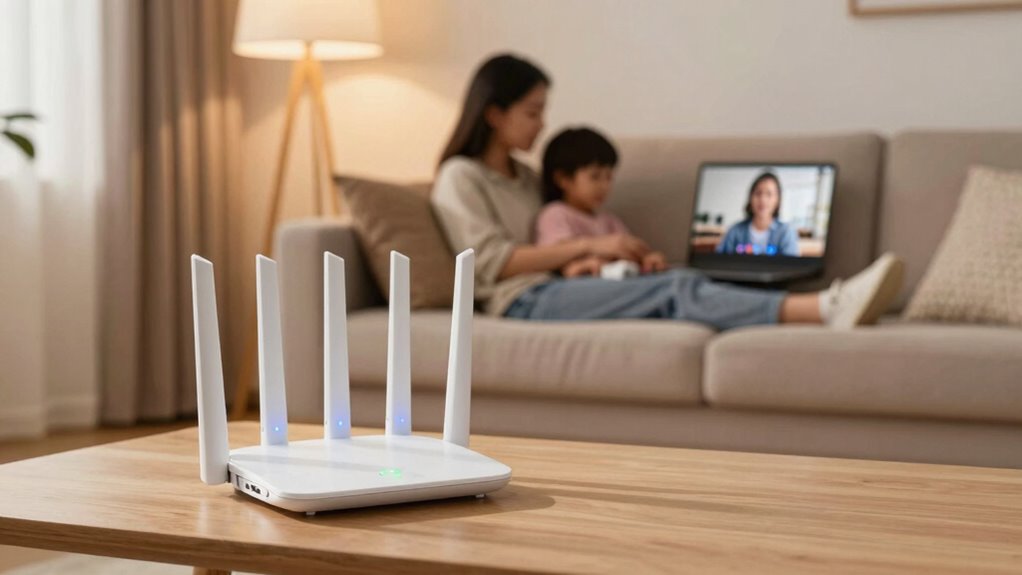
If your Wi-Fi struggles with dead zones or slow connections, a mesh system might be the solution. It can support multiple devices smoothly and makes managing your network easier. Considering these benefits, you’ll want to decide if a mesh setup fits your home’s needs. Discover trusted businesses and services near you to find expert installation and support. Additionally, a mesh system can help optimize your network’s coverage and reliability, especially in larger or multi-story homes. Understanding wave and wind can also help you stay informed about the latest tech solutions for home connectivity. Staying aware of technological advancements can further enhance your home network’s performance and security.
Eliminates Wi-Fi Dead Zones
Dead zones can be frustrating when your Wi-Fi signal drops out in certain parts of your home, making it difficult to stream, work, or browse seamlessly. A mesh system helps eliminate these dead zones by creating a unified network that covers every corner. Here’s how:
- It reduces interference by intelligently selecting channels, improving stability.
- It offers interference mitigation, minimizing disruptions caused by other devices.
- It extends coverage with multiple nodes, ensuring no area is left behind.
- It supports device prioritization, allocating bandwidth where it’s needed most.
- Additionally, smart connectivity features optimize network performance based on your usage patterns. These features often include band steering that automatically directs devices to the best frequency band for optimal performance.
With these features, a mesh system ensures a consistent Wi-Fi experience throughout your home, eliminating dead zones and keeping your connection reliable wherever you are.
Supports Multiple Devices Seamlessly
A mesh system not only eliminates dead zones but also handles multiple devices effortlessly, ensuring everyone in your home stays connected without interruptions. With broad device compatibility, it supports smartphones, tablets, smart home gadgets, and more simultaneously. This prevents slowdowns when several users stream, game, or work online. Plus, advanced network security features keep all devices protected from cyber threats. You won’t have to worry about device conflicts or security gaps, even with many devices connected. The system dynamically manages traffic, prioritizing critical activities and maintaining ideal speed across your network. This seamless support makes a mesh system ideal for busy households or smart homes with numerous connected gadgets. Additionally, network management features help optimize performance for all connected devices. Implementing a mesh network also simplifies home network setup, reducing the need for multiple extenders or complicated wiring. Incorporating modern networking technologies further enhances overall stability and speed, providing a more reliable and future-proof home network.
Simplifies Network Management
Managing a traditional Wi-Fi router can quickly become complicated as your network grows, with multiple devices competing for bandwidth and connection stability. A mesh system simplifies network management by providing unified control over all nodes.
Here’s how it helps:
- It offers centralized management, so you can configure settings, monitor traffic, and update firmware easily.
- Mesh systems improve device compatibility, ensuring all your gadgets connect smoothly without conflicts.
- They enhance network security with unified security protocols, making it easier to protect your data.
- Maintenance becomes straightforward, with automatic updates and seamless expansion as you add more nodes.
This streamlined approach reduces frustration, keeps your network secure, and guarantees all devices perform at their best without constant tinkering.
What Are the Best Features to Look for in a Wi-Fi Mesh System?
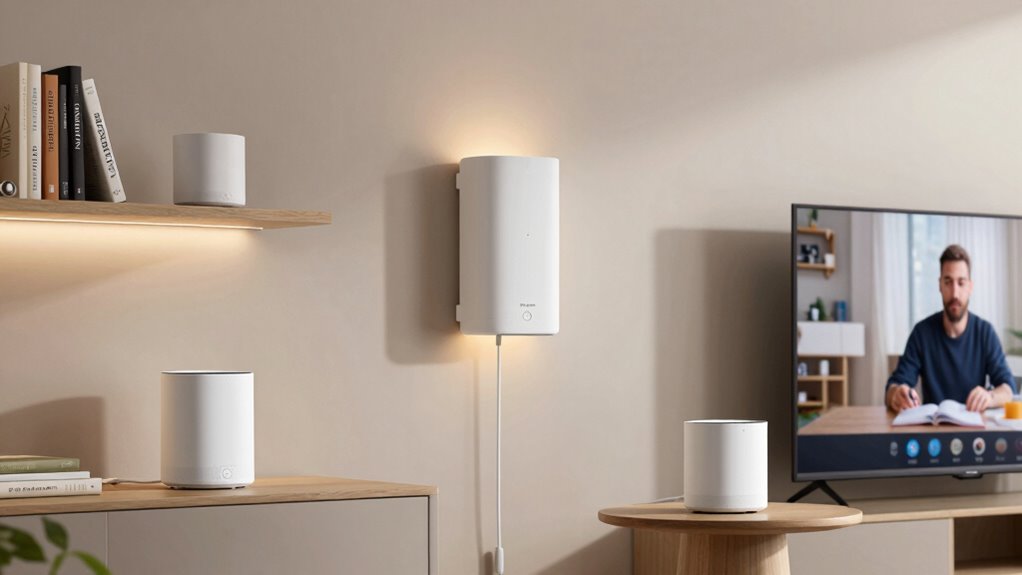
When choosing a Wi-Fi mesh system, focusing on key features can make a significant difference in your home’s internet performance. Look for systems that support a smart home setup, allowing seamless integration with devices like smart thermostats, security cameras, and voice assistants. Prioritize strong network security features, such as WPA3 encryption and automatic firmware updates, to safeguard your data and privacy. Dual-band or tri-band technology ensures better bandwidth management, reducing dead zones and buffering. Easy-to-use mobile apps for setup and management are also valuable, making it simple to monitor your network. Additionally, consider the system’s coverage area and scalability, so your Wi-Fi can grow with your home’s needs. Network reliability is essential for maintaining consistent call quality during captioned calls. Furthermore, selecting a system with robust performance helps ensure smooth connectivity even when multiple devices are active simultaneously. Incorporating quality of service (QoS) features can prioritize bandwidth for critical applications like video calls, which is especially beneficial for captioned calls.
How to Set Up Your Mesh Network for Optimal Performance

To get the best performance from your mesh network, you need to set it up thoughtfully. Focus on positioning your mesh nodes in central, open areas and consider using wired connections when possible. Adjust your router settings to optimize coverage and reduce interference for a seamless Wi-Fi experience.
Position Mesh Nodes Strategically
Strategically positioning your mesh nodes is essential for maximizing your Wi-Fi network’s performance. Proper node placement ensures strong signals and minimizes signal interference. To achieve this, consider these tips:
- Place nodes centrally in each area to ensure even coverage.
- Keep nodes elevated and away from walls or large furniture that can block signals.
- Avoid placing nodes near devices that cause signal interference, like microwaves or cordless phones.
- Maintain distance between nodes to prevent overlap and reduce congestion.
Optimize Router Settings
Once you’ve positioned your mesh nodes effectively, the next step is to fine-tune your router settings to guarantee peak performance. Start by updating your firmware regularly—this ensures your device has the latest security patches and performance improvements. Next, optimize router security by changing default passwords and enabling WPA3 encryption. Adjust your network channels to reduce interference, choosing less congested frequencies. Use the following table to guide your settings:
| Setting | Recommended Action |
|---|---|
| Firmware updates | Enable automatic updates |
| Router security | Use strong, unique passwords |
| Channel selection | Switch to less crowded channels |
These tweaks help prevent dropped calls and improve overall stability, making your Wi-Fi mesh system more reliable.
Use Wired Connections When Possible
Using wired connections whenever possible is one of the most effective ways to enhance your mesh network’s performance. An ethernet setup provides a stable, high-speed link that reduces interference and congestion. To optimize your network, consider these steps:
- Connect your main router directly to the modem using an ethernet cable.
- Use wired connections for your mesh nodes when feasible, ensuring a reliable backbone.
- Prioritize wired connections for devices that demand high bandwidth, like video conferencing or streaming.
- Keep your ethernet setup organized, avoiding tangled cables and ensuring secure connections.
Common Mesh Network Problems That Affect Calls and How to Fix Them
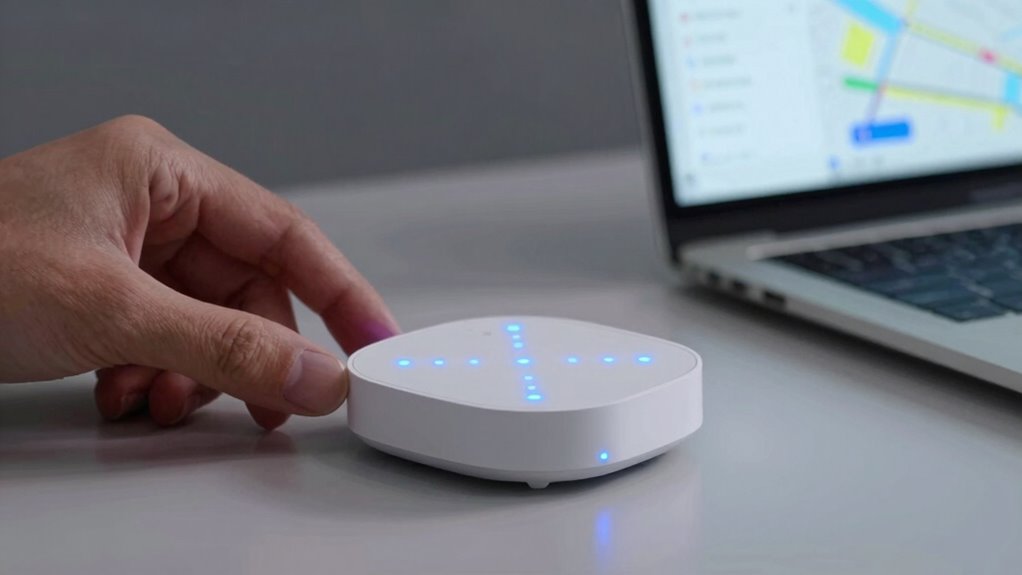
Mesh network issues can disrupt call quality and cause dropped calls, especially if your devices struggle to maintain a stable connection. One common problem is interference, which can come from other wireless devices, thick walls, or electronic equipment. To fix this, focus on interference reduction by placing your mesh nodes away from potential sources of disruption. Another issue is poor bandwidth management, where too many devices compete for the same network resources, slowing down your connection. To improve this, prioritize bandwidth for calls or essential devices using your mesh system’s settings. Regularly updating firmware and ensuring your mesh nodes are best positioned also help maintain a reliable connection. Addressing interference and managing bandwidth are key to keeping your calls clear and uninterrupted.
How Do Mesh Systems Compare to Traditional Wi-Fi Routers?
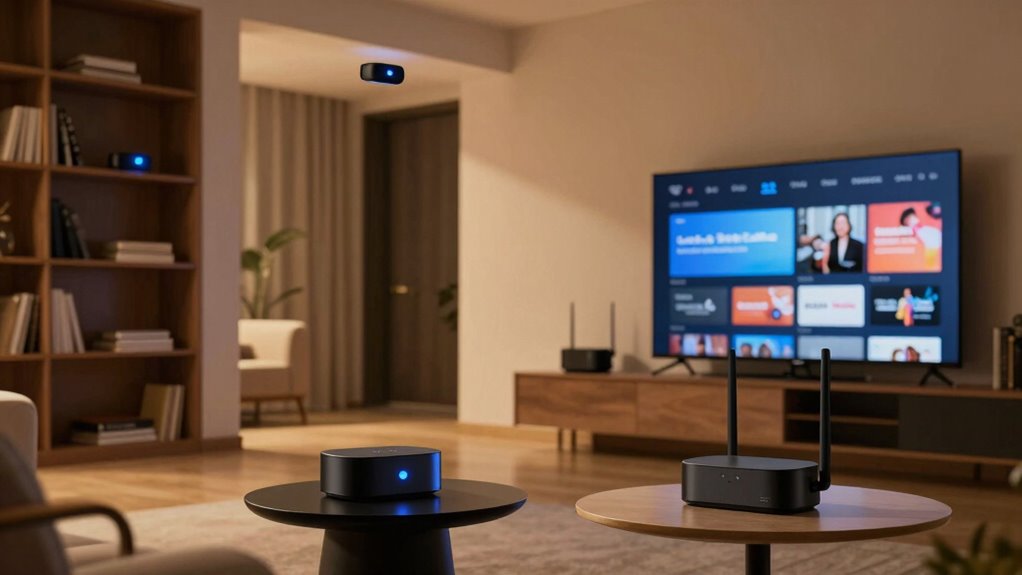
While traditional Wi-Fi routers can provide solid coverage for small spaces, mesh systems offer a more scalable and reliable solution for larger or multi-story homes. They automatically optimize coverage, reducing dead zones caused by poor router placement. Here’s how they compare:
- Mesh systems use multiple nodes to blanket your home, minimizing wireless interference.
- They adapt dynamically to device location, maintaining strong signals everywhere.
- Traditional routers often require strategic placement and may struggle with interference.
- Mesh setups are easier to expand, unlike single-router systems that struggle with coverage gaps.
If you have a big or multi-floor home, mesh systems ensure consistent, high-quality calls by reducing interference and optimizing coverage, unlike traditional routers that depend heavily on placement.
Troubleshooting Wi-Fi Mesh Issues to Keep Your Calls Clear

When your Wi-Fi calls drop or freeze, troubleshooting becomes essential to restore clear communication. Start by checking device compatibility with your mesh system to ensure all devices work seamlessly. Confirm that your mesh security settings aren’t blocking necessary connections. To diagnose issues, review the following table:
| Issue | Solution |
|---|---|
| Weak signal in certain areas | Reposition nodes for better coverage |
| Device incompatibility | Update firmware or replace incompatible devices |
| Security settings blocking calls | Adjust mesh security to allow VoIP traffic |
| Network congestion | Limit bandwidth-heavy activities during calls |
Is a Wi-Fi Mesh System Worth the Investment for Your Home or Business?
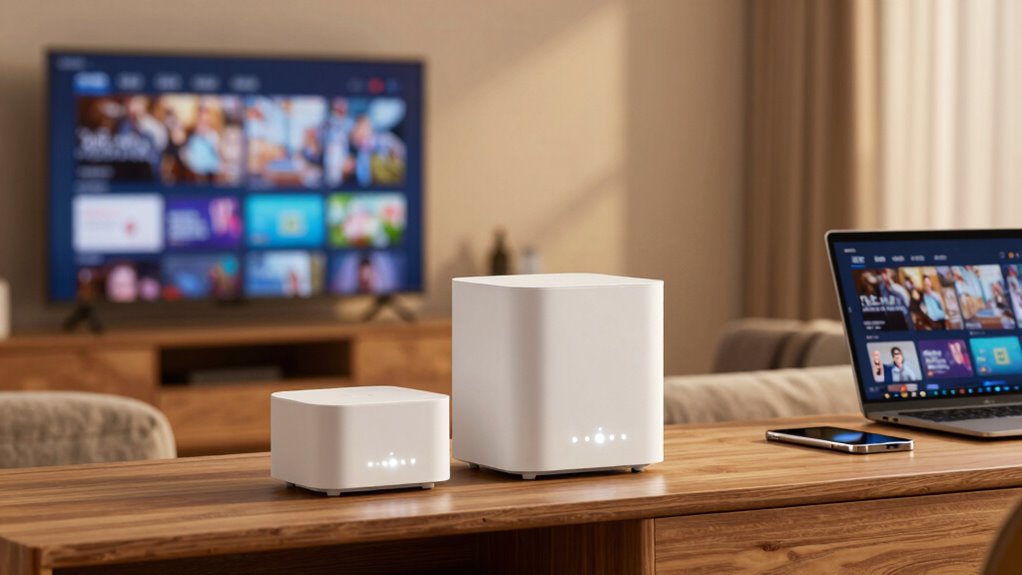
Deciding whether a Wi-Fi mesh system is worth the investment depends on your specific needs and environment. Consider these factors:
- Cost comparison: Although mesh systems can be pricier initially, they often save money long-term by reducing the need for additional equipment and troubleshooting.
- Coverage needs: If your home or business has dead zones or large areas, a mesh system provides seamless coverage.
- Aesthetic design: Modern mesh units boast sleek, unobtrusive designs that blend into your environment, maintaining visual appeal.
- Performance improvements: If you experience frequent dropped calls or slow internet, investing in a mesh system can enhance reliability and connection quality.
Ultimately, if these benefits align with your priorities, a Wi-Fi mesh system is a worthwhile investment.
Frequently Asked Questions
Can Mesh Systems Prioritize Video Caption Calls Over Other Devices?
Yes, with quality prioritization and bandwidth allocation, you can guarantee your mesh system prioritizes video caption calls over other devices. Most mesh systems allow you to set priorities so your calls get the bandwidth they need, reducing interruptions. By configuring these settings, you make sure your caption calls stay clear and connected, even when multiple devices are streaming or downloading. This way, your calls remain smooth and reliable.
How Does a Mesh System Handle Multiple Users During a Call?
Did you know that Wi-Fi mesh systems can support up to 100 devices simultaneously? They handle multiple users during a call by intelligently managing bandwidth allocation, ensuring each user gets enough speed for their needs. When network congestion occurs, mesh systems dynamically prioritize critical tasks like caption calls, reducing lag and dropped connections. This way, everyone stays connected smoothly, even during busy times.
Are There Specific Mesh System Brands Optimized for Captioning Services?
Yes, some mesh systems are optimized for captioning services, especially those with strong security features suitable for smart homes. Look for brands like Netgear Orbi or ASUS ZenWiFi, which offer reliable connections and enhanced security. These systems guarantee your caption calls stay uninterrupted, even with multiple devices connected. Prioritize mesh systems that provide robust security features, guaranteeing your smart home remains secure while supporting high-quality captioning and seamless connectivity.
What’s the Impact of Wall Materials on Mesh Wi-Fi Performance?
Wall interference can dramatically diminish your mesh Wi-Fi performance, like a gust of wind scattering leaves. Material effects, such as concrete or brick, act as barriers that weaken signal strength, causing slower speeds and dropped calls. To maintain a stable connection for captioning services, position your mesh nodes away from thick walls and prioritize open spaces. Understanding wall interference helps you optimize your network and keep communication flowing smoothly.
Can Mesh Networks Automatically Switch Nodes to Improve Call Quality?
Yes, mesh networks automatically perform network handoff through node switching to enhance call quality. As you move around, your device seamlessly connects to the best node, reducing dropped calls and improving stability. This process happens behind the scenes, ensuring uninterrupted communication. By intelligently managing node switching, your mesh system provides consistent, reliable coverage, especially during calls, so you don’t have to manually reconnect or worry about signal drops.
Conclusion
A Wi-Fi mesh system might not appear vital until your calls drop mid-conversation, disrupting your day. Unlike traditional routers, it offers seamless coverage and reliability, making your video and caption calls clearer and more consistent. While the investment might seem optional, it’s the difference between frustrating interruptions and smooth, dependable communication. In a world where connection is everything, a mesh system ensures you stay connected—no matter how many devices are vying for bandwidth.