
OCR in video magnifiers instantly converts printed text into speech, making it easier for you to access written information visually or aurally. This feature scans text in real-time, recognizing fonts and handwriting quickly and accurately. It helps reduce eye strain and boosts independence, especially for those with severe visual impairments. To understand how this technology enhances your experience and the best devices available, keep exploring further.
Key Takeaways
- OCR in video magnifiers scans printed text and converts it into digital data for speech output.
- It enables real-time recognition, allowing users to listen to printed content immediately.
- OCR enhances accessibility by transforming physical text into spoken words, aiding users with visual impairments.
- Advanced algorithms handle various fonts, handwriting, and styles for accurate speech conversion.
- Proper setup and lighting optimize OCR performance, ensuring reliable conversion of print into speech.
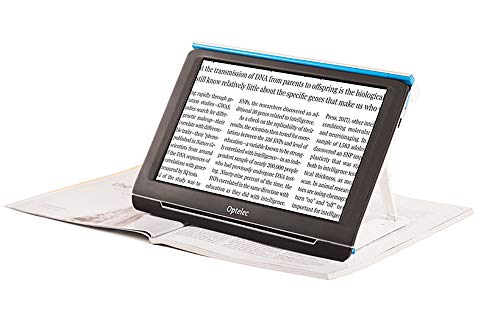
Optelec Compact 10 Video Magnifier with Speech
View and magnify text, objects and photos
As an affiliate, we earn on qualifying purchases.
As an affiliate, we earn on qualifying purchases.
What Is OCR Technology in Video Magnifiers and How Does It Work?

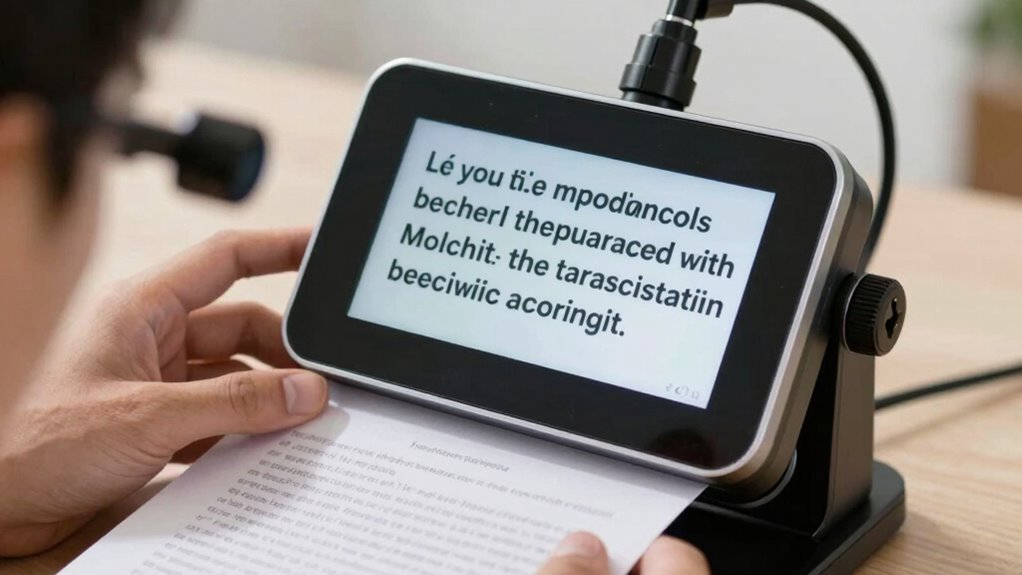
Have you ever wondered how video magnifiers can read text aloud or display it clearly for easier viewing? That’s thanks to OCR technology embedded in these devices. OCR, or optical character recognition, scans the text you see and converts it into digital data that the device can process. It recognizes printed characters quickly and accurately, making reading easier. Many advanced video magnifiers also include handwriting recognition, allowing you to capture and read handwritten notes. Additionally, they support multiple languages, so you can read text in your preferred language without hassle. This combination of features makes OCR a powerful tool, transforming physical text into accessible, spoken, or visually enhanced content. It’s an essential part of modern assistive technology for those with visual impairments. optical character recognition can significantly improve reading efficiency and independence. Incorporating reliable and accurate recognition helps ensure the device functions smoothly and effectively in various conditions. Comfortable workspace design can further enhance the overall experience by reducing eye strain and increasing efficiency during use. Furthermore, advancements in cloud-based processing are increasingly enabling faster and more versatile OCR capabilities, broadening the potential for innovative assistive solutions. Additionally, ongoing improvements in machine learning algorithms are enhancing OCR accuracy even further across diverse fonts and handwriting styles.

5 Inch Low Vision Aids, Electronic Auto Focus Reading Aid Simplified Buttons Digital Video Magnifier for The Visually Impaired, Low Vision, Color Blindness, Amblyopia
🌈【High Power Magnification】This 5.0 inch portable magnifier reading aids provide 2X-32X zoom magnification, the unit has been an…
As an affiliate, we earn on qualifying purchases.
As an affiliate, we earn on qualifying purchases.
How Does OCR Turn Printed Text Into Speech Instantly?
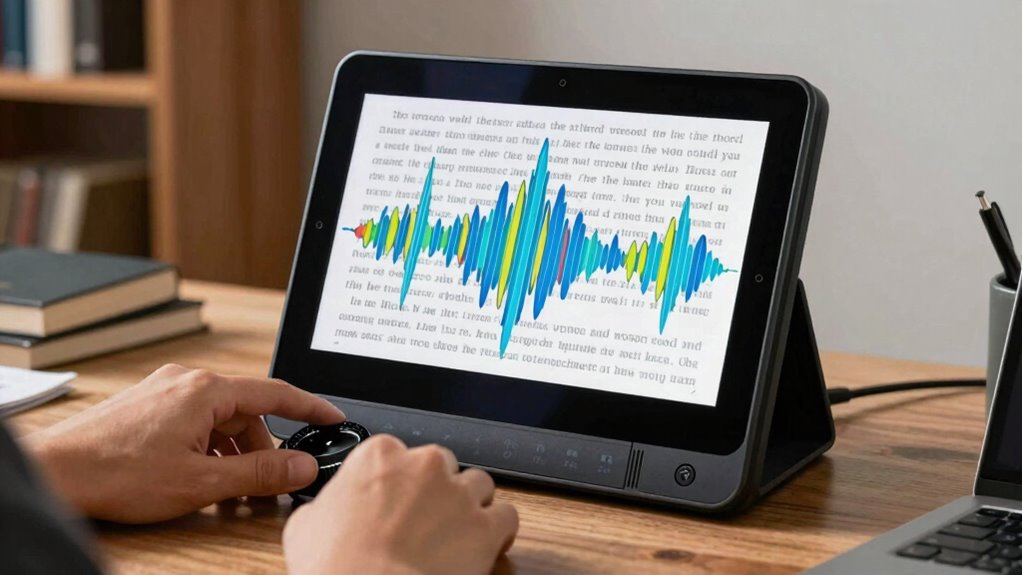
When OCR scans printed text, it quickly detects letters and words through advanced image analysis. This information is then converted into digital data, ready for speech synthesis. Additionally, these systems are continually improved by incorporating character recognition technologies to enhance accuracy and speed. To ensure clarity, the system also accounts for various font styles and sizes, improving its ability to accurately interpret diverse printed materials. Finally, the system transforms that data into spoken words instantly, allowing you to listen rather than read.
Text Detection Process
The text detection process in video magnifiers starts by capturing the live video feed and isolating the area containing printed text. This involves quick image analysis to identify regions with high contrast and sharp edges, which typically indicate text. The device uses algorithms to distinguish text from the background, filtering out irrelevant details like shadows or reflections. Once the potential text area is identified, it applies text detection techniques to outline the characters and lines. This step guarantees that only the relevant portions are processed further. The entire process happens rapidly, enabling the device to focus on the detected text, preparing it for recognition. This seamless image analysis and text detection are vital for turning visual print into speech instantly.
Speech Conversion Mechanics
Once the OCR system identifies and isolates the text, it immediately converts the visual characters into digital data. This data is then processed by a voice synthesis engine, which transforms the text into natural speech. If the device supports multiple languages, it can perform language translation before speech synthesis, allowing you to hear the text in your preferred language. The system uses advanced algorithms to guarantee speech sounds clear and realistic, providing a seamless reading experience. This real-time conversion enables you to instantly hear printed text, making information accessible on the spot. The combination of OCR, voice synthesis, and language translation creates an efficient, user-friendly solution that turns printed words into speech effortlessly.

Eyoyo Digital Magnifier Portable Electronic Video Magnifier Reading Aids 3.5 Inch LCD Screen for Low Vision 2x-25x Zoom Foldable Handle
2X-25X Magnification: 3.5-inch digital magnifier supports 2x, 8x, 16x, and 25x magnification; designed for short-term reading assistance, helping…
As an affiliate, we earn on qualifying purchases.
As an affiliate, we earn on qualifying purchases.
What Are the Benefits of OCR in Video Magnifiers for Visual Impairments?
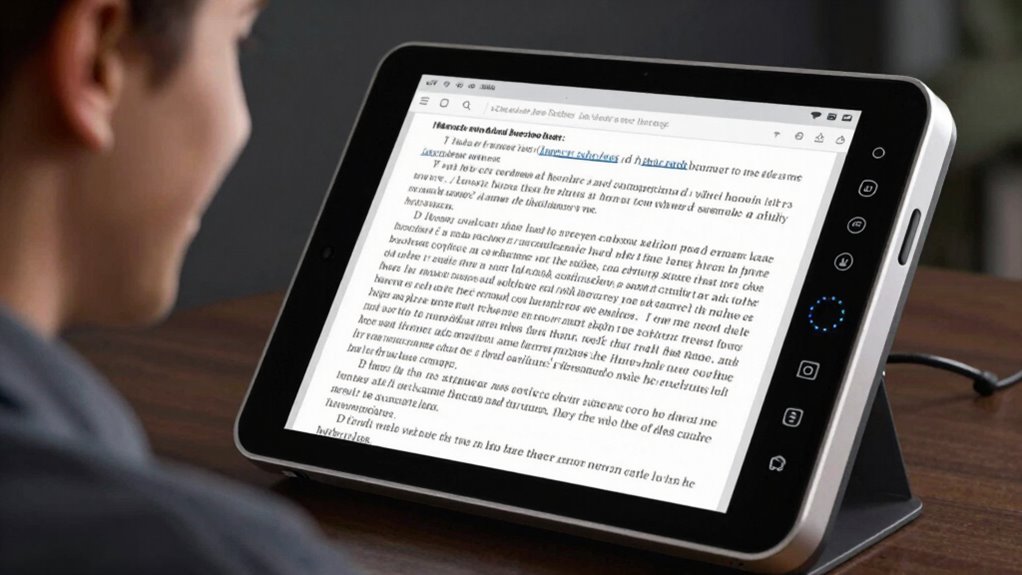
OCR technology in video magnifiers considerably enhances accessibility for individuals with visual impairments by allowing text to be converted into speech or enlarged for easier reading. This reduces eye strain and improves visual comfort, making reading less tiring and more enjoyable. This way, users can enjoy a more comfortable reading experience, especially for lengthy texts. By transforming printed text into speech, OCR minimizes the need to focus on small, detailed print, easing cognitive load and helping you process information more efficiently. It enables quick recognition of text, saving time and reducing frustration. With OCR, you can access a wider range of printed materials without constantly adjusting magnification or straining your eyes. Additionally, integrating power backup systems ensures continuous access to essential devices, even during outages or power interruptions. Incorporating ergonomic design principles in the development of these devices can further enhance user comfort and effectiveness. Furthermore, understanding cloud service vulnerabilities can inform strategies to improve device reliability and security. Implementing regular maintenance schedules can also help maintain optimal device performance and longevity.

Snow 12 Inch Foldable Portable Video Magnifier by Zoomax with OCR for Low Vision & Reading Assistance – HD Display, 19x Magnification, Text-to-Speech, & 20+ Language Support
VERSATILE FOLDING STAND: Enjoy stability and flexibility with the foldable stand of the Zoomax SNOW 12, perfect for…
As an affiliate, we earn on qualifying purchases.
As an affiliate, we earn on qualifying purchases.
What Features Should You Look for in OCR Video Magnifiers?
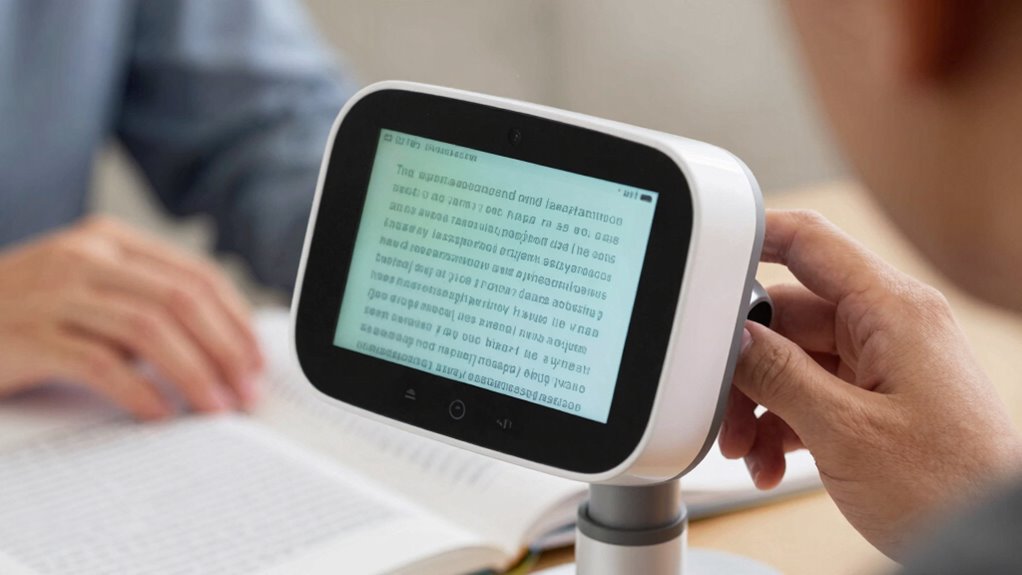
What features should you prioritize when choosing an OCR video magnifier to guarantee it meets your needs? First, look for adjustable font styles to ensure you can customize text for clarity. The ability to change font size and style helps you read comfortably. Next, consider color contrast options; a device that allows you to modify background and text colors will improve readability, especially in varying lighting conditions. High contrast settings make it easier to distinguish characters and reduce eye strain. Additionally, check if the OCR feature is fast and accurate, so you get reliable text-to-speech conversion without delays. A user-friendly interface is also essential for quick adjustments. Prioritizing these features ensures your magnifier will enhance your reading experience and cater to your specific visual needs. Also, proper lighting conditions can significantly influence the effectiveness of OCR technology, so choosing a device with adaptable settings can make a substantial difference. Incorporating ergonomic design can further improve comfort during extended use, especially when combined with adjustable magnification levels for personalized visual support. Furthermore, selecting a device with easy maintenance ensures long-term usability and consistent performance. Additionally, considering compatibility with other assistive devices can enhance overall usability and integration into your existing tech setup.
How Do Popular Video Magnifiers Compare With and Without OCR?
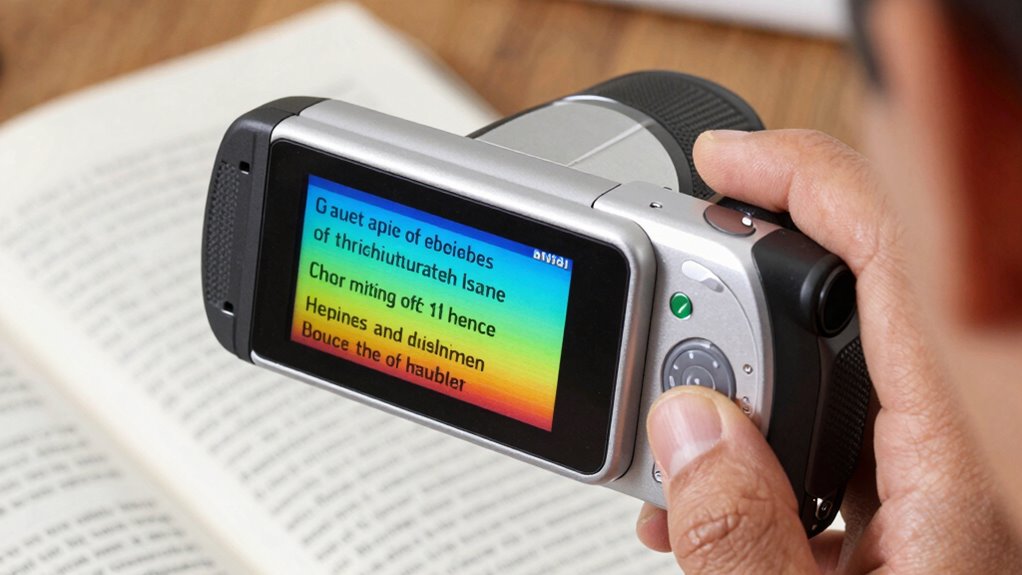
When comparing popular video magnifiers, you’ll notice that those with OCR often boost reading speed substantially. OCR-enabled devices can recognize text more accurately, making reading easier and reducing errors. Without OCR, you might find yourself spending more time deciphering text, especially in complex or cluttered layouts. Additionally, understanding deep-sky imaging techniques can help users appreciate the importance of clarity and precision, similar to how OCR enhances the accuracy of text recognition.
Reading Speed Enhancement
Many popular video magnifiers substantially improve reading speed when they incorporate OCR technology, allowing you to quickly convert images of text into digital, readable formats. This boosts your reading fluency by reducing the time spent scanning and deciphering print. With OCR, you can better focus on comprehension strategies, making it easier to retain information and understand context. Enhanced reading efficiency is achieved as OCR reduces manual efforts required to read printed materials. Without OCR, you often rely solely on magnification, which can slow you down and strain your eyes. Incorporating OCR also minimizes visual fatigue, making prolonged reading sessions more comfortable and sustainable. Additionally, OCR can help support independent living by enabling users to access printed information more easily in everyday situations. The technology also benefits users by providing text-to-speech conversion, which can further assist those with severe visual impairments. The table below compares features that influence reading speed:
| Feature | With OCR | Without OCR |
|---|---|---|
| Reading Fluency | Enhanced due to quick text conversion | Limited, slower scanning |
| Comprehension Strategies | Easier with highlighted, digital text | More effort needed to decode |
| Speed of Access | Faster access to large volumes of text | Slower, manual reading |
| Eye Strain | Reduced with clear digital display | Higher due to prolonged focus |
Text Recognition Accuracy
How accurately do popular video magnifiers recognize printed text with and without OCR technology? Without OCR, recognition relies on visual clarity, often struggling with font consistency and lighting effects. Variations in font styles or sizes can cause misreads, especially if the text isn’t sharp or well-lit. When OCR is integrated, recognition improves considerably, as the software processes the image to identify characters regardless of lighting conditions or font inconsistencies. OCR helps compensate for uneven lighting or shadows that might otherwise distort text. Additionally, image quality plays a crucial role in the effectiveness of OCR, as poor resolution can still hinder accurate recognition. Improving camera resolution can significantly enhance OCR performance and overall text recognition accuracy. While OCR enhances accuracy, it still depends on good image quality. Additionally, understanding how lease terms impact costs can be analogous to recognizing the importance of image quality in OCR — both require clarity for optimal results. Overall, video magnifiers with OCR provide more reliable text recognition, especially in challenging environments, making printed text accessible and ensuring you get the most accurate reading experience possible.
How to Set Up and Use OCR on Your Video Magnifier
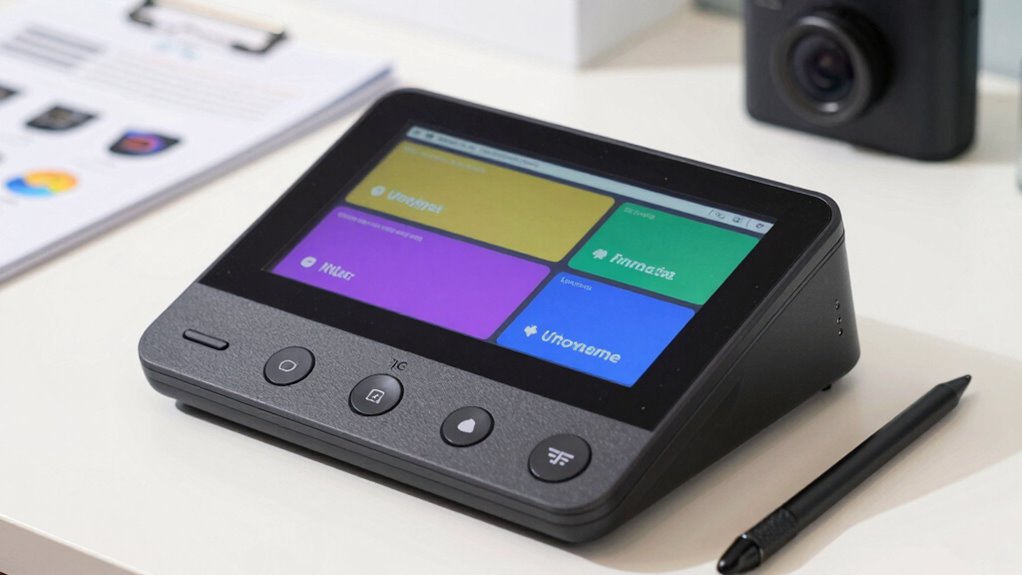
Are you ready to enhance your video magnifier with OCR capabilities? To get started, ensure your device supports OCR and update its firmware if necessary, reflecting assistive tech advancements. Begin by locating the OCR menu, usually found in the device settings or accessibility options. Once there, activate the OCR feature and calibrate your camera for optimal performance. Position the document within the camera’s view, guaranteeing good lighting and clarity. Use the on-screen prompts to capture the text, which your device will process and convert into speech or a digital text display. Practicing these steps will boost your digital literacy and help you make the most of your assistive tech. With a little setup, you’ll unlock the full potential of your video magnifier.
Troubleshooting OCR Accuracy in Video Magnifiers

When OCR accuracy in your video magnifier isn’t meeting expectations, troubleshooting begins with checking the camera’s focus and lighting conditions. Poor focus can blur text, while inadequate lighting causes shadows or glare, both reducing OCR precision. Next, ensure your software is compatible with your device; outdated or incompatible software can hinder performance. Also, explore the user interface; some settings might need adjustment for better recognition.
| Issue | Solution |
|---|---|
| Blurry text | Adjust camera focus |
| Poor lighting | Improve ambient lighting or add light source |
| Software incompatibility | Update or reinstall compatible software |
| User interface settings | Calibrate OCR settings for clarity |
| Text distortion or shadows | Position the magnifier to avoid glare |
What Are the Future Trends in OCR Accessibility Technology?
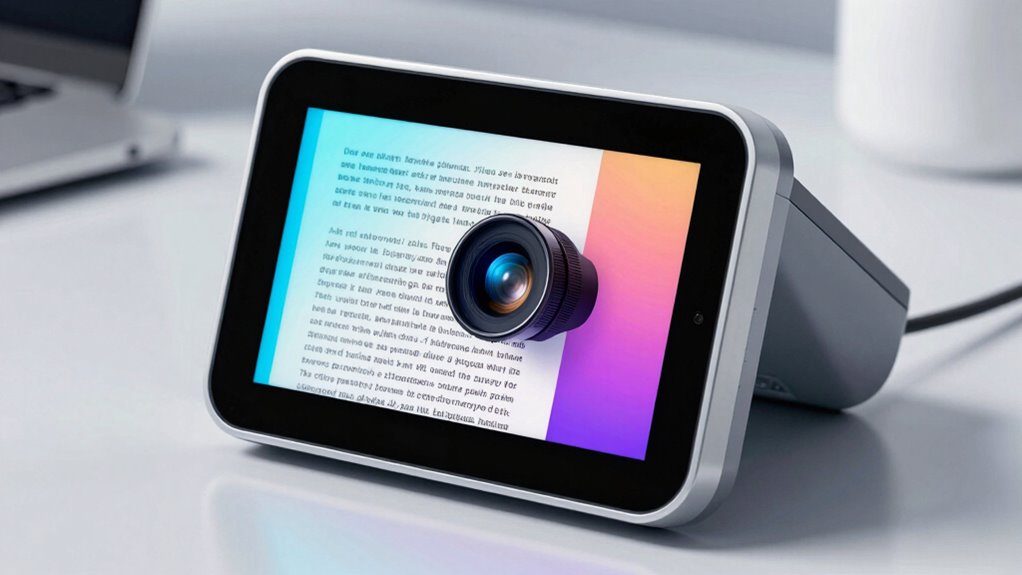
Advancements in OCR technology are shaping the future of accessibility tools, making them more intuitive and effective for users with visual impairments. One exciting trend is the integration of augmented reality, which can overlay digital information directly onto your environment, enhancing object recognition and text comprehension in real-time. Additionally, braille integration is evolving, allowing OCR systems to convert printed text into tactile braille output seamlessly, providing a more inclusive reading experience. These innovations aim to blend visual, auditory, and tactile feedback, enabling you to navigate your surroundings more independently. As OCR continues to develop, expect smarter, more responsive devices that adapt to your needs, breaking down barriers and expanding opportunities for learning, communication, and daily activities.
How OCR in Video Magnifiers Empowers Independence and Learning
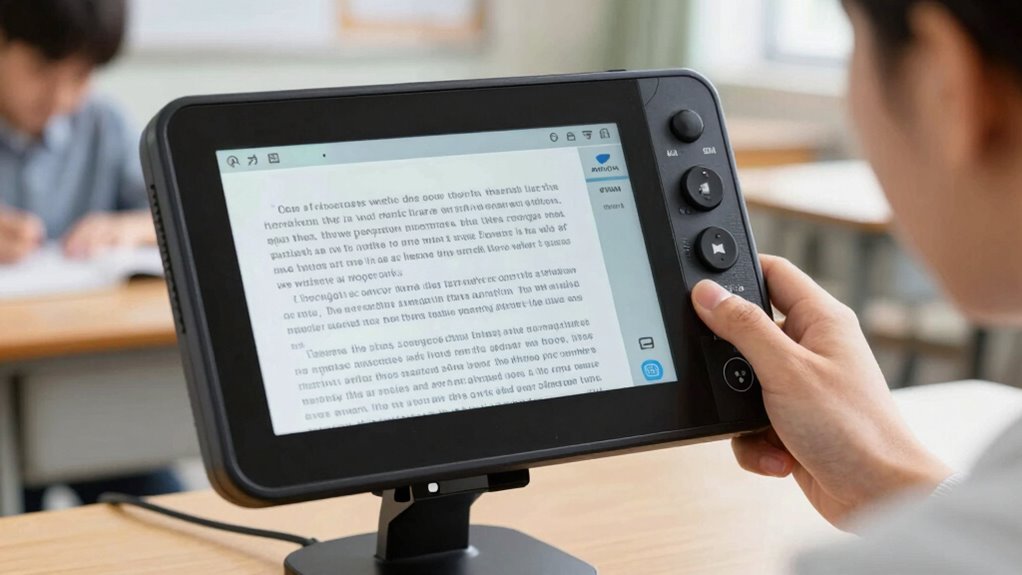
OCR in video magnifiers markedly enhances your independence by transforming printed text into clear, real-time digital images that you can easily read and interpret. This technology boosts your reading comprehension by providing sharp, enlarged text, making it easier to understand printed material. You can also utilize digital annotation features to highlight or note key information without paper. These tools empower you to access books, labels, and documents independently, fostering confidence in daily tasks. Here’s how OCR benefits your learning:
| Feature | Benefit | Application |
|---|---|---|
| Real-time OCR | Immediate text conversion | Reading signs and menus |
| Digital annotation | Custom notes and highlights | Studying and reviewing texts |
| Text enlargement | Clear, comfortable viewing | Reading fine print |
| Voice output | Spoken text for better comprehension | Multisensory learning |
This integration enhances your autonomy and educational growth.
Frequently Asked Questions
Can OCR in Video Magnifiers Recognize Handwriting or Only Printed Text?
You’ll find that OCR in video magnifiers mainly recognizes printed text, not handwriting. While some advanced models offer limited handwriting recognition, their font flexibility is usually restricted, making it less reliable for handwritten notes. For the best results, use printed materials with clear, consistent fonts. If you need to read handwriting regularly, consider specialized devices designed specifically for handwriting recognition, as standard OCR features may not meet your needs.
How Does Lighting Affect OCR Accuracy in Video Magnifiers?
Lighting conditions markedly impact OCR accuracy in video magnifiers. Poor or uneven lighting can cause shadows and glare, making it harder for the camera to capture clear text. You should ensure proper, consistent lighting to improve camera sensitivity and OCR performance. Bright, diffuse light works best, helping the device accurately recognize print. Adjusting your lighting setup can make a noticeable difference in how well the OCR feature works.
Are OCR Features Compatible With All Languages and Fonts?
Like a chameleon adapting to its surroundings, OCR features navigate language limitations and font variability. While many systems support multiple languages, some struggle with complex scripts or less common fonts, making accuracy a delicate dance. You’ll find that compatibility varies, so it is crucial to check if the OCR can handle your specific language or font needs. Ultimately, the technology’s versatility depends on its design and the diversity of its language database.
What Maintenance Is Required for OCR Components in Video Magnifiers?
You need to regularly perform component calibration to guarantee your OCR functions accurately. Keep your software updated to fix bugs, improve recognition, and add new features. Check for calibration issues if the OCR misreads text, and follow manufacturer instructions for calibration procedures. Regular software updates help maintain compatibility with various fonts and languages, ensuring your video magnifier’s OCR stays reliable and effective over time.
How Do Updates Improve OCR Performance Over Time?
Imagine a gentle boost to your daily reading experience. Software updates steadily enhance OCR performance, making text recognition more accurate and reliable. These updates bring performance improvements that help the device adapt to new fonts, lighting conditions, and print styles. By keeping your video magnifier’s software current, you guarantee smoother, more confident reading, allowing you to focus on what truly matters without frustration or delay.
Conclusion
Don’t let concerns about cost or complexity hold you back—OCR in video magnifiers is easier to use and more affordable than ever. It’s a powerful tool that transforms printed text into speech instantly, boosting your independence and confidence. With simple setup and ongoing improvements, you can enjoy seamless access to reading materials. Embrace this technology today and experience the freedom and learning opportunities it brings, no matter your visual ability.