Choosing an Android phone for hearing aid Bluetooth streaming is not just a matter of picking the newest phone. The hearing aids must support the kind of Bluetooth connection you need, and their apps must work with your phone’s Android version. In this lineup, the Motorola Edge 60 is the only smartphone, while the other four products are Bluetooth hearing aids; that distinction matters because a phone alone cannot provide hearing assistance.

Get everyday helpers delivered free with Prime
- Fast, free delivery on millions of items
- Prime Video, Amazon Music and more included
- Member-only deals all year
For buyers who need hearing aids as well as streaming, I’d start with the Vivtone Xpure for its stated Android 11.0+ compatibility and straightforward streaming feature set, or the AuraLink for its IP68 rating and app-based adjustments. The Motorola Edge 60 is the phone choice, but its listing does not confirm hearing-aid compatibility with any particular model. The central tradeoff is between buying a phone with enough current software and connectivity, and choosing hearing aids whose app and Bluetooth functions fit your needs.
I rank these options by usefulness for the specific goal of Android-based hearing aid streaming—not by treating every product as the same kind of device. I also call out gaps in the available compatibility details, since Bluetooth support by itself does not prove that a particular aid will stream calls and media from every Android phone.
Complete the kit


Key Takeaways
- The Motorola Edge 60 is the only phone in this lineup; the four other picks are hearing aids, so they cannot replace a smartphone.
- Vivtone is the clearest Android-oriented hearing-aid option here because its stated compatibility begins at Android 11.0 and it lists call and music streaming.
- AuraLink combines Android and iOS app compatibility with IP68 protection, but its description does not specify a minimum Android version or streaming runtime.
- Yeasound’s Bluetooth streaming is listed for iOS devices, so I would not choose it specifically for Android streaming without confirming Android support with the seller.
- Bluetooth version, app compatibility, and hearing-aid streaming support are separate details; confirm the exact phone-and-aid pairing before buying.
| Vivtone Bluetooth Hearing Aids with APP Control for Precise Fitting, Phone Call & Music Streaming | 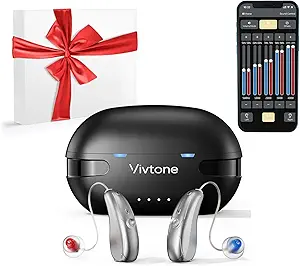 | Best Android-first hearing-aid pick | Compatibility: iOS 12 and Android 11.0+ | Design: Receiver-in-Canal | Connectivity: Bluetooth | VIEW ON AMAZON | See Our Full Breakdown |
| AuraLink Bluetooth Hearing Aids for Seniors Adults, App-Controlled, AI Noise Reduction, Bluetooth 5.4 |  | Best for rugged use and extra sound tools | Hearing loss range: 25–85 dB HL | Bluetooth version: 5.4 | Water and dust resistance: IP68 | VIEW ON AMAZON | See Our Full Breakdown |
| Motorola Edge 60 5G Dual SIM, 12GB RAM, 512GB Storage, Blue |  | Best Android phone in this lineup | Operating system: Android 15 | Display: 6.67 inches | Processor: MediaTek Dimensity 7300 | VIEW ON AMAZON | See Our Full Breakdown |
| Diamond X1 Bluetooth Hearing Aids for Seniors with Smartphone App |  | Best for simple modes and active-day wear | Intended hearing loss: Mild to moderate | Bluetooth version: 5.3 | Battery life: Up to 12 hours per charge | VIEW ON AMAZON | See Our Full Breakdown |
| Yeasound RIC700 Plus Hearing Aids with AI Noise Reduction & Bluetooth |  | Best stated streaming endurance, with an iOS limitation | Streaming platform stated: iOS devices | Frequency response: Up to 8000Hz | Support time: 279 hours | VIEW ON AMAZON | See Our Full Breakdown |
More Details on Our Top Picks
Vivtone Bluetooth Hearing Aids with APP Control for Precise Fitting, Phone Call & Music Streaming
Vivtone earns the strongest hearing-aid position for this topic because its listing gives a specific Android threshold: Android 11.0 or later. It also explicitly identifies phone-call and music streaming, which makes the intended use clearer than the Yeasound listing, where streaming is stated for iOS devices. For an Android owner who needs hearing aids and wants app adjustments, those details give me a more concrete starting point.
The product offers multiple environment modes and customizable settings through its companion app. That can help a buyer adjust sound for different situations without changing phones, though the listing does not explain the precise Bluetooth audio protocol or name tested Android handsets. Its stated battery figures also show an important tradeoff: up to 24 hours of audio use, but only 3 hours of streaming. Someone who streams music or calls for long stretches should treat that shorter streaming figure as more relevant than the general audio runtime.
Compared with AuraLink, Vivtone provides a clearer minimum Android version and more explicit streaming claims, while AuraLink adds IP68 protection and tinnitus masking. The charging case may feel bulky, and the product notes that noisy environments can still be challenging. I’d choose Vivtone when direct Android compatibility information and call/music streaming are the main priorities, but I would check app availability and phone pairing before relying on it for daily calls.
Pros:- Lists compatibility with Android 11.0 and later.
- Explicitly supports phone calls and music streaming.
- App controls and environment modes allow sound customization.
- Lists up to 24 hours of audio use and a 2.5-hour recharge.
Cons:- Streaming runtime is listed as only 3 hours.
- Companion-app control requires a compatible smartphone.
- The charging case may be bulky, and noisy settings can remain difficult.
Best for: Android users on version 11.0 or later who want app adjustment plus stated call and music streaming.
Not ideal for: People who stream audio for many hours each day, need strong performance in very noisy places, or want a compact charging case.
- Compatibility:iOS 12 and Android 11.0+
- Design:Receiver-in-Canal
- Connectivity:Bluetooth
- Streaming:Phone calls and music
- Audio battery life:Up to 24 hours
- Streaming battery life:3 hours
- Recharge time:2.5 hours
- Standby:Up to 1 week
Our verdict“I’d put Vivtone first for Android hearing-aid streaming because its listing is the clearest about Android version support and call and music use.”
AuraLink Bluetooth Hearing Aids for Seniors Adults, App-Controlled, AI Noise Reduction, Bluetooth 5.4
AuraLink is a strong alternative for buyers who care about durability and sound personalization alongside streaming. Its listing says the app works with iOS and Android, and it pairs that with Bluetooth 5.4, AI noise reduction, tinnitus masking, and an IP68 water-and-dust-resistance rating. Compared with Vivtone, it offers more stated environmental protection and an additional tinnitus feature; Vivtone, however, is more specific about its minimum Android version and explicitly names call and music streaming.
That missing detail matters. AuraLink’s broad Android compatibility is encouraging, but the supplied information does not state a minimum operating-system version or spell out whether phone calls and media stream directly from all Android handsets. I would confirm those points before buying if the primary reason for the purchase is streaming. Its UV-sanitizing charging case and RIC design may appeal to people who want extra care and a discreet fit, but the listing gives no battery runtime figures to help estimate how often streaming will require charging.
AuraLink is positioned for mild to moderate hearing loss, so its feature list should not be read as a substitute for a clinical assessment or a guarantee of suitable amplification. The advanced functions may also bring a higher cost, as the product description suggests. I’d choose it over Vivtone when IP68 protection and tinnitus masking are more important, but choose Vivtone when explicit Android version and streaming claims matter more.
Pros:- App compatibility is listed for both iOS and Android.
- IP68 water and dust resistance is stated.
- Includes AI noise reduction and tinnitus masking.
- RIC design and UV-sanitizing charging case add practical features.
Cons:- No minimum Android version is provided in the supplied specifications.
- Streaming support and streaming runtime are not stated as clearly as Vivtone’s.
- Designed for mild to moderate hearing loss, not severe cases.
Best for: Android users seeking app-based personalization, IP68 protection, noise reduction, and tinnitus masking.
Not ideal for: Buyers who need a clearly stated Android minimum, published streaming battery life, or a product intended for severe hearing loss.
- Hearing loss range:25–85 dB HL
- Bluetooth version:5.4
- Water and dust resistance:IP68
- Design:Receiver-in-Canal
- App compatibility:iOS and Android
- Noise processing:AI noise reduction
- Additional feature:Tinnitus masking
- Charging case:UV sanitizing
Our verdict“AuraLink is my pick for a feature-rich, more weather-protected hearing aid, provided the seller confirms direct streaming with your Android phone.”
Motorola Edge 60 5G Dual SIM, 12GB RAM, 512GB Storage, Blue
The Motorola Edge 60 is the only actual Android phone among these five products, so it fills a different role from the hearing aids. It runs Android 15 and has a 6.67-inch display, 5G, 512GB of internal storage, and support for a microSD card up to 1TB. Those details point to a handset with room for hearing-aid apps, media, and everyday multitasking. Its 12GB RAM listing and Dimensity 7300 processor are relevant to general responsiveness, but they do not establish hearing-aid compatibility.
That distinction is the main buying caveat. The product information supplied here does not identify hearing-aid models tested with the Edge 60, describe Bluetooth audio support for hearing aids, or confirm that a particular hearing-aid app works on this phone. Compared with Vivtone, which states Android 11.0+ compatibility, the Motorola is a phone that may be a suitable host but does not make a specific pairing promise. I would check both the aid maker’s compatibility list and the app’s Play Store requirements before choosing it for a streaming setup.
The Edge 60 makes more sense than the hearing aids for someone who already owns compatible hearing aids and needs a new handset. Dual SIM support and expandable storage add flexibility; the large 6.67-inch screen can also be easier for some people to read, though it makes this a sizeable phone rather than a compact pick. Carrier support can depend on network bands and policies, and some MVNO activations may require IMEI registration. Unlike the hearing aids, it provides no hearing correction or amplification on its own.
Pros:- Runs Android 15, giving it a current software base for compatible apps.
- 512GB storage with microSD expansion up to 1TB provides room for apps and media.
- Supports 5G, Nano-SIM, and eSIM.
- Up to 12GB RAM and a Dimensity 7300 processor support general multitasking.
Cons:- The listing does not confirm compatibility with any specific hearing aid.
- Does not provide hearing assistance or amplification by itself.
- Carrier and MVNO activation can depend on network requirements and IMEI registration.
Best for: Someone replacing an Android handset who will pair it with hearing aids confirmed to support the phone and its apps.
Not ideal for: Anyone expecting a phone to act as hearing aids, or anyone who needs confirmed compatibility with a specific hearing-aid model before buying.
- Operating system:Android 15
- Display:6.67 inches
- Processor:MediaTek Dimensity 7300
- RAM:Up to 12GB with RAM Boost
- Internal storage:512GB
- Expandable storage:microSD up to 1TB
- Mobile connectivity:5G
- SIM:Nano-SIM and eSIM
Our verdict“I’d select the Edge 60 as the phone half of a confirmed-compatible setup, not as a stand-alone answer to hearing aid streaming.”
Diamond X1 Bluetooth Hearing Aids for Seniors with Smartphone App
Diamond X1’s appeal is its practical set of listening modes: Indoor, Conversation, Restaurant, and Commute. A buyer who wants a few named presets may find those easier to understand than a long menu of fine adjustments. The product also lists Bluetooth 5.3, app personalization, noise cancellation, and feedback suppression, with an earbud-style form that may look more like a consumer audio device than a traditional aid.
For Android streaming, though, its description leaves a key question open: it says the app is for smartphones but does not specify an Android version or explicitly confirm call and media streaming. That makes it less direct than Vivtone, whose listing names Android 11.0+ and phone-call and music streaming. Diamond X1’s stated battery runtime—up to 12 hours per charge and 36 hours with the case—sounds useful for a full day, but I would still verify how much that changes with continuous streaming.
The IPX5 rating offers resistance to water jets, not full waterproofing, so I would not treat it like AuraLink’s IP68-rated design. It is also aimed at mild to moderate hearing loss, which narrows who should consider it. I’d put Diamond X1 on the shortlist if easy presets and its charging case suit the buyer, but I would ask the maker to confirm Android app availability and direct audio streaming before purchasing for this particular use.
Pros:- Four named sound modes cover common listening environments.
- App personalization, noise cancellation, and feedback suppression are listed.
- Up to 12 hours per charge and 36 hours with the case are stated.
- Different-sized ear domes are included.
Cons:- The supplied details do not specify a minimum Android version or explicitly confirm direct streaming.
- IPX5 is not a fully waterproof rating.
- Designed for mild to moderate hearing loss.
Best for: People with mild to moderate hearing loss who prefer named listening modes and an earbud-style design.
Not ideal for: Buyers who need explicit Android-version or streaming confirmation, full waterproofing, or support for severe hearing loss.
- Intended hearing loss:Mild to moderate
- Bluetooth version:5.3
- Battery life:Up to 12 hours per charge
- With charging case:Up to 36 hours
- Water resistance:IPX5
- Sound modes:Indoor, Conversation, Restaurant, Commute
- App:Smartphone personalization
- Fit accessories:Different-sized ear domes
Our verdict“Diamond X1 is a straightforward preset-focused option, but I would confirm Android streaming support before ranking it ahead of Vivtone.”
Yeasound RIC700 Plus Hearing Aids with AI Noise Reduction & Bluetooth
Yeasound stands out for unusually detailed runtime claims: 279 hours of support and 162 hours of streaming are listed. If those figures match the use case and measurement conditions, they suggest less charging interruption than Vivtone’s stated three hours of streaming. The RIC700 Plus also names AI noise reduction, a 5.3 ms processing speed, a light listed weight, and IPX8 water resistance, giving it a distinctly feature-heavy profile.
But this roundup is about Android, and Yeasound’s listing says Bluetooth streaming is for iOS devices. That makes it the weakest fit for an Android-first streaming purchase unless the manufacturer confirms Android support for the exact model and app. In contrast, Vivtone states Android 11.0+ compatibility, and AuraLink lists app compatibility with both operating systems. A newer phone or Bluetooth version cannot resolve a limitation in the hearing aid’s own supported platforms.
The listing also says app settings require a smartphone and warns that very noisy environments may still be difficult. I would consider Yeasound only if its stated endurance and compact RIC design are attractive and Android streaming support is confirmed directly. Without that confirmation, its impressive runtime does not outweigh the platform mismatch for the purpose of this guide.
Pros:- Lists 162 hours of streaming support and 279 hours of total support.
- AI noise reduction and app-based customization are included.
- IPX8 water resistance is stated.
- Compact RIC form and 5.3 ms processing speed are listed.
Cons:- Bluetooth streaming is specified for iOS devices, not Android.
- App control requires a smartphone.
- May be less effective in very noisy environments.
Best for: Buyers who prioritize the listed streaming endurance and can verify that their Android phone is supported.
Not ideal for: Android users who need a clear compatibility promise, or anyone who does not want to confirm platform support before buying.
- Streaming platform stated:iOS devices
- Frequency response:Up to 8000Hz
- Support time:279 hours
- Streaming time:162 hours
- Weight:0.088 oz
- Dimensions:1.23 inches
- Water resistance:IPX8
- Processing speed:5.3 ms
Our verdict“Yeasound has the strongest stated streaming-endurance figures here, but I would not recommend it for Android until compatibility is confirmed.”
How We Picked
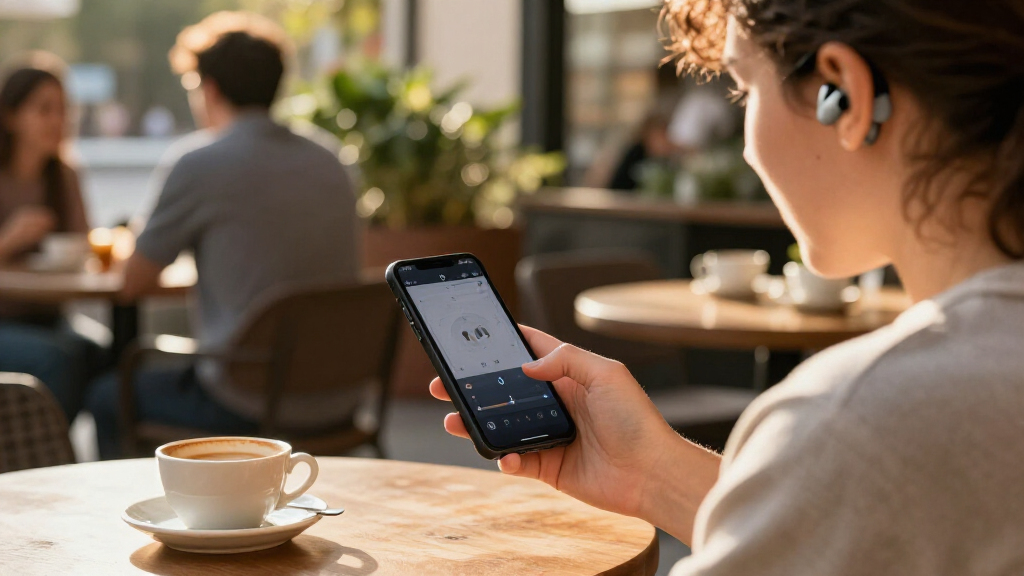
I ranked these products around one practical question: how well does each listing help an Android user achieve hearing aid Bluetooth streaming? That means I gave more weight to explicit Android compatibility, clearly stated call or media streaming, and useful app controls than to general phone performance or broad hearing-aid claims. A newer Bluetooth version can be useful, but it is not proof of compatibility with a particular Android handset or proof that calls and music will route to the aids.
The lineup mixes one Android smartphone and four hearing-aid products. I keep those categories distinct rather than pretending the phone competes directly with hearing aids. The Edge 60 is judged as the handset a buyer might pair with hearing aids; each other product is judged as a hearing-aid option that may work with an Android phone. I also considered stated battery information, environmental protection, sound controls, and the limits described in each listing.
Where a listing leaves an important detail unanswered, I treat that as a buying risk rather than filling the gap with assumptions. For example, Yeasound specifies streaming for iOS, while AuraLink says it supports iOS and Android but does not give a minimum Android version here. Before purchase, I would verify the companion app’s current Android requirements and ask whether the exact model supports direct audio streaming from the phone, rather than relying on Bluetooth branding alone.
Factors to Consider When Choosing Android Phones For Hearing Aid Bluetooth Streaming
I’d treat Android hearing-aid streaming as a two-device compatibility decision. The phone needs to run the maker’s app, and the hearing aids need to support the desired audio connection. A product page that says “Bluetooth” does not, by itself, tell me whether music and calls stream directly, whether only app controls use Bluetooth, or which Android versions work.
Separate the phone from the hearing aids
The Motorola Edge 60 is a smartphone; Vivtone, Diamond X1, AuraLink, and Yeasound are hearing aids. If you already own hearing aids, compare phones against the hearing-aid maker’s compatibility list. If you need amplification as well as a handset, pick the hearing aids first, then verify a phone that meets their app and streaming requirements. A phone cannot substitute for hearing aids, and a hearing-aid app being available does not automatically mean calls and media will stream to the devices.
Confirm what Bluetooth actually does
Ask whether Bluetooth supports direct call and media audio, app control, or both. Vivtone explicitly lists phone calls and music streaming; Yeasound’s listing limits its streaming statement to iOS. AuraLink and Diamond X1 describe Bluetooth and smartphone apps, but the supplied details do not spell out the full Android streaming behavior. Before buying, confirm your exact phone model, Android version, and hearing-aid model with the manufacturer or seller.
Check Android version and app availability
Vivtone gives the clearest OS threshold in this lineup: Android 11.0 or later. AuraLink lists Android compatibility without a minimum version, while Diamond X1 does not specify an Android version in the supplied information. The Motorola Edge 60 runs Android 15, but that alone does not prove every hearing-aid app or audio feature will work. Check the current app listing and the hearing-aid maker’s compatibility page before you rely on a setup for calls.
Compare streaming runtime, not only all-day battery claims
Battery figures can describe different kinds of use. Vivtone lists up to 24 hours of audio use but only 3 hours of streaming; Diamond X1 gives up to 12 hours per charge and up to 36 hours with the case. Yeasound lists 162 hours of streaming, but its stated Android limitation needs resolving first. AuraLink’s supplied details do not include runtime. If you stream frequently, prioritize a clearly defined streaming figure and ask how it was measured.
Match protection and fit to daily use
IP ratings can help compare resistance, but they are not interchangeable: AuraLink lists IP68, Yeasound IPX8, and Diamond X1 IPX5. Confirm the maker’s care instructions rather than assuming any rating means the devices can be worn in every wet situation. Fit and hearing needs matter just as much. Diamond X1 and AuraLink are described for mild to moderate hearing loss, and Vivtone’s listing warns that very noisy settings may remain challenging. Seek professional guidance if your hearing needs are beyond the product’s stated range.
Treat the phone’s general specs as supporting details
The Edge 60’s Android 15 software, large display, storage, and dual-SIM support can make it a capable everyday handset. Those features may help with app use, accessibility settings, and media storage, but they are not hearing-aid compatibility guarantees. For a streaming setup, a confirmed pairing matters more than extra storage or processor features. Also check carrier support, especially if activating through an MVNO, since the listing says IMEI registration may be required.
Frequently Asked Questions
Which product in this roundup is an Android phone?
The Motorola Edge 60 is the only smartphone in the lineup, and it runs Android 15. The other four products are Bluetooth hearing aids. The Edge 60 can be considered as a handset to pair with compatible hearing aids, but its supplied listing does not confirm compatibility with any specific hearing-aid model.
Which hearing aid has the clearest stated Android support?
Vivtone gives the clearest Android requirement, listing compatibility with Android 11.0 and later, as well as phone-call and music streaming. AuraLink also lists Android app compatibility, but the supplied details do not state a minimum OS version or give the same explicit call-and-music streaming wording. I would still confirm your exact phone model and app version before buying either one.
Does Bluetooth on a hearing aid guarantee music and call streaming?
No. Bluetooth may support app controls without supporting direct media or call audio, and device compatibility can depend on the phone, Android version, hearing-aid model, and companion app. Check the maker’s documentation for explicit call and media streaming support on your exact Android setup. This is especially important for Yeasound, whose supplied listing specifies streaming for iOS devices.
Can I use these hearing aids with any Android phone?
The supplied product details do not establish universal compatibility for any of the hearing aids. Vivtone names Android 11.0+; AuraLink lists Android compatibility without a minimum version; Diamond X1 does not specify one here; and Yeasound states iOS streaming. Before choosing, verify the app’s current Android requirements and ask whether the hearing aid streams calls and media with your specific phone.
Which pick makes the most sense for long streaming sessions?
Yeasound lists the longest streaming runtime in the provided information, at 162 hours, but its streaming support is stated for iOS, so I would not select it for Android without direct confirmation. Vivtone explicitly supports Android and streaming but lists only three hours of streaming battery life. For lengthy sessions, compare confirmed Android streaming runtime with the maker, rather than relying on total-use or standby claims.
Conclusion
For an Android user who needs hearing aids and wants the clearest stated route to streaming, I’d choose Vivtone first: it names Android 11.0+, phone calls, and music, though its three-hour streaming figure deserves close attention. For a buyer who values IP68 protection, AI noise reduction, and tinnitus masking, I’d look at AuraLink after confirming its minimum Android version and direct streaming behavior. Diamond X1 suits someone who prefers named listening modes, but I would verify Android streaming before ordering.
If you already have compatible hearing aids and need a new handset, the Motorola Edge 60 is the phone option here, not a hearing aid; confirm the pairing rather than assuming Android 15 guarantees it. I’d skip Yeasound for an Android-first setup unless its maker confirms Android streaming, despite its long stated streaming runtime. In every case, the best match is the one whose app, operating-system requirement, and direct audio-streaming support are confirmed for your exact devices.