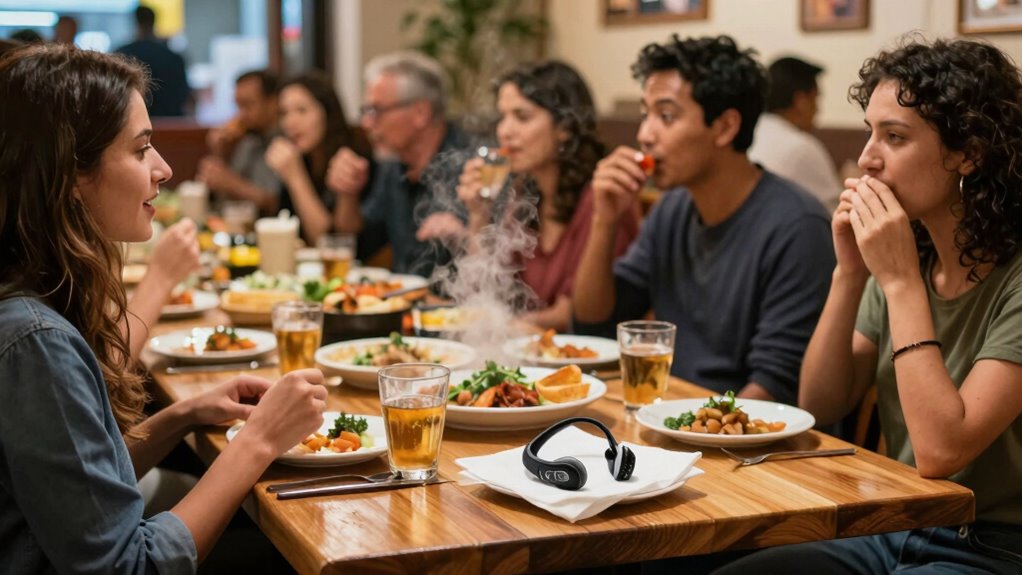
Restaurant noise is tough for your hearing devices because multiple sounds like conversations, music, and clattering dishes create a jumble. Large, open spaces with hard surfaces reflect sound waves, causing echoes and reverberation that make speech harder to understand. Not all devices have the advanced noise reduction needed for such environments. If you want to discover more tips to improve your experience and make dining easier, keep exploring solutions that work for you.
Key Takeaways
- Multiple overlapping sounds and background noise create a complex auditory environment that challenges hearing devices.
- Hard surfaces and room reflections cause echoes, distorting speech clarity.
- Reverberation and echoes reduce speech intelligibility for hearing aids.
- Not all devices have advanced noise reduction or directional microphones to handle noisy settings.
- Crowded, open layouts with high noise levels overwhelm hearing device filtering capabilities.

Dining out can be enjoyable, but restaurant noise often makes conversations difficult, especially for those relying on hearing devices. The bustling acoustic environments found in many restaurants create a challenging setting for clear communication. When you’re in a noisy restaurant, multiple sounds—conversations, background music, clattering dishes—combine into a jumble that can drown out speech. Your hearing devices are designed to help, but their effectiveness depends heavily on the acoustic environment. They pick up sound through microphones and amplify it, yet in these noisy settings, they may also amplify unwanted background noise, making it hard to focus on the person you’re talking to.
One reason restaurant noise is so tough for hearing devices is that the acoustics of the space play a significant role. Large, open layouts with hard surfaces like tile floors, glass walls, or metal fixtures reflect sound waves, causing echoes and reverberation. These echoes distort speech and make it more difficult for your device to distinguish the speaker’s voice from the surrounding noise. The more reflective the environment, the more challenging it becomes for your hearing device to process sound accurately. This is compounded in crowded spaces, where the sheer volume of competing sounds overwhelms the device’s ability to filter and prioritize what you want to hear. Additionally, understanding room acoustics can help you identify environments that may be more challenging for your hearing devices. Being aware of how sound reflections influence acoustic quality can also help you choose better seating options. Recognizing acoustic challenges can help you plan your seating arrangements to optimize hearing comfort.
Device compatibility also impacts how well your hearing aids perform in noisy restaurants. Not all devices are equally equipped to handle complex acoustic environments. Some newer models feature advanced noise reduction algorithms and directional microphones that can help focus on sounds coming from specific directions—usually the person you’re facing. If your device isn’t compatible with these features, or if it’s an older model, you’ll find it much harder to follow conversations amid the din. Additionally, certain settings or accessories, like remote microphones that transmit sound directly to your device, can improve your experience. But if your device lacks compatibility with these accessories, you’re left to contend with the ambient noise without extra help. Recognizing how device features and room acoustics interact can help you choose the right solutions for noisy settings.
Ultimately, understanding how acoustic environments affect your hearing devices can help you anticipate challenges and adapt accordingly. Choosing devices with better noise management features and being mindful of restaurant acoustics can make dining out more enjoyable. Using strategies like positioning yourself closer to the speaker, avoiding seating near the kitchen or music speakers, and requesting quieter tables can also improve your experience. Recognizing the importance of device compatibility and the impact of room acoustics empowers you to make smarter choices, ensuring that dining out remains an enjoyable social activity despite the noise.

Flaygo Rechargeable Hearing Aid for Seniors with 16-Channel Digital Chips Intelligent Noise Cancellation for Clear Sound Super-Mini Invisible Design Comfort Fit in Ear Canal & 7-Day Ultra Standby(Not Hearing amplifiers)
- Superior Sound Quality: Advanced noise reduction for clear speech
- Long Battery Life: Up to 16 hours per charge, 7 days standby
- Fast Charging: Full charge in 1-2 hours
As an affiliate, we earn on qualifying purchases.
As an affiliate, we earn on qualifying purchases.
Frequently Asked Questions
Can Hearing Devices Automatically Reduce Background Noise in Restaurants?
Yes, your hearing devices can automatically reduce background noise in restaurants. Modern devices use sound amplification and noise cancellation technology to focus on speech and diminish surrounding noise. This helps you hear conversations more clearly even in noisy environments. These features activate automatically, so you don’t have to adjust settings manually. As a result, you enjoy better communication and a more comfortable dining experience, despite the challenging noise levels.
Do Certain Types of Hearing Devices Handle Restaurant Noise Better?
Certain hearing devices handle restaurant noise better, especially those with advanced hearing aid compatibility and adaptive noise control. You’ll find that models featuring sophisticated signal processing and directional microphones excel in complex restaurant acoustics. These devices focus on your conversation partner, reducing background chaos. By choosing devices designed for challenging environments, you’ll experience clearer conversations and greater confidence, even amidst the clatter and chatter of busy eateries.
How Can I Prepare My Hearing Device Before Dining Out?
Before dining out, you should clean and inspect your hearing device for any buildup or damage, ensuring peak performance. Turn on any noise-canceling or environment-specific settings to help manage restaurant noise. Use hearing protection if necessary, like earplugs, to reduce overwhelming sounds. Also, perform device maintenance, such as changing batteries or checking for earwax blockage, so your device functions smoothly and you enjoy your meal without fuss.
Are There Specific Settings to Improve Speech Understanding in Noisy Environments?
Think of your hearing device as a skilled conductor leading an orchestra. To improve speech understanding in noisy environments, select settings that enhance sound filtering and acoustic customization. These adjustments focus on amplifying speech and reducing background noise, making conversations clearer. By customizing your device for the environment, you create harmony amidst chaos, allowing you to focus on what matters most—connecting with others without the distraction of overwhelming sounds.
What Role Does Microphone Directionality Play in Noisy Settings?
Microphone directionality plays a vital role in noisy settings by focusing on sounds directly in front of you. You can adjust microphone sensitivity to enhance this effect, reducing background noise. With a directional focus, your hearing device filters out side and behind sounds, making speech clearer. This setup helps you concentrate on conversations amid restaurant noise, so you don’t miss important words or details, improving overall communication.
Conclusion
Managing restaurant noise with hearing devices can be tough, but you’re not alone. Nearly 70% of hearing aid users report difficulty understanding speech in noisy environments like restaurants. This highlights how challenging background noise can be, even with the latest technology. However, understanding these challenges can help you prepare better—whether by choosing quieter spots or using specific device features. With awareness and some strategies, you can still enjoy dining out without missing out on the conversation.