When you first start using a hearing device, sounds can feel sharp or tinny because your brain is still adjusting to the new sound input. Initially, amplification and device settings may cause noises to seem more intense or distorted. Over time, with consistent use and proper fine-tuning from your audiologist, your brain learns to interpret sounds more naturally, and the sharpness will diminish. Keep exploring to understand how this adaptation process works and what you can do to improve your experience.
Key Takeaways
- Initial sharpness is due to the brain adjusting to new, amplified sounds.
- Hearing devices may produce tinny or harsh sounds until properly fine-tuned.
- Manufacturer settings are initial estimates; professional calibration improves sound quality.
- Auditory adaptation takes time, and consistent use helps the brain normalize sounds.
- Environmental noise can temporarily make sounds seem more intense or sharp.
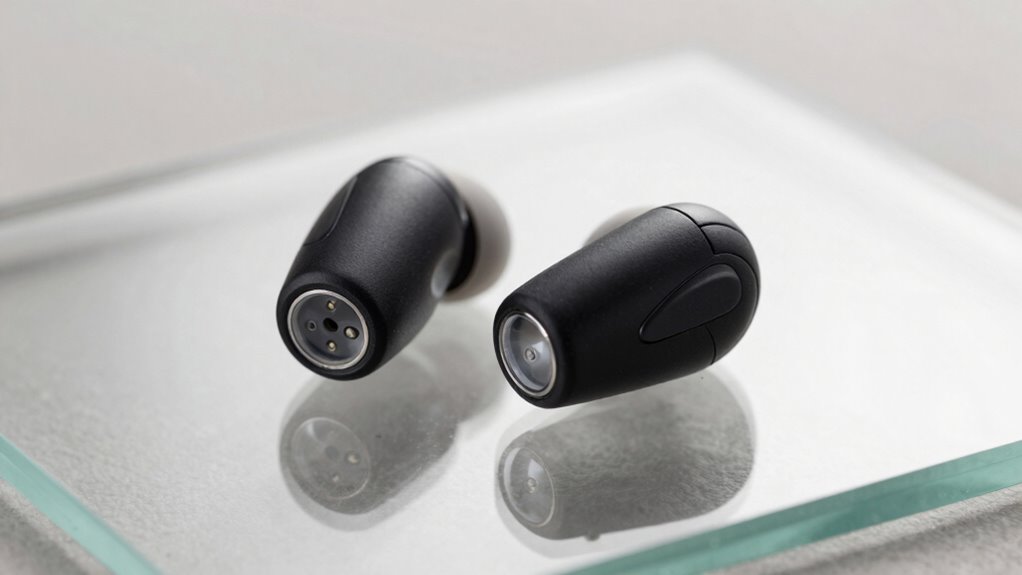
When you first start using a hearing device, it’s common to notice that sounds feel sharp or tinny. This initial experience can be surprising and even a little uncomfortable, but it’s a normal part of the sound adaptation process. Your brain needs time to adjust to the new way it’s receiving auditory information, especially if your hearing loss was significant before. During this period, sounds are often perceived as more intense or distorted because your device is amplifying sounds to compensate for hearing loss, but the fine-tuning isn’t perfect right away. That’s where device calibration comes into play. Manufacturers set initial settings based on your hearing profile, but these are just starting points. Your hearing healthcare professional will fine-tune your device to match your specific needs, gradually smoothing out those sharp or tinny sounds.
Initial sounds may feel sharp or tinny, but proper calibration helps your brain adapt for a more natural listening experience.
Sound adaptation is a gradual process. As you wear your hearing device consistently, your brain begins to recalibrate how it interprets sound signals. It learns to filter out background noise, recognize speech more clearly, and adapt to the new auditory environment. During this period, it’s normal for sounds to feel overly bright or harsh because your brain is still adjusting to the amplified input. Over time, with proper device calibration and regular use, these sounds will soften and become more natural. It’s important to be patient—your brain needs time to re-learn how to process sounds effectively. Sound processing is a complex function that improves with experience and consistent use. Recognizing the importance of auditory training can further enhance your adaptation journey. Additionally, understanding how sound quality can vary helps set realistic expectations for your hearing experience.
Your audiologist plays a key role in smoothing this transition. They will regularly adjust the device’s settings based on your feedback and your experience of sound quality. These adjustments ensure that the device delivers a balanced sound that feels comfortable and natural. If, after initial calibration, sounds remain uncomfortably sharp, don’t hesitate to ask for further tweaks. Remember, every person’s hearing needs are unique, so your device settings should be tailored specifically to you. Additionally, understanding the importance of sound adaptation can help you better manage expectations during this process. It’s also helpful to know that sound environments influence how your device sounds and your level of comfort, so sharing your environment details with your audiologist can lead to better adjustments.
It’s also worth noting that the environment influences how your device sounds. Noises in a noisy room may seem more overwhelming at first, but as your sound adaptation progresses, you’ll become more accustomed to distinguishing speech from background noise. The key is consistent use and open communication with your audiologist. Over time, the sharp or tinny sensation will diminish as your brain adjusts, and you’ll start to enjoy a richer, more natural listening experience.
hearing aid sound calibration device
As an affiliate, we earn on qualifying purchases.
As an affiliate, we earn on qualifying purchases.
Frequently Asked Questions
How Long Does It Take to Adjust to New Hearing Devices?
It usually takes about 2 to 4 weeks for you to fully adjust to new hearing devices. During the acclimation process, your ears and brain undergo sound adaptation, helping you get used to new auditory inputs. Be patient and wear your devices consistently, as this will speed up the adjustment. Remember, everyone’s different, so some may adapt quicker, while others need a bit more time to feel comfortable with their hearing aids.
Do Different Brands of Hearing Aids Affect Sound Quality?
Different brands of hearing aids can influence sound quality, much like choosing the right paint changes a room’s vibe. In a brand comparison, you’ll find each device offers unique features, especially in sound customization. Some brands focus on natural sound, while others emphasize clarity. Your experience depends on how well the device matches your hearing needs and the available adjustments, making it essential to explore options before settling on one.
Can Hearing Loss Severity Impact Initial Sound Perception?
Yes, hearing loss severity impacts your initial sound perception. When your hearing sensitivity is considerably reduced, sounds can seem sharper or distorted until your device’s sound calibration adjusts to your needs. Early on, your hearing aids work to fine-tune the sound, which may take time. This process helps improve clarity and comfort, ensuring you experience a more natural hearing quality as the calibration aligns with your specific hearing profile.
Are There Specific Settings to Reduce Sharpness?
You can reduce sharpness by adjusting your hearing device’s frequency tuning and sound calibration. While initial sounds might feel harsh, these specific settings soften high frequencies that cause discomfort, making everyday sounds more natural and comfortable. Don’t hesitate to work with your audiologist to customize these adjustments. With proper tuning, you’ll find your hearing device becomes a helpful tool rather than a source of sharpness.
Does Earwax Influence How Hearing Devices Sound Initially?
Yes, earwax buildup can influence how your hearing device sounds initially by blocking or muffling the sound. It can interfere with sound calibration, causing the device to sound sharper or distorted. Regularly cleaning your ears and maintaining your device helps guarantee proper sound quality. If you notice persistent issues, consult your audiologist for adjustments, as they can recalibrate the device for ideal performance and comfort.
Conclusion
When you first start using hearing devices, it’s like adjusting to a new song—at first, the notes might seem a bit sharp or unexpected. But with a little time and patience, your ears will begin to harmonize with the new sounds. Think of it as a gentle tuning process, where each note finds its proper place. Before long, you’ll notice a smooth, natural flow returning, and the world around you will sound more beautiful than ever.