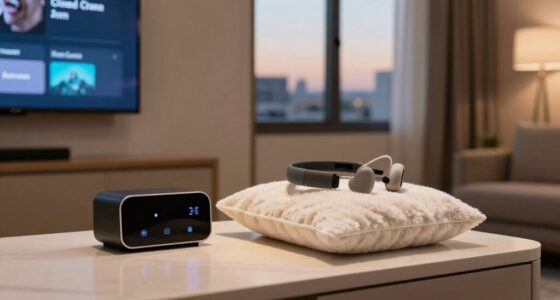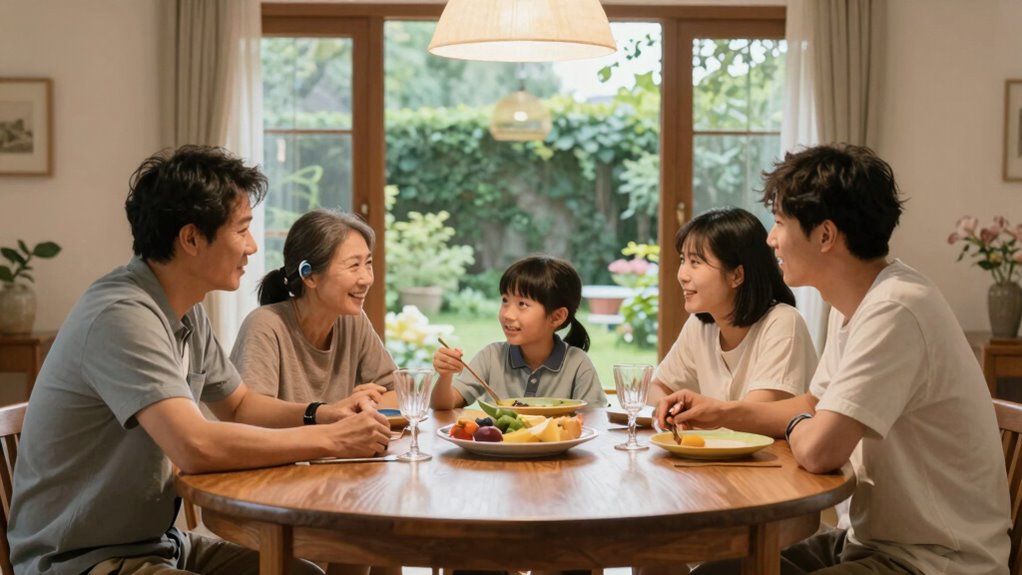

To make family dinners easier with hearing loss, keep noise levels low by reducing background sounds and speaking clearly. Sit facing everyone to see facial cues and use visual aids like written notes or pictures. Guarantee hearing aids are working and consider soundproofing the dining area for added clarity. Encourage family members to speak slowly, and use gestures to support communication. For more helpful tips, explore how these strategies can make your family dinners more enjoyable.
Key Takeaways
- Prepare noise-free, simple meals and keep background noise to a minimum during dinner.
- Use visual aids, written menus, and strategic positioning to support understanding.
- Ensure hearing aids are functioning properly with fresh batteries before meals.
- Encourage clear, moderate speech and use gestures or notes to enhance communication.
- Create a quiet, distraction-free environment by turning off or lowering TV and music volumes.
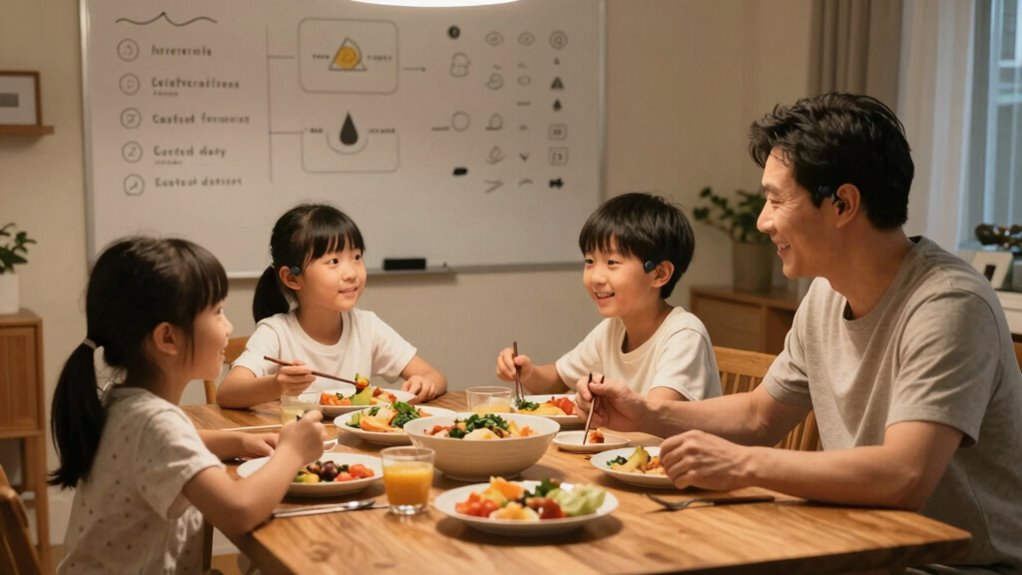
Family dinners can be lively and enjoyable, but hearing loss sometimes makes it challenging to follow conversations. When you struggle to catch every word, mealtimes can feel isolating instead of social. Luckily, there are practical ways to make these gatherings more comfortable and engaging. Focusing on cooking tips and conversation strategies can help create a more inclusive environment for everyone at the table.
Start with simple cooking tips that can improve communication. Consider preparing dishes that don’t require a lot of noise or clutter, which can make it easier for you to concentrate on conversations. Using clear, straightforward recipes reduces the need for excessive background noise from busy kitchen appliances or multiple dishes cooking simultaneously. Additionally, serve food in smaller, manageable portions so you don’t feel overwhelmed by a large spread, allowing you to focus on the people you’re talking to rather than managing a mountain of dishes. If you use hearing aids, make sure they’re adjusted properly before dinner, and keep extra batteries handy. This way, you can maximize your ability to hear and participate actively. Incorporating soundproofing techniques in your dining area can also help reduce background noise and improve overall hearing clarity during meals. Exploring other listening strategies can further enhance your experience at the dinner table. Incorporating visual aids like pictures or written menus can also support understanding and make conversations more accessible. Being mindful of your environment can significantly impact your ability to engage in conversations comfortably. Making small adjustments in your surroundings can also help create a more quiet atmosphere conducive to conversation.
Prepare simple, noise-free dishes and keep hearing aids ready to enhance focus and participation during family dinners.
When it comes to conversation strategies, positioning yourself plays a vital role. Sit facing the group or the person you want to hear best, as this minimizes background noise and helps you catch facial expressions and lip movements that support understanding. Encourage others to speak clearly and at a moderate pace, and politely ask for repetition if needed. Many people appreciate your honesty and will naturally adapt their speech to make communication easier. Using visual cues, like gestures or written notes, can also enhance understanding and keep everyone engaged. It’s helpful to establish a signal or cue with family members to indicate when someone wants to speak or clarify something, preventing interruptions and confusion.
In social settings, it’s beneficial to minimize competing sounds by turning off or lowering background music and TV volume during dinner. If you’re hosting, you can gently remind family members of these adjustments. Incorporating conversation strategies like summarizing key points or asking specific questions to keep the dialogue flowing smoothly. These tactics help you stay involved and reduce frustration, making dinner time more enjoyable for everyone. Remember, open communication and a little planning go a long way. With mindful cooking tips and thoughtful conversation strategies, you can turn family dinners into warm, inclusive moments where everyone feels connected, regardless of hearing challenges.
As an affiliate, we earn on qualifying purchases.
Frequently Asked Questions
What Types of Hearing Aids Are Best for Dining Situations?
For dining situations, behind-the-ear (BTE) hearing aids with advanced noise reduction features are your best choice. They effectively filter out background noise, making conversations clearer. You might also consider receiver-in-canal (RIC) styles, which are discreet and deliver natural sound quality. Both styles allow you to customize settings for noisy environments, helping you focus on family chatter and enjoy meals without missing important sounds.
How Can I Improve Communication With Family Members With Hearing Loss?
Did you know that struggles with background noise affect 80% of people with hearing loss? To improve communication, you can encourage family members to face you directly, speak slowly, and reduce background noise during conversations. Lip reading becomes easier when everyone speaks clearly and maintains eye contact. Creating a quiet environment and using visual cues help guarantee your family feels heard and understood, making dinners more enjoyable for everyone.
Are There Specific Seating Arrangements That Help?
You should try seating strategies that bring everyone into a semi-circle or circular arrangement, so your loved one can see all faces clearly. Place the person with hearing loss at the center or near the speaker to improve understanding. Use conversation tips like speaking slowly, facing them directly, and reducing background noise. These adjustments encourage better communication and help everyone feel included during family dinners.
What Technology Can Assist During Family Dinners?
You can use speech enhancement and noise reduction technology to improve your family dinner experience. Devices like hearing aids with advanced microphones can focus on your loved ones’ voices, making speech clearer. Consider wireless earbuds or tabletop microphones that amplify conversation and reduce background noise. These tools help you stay engaged and understand everyone better, creating a more enjoyable and inclusive family dinner for you and your loved ones.
How Can I Help Children Understand Hearing Loss?
Think of hearing loss as a puzzle you can help children piece together. Explain that sign language and visual cues are like secret codes that let them communicate without hearing. Show them how to use gestures and facial expressions, making it fun and engaging. Encourage patience and practice, so they learn to recognize these signs. By doing this, you turn understanding into an adventure, deepening their empathy and connection.
Conclusion
Remember, just like the steady rhythm of a familiar song, simple adjustments can turn family dinners into harmonious moments. With patience, clear communication, and a little creativity, you can navigate the noise and connect more deeply. Think of it as tuning a delicate instrument—you may need to tweak a few things, but the melody of shared laughter and stories will always find its way. Embrace these steps, and make every dinner a cherished chorus.