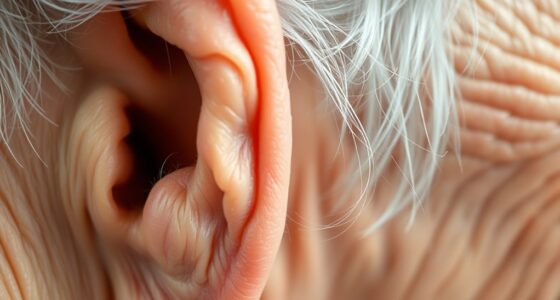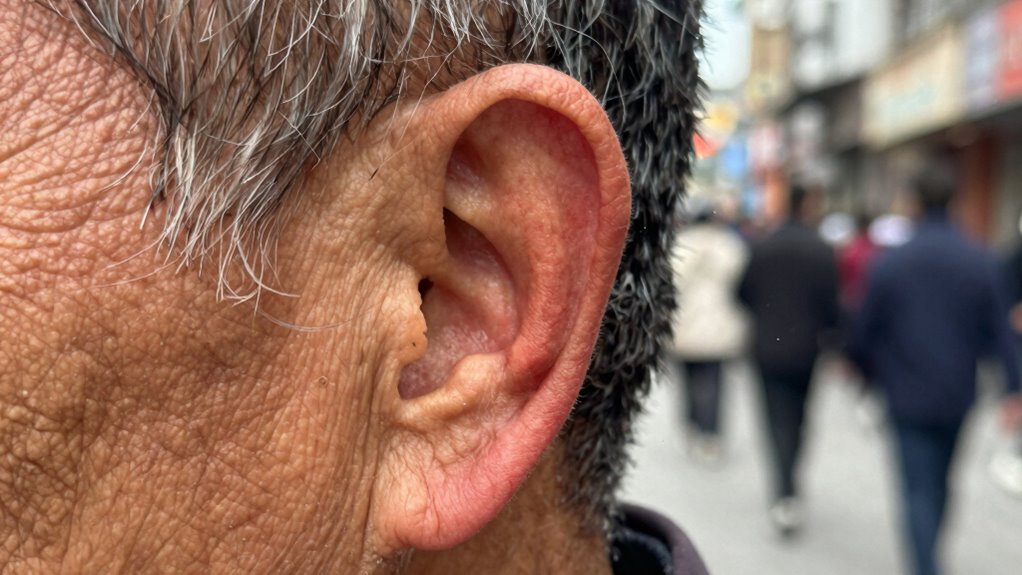
You might notice difficulty hearing in noisy places before any major hearing loss shows up because your auditory system is changing. Subtle signs like increased sound sensitivity and fatigue mean your ears and brain are working harder to process sounds. These early symptoms indicate your hearing is adjusting and could worsen if ignored. Recognizing these signs early helps prevent more serious damage. Keep exploring to discover how you can protect your hearing and stay ahead of potential issues.
Key Takeaways
- Early auditory processing changes can cause difficulty distinguishing speech in noisy environments before measurable hearing loss occurs.
- Increased sound sensitivity and fatigue indicate the ears are adapting, signaling early stages of auditory system stress.
- Subtle signs like asking for repetitions or feeling overwhelmed suggest initial difficulties with auditory information processing.
- Noise exposure accelerates early auditory changes, making hearing in noisy settings more challenging even without significant loss.
- Recognizing these early symptoms allows for timely intervention to prevent progression to major hearing impairment.

Many people find it challenging to hear clearly in noisy environments, and this difficulty can considerably impact daily life. You might notice that conversations become harder to follow when there’s background chatter, music, or other loud sounds. This struggle doesn’t always mean you’re on the brink of major hearing loss, but it can signal early changes in how your auditory system functions. Often, you experience increased sound sensitivity, making certain noises seem uncomfortably loud or overwhelming. This heightened sound sensitivity isn’t just annoying—it can be a sign that your ears are starting to struggle with filtering out unnecessary noise.
Difficulty hearing in noisy settings can signal early changes in your hearing health.
As your ears and brain work harder to distinguish speech from background sounds, you may also experience auditory fatigue. This fatigue manifests as a feeling of tiredness or mental exhaustion after spending time in noisy settings. It’s your body’s way of signaling that your auditory system is under stress. When your ears are constantly trying to process complex sound environments, they become overworked, leading to this kind of fatigue even if your hearing thresholds remain unchanged. Research indicates that early signs of auditory processing changes can be detected before significant hearing loss develops, emphasizing the importance of paying attention to these subtle symptoms. Recognizing these early signs can also help identify the need for preventive measures to protect your hearing health.
Hearing difficulty in noise often begins subtly. You might find yourself asking people to repeat themselves more often or struggling to follow conversations in crowded places. These signs are early indicators that your auditory system is adapting to changes. It’s not necessarily a sign of severe damage but rather a sign that your ears are experiencing increased strain or sensitivity. This increased sound sensitivity can make everyday sounds seem more intense or sharper, which can be uncomfortable and distracting. Recognizing these early symptoms allows for prompt action to protect your hearing health.
The key is recognizing that these early symptoms are signals your hearing health needs attention. Ignoring sound sensitivity and auditory fatigue can sometimes lead to further issues, including more significant hearing problems down the line. Research shows that early changes in auditory processing can be linked to hearing system alterations before major loss occurs. Additionally, factors like loud noise exposure can accelerate these early changes. Addressing these early signs involves protecting your hearing from loud noises, managing stress, and seeking professional advice if you notice persistent difficulties. Early intervention can help preserve your hearing and reduce discomfort, preventing these problems from escalating into more serious hearing loss.

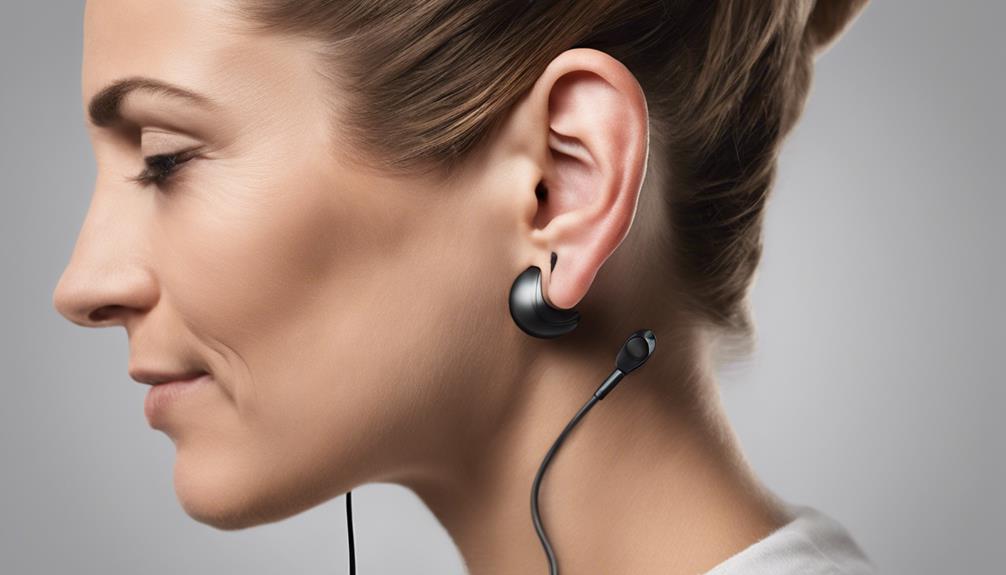
Peltor Sport Tri-Flange Corded Reusable Earplugs, 3-Pairs per Pack
- Noise Reduction Rating: 26 dB NRR
- Design: Tri-flange for comfort
- Reusability: Washable and corded
As an affiliate, we earn on qualifying purchases.
As an affiliate, we earn on qualifying purchases.
Frequently Asked Questions
Can Hearing Difficulty in Noise Be Reversed With Treatment?
Yes, hearing difficulty in noise can often be improved with treatment. Hearing therapy, including auditory training and strategies like noise masking, helps your brain adapt and better distinguish sounds in noisy environments. Early intervention is essential; consulting an audiologist can guide personalized treatment options. While some issues might not be fully reversible, these therapies can considerably enhance your ability to hear clearly in challenging settings.
Do Age-Related Changes Affect Hearing in Noisy Environments First?
Yes, age-related decline often impacts your ability to hear in noisy environments first. As you age, noise sensitivity increases, making it harder to distinguish speech from background sounds. This early change happens because the tiny hair cells in your inner ear deteriorate, reducing your auditory processing. You might notice difficulty understanding conversations in crowded places before experiencing overall hearing loss, highlighting how aging can selectively affect your hearing in complex auditory settings.
How Early Can Hearing Issues in Noise Be Detected?
You can catch hearing issues in noise early, often before noticeable major loss. Early detection hinges on paying attention to noise sensitivity—if sounds seem muffled or harder to distinguish in busy settings, it’s time to consult an audiologist. Regular checkups help identify subtle changes, acting like a canary in a coal mine. Spotting these signs early allows you to address problems promptly, preserving your hearing health for years to come.
Is Hearing Difficulty in Noise Linked to Cognitive Decline?
Yes, hearing difficulty in noise is linked to cognitive decline. You may notice challenges with auditory processing, making it harder to distinguish speech in noisy environments. This difficulty often signals underlying cognitive connection issues, as your brain struggles to interpret sounds efficiently. Addressing auditory processing problems early can help slow cognitive decline, so don’t ignore these signs. Regular hearing assessments and cognitive evaluations can keep you proactive about your hearing and brain health.
Are Certain Professions More Prone to Hearing Difficulty in Noise?
Certain professions are more prone to hearing difficulty in noise, especially those with poor workplace acoustics or high noise levels. If you work in loud environments like construction or factories, you might struggle to hear in noisy settings, even if your hearing seems fine. Using noise-canceling devices can help protect your ears and improve communication. Prioritizing workplace acoustics improvements also reduces the risk of early hearing difficulties.
Conclusion
Think of your ears as a finely tuned orchestra, where even a whisper of trouble can throw off the harmony. When difficulty in noisy environments begins, it’s like a faint shadow creeping over your soundscape—warning you that something’s amiss. Don’t wait for the music to stop altogether. Catch the warning signs early, tune up your hearing, and keep your auditory symphony alive, vibrant, and clear for years to come.