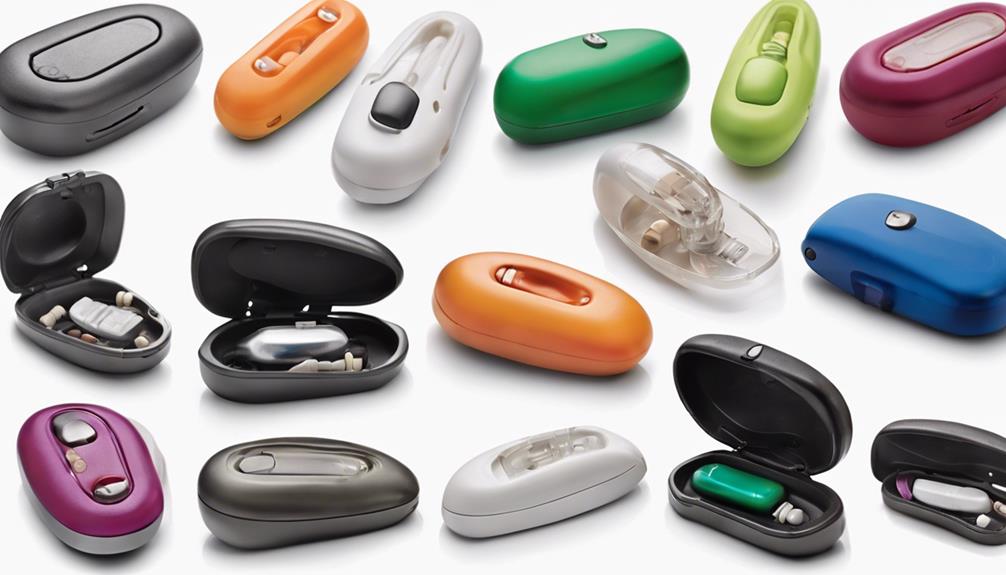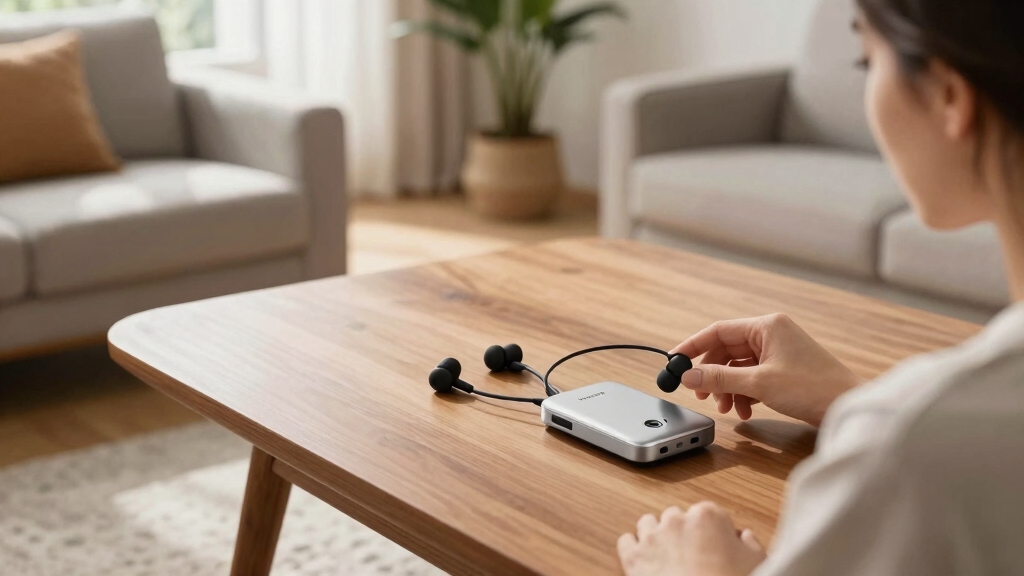
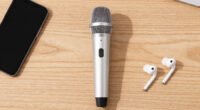
Choosing the best low-latency assistive listening system depends on your specific needs—whether for a large church, school, or personal use. The Avantree Audiplex MX stands out as the overall top choice thanks to its multi-channel capability and reliable performance. For those seeking simple setups, the Venucast AuraPlex H4 offers affordability with decent latency. The main tradeoffs involve balancing latency, ease of use, scalability, and cost. Continue reading for a detailed breakdown of each option and find the best fit for your environment.
Key Takeaways
- Multi-channel systems like the Avantree Audiplex MX excel in environments with multiple speakers or zones, but they tend to cost more and be more complex to set up.
- Latency performance varies significantly; the best systems keep delay below 20ms to prevent audio-visual mismatch, especially important in live settings.
- Wireless systems with multiple receivers offer scalability but may introduce more latency or interference if not well-designed or properly configured.
- Ease of use and setup are crucial for non-technical users—simpler systems often sacrifice some latency performance for user-friendliness.
- Price correlates with features like multiple channels, transmitter range, and build quality; prioritize your needs to avoid overpaying for unused features.
| Avantree Audiplex MX Multi-Channel Assistive Listening System for Schools & Churches |  | Best Overall for Medium Venues | Connectivity Technology: 2.4G RF | Compatible Devices: Bluetooth, Optical, AUX | Number of Channels: 2 | VIEW LATEST PRICE | See Our Full Breakdown |
| Avantree Audiplex M3 Multi-Channel Assistive Listening System with Add-On Receiver |  | Best for Large, Dynamic Environments | Channels: Multi-Channel | Range: 328ft / 100m | Input Options: Optical, AUX, Bluetooth | VIEW LATEST PRICE | See Our Full Breakdown |
| Venucast AuraPlex H4 Auracast Wireless Headphones System with Transmitter & 4 Headphones |  | Best for Small Groups and Simple Setup | Model Number: BTHS-AS90R | Connectivity: Optical, AUX, Bluetooth | Battery Charge Time: 2 hours | VIEW LATEST PRICE | See Our Full Breakdown |
| Avantree AuraPlex MX Auracast Assistive Listening System for Churches |  | Best for Church and Community Venues | Range: 328 ft | Includes: 1 transmitter, 10 receivers | Compatibility: Auracast-enabled hearing aids and devices | VIEW LATEST PRICE | See Our Full Breakdown |
| Avantree AuraPlex MX & Aria Aura Assistive Listening System Bundle |  | Best for Versatile Group Listening | Transmitter Count: 1 | Receivers Count: 10 | Headphones: 4 Auracast-compatible | VIEW LATEST PRICE | See Our Full Breakdown |
| Avantree Audiplex M3 Multi-Channel Assistive Listening System Bundle with 3 Add-on Receivers |  | Best for Large Venues and Complex Setups | Channels: Multi-channel | Range: 328ft / 100m | Audio Quality: 48 kHz digital audio | VIEW LATEST PRICE | See Our Full Breakdown |
| low-latency assistive listening system | Range |
|---|---|
| Avantree Audiplex MX Multi-Cha | — |
| Avantree Audiplex M3 Multi-Cha | 328ft / 100m |
| Venucast AuraPlex H4 Auracast | — |
| Avantree AuraPlex MX Auracast | 328 ft |
| Avantree AuraPlex MX & Aria Au | 100 meters / 328 feet |
| Avantree Audiplex M3 Multi-Cha | 328ft / 100m |
More Details on Our Top Picks
Avantree Audiplex MX Multi-Channel Assistive Listening System for Schools & Churches
This system excels in delivering clear, synchronized audio over a 100-meter range, making it ideal for venues like churches and schools where multiple users need simultaneous access. Compared to the Venucast AuraPlex H4, which is better suited for small groups, the Audiplex MX offers more channels and expandable receivers, though its limited to 2 channels might restrict more complex setups. Its low-latency support ensures audio stays in sync during presentations, a key feature not always guaranteed in simpler systems. The inclusion of wired earbuds could be a drawback for users preferring wireless convenience, but overall, this system balances performance with scalability for medium-sized venues.
Pros:- Supports multiple channels to prevent interference in group settings
- Low-latency audio ensures synchronized sound during live events
- Long 100-meter wireless range suitable for medium venues
- Expandable system with additional receivers for larger groups
Cons:- Requires batteries for all receivers, adding maintenance
- Limited to only 2 channels, restricting complex multi-language or multi-zone use
Best for: Medium venues such as churches, schools, and community centers needing reliable multi-user audio
Not ideal for: Very large venues or outdoor spaces where a longer range or more channels are necessary
- Connectivity Technology:2.4G RF
- Compatible Devices:Bluetooth, Optical, AUX
- Number of Channels:2
- Item Weight:1200 g
- Color:Black
- Power Source:Battery Powered
Our verdict“This pick is best for medium-sized venues that prioritize reliable, synchronized audio with room to grow.”
Avantree Audiplex M3 Multi-Channel Assistive Listening System with Add-On Receiver
Compared to the Avantree Audiplex MX, which is designed primarily for medium venues, the M3 excels in very large spaces thanks to its impressive 328-foot range and multi-channel support. Its ability to expand up to 100 receivers makes it suitable for large conferences, seminars, or multilingual settings where multiple streams are needed simultaneously. However, the setup can be complex, requiring some technical know-how to optimize the system. While its scalability is a major strength, the higher price and limited info on battery life mean it’s better suited for organizations with technical support or larger budgets. This system offers robust coverage but demands more initial effort and investment.
Pros:- Extremely long wireless range suitable for large spaces
- Supports multiple channels for simultaneous translations or group listening
- Expandable up to 100 receivers for big audiences
- Flexible input options including Bluetooth and wired connections
Cons:- Setup process may be complex and technically demanding
- Limited information on battery durability and long-term reliability
Best for: Organizations hosting large events or venues needing scalable, multi-channel audio coverage
Not ideal for: Small venues or users seeking a plug-and-play experience without technical setup
- Channels:Multi-Channel
- Range:328ft / 100m
- Input Options:Optical, AUX, Bluetooth
- Expandable:Up to 100 receivers
- Includes:1 transmitter, 1 add-on receiver
Our verdict“Ideal for large, complex venues that require scalable, multi-channel audio transmission with extensive coverage.”
Venucast AuraPlex H4 Auracast Wireless Headphones System with Transmitter & 4 Headphones
This system is tailored for small to medium groups, offering a straightforward, plug-and-play experience with no app or pairing fuss. Unlike the larger systems like the Avantree Audiplex MX or M3, which focus on extensive venues, the AuraPlex H4 emphasizes simplicity and immediate usability. Its compatibility with a wide range of devices via Optical, AUX, and Bluetooth makes it versatile for various setups, but its small group size limits its usefulness in larger venues. Battery life details are vague, which could be a concern for extended use, and the need to purchase headphones separately adds some expense. It’s a good choice for quick, reliable listening for small gatherings.
Pros:- Simple plug-and-play setup with no apps or pairing needed
- Supports a wide range of devices via Optical, AUX, and Bluetooth
- Expandable system suitable for small groups
Cons:- Limited to small group sizes, not suitable for large venues
- Battery life information is not specified, which could impact longer sessions
Best for: Small groups, classrooms, or meetings where easy setup and straightforward operation are priorities
Not ideal for: Large venues or events requiring extensive multi-user coverage
- Model Number:BTHS-AS90R
- Connectivity:Optical, AUX, Bluetooth
- Battery Charge Time:2 hours
- Included:Transmitter and 4 headphones
- Warranty:2 years
Our verdict“This system makes the most sense for small groups or settings where ease of use is paramount over scale.”
Avantree AuraPlex MX Auracast Assistive Listening System for Churches
Designed specifically for venues like churches and lecture halls, the AuraPlex MX leverages Bluetooth LE Audio for clear, synchronized sound with multiple receivers. Its support for Auracast-enabled hearing aids and devices allows seamless integration for users with compatible hearing technology, setting it apart from non-Auracast systems like the Venucast AuraPlex H4. While the 328-foot range is suitable for medium-sized venues, outdoor or heavily obstructed spaces may diminish performance. The system’s reliance on compatible hearing aids could limit usability for some users, but overall, it offers a flexible, scalable solution for venues that prioritize accessibility and long-range coverage.
Pros:- Supports multiple users with included receivers and BYOD option
- Compatible with Auracast-enabled hearing aids and devices
- Long-range coverage up to 328 feet
Cons:- Limited effectiveness in outdoor or obstructed environments
- Dependent on users having compatible hearing aids or devices
Best for: Churches, community centers, and lecture halls with users equipped with Auracast-enabled hearing aids
Not ideal for: Outdoor venues or users without compatible hearing aids or Bluetooth devices
- Range:328 ft
- Includes:1 transmitter, 10 receivers
- Compatibility:Auracast-enabled hearing aids and devices
- Supported Venues:Churches, lecture halls, events
Our verdict“Best suited for venues with users equipped with Auracast-enabled hearing aids seeking long-range, synchronized sound.”
Avantree AuraPlex MX & Aria Aura Assistive Listening System Bundle
This bundle combines the AuraPlex MX transmitter with Aria Aura headphones, making it ideal for venues that need flexible, multi-user audio with Bluetooth LE Audio. It resembles the Venucast AuraPlex H4 in supporting easy setup and device compatibility, but adds the benefit of Auracast support for hearing aids. Its 100-meter range provides enough coverage for most medium venues, though outdoor or heavily obstructed spaces may hinder performance. The bundle’s compatibility with various hearing aids and support for both venue-provided and personal devices makes it highly adaptable, though it requires users to have compatible hearing aids or devices for full functionality. This option offers a balance of accessibility and convenience.
Pros:- Compatible with a wide range of Auracast-enabled hearing aids
- Supports multiple users with flexible device options
- Long-range coverage suitable for medium venues
- Includes both venue-provided and BYOD support
Cons:- Limited outdoor or heavily obstructed space performance
- Dependent on users having compatible hearing aids or devices
Best for: Medium-sized venues seeking flexible, multi-user audio with hearing aid support
Not ideal for: Outdoor or large-scale venues where obstructions could impair Bluetooth performance
- Transmitter Count:1
- Receivers Count:10
- Headphones:4 Auracast-compatible
- Range:100 meters / 328 feet
Our verdict“This bundle is suited for venues that require versatile, accessible group listening with easy setup and device flexibility.”
Avantree Audiplex M3 Multi-Channel Assistive Listening System Bundle with 3 Add-on Receivers
The Avantree Audiplex M3 stands out for its impressive 328-foot range and multi-channel capabilities, making it well-suited for large spaces like churches, auditoriums, or classrooms where multiple zones or input sources are needed. Compared with the Avantree Audiplex MX, which is more streamlined for smaller venues, the M3 offers expanded connectivity options such as optical, AUX, and Bluetooth inputs, giving it greater versatility. However, its setup can be more involved, especially when configuring multiple channels, which might be daunting for users without technical experience. The ability to expand up to 100 receivers makes it ideal for growing audiences, but that scalability comes with increased complexity and cost. Sound quality remains high at 48 kHz digital audio with low latency, ensuring real-time clarity even over long distances. This system makes the most sense for organizations needing extensive coverage and flexible input options, willing to handle a more detailed setup process.
Pros:- Extensive 328-foot range suitable for large venues
- Supports multiple input options (Optical, AUX, Bluetooth) for versatile setups
- Expandable to accommodate up to 100 receivers for large groups
- High-quality 48 kHz digital audio with low latency ensures real-time clarity
Cons:- Setup can be complex, especially for configuring multiple channels
- May require technical knowledge or professional installation for optimal operation
- Additional receivers increase overall cost and maintenance
Best for: Large venues or institutions that need multi-input flexibility and extensive coverage, such as churches, conference centers, or schools
Not ideal for: Small spaces or users seeking a plug-and-play solution with minimal setup, as the system’s multi-channel configuration can be complex
- Channels:Multi-channel
- Range:328ft / 100m
- Audio Quality:48 kHz digital audio
- Latency:Low latency
- Input Options:Optical, AUX, Bluetooth
- Expandable:Up to 100 receivers
Our verdict“This system is best for large, technically equipped venues that need flexible, long-range assistive listening with high fidelity.”
How We Picked
These products were evaluated based on their latency performance, scalability, ease of installation, build quality, and value for money. We prioritized systems that offer truly low-latency audio, ideally under 20 milliseconds, to ensure real-time clarity. Compatibility with various environments—such as churches, schools, or personal use—also played a role, along with user-friendliness and setup time. Products were ranked by how well they balance these factors, with a focus on reliability and performance in live or dynamic settings.Factors to Consider When Choosing Best Low-latency Assistive Listening Systems
When selecting a low-latency assistive listening system, understanding key factors can help you avoid common pitfalls and choose a setup that truly meets your needs. The right system must balance latency, scalability, ease of use, and environment compatibility. Paying attention to these details ensures you get a reliable solution that minimizes delay and maximizes clarity, especially during live events or group settings.Latency Performance
Latency directly impacts how synchronized the audio is with real-time speech or sounds. Systems with latency above 20 milliseconds can cause noticeable delays, making lip-sync or visual cues confusing. For live performances, clear communication, and group listening, aim for systems with latency under 15ms. Investing in low-latency technology reduces frustration and improves overall hearing clarity.
Scalability and Number of Receivers
Consider how many users or zones you need to serve. Larger venues like churches or conference halls require systems that support multiple receivers without sacrificing performance. Multi-channel transmitters allow different groups or areas to listen without interference. However, more channels often mean higher costs and more complex setup—balance your current needs with future scalability.
Ease of Setup and Use
Systems with straightforward installation and intuitive controls save time and reduce user frustration. If you’re not technically inclined, prioritize models with simple pairing, minimal configuration, and clear instructions. Conversely, more complex systems may offer advanced features but can be overwhelming for casual users or small venues.
Build Quality and Reliability
Durability matters, especially in daily use environments. Look for systems with sturdy transmitters, comfortable receivers, and secure connections. Reliable wireless transmission minimizes dropouts and interference, which is critical during live events. Investing in quality reduces maintenance costs and ensures consistent performance over time.
Cost and Value
Prices vary widely, often reflecting features like multiple channels, extended range, or bundled accessories. Determine your essential features first, then compare options within your budget. Sometimes paying more upfront for a scalable, low-latency system saves money in the long run by avoiding frequent upgrades or replacements.
Frequently Asked Questions
How low does the latency need to be for effective assistive listening?
For assistive listening, aiming for latency under 20 milliseconds generally provides a seamless experience, especially in live settings. Latency above this can cause noticeable delays between speech and audio, leading to lip-sync issues or confusion. The best systems strive for under 15ms to ensure near real-time audio, which is vital during speech or music performances.
Can I use a low-latency system outdoors or in large venues?
Yes, but outdoor environments and large venues demand systems with extended range and robust interference resistance. Look for models with higher transmission power and multiple channels to prevent dropouts. Keep in mind that outdoor use can introduce signal challenges, so choosing a system specifically rated for such conditions ensures consistent low-latency performance across larger spaces.
Are multi-channel systems worth the extra cost?
Multi-channel systems are ideal for environments with multiple speakers, zones, or users, as they prevent interference and provide tailored audio streams. While they come with higher price tags and setup complexity, their ability to support larger groups without latency issues makes them a worthwhile investment in active settings like churches or conferences. For small, single-user setups, simpler models often suffice and save money.
How important is build quality for long-term use?
Build quality directly impacts durability and ongoing reliability. In high-traffic or daily-use environments, sturdy transmitters and comfortable, secure receivers reduce the risk of breakage or malfunction. Investing in well-made systems often results in fewer repairs and replacements over time, making them more cost-effective despite a higher initial price.
Should I prioritize price or features when choosing a low-latency system?
Balancing price and features depends on your specific needs. If you require simple, occasional use, a budget model with acceptable latency might be enough. However, for frequent or professional use, investing in a system with low latency, scalability, and robust build quality ensures better performance and longevity. Skimping on features might save money upfront but could lead to frustrations or additional expenses later.