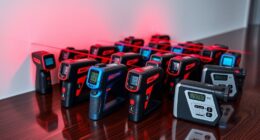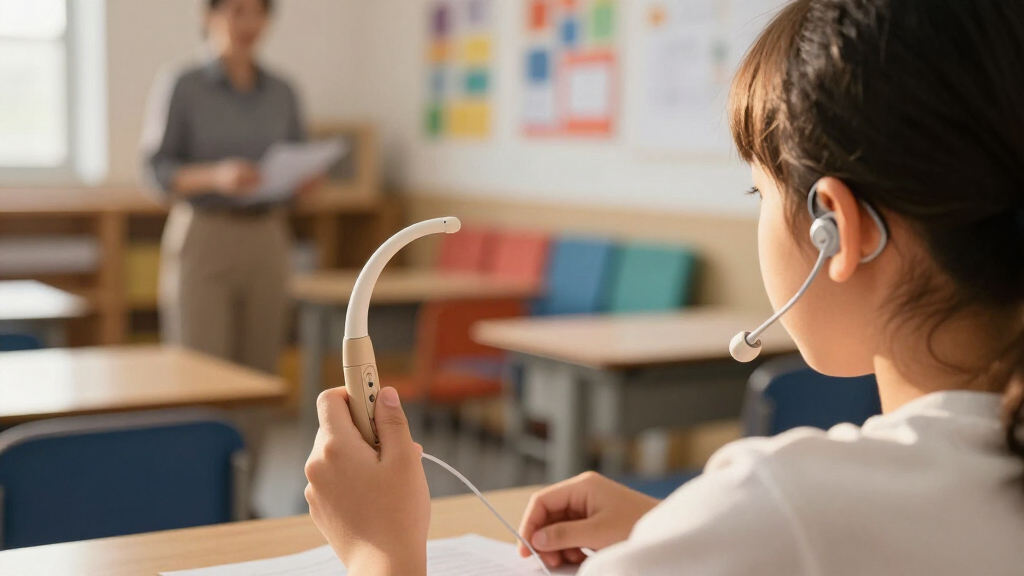

The Retekess T130S with 32-slot charging case is my best overall assistive listening device for classrooms because its two transmitters, 18 receivers, and centralized charging suit a shared school fleet. The Retekess T130 with 10 receivers is the stronger value choice for one teacher and a smaller student group, while the Williams Sound Pocketalker Ultra makes more sense for one student who needs nearby speech amplification. The main choice is between a personal amplifier and a distributed receiver system, followed by decisions about fleet size, hearing-aid compatibility, charging, and classroom mobility. Long-range systems provide more freedom but can add setup work, bulk, and features better suited to auditoriums than ordinary lessons. Continue reading for my full breakdown of which configurations fit different classrooms, budgets, and hearing-access needs.
Key Takeaways
- The Retekess T130S earned my top position because its 18 receivers, two transmitters, and 32-slot charging case form the most classroom-ready fleet, though smaller classes may pay for capacity they rarely use.
- The comparison revealed a clear value point at one transmitter and 10 receivers: the Retekess T130 and Avantree Audiplex MX cover a typical small group without the cost and storage burden of the T130S package.
- The three Retekess TT119 configurations emphasize long range and broad audio connectivity, making them better matches for auditoriums, interpretation, and campus events than for a teacher who only needs a simple daily lesson system.
- Receiver type matters as much as receiver count: neckloops favor compatible telecoil hearing aids, bone-conduction headsets leave the ears open, and conventional earpieces may be easier to share but require stricter hygiene routines.
- The Williams Sound Pocketalker Ultra is the only clearly personal, close-range option in this lineup; it is easier for one student but cannot replace a multi-receiver system when several learners need the same teacher feed.


More Details on Our Top Picks
4-Person Assistive Listening System with 3-Year Warranty and ADA Plaque
I place the 4-Person Assistive Listening System in the small-classroom starter role because it covers a defined four-listener need without forcing a school into a ten-receiver fleet. Its four-user capacity is easier to manage than the Retekess T130 package, while the three-year US-based warranty and phone support give staff a clearer help path when setup questions arise. The included ADA plaque also supports a more complete accessibility deployment than hardware-only kits. Expansion through extra receivers keeps the system useful if enrollment changes, but each added listener raises cost and the supplied data leaves accessory contents vague. I would choose it for a resource room or small lecture space, not a large class needing many receivers or clearly documented multi-channel operation.
Pros:- Three-year US-based warranty provides longer support coverage
- Phone support can help school staff resolve setup problems
- Additional receivers can expand the initial four-person system
- Included ADA plaque supports accessible-room identification
Cons:- Every expansion beyond four listeners requires another receiver purchase
- Included listening accessories are not clearly identified
- Base-package multi-channel capabilities are not fully documented
Best for: Resource rooms, small seminars, and schools supporting up to four listeners with access to US-based phone help
Not ideal for: Large classes or multilingual programs that need numerous receivers and a clearly defined multi-channel package
- Listener Capacity:4 users
- Warranty:3 years
- Warranty Region:US-based
- Customer Support:Phone support
- Accessibility Signage:ADA plaque included
- Expandable:Yes
- Expansion Method:Additional receivers
Our verdict“I recommend this kit for a small school space that values warranty support more than high receiver capacity.”
Retekess T130 Assistive Listening System with Tour Guide Headsets
I rank the Retekess T130 as the value choice for a ten-listener classroom because the box combines one transmitter, ten rechargeable receivers, and a 16-port charging station. That fleet-level charging is a practical advantage over the 4-Person Assistive Listening System, especially for teachers who need devices ready at the start of each period. Its 50–60-meter range suits most classrooms and many lecture rooms, while AUX input lets an instructor feed recorded media into the same listening chain. The compromise is mobility: the kit is bulkier than a small personal amplifier, and its one-way audio cannot carry student replies. It also trails the TT106S and TT119 on range. I favor it when receiver count and centralized charging matter more than two-way discussion or campus-scale coverage.
Pros:- Ten included receivers cover a small or midsize class group
- 16-port station simplifies charging and device storage
- Rechargeable batteries reduce reliance on disposable cells
- AUX connectivity supports audio from external media devices
Cons:- One-way transmission does not support amplified student replies
- 50–60-meter range is much shorter than the TT106S and TT119
- Charging hardware makes the package bulkier to transport
Best for: Teachers, training departments, and learning-support teams that need ten rechargeable receivers managed from one charging station
Not ideal for: Discussion-based classes needing student-to-teacher communication or programs operating across very large venues
- Transmitters:1
- Receivers:10
- Transmission Range:50–60 meters
- Charging Station:16-port USB
- Battery Package:11 lithium-ion batteries included
- Audio Direction:One-way transmission
- Item Weight:1.52 pounds
- Dimensions:9.84 x 7.87 x 6.69 inches
- Certification:FCC certified
Our verdict“I recommend the T130 when a school needs an affordable ten-listener fleet with centralized charging and can accept one-way audio.”
Retekess TT106S Assistive Listening System with 2.4G Wireless Microphone
I assign the Retekess TT106S the long-range mobile role because its 200-meter reach and 50-hour battery reduce charging and dropouts during movement between classrooms, auditoriums, or outdoor instruction. Compared with the T130’s 50–60-meter range, it offers far more roaming headroom, and its lavalier microphone plus one-touch mute and frequency sync are better suited to an instructor who changes locations. The 9,999-channel menu can separate many groups, yet that abundance also creates more setup choices than a typical classroom needs. The product data does not identify a bundled receiver count or centralized charging station, making fleet planning less certain than with the ten-receiver Avantree Audiplex MX. I would pick this for mobile training teams that prize endurance and range over a clearly defined class set.
Pros:- Up to 50 hours of battery life supports long teaching schedules
- 200-meter range allows movement beyond a standard classroom
- 9,999 channels can separate many nearby instructional groups
- One-touch mute and frequency sync reduce repetitive control steps
Cons:- Large channel menu may burden staff who want a basic preset system
- Bundled receiver quantity is not stated in the supplied data
- No centralized fleet-charging station is identified
Best for: Mobile instructors, outdoor education programs, and multi-room training teams needing long battery life and extended wireless reach
Not ideal for: Schools wanting a clearly documented receiver bundle and a centralized charging workflow
- Wireless Band:2.4G
- Battery Life:Up to 50 hours
- Battery Capacity:450mAh
- Range:200 meters
- Channels:9,999
- Volume Levels:0–9
- Auto Shutdown:Yes
- Microphones:Built-in media microphone and lavalier
- Controls:One-touch mute and frequency sync
Our verdict“I recommend the TT106S for mobile instruction where exceptional endurance and range outweigh uncertainty about the receiver package.”
Retekess TT119 Assistive Listening System, Church Translation (1TX 10RX)
I reserve the Retekess TT119 for large installed classrooms and auditoriums, where its 300-meter range and 17-channel support justify the heavier hardware. It accepts XLR, AUX, RCA, and USB sources, so a school can tie it to a mixer, presentation computer, or room audio system more flexibly than the portable TT106S. Recording and monitor functions also suit interpreted lectures or events that need an audio record. The price of that capability is complexity: its 3.86-kilogram chassis and corded-power orientation make room-to-room use awkward, while the many input paths may call for AV staff. With only 17 channels, it is less granular than the TT106S’s 9,999-channel system. I recommend it for a fixed lecture hall, not a teacher carrying gear between periods.
Pros:- 300-meter range supports large school venues
- Seventeen channels accommodate multiple listening or interpretation groups
- XLR, AUX, RCA, and USB inputs work with varied classroom audio sources
- Recording and monitoring functions support interpreted events and lecture capture
Cons:- 3.86-kilogram weight makes frequent transport awkward
- Desktop transmitter and corded power favor permanent installation
- Numerous connections and functions may require experienced AV staff
Best for: Schools equipping a fixed auditorium, lecture hall, or multilingual classroom with an existing mixer or installed audio system
Not ideal for: Traveling teachers and small resource rooms that need lightweight, battery-first equipment with simple setup
- System Configuration:1 transmitter and 10 receivers
- Wireless Range:Up to 300 meters / 980 feet
- Channels:17
- Audio Inputs:XLR, AUX, RCA, and USB
- Receiver Connector:3.5 mm jack
- Transmitter Type:Desktop FM transmitter
- Functions:Recording, monitoring, stereo input, and one-click mute
- Power Source:Corded electric; 1 AA battery required
- Weight and Dimensions:3.86 kg; 17.91 x 12.2 x 10.63 inches
Our verdict“I recommend the TT119 for a school installing a powerful multi-input system in one large room rather than moving it between classes.”
Avantree Audiplex MX Multi-Channel Assistive Listening System with Transmitter and 10 Receivers
I give the Avantree Audiplex MX the low-latency multi-channel role because its 30ms delay helps amplified audio stay aligned with a teacher’s speech and presentation video. Its four selectable channels offer simpler group separation than the TT106S’s vast channel menu, while the ten included clip-on receivers make class-size planning clearer than expandable-only four-person kits. A stated 100-meter range is ample for medium school venues, and more receivers can be added later. Still, the package includes only three wired on-ear earbuds for ten receivers, so many schools will need extra listening accessories from day one. Four channels also give less separation than the TT119’s 17 channels, and wireless setup requires staff familiarity. I choose this for video-heavy lessons and several nearby groups where synchronization matters more than maximum channel capacity.
Pros:- 30ms latency helps speech and video remain closely synchronized
- Four selectable channels separate nearby classroom groups
- Ten clip-on receivers provide a defined starting capacity
- Receiver expansion allows the system to grow with enrollment
Cons:- Only three wired earbuds are supplied for ten receivers
- Four channels offer less group separation than the TT119
- Wireless channel setup may require staff training
Best for: Medium-size classrooms, conference rooms, and video-based lessons needing ten receivers with low audio delay
Not ideal for: Schools expecting a ready-to-wear ten-person kit or needing more than four simultaneous audio groups
- Channels:4 selectable channels
- Latency:30ms
- Listed Range:100 meters / 1,028 feet
- Transmitters:1
- Receivers:10 clip-on receivers
- Expandable:Yes, with additional receivers
- Included Listening Accessories:3 wired on-ear earbuds
- Supported Venues:Schools, churches, and conference rooms
Our verdict“I recommend the Audiplex MX for schools prioritizing synchronized presentation audio and manageable multi-channel operation for about ten listeners.”
Retekess T130 Assistive Listening System with Bone Conduction Headphones
I rank the Retekess T130 as the comfort-focused classroom pick because its bone-conduction headphones leave the ears open, which can suit students who dislike earbuds or need to hear nearby conversation alongside amplified speech. Its 200-meter range and 99 channels provide more operating flexibility than the Retekess T130S, although the T130S supplies longer 20-hour battery life and a charging case. The package includes 15 receivers but only four bone-conduction headphones, so a larger class may need compatible listening accessories for the remaining users. The eight-hour battery covers a typical school day, yet it leaves less margin for evening programs. I would also favor a quieter classroom because the system lacks stronger active noise cancellation. Its 3.5mm connection is practical with compatible equipment but less convenient with newer port-free devices.
Pros:- Non-in-ear bone-conduction design can reduce discomfort during long lessons
- 200-meter working range supports classrooms, auditoriums, and school events
- 99 transmitter channels provide flexibility when several groups operate nearby
- Noise reduction and low-distortion audio support clearer speech
Cons:- Only four bone-conduction headphones are included for 15 receivers
- Eight-hour runtime is shorter than the Retekess T130S system’s 20-hour rating
- No active noise cancellation for extremely loud learning environments
Best for: I recommend it for schools serving students who resist in-ear headphones and need coverage across large classrooms, auditoriums, or campus activities.
Not ideal for: I would skip it for very noisy vocational classrooms or fully wireless audio setups because noise isolation is limited and the transmitter relies on a 3.5mm connection.
- Receivers:15
- Bone-conduction headphones:4
- Transmitter channels:99
- Battery life:Up to 8 hours
- Working range:200 meters
- Audio connection:3.5mm jack
- Headphone design:Non-in-ear bone conduction
Our verdict“I would choose this system when open-ear comfort matters more than all-day-plus runtime or complete headset coverage for every receiver.”
Assistive Listening System with Neckloops and Carrying Case – Ideal for Church and School Venues (For 10 People)
I place this system first for low-maintenance battery operation: its receivers run for up to 55 hours on two AAA batteries, far beyond the eight-hour Retekess T130 and 20-hour Retekess T130S. That endurance suits schools where equipment circulates between classrooms and charging routines are unreliable. The neckloops also make it relevant for compatible hearing-device users, while belt clips, armbands, and neck straps give staff several ways to fit individual students. A 10-person capacity works for a resource room or small group but falls short of the T130S package with 18 receivers. Replaceable batteries prevent charging downtime, though recurring battery purchases create cost and waste. I also give weight to the lifetime limited warranty and U.S.-based support, especially for schools without an audiovisual specialist, but buyers should verify neckloop compatibility for their users.
Pros:- Up to 55 hours of operation reduces midweek battery changes
- Neckloops can serve users with compatible hearing devices
- Belt clip, armband, and neck strap options support different wearing needs
- Lifetime limited warranty and free U.S.-based technical support add long-term value
Cons:- AAA batteries create recurring expense and disposal needs
- Ten-person capacity is too small for many full classrooms
- Neckloop performance depends on compatibility with each listener’s hearing device
Best for: I recommend it for resource rooms and small classes that need long receiver runtime, neckloop support, and accessible U.S.-based technical help.
Not ideal for: I would pass on it for classes exceeding 10 listeners or districts seeking rechargeable hardware with no recurring battery purchases.
- Listener capacity:10 people
- Included case:CAS-10 carrying case
- Listening accessory:Neckloops
- Battery type:AAA
- Batteries per receiver:2
- Battery life:Up to 55 hours
- Carrying options:Belt clip, Velcro armband, and neck strap
- Warranty:U.S.-based lifetime limited warranty
Our verdict“I would buy this for a small school group that values exceptional runtime and support more than rechargeable operation or high capacity.”
Peavey Assisted Listening System with 72.9 MHz Transmitter & 4 Receivers
I see the Peavey Assisted Listening System as a straightforward choice for a teacher, counselor, or meeting leader who needs only four receivers. Its fixed 72.9 MHz transmission, included earbuds, individual volume adjustment, and telescoping antenna keep the package focused on basic speech delivery. Compared with the expandable 4-Person Assistive Listening System, however, Peavey provides less information about future expansion, range, and battery runtime. The rated output of up to 130 dB SPL offers ample level for listeners who need stronger amplification, but schools will need careful volume management to avoid excessive settings. Its compact form is easier to store than the 32-slot Retekess T130S case. The weak points are the 90-day warranty, sparse technical documentation, and below-four-star customer rating, which make this a less reassuring institutional purchase than systems backed by multi-year support.
Pros:- Four included receivers suit focused intervention groups
- Adjustable volume lets each listener set a usable speech level
- Up to 130 dB SPL provides substantial amplification capability
- Compact design and telescoping antenna simplify storage
Cons:- Battery life and operating range are not specified
- The 90-day warranty is much shorter than competing classroom packages
- Below-four-star customer rating may concern institutional buyers
Best for: I recommend it for counselors, tutoring rooms, and small-group instructors needing a simple four-listener system with adjustable volume.
Not ideal for: I would avoid it for district-wide deployment or procurement teams that require documented range, battery runtime, expansion options, and lengthy warranty coverage.
- Operating frequency:72.9 MHz
- Receivers:4
- Included earpieces:Earbuds
- Maximum output:Up to 130 dB SPL
- Volume control:Adjustable
- Antenna:Telescoping
- Warranty:90 days
- Battery life:Not specified
Our verdict“I would select Peavey for a small, basic setup only when simplicity matters more than documented performance and long warranty protection.”
Retekess T130S Assistive Listening System with 32-Slot Charging Case, 2 Transmitters, 18 Receivers
I rank the Retekess T130S highest for schools managing many listeners because it combines 18 receivers, two transmitters, and a 32-slot charging case. That case turns a collection of loose devices into one manageable classroom set, while 20-hour runtime covers several teaching days between charges. Compared with the 10-person neckloop system, it handles a larger group without disposable AAA batteries; compared with the Retekess T130 bone-conduction package, it supplies more included receivers and much longer runtime but a shorter stated range. The 49-channel system can separate groups or interpretation feeds, although staff must assign channels correctly before use. One-click mute and group control help a teacher manage sessions without handling every receiver. At 45 grams per receiver, the units remain portable, but the multi-unit setup is more equipment than a four-student intervention group needs.
Pros:- Eighteen receivers cover more students than the smaller packages in this batch
- A 32-slot case centralizes charging and storage
- Twenty-hour battery life supports extended school use
- One-click mute and group control simplify instructor management
Cons:- Multiple channels and transmitters require staff setup and labeling
- The 100-meter range is shorter than the Retekess T130’s stated 200 meters
- The large system may be excessive for small intervention groups
Best for: I recommend it for large classrooms, school assemblies, language-access programs, and districts that need centralized charging for many receivers.
Not ideal for: I would skip it for occasional four-person groups because the large case, dual transmitters, and channel setup add unnecessary scale and administration.
- Transmitters:2
- Receivers:18
- Working range:328 feet / 100 meters
- Battery life:20 hours
- Charging case capacity:32 units
- Channels:49
- Receiver weight:45 g
- Transmitter weight:140 g
Our verdict“I would choose the T130S for a school that needs a rechargeable, centrally managed fleet rather than a small grab-and-go kit.”
4-Person Assistive Listening System with Carrying Case and ADA Plaque
I favor this 4-Person Assistive Listening System for schools that want to start small without committing to a fixed four-user ceiling. Additional R-120 or R-100 receivers can expand the setup, a clearer growth path than the Peavey four-receiver kit provides. The included CAS-10 carrying case keeps the starter equipment together, while the ADA plaque helps staff make the service visible to students and visitors. Its three-year U.S.-based warranty is far stronger than Peavey’s 90-day coverage, making it easier for me to recommend for institutional ownership. The tradeoff is incomplete performance detail: no battery life, range, frequency, or included listening accessory is stated. Expansion also means buying more receivers separately, so a school expecting rapid growth may find the 18-receiver Retekess T130S more practical from the outset. I see this as a support-led starter package, not the strongest choice for spec-driven procurement.
Pros:- Expandable beyond four users with compatible receivers
- CAS-10 carrying case supports organized storage and transport
- Included ADA plaque helps identify the available listening service
- Three-year U.S.-based warranty and phone support suit institutional ownership
Cons:- Only four users are supported before extra receivers are purchased
- Battery life, operating range, and frequency are not provided
- Expansion raises the total cost and may require separately purchased accessories
Best for: I recommend it for small schools, reception areas, and resource rooms that need four receivers now but expect listener demand to grow.
Not ideal for: I would skip it for buyers who need verified range and runtime before approval, or who already expect to serve a full class.
- Initial listener capacity:4 people
- Included case:CAS-10 carrying case
- Accessibility signage:ADA plaque included
- Expandable:Yes
- Compatible expansion receivers:R-120 or R-100
- Warranty length:3 years
- Support location:U.S.-based
- Support channel:Phone support
Our verdict“I would buy this as a supported four-user starting point when gradual expansion matters more than having a fully specified large-class system today.”
Retekess TT119 Assistive Listening System for Church, School, and Tours
I rank the Retekess TT119 as the strongest choice here for schools running interpreted assemblies, lectures, or family events. Its 17 selectable channels let several language feeds operate within one venue, while interpreter monitoring and seamless language switching support a more organized workflow than the one-way Retekess T130. A 300-meter range also gives it far more reach than the T130’s 60 meters, making it better suited to auditoriums and spread-out campuses. Recording and broad XLR, AUX, RCA, and USB compatibility add value for schools connecting existing sound equipment. The tradeoff is scale: at 9.78 kg, this is closer to professional venue equipment than a grab-and-go classroom kit. Battery management and the broader control set may also require trained staff.
Pros:- Seventeen channels support simultaneous interpretation feeds
- 300-meter range covers auditoriums and large school spaces
- Interpreter monitoring and recording support organized language-access workflows
- XLR, AUX, RCA, and USB compatibility suits varied school audio systems
Cons:- The 9.78 kg system is cumbersome to move between classrooms
- Battery-powered operation adds ongoing charging or replacement management
- The professional feature set may be difficult for untrained staff to configure
Best for: Schools with interpreter teams that need several language channels across auditoriums, assemblies, or large parent events
Not ideal for: Teachers seeking a lightweight system for occasional single-classroom use, since the heavy kit and broader controls add unnecessary setup
- Connectivity:RF
- Wireless Range:Up to 300 meters
- Number of Channels:17
- Audio Inputs:XLR, AUX, RCA, and USB
- Power Source:Battery powered
- Recording:Supported
- Item Weight:9.78 kg
- Dimensions:15.75 x 13.78 x 29.65 inches
Our verdict“This TT119 makes the most sense for schools that value multilingual capacity and venue-wide reach more than everyday portability.”
Retekess T130 Wireless Tour Guide System (1 Transmitter, 15 Receivers)
The Retekess T130 earns my portable pick because its 56-gram transmitter, 46-gram receivers, and automatic pairing suit teachers who move between rooms or lead campus tours. The bundle serves up to 15 listeners, while 12-hour transmitter and 18-hour receiver runtimes can cover a full school day without a midday charge. Compared with the much heavier Retekess TT119, it is easier to issue, collect, and carry, though its 60-meter range is better matched to classrooms and small halls than large auditoriums. PLL interference avoidance helps preserve speech clarity around other wireless equipment. Buyers should recognize the limits: audio travels in one direction, it does not translate speech automatically, and it excludes T130U compatibility. This is a practical teaching system, not a multilingual production platform.
Pros:- Very light transmitter and receivers are easy to carry between rooms
- Automatic pairing reduces preparation time before class
- Receiver battery life reaches 18 hours
- PLL technology helps limit wireless interference
Cons:- One-way transmission prevents listeners from speaking back through the system
- The 60-meter range is much shorter than either TT119 model
- It cannot translate automatically and is incompatible with the T130U
Best for: Itinerant teachers, campus-tour leaders, and small programs serving groups of up to 15 listeners
Not ideal for: Schools needing student talkback, automatic translation, or coverage across a large auditorium
- Bundle:1 transmitter and 15 receivers
- Wireless Range:60 meters
- Transmitter Weight:56 g
- Receiver Weight:46 g
- Transmitter Battery:900 mAh; up to 12 hours
- Receiver Battery Life:Up to 18 hours
- Microphone:Lavalier
- Audio Direction:One-way
- Charging:USB cable
Our verdict“I would choose the T130 for mobile classroom groups that need simple distribution and long battery life without two-way communication.”
Venucast AuraPlex MX Auracast Assistive Listening System for Churches
I place the Venucast AuraPlex MX ahead of the conventional RF options for schools already adopting Auracast hearing aids or personal listening devices. Its Bluetooth LE Audio and BYOD support can let compatible users listen through familiar equipment, reducing dependence on school-issued receivers. The included transmitter and ten receivers still provide a managed option for other listeners. Its 328-foot range exceeds the Retekess T130’s 60-meter coverage, yet the TT119 reaches much farther and offers 17 channels for interpretation. The AuraPlex is also less dependable outdoors or around heavy obstructions, and its stated venue scope stops around 300 people. Device compatibility is the deciding factor: this is the most forward-looking pick in the group, but schools without Auracast-ready hardware may get more immediate value from a traditional receiver-based system.
Pros:- Works with select Auracast-enabled hearing aids and devices
- BYOD support can reduce the number of school-issued receivers needed
- Ten included receivers accommodate listeners without personal equipment
- 328-foot range suits many classrooms, halls, and event spaces
Cons:- Full benefit depends on compatible Auracast devices
- Outdoor areas and heavily obstructed rooms may reduce reliability
- It is positioned for venues of roughly 300 people or fewer
Best for: Medium-sized schools whose students or visitors already use compatible Auracast hearing aids or BYOD listening devices
Not ideal for: Campuses with older hearing devices, outdoor programs, or heavily obstructed spaces where Auracast compatibility and coverage may fall short
- Transmitters:1
- Receivers:10
- Wireless Technology:Bluetooth LE Audio with Auracast
- Range:Up to 328 feet
- Device Compatibility:Select Auracast hearing aids and devices
- Personal Device Support:BYOD supported
- Venue Types:Classrooms, churches, and event spaces
Our verdict“The AuraPlex MX is my choice for Auracast-ready schools that want personal-device flexibility within a medium-sized venue.”
Williams Sound Pocketalker Ultra Hearing Amplifier with Batteries and Accessories
The Williams Sound Pocketalker Ultra fills a different classroom role from every group system here: it amplifies nearby sound for one listener rather than broadcasting a teacher’s voice to many receivers. I favor it for tutoring, conferences, counseling sessions, or desk-side instruction because simple volume and tone controls let a student or adult adjust speech without managing channels or pairing. Up to 40 dB of amplification is substantial for conversation, and the included microphone extension cord can place the pickup closer to the speaker. Compared with the Retekess T130, however, it cannot support a class-sized group or provide 60-meter wireless coverage. It also requires manual adjustment and is not a replacement for prescribed hearing care, particularly for profound hearing loss. Twenty AAA batteries and several listening accessories make the package unusually complete.
Pros:- Up to 40 dB of amplification supports close-range speech listening
- Separate volume and tone controls allow personal adjustment
- Lightweight personal format avoids transmitter pairing
- Includes 20 batteries, two listening options, and a microphone extension cord
Cons:- Serves one listener rather than a classroom group
- Manual adjustments may be distracting during changing listening situations
- It is not a substitute for a medical hearing aid for severe or profound loss
Best for: Students, visiting adults, or support staff who need personal amplification during tutoring, meetings, or other close-range conversations
Not ideal for: Teachers addressing multiple listeners or people with profound hearing loss who need a clinically fitted hearing solution
- Amplification:Up to 40 dB
- Controls:Adjustable volume and tone
- Battery Type:AAA
- Included Batteries:20
- Listening Accessories:Headphones and mini earbud
- Additional Accessories:Microphone extension cord, neck lanyard, microfiber cloth, and user manual
- Warranty:5 years
Our verdict“I recommend the Pocketalker Ultra for focused one-to-one classroom support, not teacher-to-group audio distribution.”
Retekess TT119 Church Translation System, Assistive Listening Device for Large Venues
I give this Retekess TT119 Church Translation System the large-venue integration role because its 300-meter range and XLR, AUX, RCA, and USB inputs suit schools feeding audio from an auditorium mixer or presentation system. Unlike the compact Retekess T130, it can cover sprawling halls and divide interpretation across 17 language channels. It also offers recording and switchable stereo, making it more flexible for produced events than a basic teacher-microphone set. Compared with the other TT119 listing in this batch, this package places clearer emphasis on D-type non-in-ear headphones and mono-or-stereo playback rather than portability. Mono is the default, so staff must change the setting when stereo matters. External headphones remain part of the listening chain, and the professional orientation makes this excessive for ordinary small-room lessons.
Pros:- 300-meter range supports large auditoriums and dispersed venue layouts
- Seventeen channels accommodate several interpretation feeds
- Four input types connect with varied school audio equipment
- Recording and switchable stereo support produced events
Cons:- Stereo playback requires changing the default mono setting
- Listeners must use external headphones
- Its professional large-venue design is excessive for routine classroom instruction
Best for: School auditoriums and conference programs that need long-range interpretation tied into an existing mixer or presentation system
Not ideal for: Single-classroom teachers who want a compact, self-contained voice amplification kit with minimal configuration
- Wireless Range:300 m / 980 ft
- Channels:17
- Audio Inputs:XLR, AUX, RCA, and USB
- Headphone Type:D-type non-in-ear headphones
- Default Audio Mode:Mono
- Optional Audio Mode:Switchable stereo
- Recording:Supported
Our verdict“This TT119 is the better fit when a school needs mixer-friendly, multilingual coverage across a large indoor venue.”
How We Picked
I ranked these products by comparing their published configurations through a classroom-specific lens. My highest weighting went to speech-access utility, receiver capacity, and daily usability, followed by charging and storage, input flexibility, portability, hearing-aid pathways, warranty coverage, and cost per listener. I also examined whether each package could move between rooms without creating extra work for teachers. Maximum range received less weight because reliable use inside a school matters more than an unusually large distance rating.
I placed complete, manageable classroom fleets above systems aimed mainly at tours or large worship spaces. The Retekess T130S led because it combines large-group capacity with centralized charging, while simpler 10-receiver packages ranked as better-value choices for smaller groups. Personal amplifiers and specialized receiver formats remain useful, but their narrower audiences kept them below flexible multi-user systems. I also marked down packages whose added inputs, recording functions, or extreme range could increase cost and setup without improving an ordinary lesson.
Factors to Consider When Choosing Assistive Listening Devices For Classrooms
I would choose a classroom listening system by mapping it to the students, rooms, and staff who will handle it every day. Published range and receiver count are useful starting points, but workflow, compatibility, and fleet management often decide whether the equipment receives regular use.
Choose Between Personal and Group Listening
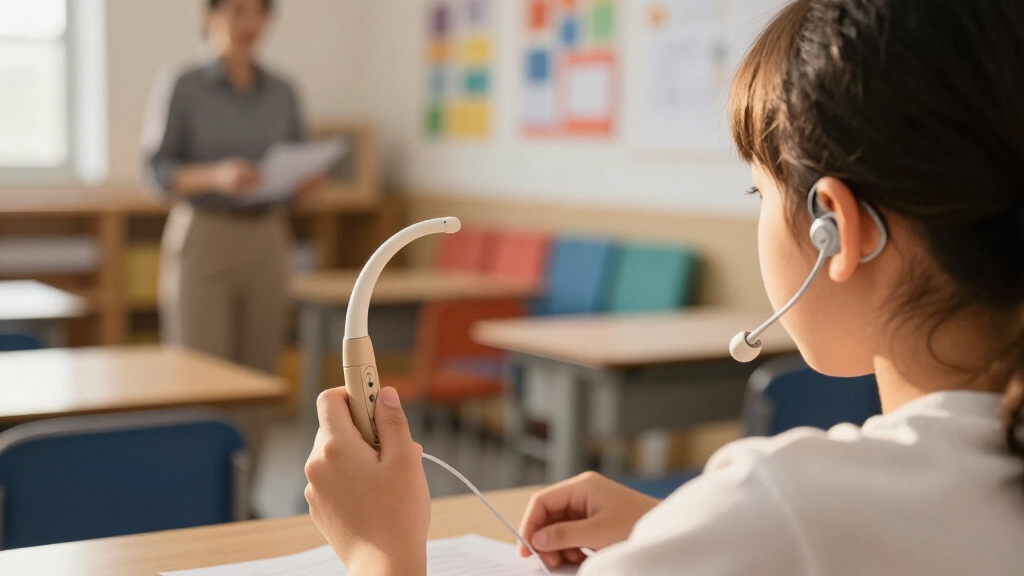
I start by deciding whether the need belongs to one student or a recurring group. A personal amplifier such as the Pocketalker captures nearby speech and sends it directly to one listener, which keeps setup simple but ties performance to microphone placement. A transmitter-and-receiver system sends one teacher feed to several students and works better when learners sit around the room or change seats. Buying a large fleet for one child creates unnecessary charging and inventory work. Relying on one personal amplifier for several students creates sharing delays and inconsistent access. My rule is to choose a personal device for an individual accommodation and a group system when two or more listeners need the same source.
Size the Receiver Fleet for Real Attendance
I would base capacity on the largest realistic listening group, then add a small allowance for new students, damaged units, and batteries that fail during class. A 10-receiver package can be a sensible middle ground even when only seven or eight units are used today. Systems with 15 or 18 receivers give schools more room to grow, but they also increase labeling, cleaning, charging, and loss risk. The 32-slot T130S case is valuable when equipment serves multiple classes because it gives every component a defined home. A four-person kit is easier to manage, yet expansion may cost more than buying a larger package at the start. I would avoid paying for a large fleet unless the school has clear ownership and storage procedures.
Match the System to the Teacher’s Workflow
A device can have strong specifications and still fail if it adds too many steps before every lesson. I favor one-button mute, clear channel controls, and centralized charging because teachers need to move between instruction and private conversation quickly. Separate chargers and loosely stored receivers create more chances for a unit to begin the day empty. Two transmitters can support team teaching or interpretation, but they also require channel planning and staff training. Recording, monitor, and multiple-input functions are useful in media rooms or auditoriums, though they may clutter a basic classroom setup. Before buying, I would write out the daily handout, pairing, collection, and charging routine and reject any configuration staff cannot sustain.
Check Hearing-Aid and Headset Compatibility
I would never assume that a receiver package works equally well for every hearing profile. Neckloops can send audio to telecoil-equipped hearing aids or cochlear implant processors, reducing the need to place another earpiece over an existing device. Bone-conduction headphones keep the ear canal open, but suitability depends on the student’s type of hearing loss and guidance from an audiologist. Standard earbuds or headphones may suit listeners without hearing aids, yet fit, volume limits, sanitation, and sensory comfort vary by age. Connector type also matters because a receiver with a standard audio output offers more headset choices than a proprietary design. I would confirm the student’s approved listening interface before choosing the transmitter technology or package size.
Treat Range as a Room-Planning Question
Published distance figures often describe favorable open conditions rather than a crowded school with walls, Wi-Fi networks, and electronic equipment. I would focus on stable coverage across the actual teaching space, including rear seats, adjoining activity areas, and movement between stations. A 300-meter rating can help during assemblies or outdoor instruction, but it brings little benefit in a single compact classroom. Multi-channel operation is more valuable when nearby rooms run separate systems because staff can assign channels and reduce accidental overlap. Schools also need a plan for preventing students from hearing audio intended for another class. A short pilot in the intended rooms can reveal dead spots and channel conflicts before a larger fleet purchase.
Budget for Ownership Rather Than the Box
The purchase price leaves out several expenses that shape long-term value. I would account for replacement earpieces, batteries, charging hardware, cleaning supplies, cases, and lost receivers. Rechargeable fleets cost more at purchase but can reduce recurring battery work when devices are used every school day. A longer warranty is attractive for shared equipment, although coverage terms and access to replacement parts matter more than the headline duration alone. An ADA plaque may support venue signage, but it does not prove that a package meets every student accommodation or local requirement. The better investment is the system with serviceable components and a named staff owner, even when another option offers more features for the same initial price.
Frequently Asked Questions
How Many Receivers Should a Classroom System Include?
I would count every current student who needs the teacher feed, then add one or two spare receivers for enrollment changes, charging failures, or repairs. A four-person kit works for a stable small group, while a 10-receiver system gives a typical intervention group more flexibility. Fifteen- and 18-receiver packages make more sense for assemblies, language access, or equipment shared across classes. Extra receivers create inventory and sanitation work, so buying the largest package is not automatically safer. My preferred capacity is the highest expected attendance plus a modest reserve.
Can These Systems Connect Directly to Hearing Aids or Cochlear Implants?
Some can, but the connection depends on the receiver output and the student’s hearing technology. A package with neckloops may connect through a telecoil in a compatible hearing aid or cochlear implant processor. Other students may need headphones, an approved direct-audio accessory, or an intermediary supplied by their hearing-care team. Auracast can offer direct broadcast audio when both the transmitter and personal device support the required Bluetooth features, but mixed device fleets can limit that benefit. I would verify the exact model pairing with the student’s audiologist or school hearing specialist before purchase.
Is a 2.4 GHz System Better Than a Traditional FM System for School Use?
Neither format wins in every school. A 2.4 GHz system can offer compact hardware and license-free operation, but busy wireless environments and walls may affect usable coverage. A traditional FM system can provide dependable room coverage and may fit an established installed setup, though frequency rules, channel availability, and older hardware deserve review. Auracast adds direct-device possibilities, yet compatibility is less predictable when students use different generations of hearing technology. I would choose based on a room trial, device compatibility, and local frequency requirements, not the newest label.
Should I Buy a Portable Kit or a Permanently Installed Classroom System?
I favor a portable kit when students change rooms, the school shares equipment, or instruction extends outdoors. A fixed system makes more sense in an auditorium, lecture room, or dedicated classroom where audio sources and seating remain consistent. Portable equipment needs a secure case and a clear charging location, while installed equipment needs professional placement and a plan for guest users. Schools sometimes buy portability without assigning anyone to move the kit, leaving it stored away from the student who needs it. I would choose the format that matches the student’s daily route and staff responsibilities.
Does an Included ADA Plaque Mean the Classroom Is Fully Compliant?
No; I treat an included plaque as signage, not proof that a room or school has met every access obligation. Compliance can depend on venue capacity, receiver quantity, hearing-aid compatibility, maintenance, staff training, and the accommodations documented for individual students. A package may include the correct symbol while still lacking enough receivers or the right listening interface. Requirements can also differ by facility and jurisdiction. I would ask the school accessibility coordinator to review the complete system and deployment plan rather than relying on package wording.
Conclusion
For most schools, my best overall recommendation is the Retekess T130S because its two transmitters, 18 receivers, and 32-slot charging case make fleet management easier across classes. My best value pick is the Retekess T130 with 10 receivers, which offers enough group capacity without the cost and bulk of the larger package. For beginners or very small groups, I would choose the 4-Person Assistive Listening System with Carrying Case and ADA Plaque because its contained package is less demanding to deploy.
The Venucast AuraPlex MX is my premium, forward-looking choice for schools ready to build around Auracast-compatible devices, though mixed hearing-device support may reduce its immediate value. For one student who needs close-range amplification, the Williams Sound Pocketalker Ultra is the better specific-use choice; for telecoil users, I would favor the 10-person neckloop system. Large auditoriums and campus events are better matches for a Retekess TT119 configuration, while the Peavey system suits buyers who prefer a compact fixed-frequency installation. The right choice comes down to listener count, hearing interface, staff workflow, and room type, with the T130S offering the strongest balance across those needs.