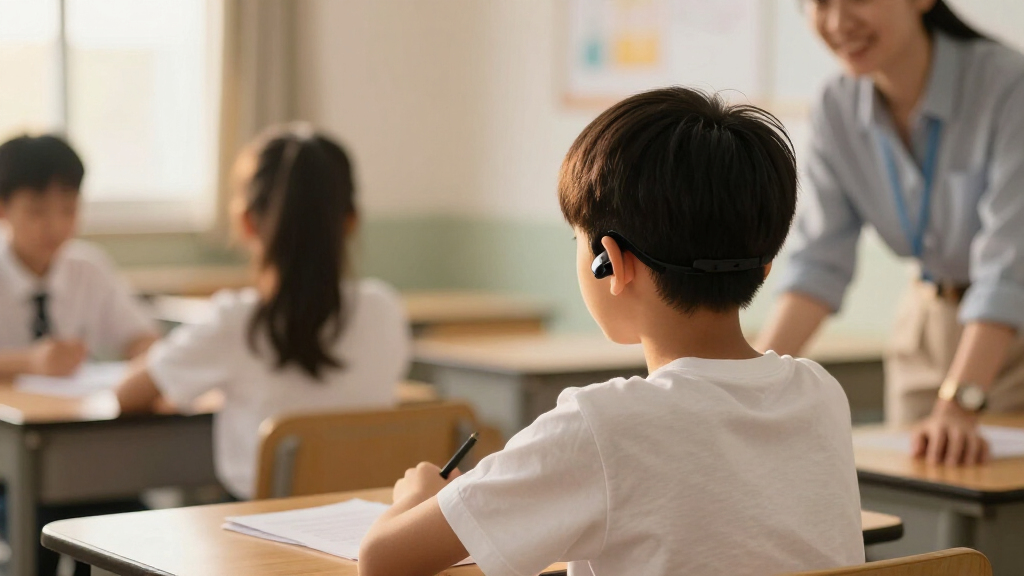

Finding the right assistive listening device for students involves balancing clarity, ease of use, and affordability. The Avantree Audiplex MX stands out as the best overall, thanks to its multi-channel setup and reliable performance. For larger classrooms or events, the Retekess TT119 offers extensive range and multiple receivers, making it ideal for group settings. However, tradeoffs include higher costs for premium models and potential complexity for beginners. Keep reading to explore these options in detail and find the best fit for your needs.
Key Takeaways
- Top-tier models like the Avantree Audiplex MX deliver high sound quality with multi-user support, ideal for classroom environments.
- Larger systems such as the Retekess TT119 excel in group settings but come with increased setup complexity and cost.
- Personal amplifiers like the Reizen Loud Ear provide straightforward solutions for individual use but may lack group support features.
- Build quality and warranty are significant differentiators, with premium systems offering longer support periods and durability.
- Battery life and ease of charging are often overlooked but crucial for all-day classroom use, especially in portable systems.
| Avantree Audiplex MX Multi-Channel Assistive Listening System with 1 Transmitter and 10 Receivers |  | Best Overall for Large Groups and Multi-Channel Flexibility | Channels Supported: 4 | Latency: 30ms | Wireless Transmission: 2.4G | VIEW LATEST PRICE | See Our Full Breakdown |
| Retekess TT119 Assistive Listening System (1 Transmitter, 50 Receivers) for Church, School, Tour Guides, and Conferences |  | Best for Large, Multilingual Events with Long Range Needs | Range: 300 meters / 980 feet | Channels: 17 | Number of Receivers: up to 50 | VIEW LATEST PRICE | See Our Full Breakdown |
| Reizen Loud Ear 110dB Gain Personal Amplifier |  | Best for Individual Use and Severe Hearing Loss | Sensitivity: 120dB | Maximum sound pickup distance: 100 feet | Batteries included: 2 AAA batteries | VIEW LATEST PRICE | See Our Full Breakdown |
| Williams Sound Pocketalker 2.0 Hearing Amplifier |  | Best for Seniors and Basic Personal Amplification | Amplification: Up to 40dB | Power Source: 2 AAA batteries | Warranty: 5 years | VIEW LATEST PRICE | See Our Full Breakdown |
| 4-Person Assistive Listening System with 3-Year Warranty and Phone Support |  | Best for Small Group Settings with Reliable Support and Expandability | Item Weight: 4 pounds | Warranty: 3 years | Supports: 4 people | VIEW LATEST PRICE | See Our Full Breakdown |
| Retekess TT119 Assistive Listening System for Church and Events |  | Best for Large Venues and Extended Range | Range: 300 m / 984 ft | Channels: 17 | Input Options: XLR, AUX, RCA, USB | VIEW LATEST PRICE | See Our Full Breakdown |
| 25-Person Assistive Listening System with Lifetime Warranty and Support |  | Best for Small to Medium Groups with Support Needs | Supports: 25 people | Includes: Neckloops, ADA plaque | Warranty: Lifetime | VIEW LATEST PRICE | See Our Full Breakdown |
| Williams Sound Pocketalker Ultra Hearing Amplifier |  | Best for Mild to Moderate Hearing Needs and Personal Use | Amplification: up to 40dB | Includes: Extra batteries, headphones, microphone extension | Adjustable Controls: Volume and tone | VIEW LATEST PRICE | See Our Full Breakdown |
| Retekess T130S Assistive Listening System with 32-Slot Charge Case and Long Range |  | Best for Large Venues with Long Range and Quick Charging | Range: up to 328 feet | Battery Life: 20 hours | Number of Channels: 49 | VIEW LATEST PRICE | See Our Full Breakdown |
| Retekess TT106S Assistive Listening System with 2.4G Wireless Microphone and 50H Battery Life |  | Best for Training, Interpreting, and Short-Term Events | Battery Life: 50 hours | Range: 200 meters | Channels: 9999 | VIEW LATEST PRICE | See Our Full Breakdown |
| assistive listening devices for student | Range | Includes |
|---|---|---|
| Avantree Audiplex MX Multi-Cha | 100 meters / 1028 feet | 1 transmitter, 10 clip-on receivers, 3 wired earbuds |
| Retekess TT119 Assistive Liste | 300 meters / 980 feet | — |
| Reizen Loud Ear 110dB Gain Per | — | — |
| Williams Sound Pocketalker 2.0 | — | — |
| 4-Person Assistive Listening S | — | ADA plaque |
| Retekess TT119 Assistive Liste | 300 m / 984 ft | — |
| 25-Person Assistive Listening | — | Neckloops, ADA plaque |
| Williams Sound Pocketalker Ult | — | Extra batteries, headphones, microphone extension |
| Retekess T130S Assistive Liste | up to 328 feet | 32-slot charge case |
| Retekess TT106S Assistive List | 200 meters | — |
More Details on Our Top Picks
Avantree Audiplex MX Multi-Channel Assistive Listening System with 1 Transmitter and 10 Receivers
This system stands out for supporting up to four channels, which effectively prevents audio interference in crowded environments like schools or churches. Its long-range capability of 100 meters ensures coverage over large spaces, surpassing the Retekess TT119’s 300-meter range, making it ideal for sizable venues. The low latency of 30ms guarantees synchronized sound, especially useful during presentations. However, the need for wired earbuds for each receiver adds a level of inconvenience that might deter users seeking a fully wireless experience. Compared to the Retekess TT119, which offers more channels and a broader receiver capacity, this system is more straightforward but less versatile for very large groups. Overall, this pick is perfect for institutions prioritizing multi-channel clarity and long-range coverage without overly complex setup.
Pros:- Supports multiple channels to prevent interference
- Long wireless range of 100 meters
- Low latency for synchronized sound
- Expandable for larger groups
Cons:- Requires wired earbuds for receivers
- Limited to 10 receivers included, additional purchase needed
Best for: Schools or churches needing reliable multi-channel support for up to 10 users in large spaces
Not ideal for: Small classrooms or users seeking completely wireless, rechargeable receivers—since it relies on wired earbuds and non-rechargeable options
- Channels Supported:4
- Latency:30ms
- Wireless Transmission:2.4G
- Range:100 meters / 1028 feet
- Number of Receivers:10 (expandable)
- Includes:1 transmitter, 10 clip-on receivers, 3 wired earbuds
Our verdict“This system suits educational or religious settings where multi-channel clarity and extensive coverage are priorities.”
Retekess TT119 Assistive Listening System (1 Transmitter, 50 Receivers) for Church, School, Tour Guides, and Conferences
The Retekess TT119 excels in environments where long-distance communication is essential, with a remarkable 300-meter range that suits large venues like churches or outdoor tours. Its support for 17 channels allows for multiple language streams, setting it apart from simpler mono systems like the Reizen Loud Ear. The system’s portable design and support for various audio inputs make it highly adaptable for different settings. Nonetheless, default mono sound may require manual switching for stereo clarity, which could complicate use during dynamic presentations. The need for batteries and a limited receiver count of 50 might also restrict scalability compared to systems like the 4-person model, which is more limited but easier to set up for small groups. Overall, it’s best for organizers needing extensive range and multilingual support in large, complex environments.
Pros:- Long-range of 300 meters
- Supports multiple languages simultaneously
- Easy one-click operation
- Portable and compatible with various inputs
Cons:- Mono sound default, may need switching for stereo
- Requires batteries for operation
- Limited to 50 receivers in the package
Best for: Large venues or multilingual tours requiring extensive range and multiple language channels
Not ideal for: Small classrooms or users wanting a plug-and-play, rechargeable setup—since it relies on batteries and may need manual audio adjustments
- Range:300 meters / 980 feet
- Channels:17
- Number of Receivers:up to 50
- Input Compatibility:XLR, AUX, RCA, USB
- Weight of Receiver:90 grams
- Battery Life:up to 10 hours
Our verdict“This system is ideal for large, complex venues where long-range and multilingual capabilities are essential.”
Reizen Loud Ear 110dB Gain Personal Amplifier
This personal amplifier offers significant sound amplification, making it well-suited for students with severe hearing challenges. Its 120dB sensitivity outperforms basic models like the Williams Sound Pocketalker 2.0, providing a more powerful boost for weak sounds. The adjustable volume control and 100-foot pickup distance make it flexible for different environments, from classrooms to outdoor settings. However, its bulkiness and reliance on AAA batteries may be less appealing for users seeking a lightweight, rechargeable device. Unlike systems designed for multiple users, this amplifier is a dedicated personal device, limiting its use in group settings but excelling for individual needs. If a student needs a strong, portable hearing boost, this model delivers, but it’s less practical for classroom-wide amplification.
Pros:- High sensitivity of 120dB
- Long-distance sound pickup up to 100 feet
- Adjustable volume for personalized hearing
- Includes dual earphones for stereo sound
Cons:- Bulky design may be less comfortable
- Requires disposable AAA batteries, no rechargeable option
Best for: Students with severe hearing loss needing portable, high-gain amplification
Not ideal for: Users seeking a discreet, rechargeable device or group amplification—since it’s bulky and uses disposable batteries
- Sensitivity:120dB
- Maximum sound pickup distance:100 feet
- Batteries included:2 AAA batteries
- Earphones:Dual earphones
Our verdict“This amplifier is ideal for students with severe hearing loss who need powerful, portable sound enhancement.”
Williams Sound Pocketalker 2.0 Hearing Amplifier
The Pocketalker 2.0 offers an easy-to-use solution for elderly students or those new to assistive listening devices. Its amplification up to 40dB is sufficient for mild to moderate hearing difficulties, especially when compared with the more powerful Retekess TT119 or the Loud Ear. Its simple setup, long battery life, and included accessories make it a practical choice for users who prioritize convenience over raw power. However, the limited amplification might not meet the needs of students with more substantial hearing issues. Additionally, the lack of a built-in rechargeable option means ongoing battery replacement. Compared to the Retekess TT119, which offers more advanced features like multiple channels, this device is less versatile but excels in simplicity and reliability for day-to-day use in quiet environments.
Pros:- Simple to set up and operate
- Long-lasting with 2 AAA batteries
- Adjustable volume and tone
- Includes multiple accessories
Cons:- Limited to 40dB amplification
- No rechargeable battery option
Best for: Seniors or students with mild to moderate hearing loss seeking an easy, straightforward device
Not ideal for: Students with severe hearing loss or those requiring high amplification—since it caps at 40dB and lacks rechargeable batteries
- Amplification:Up to 40dB
- Power Source:2 AAA batteries
- Warranty:5 years
- Included Accessories:Microphone, earbuds, headphones, batteries, extension cord, user manual
Our verdict“This device suits users seeking a basic, reliable hearing amplifier for everyday use with minimal fuss.”
4-Person Assistive Listening System with 3-Year Warranty and Phone Support
This system provides a straightforward solution for small groups, supporting up to four users simultaneously. Its inclusion of a 3-year warranty and dedicated phone support adds confidence for organizations seeking dependable service. While its capacity is limited compared to larger systems like the Retekess TT119, it offers expandability with additional receivers, making it flexible for growing needs. The system’s portability and simple setup make it suitable for churches, classrooms, or small theaters. However, the limited user capacity without extra receivers can be a drawback for larger groups, and the need for additional purchases to expand could increase total costs. Compared to the Avantree Audiplex MX, which is geared more toward large-scale venues, this pick makes the most sense for those prioritizing ease of use and reliable support for small groups.
Pros:- Supports 4 users simultaneously
- Includes 3-year warranty and phone support
- Expandable with additional receivers
- Lightweight and portable
Cons:- Limited to 4 users without expansion
- Requires additional purchases for larger groups
Best for: Small institutions or classrooms needing a dependable, expandable system supporting up to four users
Not ideal for: Large venues or groups expecting rapid growth—since it’s limited to four users without extra receivers
- Item Weight:4 pounds
- Warranty:3 years
- Supports:4 people
- Includes:ADA plaque
- Expandability:Yes, with additional receivers
Our verdict“This system is ideal for small, growing groups that value reliable support and expandability without complexity.”
Retekess TT119 Assistive Listening System for Church and Events
The Retekess TT119 stands out for its impressive 300-meter wireless range, making it ideal for large venues like churches and conference halls. Compared with smaller systems like the Williams Sound Pocketalker Ultra, this option provides coverage over vast spaces, but it requires external batteries for receivers, which adds complexity. The support for 17 channels and multiple input options ensures flexibility for various audio sources, though the mono default may require adjustment for stereo sound. Its easy one-click operation simplifies use during events, but the 10-hour battery life can be limiting for all-day sessions. This system is best suited for venues needing extensive coverage, where its range outweighs the inconvenience of external power. However, for portable or small classroom settings, it might be overkill. The system’s compatibility with multiple input types enhances adaptability, yet it demands external batteries, which could be less convenient.- Long wireless range of 300 meters
- Supports 17 channels and multiple input options
- Easy one-click mute and pause functions
- Compatible with XLR, AUX, RCA, USB
Pros:- Impressive 300-meter wireless range suitable for large spaces
- Supports multiple languages with up to 17 channels
- User-friendly with one-click mute and pause features
Cons:- Requires external batteries for receivers, adding setup complexity
- Limited to 10 hours of continuous use, which may not suffice for long events
Best for: Large venues like churches, schools, and conference centers needing extensive coverage
Not ideal for: Small classrooms or portable settings where simplicity and portability are prioritized
- Range:300 m / 984 ft
- Channels:17
- Input Options:XLR, AUX, RCA, USB
- Weight of Receiver:90 grams
- Battery Life:Up to 10 hours
Our verdict“This system makes the most sense for large venues requiring extensive coverage and multiple input options, despite some logistical drawbacks.”
25-Person Assistive Listening System with Lifetime Warranty and Support
This system supports up to 25 listeners simultaneously and includes key accessories like neckloops and an ADA plaque, making it well-suited for venues like churches and theaters. Compared to the larger Retekess TT119, this model focuses on smaller groups but offers expandability through additional receivers. Its US-based lifetime warranty and support provide peace of mind, though the system’s capacity is limited to 25 without expansion. The included accessories facilitate immediate use, but the absence of detailed pricing and the need for extra purchases for expansion could be drawbacks. This pick is ideal for organizations prioritizing reliable support for small to medium groups, especially when warranty and support are considerations. For larger venues, it may fall short; for very casual settings, it might be more than needed. The expandable design offers future growth but at additional cost.- Supports up to 25 listeners
- Includes neckloops and ADA plaque
- Supports expansion with additional receivers
Pros:- Supports up to 25 listeners simultaneously
- Includes essential accessories like neckloops and ADA plaque
- Lifetime warranty and US-based support
Cons:- Limited to 25 users without expansion, restricting scalability
- No specific pricing details, potential hidden costs for expansion
Best for: Small to medium-sized groups in churches, theaters, or classrooms needing reliable support
Not ideal for: Large venues or events with more than 25 participants, due to capacity limits
- Supports:25 people
- Includes:Neckloops, ADA plaque
- Warranty:Lifetime
- Weight:20 pounds
Our verdict“This system offers reliable support for smaller groups, with the benefit of a lifetime warranty, though its capacity limits scalability for larger audiences.”
Williams Sound Pocketalker Ultra Hearing Amplifier
The Pocketalker Ultra excels as a personal amplifier, especially compared to multi-user systems like the Retekess T130S. It amplifies sounds up to 40dB, making it suitable for individual students with mild to moderate hearing challenges. Its lightweight, ergonomic design makes it easy to carry and operate, and the included accessories, such as extra batteries and headphones, extend usability. However, it is not a substitute for a professional hearing aid and is limited to one user, making it less ideal for classroom-wide amplification. Proper placement is crucial for effective use, and it doesn’t support multiple users simultaneously. This device makes sense for individual students needing personal sound enhancement, not group settings. Its portability and simplicity come with the tradeoff of limited amplification power and scope. Compared to the multi-person systems, it offers convenience but less coverage.- Amplifies sounds up to 40dB
- Lightweight and ergonomic design
- Includes extra batteries and accessories
Pros:- Easy to use with adjustable volume and tone controls
- Lightweight, portable, and comfortable for daily use
- Includes a supply of batteries and accessories for extended use
Cons:- Limited to individual use, not suitable for group amplification
- Not a replacement for professional hearing aids or classroom systems
Best for: Students with mild to moderate hearing loss seeking personal amplification
Not ideal for: Classrooms or groups needing shared sound systems or extensive coverage
- Amplification:up to 40dB
- Includes:Extra batteries, headphones, microphone extension
- Adjustable Controls:Volume and tone
- Compatibility:Neckloops, telecoil devices
- Design:Lightweight, ergonomic
- Warranty:5 years
Our verdict“This personal amplifier is ideal for students needing simple, portable sound enhancement, but it falls short for group or classroom-wide needs.”
Retekess T130S Assistive Listening System with 32-Slot Charge Case and Long Range
The Retekess T130S offers a remarkable 328-foot working distance, making it well-suited for large venues like churches and schools where mobility and range are priorities. Its long battery life of 20 hours and a smart charging case facilitate continuous use, unlike smaller systems like the Avantree Audiplex, which may have shorter battery life. Its support for 49 channels helps prevent interference in crowded environments, though its bulkier size can pose portability issues. The system’s user-friendly interface and group control streamline operation during events, but managing multiple units may require careful channel coordination. This system is perfect for large spaces that demand long-range communication and quick recharging, with the tradeoff being bulk and channel management complexity. For smaller or portable settings, it may be less convenient.- Range up to 328 feet
- 20 hours of continuous use
- Includes a 32-slot charging case
Pros:- Long working range of 328 feet
- Extended 20-hour battery life for all-day use
- Includes a convenient 32-slot charge case
Cons:- Bulkier size may reduce portability and ease of handling
- Requires charging time for multiple units, which could delay setup
Best for: Large venues requiring extensive range, long battery life, and quick recharging capabilities
Not ideal for: Small, portable environments where size and ease of carry are more critical than long-range coverage
- Range:up to 328 feet
- Battery Life:20 hours
- Number of Channels:49
- Includes:32-slot charge case
- Dimensions:19.69 x 5.51 x 12.28 inches
- Material:ABS
Our verdict“This system excels in large, sprawling venues where long-range and continuous operation outweigh portability concerns.”
Retekess TT106S Assistive Listening System with 2.4G Wireless Microphone and 50H Battery Life
The Retekess TT106S combines impressive 50-hour battery life with a 200-meter range, making it ideal for training sessions, interpreting, and short-term events. Its support for a seemingly unlimited number of channels (up to 9999) allows multiple teams to operate simultaneously without interference, unlike systems with limited channels such as the T130S. The one-touch controls simplify operation, but the need for regular charging every 3 hours might cause interruptions during continuous use, especially in busy settings. Auto-shutdown helps conserve power but may require monitoring to prevent unexpected disconnections. This model makes sense for dynamic, multi-team environments, although its sound quality details are less documented. This pick is well-suited for short to medium-length events requiring multiple channels and long battery life, with the tradeoff of frequent charging for extended use. For simple, single-user needs, a less complex device might suffice.- Battery life up to 50 hours
- Range of 200 meters
- Supports 9999 channels
Pros:- Long battery life of up to 50 hours
- Very wide 200-meter range for versatile use
- Supports up to 9999 channels for multiple teams
Cons:- Requires charging every 3 hours for full operation
- Limited detailed info on sound quality, potential for unclear audio
Best for: Training sessions, interpreting, or events with multiple teams needing long-lasting, reliable communication
Not ideal for: Single-user scenarios or continuous long events where frequent charging could cause disruptions
- Battery Life:50 hours
- Range:200 meters
- Channels:9999
- Charging Time:3 hours
Our verdict“This system suits multi-team, dynamic environments demanding long battery life and broad coverage, though frequent charging may be a concern.”
How We Picked
I evaluated assistive listening devices for students based on performance, usability, build quality, and value. Systems needed to support multiple users reliably, with clear audio and simple controls for both teachers and students. I prioritized products with strong battery life, durability, and versatile range options suitable for different classroom sizes and settings. The ranking reflects a balance between features, ease of use, and price, ensuring that both budget-friendly and premium options are fairly represented.Factors to Consider When Choosing Assistive Listening Devices For Students
Choosing an assistive listening device for students involves understanding several key factors that affect usability, reliability, and overall value. It’s important to consider the size of your classroom, the number of users, and whether you need portable or stationary systems. Budget constraints also play a role, but investing in a durable, easy-to-use system can save money in the long run. Below, I cover the main aspects to consider when selecting the best device for your educational environment.Range and Coverage Area
The distance a device can transmit clearly determines how well it will serve your classroom or event space. Larger areas require systems with extended range and multiple receivers. If you teach in a small room, a more compact system might suffice, but for auditoriums or large halls, look for models like the Retekess TT119 that support wide coverage without signal dropouts. Remember, more range often means higher cost and potentially more complex setup.
Ease of Use and Setup
Many assistive listening devices can be complicated to set up and operate, especially for teachers or students unfamiliar with tech. Systems with simple controls, clear instructions, and minimal configuration tend to be more effective in daily use. Consider products with quick pairing features or automated setup processes. The tradeoff might be fewer customization options, but ease of use is critical for consistent application in busy classrooms.
Number of Users Supported
The number of receivers a system can support directly impacts its suitability for group learning or large lectures. Systems like the Avantree Audiplex MX support multiple users simultaneously, ideal for classrooms with several hearing-impaired students. Cheaper or smaller systems may only support a few users, limiting their utility in larger settings. Keep in mind, more users generally mean higher price points and more complex management.
Battery Life and Portability
Long-lasting batteries are essential for all-day use, especially in busy school environments. Systems with quick recharge times or replaceable batteries tend to be more versatile. Portability is another consideration—compact, lightweight units are easier for students to carry around or for teachers to set up on the go. However, increased portability might sacrifice some range or audio quality, so weigh your priorities carefully.
Sound Quality and Feedback Resistance
Clear audio without feedback or background noise is vital for effective communication. Higher-end models often feature noise reduction and feedback suppression, making speech easier to understand. Cheaper systems might struggle with interference or static, reducing their effectiveness. Testing or reading reviews about sound clarity can help avoid dissatisfaction, especially in noisy or reverberant environments.
Frequently Asked Questions
Can these systems be used with hearing aids?
Many assistive listening devices are compatible with hearing aids, especially those with T-coil (telecoil) compatibility. This feature allows the device to directly connect to the hearing aid’s T-coil, providing a clearer sound free of background noise. However, not all models have this feature, so checking specifications is essential. For students with hearing aids, choosing a system with T-coil compatibility can significantly enhance their experience.
Are wireless systems more reliable than wired ones?
Wireless assistive listening devices offer greater flexibility and easier setup, which is advantageous in dynamic classroom environments. They eliminate clutter and reduce trip hazards associated with wires. However, wireless systems can sometimes face interference or connectivity issues, especially in crowded or signal-rich areas. Wired systems tend to be more stable but are less flexible and more cumbersome to move around. The best choice depends on your environment and mobility needs.
What is the typical battery life I should look for?
For daily classroom use, a battery life of at least 8-12 hours is recommended to cover an entire school day without interruption. Rechargeable batteries are convenient, but systems with replaceable batteries can sometimes offer longer use. Consider systems with quick recharge features or spare batteries to avoid downtime. A longer battery life reduces the need for frequent charging or battery replacement, making devices more reliable during busy days.
How important is durability for these devices?
Durability is a key factor, especially in school settings where devices are frequently handled, transported, and sometimes subjected to rougher treatment. Look for models with sturdy casings, water resistance, and good warranty coverage. Investing in a durable device reduces long-term costs and minimizes downtime due to repairs. For active or younger students, rugged designs can make a significant difference in device longevity.
Should I prioritize features over price?
While budget is a consideration, focusing solely on price can lead to purchasing systems that lack essential features like sufficient range, sound clarity, or durability. A more expensive system with better performance, ease of use, and longer warranty can be more cost-effective over time. Assess your specific needs—such as the size of the classroom and number of users—and choose a device that provides the best value for those requirements.
Conclusion
For those seeking the best overall experience, the Avantree Audiplex MX offers a balanced mix of multi-user support, reliable audio, and ease of setup, making it ideal for most classroom environments. Budget-conscious buyers will find the Reizen Loud Ear or smaller systems suitable for individual use without breaking the bank. Educators or schools requiring large-group support with long-range coverage should consider models like the Retekess TT119 or the 25-Person system, despite the higher investment. For beginners or casual users, simpler, portable units with straightforward controls are recommended, while those with specific needs, like T-coil compatibility, should prioritize features accordingly. Overall, your choice depends on classroom size, user numbers, and budget—matching those factors to the right device will ensure effective, accessible communication for all students.