Personal sound amplifiers for hearing loss vary in how they pick up nearby speech, fit, recharge, and manage background noise. My best overall pick is the Williams Sound PockeTalker Ultra DUO for its dedicated listening setup and choice of headphone or earbud; the SuperEar Plus SE7500 stands out for straightforward amplification, while the MEDca Bluetooth Personal Sound Amplifier adds app control and a charging case. The main tradeoffs are discreet in-ear wear versus a separate microphone you can aim, and rechargeable convenience versus replaceable battery life. These devices amplify sound but are not a substitute for a hearing evaluation or prescription hearing aids. Read on for how all 15 options compare and which buyer each one suits.

Get everyday helpers delivered free — and shop member deals
- Fast, free delivery on millions of items
- Access to Prime Big Deal Days deals on October 6–7
- Prime Video, Amazon Music and more included
Complete the kit


Key Takeaways
- The PockeTalker Ultra DUO leads for focused listening because its separate microphone can be positioned toward a speaker, and it includes both headphone and earbud options.
- The SuperEar Plus SE7500 is a simpler alternative for buyers who want a dedicated amplifier without the Bluetooth and app features found in some in-ear models.
- The MEDca Bluetooth model favors connected convenience with app control and a charging case, though buyers who prefer minimal setup may find that feature set unnecessary.
- Several picks use a microphone-and-headphone format, including SuperEar SE5000, Joanbro, and Williams Sound; this can suit conversations or television listening but is less discreet than in-ear devices.
- Rechargeable and long-battery claims do not settle fit or sound quality; buyers still need to check wearing comfort, control simplicity, and whether amplification suits their listening environment.
| Audien Atom One OTC Hearing Aids | 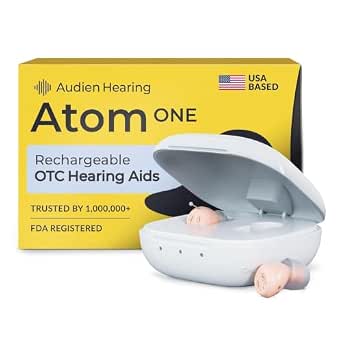 | Best for Simple Rechargeable Wear | Fit: In-ear | Controls: Analog volume and frequency dials | Battery: Rechargeable lithium-ion | VIEW LATEST PRICE | See Our Full Breakdown |
| Silver Sonic Personal Sound Amplifier |  | Best for Distant Listening | Maximum range: Up to 90 feet | Amplification: Up to 50 dB | Sound controls: Adjustable volume and HI/LOW frequency switch | VIEW LATEST PRICE | See Our Full Breakdown |
| Reizen Loud Ear Personal Sound Amplifier |  | Best for Long-Range Pocket Use | Pickup distance: Up to 100 feet | Sensitivity: 110 dB ±3 dB per mW | Frequency range: 20 Hz–20 kHz | VIEW LATEST PRICE | See Our Full Breakdown |
| SuperEar Plus SE7500 Personal Sound Amplifier |  | Best for Extended Battery Runtime | Model: SE7500 | Sound gain: Up to 50+ dB | Battery type: 2 AAA batteries | VIEW LATEST PRICE | See Our Full Breakdown |
| Hearing Aid for Seniors, Noise Cancelling, 500 Hours Per Battery Life |  | Best for Long-Lasting Behind-Ear Wear | Fit: Rotatable behind-ear design with hook | Battery type: P675 Zine Air Varta | Battery capacity: 620 mAh | VIEW LATEST PRICE | See Our Full Breakdown |
| SuperEar SE5000 Personal Sound Amplifier with Headphones and Earbuds |  | Best for Flexible Everyday Listening | Amplification: Up to 50+ dB | Battery: 1 AAA battery included | Battery life: Up to 30 hours with moderate to heavy use | VIEW LATEST PRICE | See Our Full Breakdown |
| Tangsonic TS-755 Rechargeable OTC Hearing Aids with Bluetooth |  | Best for Bluetooth and Everyday Wear | Type: OTC in-ear hearing aids | Sound processing: 32-channel | Connectivity: Bluetooth; compatible with iOS and Android | VIEW LATEST PRICE | See Our Full Breakdown |
| MEDca MZ-21 Mini CIC Hearing Amplifiers, Pair |  | Best Compact Battery-Powered Pair | Type: In-ear CIC hearing amplifiers | Quantity: Pair | Power source: A10 batteries | VIEW LATEST PRICE | See Our Full Breakdown |
| Joanbro Personal Sound Amplifier with Headphones and Earbud |  | Best for Multiple Microphone Setups | Additional acoustic gain: 50 dB | Total gain: Up to 108 dB | Microphone options: 3 types | VIEW LATEST PRICE | See Our Full Breakdown |
| Rechargeable Hearing Amplifier with Headphones |  | Best for Long Runtime | Sound gain: Up to 65 dB | Charging time: About 1 hour | Battery life: Up to 120 hours per charge | VIEW LATEST PRICE | See Our Full Breakdown |
| IceHeat Rechargeable Personal Sound Amplifier for Seniors |  | Best for Room-to-Room Listening | Maximum audio range: 30 feet | Gain: 50 dB | Tone control: 7 levels | VIEW LATEST PRICE | See Our Full Breakdown |
| Rechargeable Personal Hearing Amplifier with Directional Microphone |  | Best for Long Battery Life | Maximum sound gain: 65 dB | Charging time: About 1 hour | Battery life: Up to 120 hours | VIEW LATEST PRICE | See Our Full Breakdown |
| Williams Sound PockeTalker Ultra DUO Sound Amplifier with Headphone and Earbud |  | Best for Flexible Listening Accessories | Acoustic gain: 20–40 dB | Battery life: Up to 100 hours | Batteries: Two AAA | VIEW LATEST PRICE | See Our Full Breakdown |
| MEDca Bluetooth Personal Sound Amplifier with App Control and Charging Case |  | Best for App-Based Adjustments | Connectivity: Bluetooth 5.3 | Battery life: Up to 21 hours | Charging case capacity: 800 mAh | VIEW LATEST PRICE | See Our Full Breakdown |
| iBston Nova In-Ear Hearing Aids for Seniors |  | Best for Simple, App-Free Wear | Weight: 1.4 g | Charging time: 1.5 hours | Use time: Up to 20 hours | VIEW LATEST PRICE | See Our Full Breakdown |
| personal sound amplifiers for hearing loss | Battery life | Controls |
|---|---|---|
| Audien Atom One OTC Hearing Ai | Up to 24 hours | Analog volume and frequency dials |
| Silver Sonic Personal Sound Am | Up to 14 hours of continuous use | — |
| Reizen Loud Ear Personal Sound | — | — |
| SuperEar Plus SE7500 Personal | Up to 80 hours | Adjustable volume |
| Hearing Aid for Seniors | Up to 500 hours per battery | — |
| SuperEar SE5000 Personal Sound | Up to 30 hours with moderate to heavy use | — |
| Tangsonic TS-755 Rechargeable | Up to 18 hours per charge; up to 60 hours with charging case | Button control for volume and listening modes |
| MEDca MZ-21 Mini CIC Hearing A | 4–7 days with normal use | Button control with adjustable volume and multiple modes |
| Joanbro Personal Sound Amplifi | About 40 hours of moderate use | — |
| Rechargeable Hearing Amplifier | Up to 120 hours per charge | Single knob for power and volume |
| IceHeat Rechargeable Personal | — | — |
| Rechargeable Personal Hearing | Up to 120 hours | One-knob power and volume control |
| Williams Sound PockeTalker Ult | Up to 100 hours | External volume and tone |
| MEDca Bluetooth Personal Sound | Up to 21 hours | Companion app and push buttons |
| iBston Nova In-Ear Hearing Aid | — | Single on-device button |
More Details on Our Top Picks
Audien Atom One OTC Hearing Aids
Audien Atom One is the most hearing-aid-like pick in this group: its compact in-ear fit, rechargeable battery, and separate analog volume and frequency dials suit adults who want straightforward daily adjustments without an app. The three ear dome sizes give buyers more ways to find a secure fit than the single-earphone setup of the Reizen Loud Ear. At up to 24 hours per charge, it also avoids the frequent battery changes required by the Silver Sonic. The tradeoff is that recharging takes about three hours, so it needs a place in the buyer’s routine. Its stated suitability is limited to mild to moderate hearing loss, and its in-ear design may be less convenient for someone who prefers an over-ear or headphone-style amplifier. Expert-guided setup and a one-year warranty add useful support for first-time buyers.
Pros:- Volume and frequency dials work without an app
- Rechargeable battery provides up to 24 hours of stated use
- Three ear dome sizes support a more tailored in-ear fit
- Includes expert-guided setup and a one-year warranty
Cons:- Designed for mild to moderate hearing loss
- Requires about three hours to recharge
- In-ear fit may not suit buyers who prefer headphones or an ear hook
Best for: Adults with mild to moderate hearing loss who want discreet in-ear wear, physical controls, and rechargeable daily use.
Not ideal for: People with severe hearing loss, those who prefer a pocket amplifier with a separate earphone, or anyone who cannot plan around a three-hour recharge.
- Fit:In-ear
- Controls:Analog volume and frequency dials
- Battery:Rechargeable lithium-ion
- Battery life:Up to 24 hours
- Charging time:About 3 hours
- Charging connector:USB-C
- Ear dome sizes:Small, medium, and large
- Warranty:1 year
Our verdict“Choose the Audien Atom One if you want simple, rechargeable in-ear amplification for mild to moderate hearing loss and can keep up with its charging routine.”
Silver Sonic Personal Sound Amplifier
Silver Sonic is the clearest fit for someone who wants to bring a distant speaker closer during a lecture, conversation, or TV listening: its stated pickup range reaches up to 90 feet, and a HI/LOW frequency switch gives a basic way to adjust the sound. That range makes it more suited to listening across a room than the close-wear Audien Atom One. Its flexible ear hook can be worn on either ear, and three soft tips offer some fit choice. The tradeoffs are a stated battery life of up to 14 hours and reliance on button cell batteries, unlike the Audien’s rechargeable design. It is a personal amplifier with a single-ear fit, not a discreet pair of OTC hearing aids, so buyers seeking all-day bilateral hearing support should look elsewhere.
Pros:- Stated pickup range reaches up to 90 feet
- Adjustable volume and HI/LOW frequency switch
- Flexible ear hook fits either ear
- Includes three soft ear tips and two button cell batteries
Cons:- Uses button cell batteries rather than a rechargeable battery
- Stated continuous battery life is up to 14 hours
- Single-ear amplifier may not suit buyers seeking paired hearing aids
Best for: Listeners who want a simple ear-hook amplifier for following a speaker or TV from across a room.
Not ideal for: People seeking rechargeable, discreet in-ear hearing aids or a device intended for continuous all-day use.
- Maximum range:Up to 90 feet
- Amplification:Up to 50 dB
- Sound controls:Adjustable volume and HI/LOW frequency switch
- Fit:Flexible ear hook for left or right ear
- Included ear tips:3 soft ear tips
- Battery life:Up to 14 hours of continuous use
- Power:2 button cell batteries
Our verdict“Pick the Silver Sonic for occasional listening to distant speakers when range and simple controls matter more than rechargeability or discreet paired wear.”
Reizen Loud Ear Personal Sound Amplifier
Reizen Loud Ear separates the microphone and controls from the earphone, giving it a pocket-amplifier format that can be clipped to clothing. Its stated pickup distance of up to 100 feet is the longest listed among these five products, edging past the Silver Sonic’s 90-foot range on paper. A belt clip and included AAA batteries make it ready for portable use, while the adjustable volume lets the listener set amplification for the situation. The compromise is a single earphone, which can feel less natural for everyday listening than the Audien Atom One’s in-ear form. It also runs on two AAA batteries rather than recharging, and its 90-day warranty is shorter than Audien’s one-year coverage. This is best viewed as a portable listening aid, not a discreet, paired hearing-aid solution.
Pros:- Stated pickup distance reaches up to 100 feet
- Belt clip keeps the amplifier portable
- Adjustable volume control
- Includes two AAA batteries and a single earphone
Cons:- Uses a single earphone rather than a paired fit
- Requires two AAA batteries
- 90-day warranty is shorter than the Audien Atom One’s one-year warranty
Best for: Listeners who want a clip-on personal amplifier for conversations or presentations at a distance and are comfortable using one earphone.
Not ideal for: Buyers who want discreet in-ear wear, paired amplification, or rechargeable power with longer warranty coverage.
- Pickup distance:Up to 100 feet
- Sensitivity:110 dB ±3 dB per mW
- Frequency range:20 Hz–20 kHz
- Estimated battery life:48 hours
- Power source:2 AAA batteries
- Dimensions:2.5 × 1.75 × 0.75 inches
- Weight:2.4 ounces
- Warranty:90 days
Our verdict“Choose Reizen Loud Ear if portable, long-range listening with a clip-on unit matters more to you than discreet paired wear or recharging.”
SuperEar Plus SE7500 Personal Sound Amplifier
SuperEar Plus SE7500 stands out for its stated battery life of up to 80 hours, well beyond the Silver Sonic’s 14 hours and the Reizen Loud Ear’s estimated 48 hours. That can mean fewer battery changes for someone who uses an amplifier often but does not want a rechargeable in-ear device such as the Audien Atom One. The package includes both earbuds and headphones, so the listener can choose between a more compact listening setup and an over-ear option. Its adjustable volume and microphone designed to reduce handling noise support simple listening on the move. The tradeoff is that it still uses two AAA batteries, and the provided information lists volume control but no frequency adjustment or hearing-loss range. Buyers seeking a close-fitting OTC hearing aid with specified mild-to-moderate suitability may prefer the Audien.
Pros:- Stated battery life of up to 80 hours
- Includes both earbuds and headphones
- Microphone is designed to minimize handling noise
- Carry case with belt clip supports portable storage
Cons:- Requires two AAA batteries
- Only adjustable volume is listed as a sound control
- Provided product data does not specify a hearing-loss range
Best for: Frequent personal-amplifier users who value long stated runtime and want both earbud and headphone listening options.
Not ideal for: Buyers who want rechargeable power, detailed frequency controls, or a device with a stated hearing-loss suitability range.
- Model:SE7500
- Sound gain:Up to 50+ dB
- Battery type:2 AAA batteries
- Battery life:Up to 80 hours
- Controls:Adjustable volume
- Included listening accessories:Earbuds and headphones
- Included carrying accessory:Carry case with belt clip
- Additional features:Automatic shut-off; microphone designed to minimize carry noise
Our verdict“Choose the SE7500 if long battery runtime and flexible listening accessories matter more than rechargeable power or frequency controls.”
Hearing Aid for Seniors, Noise Cancelling, 500 Hours Per Battery Life
This behind-ear amplifier is the pick here for buyers who want a secure hook and infrequent battery changes: the product states up to 500 hours per battery, far longer than the SuperEar Plus SE7500’s 80 hours. Its rotatable design and hook aim to keep it in place during all-day wear, while four frequency programs offer more sound-shaping choices than the Silver Sonic’s HI/LOW switch. The stated 36 dB gain and mild-to-moderate suitability give buyers a clearer use range than the Reizen Loud Ear listing provides. There are tradeoffs: it depends on a specific P675 Zine Air Varta battery type, and its behind-ear form is more visible than the compact in-ear Audien Atom One. Buyers should also distinguish this amplifier’s stated suitability from a clinical hearing assessment.
Pros:- Stated battery life is up to 500 hours per battery
- Rotatable behind-ear design with a secure hook
- Four selectable frequency programs
- Up to 36 dB gain and stated mild-to-moderate suitability
Cons:- Requires a specific P675 Zine Air Varta battery type
- Not intended for severe hearing loss or deafness
- Behind-ear fit is more visible than the Audien Atom One’s in-ear design
Best for: Adults with mild to moderate hearing loss who prefer a secure behind-ear hook and want long stated battery life with several frequency programs.
Not ideal for: People with severe hearing loss, buyers who want discreet in-ear wear, or anyone unable to source the specified P675 Zine Air Varta batteries.
- Fit:Rotatable behind-ear design with hook
- Battery type:P675 Zine Air Varta
- Battery capacity:620 mAh
- Battery life:Up to 500 hours per battery
- Gain:36 dB
- Frequency programs:High, Low, Mid, Wide
- Suitable hearing loss:Mild to moderate
Our verdict“Choose this model if a secure behind-ear fit, several frequency programs, and very long stated battery life are your priorities for mild to moderate hearing loss.”
SuperEar SE5000 Personal Sound Amplifier with Headphones and Earbuds
The SuperEar SE5000 is a practical choice for someone who wants one amplifier for nearby conversations, everyday sounds, and TV listening through headphones. Its swivel microphone and tactile volume wheel make it easier to aim and adjust sound as the setting changes. I rank it ahead of the Joanbro for simpler setup: the SE5000 includes both stereo headphones and earbuds, while Joanbro’s main distinction is its choice of three microphones and long extension cables. That flexibility comes with a limit: the SE5000 does not connect directly or wirelessly to a TV, so it picks up sound in the room rather than feeding audio from the television. Its AAA battery is easy to replace, but requires keeping spares on hand. Choose it for portable, straightforward listening rather than a direct TV or streaming solution.
Pros:- Includes both stereo headphones and stereo earbuds
- Swivel microphone can be repositioned for different listening situations
- Tactile volume wheel allows direct adjustment
- Belt clip and up to 30 hours of stated battery life support portable use
Cons:- Does not connect directly or wirelessly to a television
- Requires a replaceable AAA battery
Best for: Listeners who want a portable amplifier with a choice of over-ear headphones or earbuds for conversations and nearby TV sound
Not ideal for: People who need direct wireless TV audio or prefer a rechargeable device
- Amplification:Up to 50+ dB
- Battery:1 AAA battery included
- Battery life:Up to 30 hours with moderate to heavy use
- Microphone:Swivel microphone
- Volume control:Adjustable tactile control wheel
- Included listening accessories:Stereo headphones and stereo earbuds
- TV connection:Does not connect directly or wirelessly
Our verdict“Choose the SuperEar SE5000 for portable, adaptable listening when room pickup is enough and direct TV audio is not a requirement.”
Tangsonic TS-755 Rechargeable OTC Hearing Aids with Bluetooth
The Tangsonic TS-755 is the most phone-connected option in this group: its Bluetooth streaming and hands-free calls suit buyers who want in-ear amplification alongside everyday phone audio. Compared with the MEDca MZ-21, which focuses on compact amplification with replaceable batteries, the TS-755 adds a rechargeable case and phone connectivity. That makes it more versatile for calls and media, though it also means a buyer should be comfortable with in-ear fit and charging routines. The set offers 32-channel processing, noise cancellation, and three silicone dome sizes, giving users several fit options and listening controls. It is intended for perceived mild to moderate hearing loss, and the supplied data does not state battery runtime while streaming. I would skip it if a simple, non-connected pocket amplifier is the priority.
Pros:- Supports Bluetooth streaming and hands-free calls with iOS and Android devices
- Charging case provides up to 60 hours of stated total use
- Three silicone dome sizes offer fit options
- Button controls adjust volume and listening modes
Cons:- Intended for perceived mild to moderate hearing loss only
- Runtime specifically while Bluetooth streaming is not stated
- Requires an in-ear fit and regular charging
Best for: Adults with perceived mild to moderate hearing loss who want in-ear amplification, phone streaming, and hands-free calling
Not ideal for: Buyers who need a clearly stated Bluetooth streaming runtime, or who prefer a pocket amplifier with headphones
- Type:OTC in-ear hearing aids
- Sound processing:32-channel
- Connectivity:Bluetooth; compatible with iOS and Android
- Battery life:Up to 18 hours per charge; up to 60 hours with charging case
- Charging:USB-C
- Controls:Button control for volume and listening modes
- Fit:In-ear, with S/M/L silicone domes
- Features:Noise cancellation, LED light, and auto-on/off
Our verdict“Pick the TS-755 if you want an in-ear amplifier that also handles phone calls and streaming, and its stated hearing range fits your needs.”
MEDca MZ-21 Mini CIC Hearing Amplifiers, Pair
The MEDca MZ-21 is aimed at buyers who want small in-ear amplifiers rather than a pocket unit with headphones. Its adjustable volume and multiple sound modes give it more direct listening control than the simpler one-knob Rechargeable Hearing Amplifier with Headphones, while its stated 4–7 day battery life may suit people who would rather change batteries occasionally than charge every day. The tradeoff is that it uses disposable A10 batteries and does not offer the Tangsonic TS-755’s Bluetooth features or charging case. Multiple dome sizes help with fit, but the product data does not explain how its modes differ or specify runtime conditions beyond normal use. I would choose this for discreet, basic amplification, not for buyers who need phone streaming or rechargeable convenience.
Pros:- Low-profile in-ear CIC design
- Adjustable volume and multiple sound modes
- Stated 4–7 day battery life with normal use
- Includes multiple earbud dome sizes
Cons:- Uses disposable A10 batteries
- Product data does not explain the differences between sound modes
- Does not list Bluetooth connectivity
Best for: People seeking a compact pair of in-ear amplifiers with adjustable modes and who are comfortable replacing small batteries
Not ideal for: Buyers who want Bluetooth streaming, rechargeable operation, or detailed guidance about the listening modes
- Type:In-ear CIC hearing amplifiers
- Quantity:Pair
- Power source:A10 batteries
- Battery life:4–7 days with normal use
- Controls:Button control with adjustable volume and multiple modes
- Weight:9.07 g
- Colors:Red, blue
- Warranty:Limited 2-year product warranty
Our verdict“Choose the MZ-21 for a compact, straightforward in-ear pair if replaceable batteries and limited feature detail are acceptable.”
Joanbro Personal Sound Amplifier with Headphones and Earbud
Joanbro stands apart from the SuperEar SE5000 through its three microphone options, including a suction-cup microphone with a long cable for positioning near a sound source. That can help a listener adapt the setup for group conversation or TV listening, while the SE5000 is simpler to carry and use with its swivel microphone. Joanbro also provides adjustable tone and volume controls, which give more ways to shape listening than the single volume wheel on the SuperEar. The cost of that flexibility is a more involved wired setup: the 2 m and 6 m cables may need arranging, and the unit runs on two AAA batteries. Its stated battery life is about 40 hours of moderate use. I would pick it for stationary listening situations where microphone placement matters, not for a cable-free routine.
Pros:- Three microphone options support different listening setups
- Adjustable tone and volume controls allow sound customization
- Includes headphones, an earbud, and a belt clip
- About 40 hours of stated battery life with moderate use
Cons:- Long wired microphone options can require cable management
- Requires two AAA alkaline batteries
Best for: Listeners who want to position a microphone near a television or adapt amplification for group conversations
Not ideal for: People who prioritize a cable-free setup or want a rechargeable amplifier
- Additional acoustic gain:50 dB
- Total gain:Up to 108 dB
- Microphone options:3 types
- Microphone extension cables:2 m and 6 m
- Tone control:Adjustable
- Power source:2 AAA alkaline batteries
- Battery life:About 40 hours of moderate use
- Included accessories:Headphone, single earbud, belt clip, 2 m extension cable, suction-cup microphone with 6 m cable and fastening strap
Our verdict“Choose Joanbro when microphone placement and tone adjustment matter more than a simple, cable-free setup.”
Rechargeable Hearing Amplifier with Headphones
This rechargeable amplifier is the runtime leader among these five picks, with a stated up to 120 hours per charge and charging in about an hour. That may suit someone who wants a pocket-style listening aid without frequent battery changes; the SuperEar SE5000, by comparison, uses a AAA battery and lists up to 30 hours. A directional microphone and automatic gain control are intended to focus amplification toward voices in front and adjust it to the surroundings, while a single knob keeps operation uncomplicated. Its listed gain reaches up to 65 dB, but that figure alone cannot tell a buyer whether the sound level or profile will suit their hearing needs. I would choose it for long stretches between charges and simple controls, while buyers needing phone streaming should look to the Tangsonic TS-755.
Pros:- Up to 120 hours of stated use per charge
- About one-hour charging time
- Directional microphone is designed to focus on voices in front
- Single knob controls power and volume
Cons:- No Bluetooth connectivity is listed
- Up to 65 dB gain may not suit every listening need
- Automatic gain control behavior is not described in detail
Best for: Listeners who want a simple headphone amplifier with long stated runtime and quick charging
Not ideal for: People who want Bluetooth phone streaming or need to confirm that the amplification profile suits a specific hearing need
- Sound gain:Up to 65 dB
- Charging time:About 1 hour
- Battery life:Up to 120 hours per charge
- Controls:Single knob for power and volume
- Microphone:Directional
- Automatic gain control:Included
- Warranty:2 years
- Repair service:Lifetime
Our verdict“Choose this model if long runtime and one-knob operation matter more to you than phone connectivity or detailed sound adjustments.”
IceHeat Rechargeable Personal Sound Amplifier for Seniors
The IceHeat’s 30-foot audio range makes it a fit for someone who wants to pick up nearby conversation or TV sound without staying right beside the source. Its seven tone levels, adjustable volume, and noise-reduction features offer more ways to shape listening than the simpler one-knob Rechargeable Personal Hearing Amplifier with Directional Microphone. That flexibility may help users who want to adjust sound for different settings, though the description doesn’t say how those tone levels affect particular frequencies. USB charging also avoids replacing the AAA batteries used by the Williams Sound PockeTalker Ultra DUO. The tradeoff is limited practical detail: battery runtime and included accessories aren’t specified, so buyers can’t judge how long it will last between charges or what they’ll need to purchase separately.
Pros:- Specified audio capture range of up to 30 feet
- Seven tone levels plus adjustable volume
- USB-rechargeable and portable
- Noise reduction and anti-feedback features
Cons:- Battery runtime is not specified
- Included accessories are not detailed
Best for: People who want a rechargeable amplifier for conversations or TV listening at home and value adjustable tone settings.
Not ideal for: Buyers who need a stated battery runtime or a clearly listed set of included listening accessories.
- Maximum audio range:30 feet
- Gain:50 dB
- Tone control:7 levels
- Noise control:Noise reduction and anti-feedback
- Charging:USB rechargeable
- Color:Black
Our verdict“Choose the IceHeat if range and tone adjustments matter more to you than having a clearly stated runtime and accessory list.”
Rechargeable Personal Hearing Amplifier with Directional Microphone
For someone who dislikes frequent charging, this model’s up to 120 hours of use from a roughly one-hour charge is its clearest advantage. The one-knob power and volume control keeps operation straightforward, while its directional noise-canceling microphone is intended to focus listening on speech. Compared with the IceHeat Rechargeable Personal Sound Amplifier, it offers a stated runtime and a simpler control scheme, but gives up the IceHeat’s seven tone levels and stated 30-foot range. The 65 dB maximum gain is a specification, not evidence that it suits every degree or cause of hearing loss. The compact design and two-year warranty with lifetime repair service add practical support, though buyers who want detailed tone shaping or independent performance evidence may prefer to look elsewhere.
Pros:- Up to 120 hours of use on a one-hour charge
- Simple one-knob power and volume control
- Directional noise-canceling microphone designed to focus on speech
- Two-year warranty and lifetime repair service are specified
Cons:- Maximum gain is limited to the stated 65 dB
- No tone-control options are specified
- The provided product information includes no independent performance evidence
Best for: People seeking a compact personal amplifier with simple controls and a long stated interval between charges.
Not ideal for: Listeners who want multiple tone settings, or buyers choosing a device as a substitute for professional hearing care.
- Maximum sound gain:65 dB
- Charging time:About 1 hour
- Battery life:Up to 120 hours
- Controls:One-knob power and volume control
- Microphone:Directional noise-canceling
- Warranty:2 years
- Repair service:Lifetime
Our verdict“Pick this model if long stated battery life and simple operation matter more than tone customization.”
Williams Sound PockeTalker Ultra DUO Sound Amplifier with Headphone and Earbud
The PockeTalker Ultra DUO stands out for letting the user choose between its included headset and single earbud, rather than committing to one listening style. A removable microphone with an extension cord and external volume and tone controls give it a more hands-on setup than the compact, app-controlled MEDca Bluetooth Personal Sound Amplifier. Its up to 100 hours of battery life is also substantial, although it runs on two AAA batteries instead of charging by USB. That may suit people who want replaceable power, but it means keeping spare batteries available. The five-year manufacturer warranty is a specified support benefit. One practical uncertainty remains: the TV listening cord is listed as both 12 feet and 2 feet, so I wouldn’t choose this model based on cord reach without confirming it.
Pros:- Includes both a headset and a single earbud
- External volume and tone controls
- Removable microphone with extension cord
- Up to 100 hours of battery life and a five-year manufacturer warranty
Cons:- Requires two AAA batteries rather than rechargeable power
- TV listening cord length is listed inconsistently as 12 feet and 2 feet
Best for: People who want to switch between a headset and one earbud, with physical volume and tone controls.
Not ideal for: Buyers who prefer rechargeable devices or need a confirmed TV cord length before choosing.
- Acoustic gain:20–40 dB
- Battery life:Up to 100 hours
- Batteries:Two AAA
- Controls:External volume and tone
- Microphone:Removable, with extension cord
- Included listening accessories:Headset and single earbud
- TV listening cord:Conflicting lengths listed: 12 ft and 2 ft
- Manufacturer warranty:5 years
Our verdict“Choose the PockeTalker Ultra DUO if accessory choice and physical controls outweigh the need for USB charging.”
MEDca Bluetooth Personal Sound Amplifier with App Control and Charging Case
The MEDca is the most adjustment-focused option in this group: its companion app allows independent left and right volume control, while multiple listening modes and digital noise reduction add further ways to tailor sound. That makes it a better match for someone comfortable using a phone than the one-knob Rechargeable Personal Hearing Amplifier with Directional Microphone, which favors simpler operation. The tradeoff is that personalized controls depend on the app, so setup and adjustments may be less convenient for someone who wants everything on the device. Its USB-C charging case with an LED battery display gives the charging setup more visibility than the IceHeat, whose runtime is unspecified. MEDca states up to 21 hours of use per charge; the provided information does not include independent evidence for its performance claims.
Pros:- App supports independent left and right volume adjustment
- Multiple listening modes and digital noise reduction
- USB-C charging case includes an LED battery display
- Includes multiple ear tips and a cleaning brush
Cons:- Personalized adjustments depend on a companion app
- Stated use time is up to 21 hours per charge
- No independent performance evidence is provided in the product information
Best for: Phone-comfortable users who want separate left and right volume adjustments and multiple listening modes.
Not ideal for: People who want to adjust sound without an app or who need independently supported performance information.
- Connectivity:Bluetooth 5.3
- Battery life:Up to 21 hours
- Charging case capacity:800 mAh
- Recharge time:Approximately 1 hour
- Charging:USB-C
- Controls:Companion app and push buttons
- App compatibility:iOS and Android
- Included accessories:Charging case, USB-C cable, multiple ear tips, cleaning brush, user guide
Our verdict“Choose the MEDca if app-based, separate-ear adjustments are useful to you and phone-dependent controls are comfortable.”
iBston Nova In-Ear Hearing Aids for Seniors
The iBston Nova is aimed at adults with mild hearing loss who want an in-canal device with a single on-device button and no app setup. Nine pairs of ear tips give buyers more opportunity to find a comfortable fit than the PockeTalker Ultra DUO, which uses a headset or single earbud, but the in-ear format may not suit everyone. Its 1.4 g weight and up to 20 hours of use per charge favor discreet everyday wear, while the MEDca Bluetooth Personal Sound Amplifier offers more control over separate left and right volume through an app. In exchange, the iBston keeps operation simpler. The listed 30-day trial and 12 months of service add support details, though the product description provides no independent evidence for its performance claims.
Pros:- Lightweight in-canal design at 1.4 g
- Single on-device button with no app required
- Up to 20 hours of use per charge
- Includes nine pairs of ear tips
Cons:- Designed for adults with mild hearing loss
- No independent evidence for performance claims is provided
Best for: Adults with mild hearing loss who want lightweight in-canal wear, simple on-device operation, and no app.
Not ideal for: People with hearing needs beyond the stated mild-loss use case, or buyers who want documented independent performance evidence.
- Weight:1.4 g
- Charging time:1.5 hours
- Use time:Up to 20 hours
- Controls:Single on-device button
- App required:No
- Included ear tips:9 pairs
- Trial period:30 days
- Service period:12 months
- Intended users:Adults with mild hearing loss
Our verdict“Pick the iBston Nova if you want a lightweight, app-free in-ear option for the stated mild hearing loss use case.”

How We Picked
I compared the 15 products on the factors that change day-to-day usefulness for someone seeking personal sound amplification: listening format, microphone placement, control complexity, power approach, included listening accessories, and portability. I gave more weight to clear, purpose-built listening setups and practical choices such as headphone or earbud compatibility than to feature counts alone. Where a listing emphasizes Bluetooth, app control, long battery life, or noise cancellation, I treated that as a potential convenience rather than proof of better speech clarity.
The ranking reflects how well each product’s stated design serves a recognizable buyer need and how much setup or tradeoff comes with it. Dedicated microphone-and-headphone units rank well for focused listening, while in-ear and Bluetooth models may appeal more to people who value a compact fit or connected controls. Product names and listing details do not establish medical suitability, independent sound performance, or a proper fit; those should be confirmed before purchase, especially when hearing changes are new or uneven between ears.
Factors to Consider When Choosing Personal Sound Amplifiers For Hearing Loss
I would start by deciding where you need help hearing and how you want to wear the device. That choice often matters more than a long feature list.
Match the microphone style to where you listen
A separate microphone lets you place or point the pickup closer to a conversation, television, or speaker. That can be useful when the sound source is in front of you, though managing a separate unit may feel awkward in active settings. In-ear amplifiers keep the equipment close to the ear, but the microphone position moves with you and may pick up surrounding sounds. Think through a typical listening situation before choosing: a quiet one-to-one conversation differs from a family table or a walk outdoors. A common mistake is expecting any amplifier to isolate speech in every noisy room. If your main challenge is group conversation, ask about directional pickup and noise handling rather than relying on a general noise-cancelling label.
Choose a fit you can wear for a full listening session
Comfort affects whether a device gets used, so check how it rests on or in the ear and whether it comes with multiple tips or listening accessories. In-ear models may be less visible, but canal fit can vary and an uncomfortable tip can make longer use unpleasant. Headphones avoid inserting a device in the ear, though they may feel warm, interfere with glasses, or be inconvenient when moving around. Do not assume that a smaller amplifier will be easier to wear; a compact body can still have controls that are hard to handle. If possible, look for a return period and clear fit guidance before buying. Persistent discomfort, irritation, or feedback is a reason to stop and reassess the fit.
Treat power claims as a convenience question
Rechargeable models reduce the need to keep spare batteries on hand, while replaceable batteries can be useful when you want a quick swap away from an outlet. A long stated runtime helps only if the charging routine or battery replacement is manageable for you. Check whether the charging case is part of the package, how the device indicates low power, and whether its controls are usable without an app. Avoid comparing battery-hour figures at face value when the listings may describe different use conditions. Buyers with limited dexterity may prefer a simple charging cradle or large controls over a smaller device with more functions. Consider your daily routine and travel habits before treating runtime as the deciding feature.
Separate sound amplification from hearing care
Personal sound amplifiers make environmental sound louder, while hearing aids are designed for hearing loss and may offer more tailored sound processing. A product labeled OTC hearing aid is a different category from a general personal sound amplifier, so check the device type and intended user rather than relying on a broad listing title. Sudden hearing loss, ear pain, drainage, dizziness, or a marked difference between ears calls for medical advice instead of a shopping workaround. An audiologist or clinician can help identify whether the problem is wax, an ear condition, or hearing loss that needs another approach. Do not raise amplification simply to overcome persistent speech difficulty; louder sound may become uncomfortable without making speech clearer. A hearing evaluation is especially useful when conversations remain hard to follow across settings.
Decide which controls you can manage comfortably
Volume wheels, mode buttons, phone apps, and Bluetooth can each help, but every extra control adds something to learn and maintain. App adjustment may suit someone comfortable using a smartphone, while a large physical control may be easier for a quick change. Check whether settings stay in place after powering off and whether the device can be adjusted while worn. A frequent buying mistake is choosing a feature-rich model without checking how small its buttons are or whether setup requires a phone. If another person helps with setup, confirm that everyday volume changes remain manageable on your own. Prioritize controls that match your vision, dexterity, and comfort with technology.
Check what listening accessories and support come with it
Headphones and earbuds create different listening experiences, and having both can make one amplifier more flexible across settings. A directional microphone can help you focus pickup toward a speaker, but it does not guarantee clear speech in a loud room. Check the listing for included accessories, compatible replacements, charging components, cleaning guidance, warranty terms, and a way to contact support. Accessories that are difficult to replace can turn a small loss or break into a reason the whole device stops being useful. A compact in-ear pair may travel easily, while a separate amplifier and headphones can take more space but offer flexible positioning. Consider the complete setup you will use, rather than judging the amplifier body alone.
Frequently Asked Questions
Should I choose a personal sound amplifier or an OTC hearing aid?
That depends on what you are trying to address. A personal sound amplifier makes surrounding sound louder, while an OTC hearing aid is intended for adults with perceived mild to moderate hearing loss and may provide features designed for that purpose. Product listings sometimes use overlapping language, so confirm the actual device category and intended use. If hearing difficulty affects daily conversations or keeps getting worse, a hearing evaluation can help you choose a suitable option. Do not rely on amplification alone for sudden changes, pain, or hearing loss that differs sharply between ears.
Will a sound amplifier make speech clearer in a noisy restaurant?
It may make sound louder, but louder sound does not always make speech easier to understand when many people are talking. A separate or directional microphone can help when you can place it near the person you want to hear, but it cannot remove every competing sound. Think about whether you can control microphone placement in the setting where you struggle. If speech remains unclear even in quiet conversations, a general amplifier may not address the underlying issue. Try a returnable device in the environments that matter to you and stop if amplification becomes uncomfortable.
Is a rechargeable amplifier a better choice than one with replaceable batteries?
Rechargeable models suit buyers who can charge the device regularly and want to avoid changing small batteries. Replaceable batteries can be handy during travel or when charging access is limited, provided replacements are easy for you to handle. Compare how each product signals low power and how long it takes to recharge or swap a battery. A charging case is useful only if it fits your routine and is not easy to misplace. Base the choice on your daily habits and dexterity rather than runtime claims alone.
Can I wear a personal sound amplifier all day?
Comfort and listening level determine whether extended wear is tolerable, and neither is the same for every person. Begin with a comfortable volume and use the device in shorter periods while you learn its controls and fit. Take it off if you notice discomfort, irritation, ringing, or an increase in listening fatigue. Check cleaning and care instructions, especially for in-ear models, and do not share earpieces without proper cleaning. If you need amplification throughout the day, a clinician can help assess whether a hearing aid or another solution would suit you better.
What should I check before buying an amplifier for an older family member?
Focus on whether the device is comfortable, whether its controls are large and clear, and whether charging or battery changes can be handled independently. A phone app may add useful adjustments for some people but complicate daily use for someone who prefers physical controls. Confirm what accessories are included and whether replacements, care instructions, and support are available. If the person has not had a hearing evaluation, arranging one can clarify whether an amplifier is appropriate and identify other causes of hearing difficulty. Whenever possible, involve the intended wearer in trying the fit and controls instead of choosing from listing claims alone.
Conclusion
For focused listening and the most flexible included setup, I would start with the Williams Sound PockeTalker Ultra DUO. The SuperEar Plus SE7500 is my value-minded choice for someone who wants a straightforward amplifier, while the MEDca Bluetooth model suits buyers who will use app control and a charging case. For beginners, I would favor whichever model has the clearest physical controls and the easiest fit to try, rather than paying for connectivity they may not use. Buyers who want a compact in-ear style can compare the MEDca MZ-21, Tangsonic TS-755, and iBston Nova, while those who need a microphone they can position should focus on dedicated headphone-and-microphone options such as the PockeTalker or SuperEar SE5000. The right pick depends on where you listen, how you prefer to wear it, and whether the product is suitable for your hearing needs.
Fall Picks
fall essentials
As an affiliate, we earn on qualifying purchases.