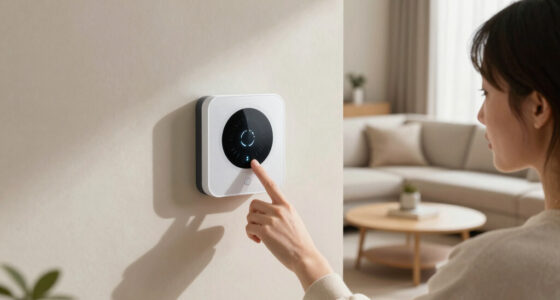
Choosing the right personal emergency response systems for seniors requires balancing ease of use with reliable connectivity. The Medical Guardian MGMini stands out as the best overall pick for its discreet design and robust 24/7 monitoring capabilities. For those who prefer a self-contained solution without ongoing costs, the 911 Help Now Medical Alert Pendant offers direct 911 calling, eliminating subscription fees. Buyers often face a tradeoff between the peace of mind provided by professional monitoring centers and the lower long-term cost of self-monitoring devices. Continue reading to see how these fourteen options stack up against each other in terms of battery life, range, and user comfort.

Get everyday helpers delivered free with Prime
- Fast, free delivery on millions of items
- Prime Video, Amazon Music and more included
- Member-only deals all year
Key Takeaways
- Cellular-based systems like ADT On-The-Go provide superior coverage compared to Wi-Fi-only units, which fail during internet outages.
- No-monthly-fee devices such as the 911 Help Now Pendant rely on the user’s existing phone line or cellular plan, shifting monitoring responsibility to family members.
- Two-way voice communication is available on premium models like Freedom Alert, whereas basic pagers only send silent alerts to a receiver.
- Fall detection accuracy varies widely; models like LogicMark Guardian Alert 911 Plus use multi-axis sensors, while cheaper units lack this feature entirely.
| CallToU Wi-Fi Caregiver Call Button Emergency Alert System |  | Best for Shared Family App Alerts | Brand: CallToU | Model: TY02BL | Included items: Two call buttons, one wrist button, and one receiver | VIEW LATEST PRICE | See Our Full Breakdown |
| CallToU Wireless Caregiver Pager with Call Button |  | Best Simple Local Alert | Included components: One plug-in receiver and one call button | Open-area range: 500+ ft | Ringtones: 55 | VIEW LATEST PRICE | See Our Full Breakdown |
| Freedom Alert Landline Personal Emergency Device with Two-Way Calling |  | Best for Landline Two-Way Calling | Connection: Landline phone service required | Communication: Two-way voice calling | Contacts: Emergency personnel, family, and friends | VIEW LATEST PRICE | See Our Full Breakdown |
| PRNBRH Senior Medical Alert System with App Notifications, Waterproof Wristband, and Receiver |  | Best for Shower-Time Wrist Alerts | Model: CF106 | Included items: Two panic buttons, one wristband remote, and one receiver | Connectivity: 2.4 GHz Wi-Fi and wireless signal | VIEW LATEST PRICE | See Our Full Breakdown |
| ADT On-The-Go Emergency Medical Alert for Seniors |  | Best for Mobile Professional Monitoring | Model: MD5 | Connectivity: Cellular | Location: Built-in GPS | VIEW LATEST PRICE | See Our Full Breakdown |
| Medical Guardian MGMini Medical Alert Device for Seniors, Rose Gold |  | Best for Discreet On-the-Go Wear | Connectivity: Cellular with Wi-Fi backup | Monitoring: 24/7 monitoring subscription; activation required | Emergency features: SOS button, two-way speaker, GPS location assistance | VIEW LATEST PRICE | See Our Full Breakdown |
| Safety+ 4G Medical Alert System with Fall Detection and GPS |  | Best for Built-In Fall Detection | Connectivity: Nationwide 4G | Monitoring: 24/7; activation required | Fall detection: Included | VIEW LATEST PRICE | See Our Full Breakdown |
| Wi-Fi Caregiver Pager System with Waterproof Call Button, Watch Button, and Receiver |  | Best for Shared Household Alerts | Included components: Waterproof call button, watch button, receiver | Wi-Fi compatibility: 2.4 GHz only | Stated range: Up to 656 feet (200 meters) | VIEW LATEST PRICE | See Our Full Breakdown |
| TurboSense Senior Caregiver Alert System with Wi-Fi App Notifications |  | Best for No-Fee App Push Alerts | Included items: Waterproof call button, SOS watch button, receiver | Connectivity: 2.4 GHz Wi-Fi app notifications; 433 MHz signal | Maximum stated range: 656 feet (200 meters) in open area | VIEW LATEST PRICE | See Our Full Breakdown |
| LogicMark Guardian Alert 911 Plus Emergency Pendant with Fall Detection |  | Best for Direct Emergency Voice Contact | Model: Guardian Alert 911 Plus | Model number: 40711 | Network: 4G LTE | VIEW LATEST PRICE | See Our Full Breakdown |
| FullHouse Wireless Caregiver Pager with Emergency Call Button and Wristband |  | Best for Simple, No-Fee In-Home Alerts | Wireless range: Up to 1,000 feet in open air; 500 feet through walls | Call button water resistance: IP55 splash-proof; do not immerse | Alert modes: Sound and silent LED flash | VIEW LATEST PRICE | See Our Full Breakdown |
| SecuLife Medical Alert Pendant with Fall Detection, GPS Tracking, and Two-Way Calling |  | Best for Location Tracking and Fall Alerts | Connectivity: 4G LTE cellular | Features: Fall alerts, GPS tracking, geofencing, SOS button, and two-way calling | Water resistance: IP67 | VIEW LATEST PRICE | See Our Full Breakdown |
| Medical Alert System – No Monthly Fees – Waterproof Necklace and Wrist |  | Best No-Fee Option for Shower Safety | Power source: Battery powered | Batteries: 2 AAA batteries, included | Alert control: Push button | VIEW LATEST PRICE | See Our Full Breakdown |
| 911 Help Now Medical Alert Pendant with Direct 911 Calling |  | Best for Direct Calls to 911 | Connectivity: 4G LTE cellular | Emergency call: Direct call to 911 | Activation: Press and hold SOS button for 3 seconds | VIEW LATEST PRICE | See Our Full Breakdown |
| personal emergency response systems for senior | Connectivity |
|---|---|
| CallToU Wi-Fi Caregiver Call B | — |
| CallToU Wireless Caregiver Pag | — |
| Freedom Alert Landline Persona | — |
| PRNBRH Senior Medical Alert Sy | 2.4 GHz Wi-Fi and wireless signal |
| ADT On-The-Go Emergency Medica | Cellular |
| Medical Guardian MGMini Medica | Cellular with Wi-Fi backup |
| Safety+ 4G Medical Alert Syste | Nationwide 4G |
| Wi-Fi Caregiver Pager System w | — |
| TurboSense Senior Caregiver Al | 2.4 GHz Wi-Fi app notifications; 433 MHz signal |
| LogicMark Guardian Alert 911 P | — |
| FullHouse Wireless Caregiver P | — |
| SecuLife Medical Alert Pendant | 4G LTE cellular |
| Medical Alert System | — |
| 911 Help Now Medical Alert Pen | 4G LTE cellular |
More Details on Our Top Picks
CallToU Wi-Fi Caregiver Call Button Emergency Alert System
Shared caregiver notifications set this CallToU apart from the simpler CallToU Wireless Caregiver Pager, which relies on a local plug-in receiver. Here, two call buttons and a wrist button can alert the receiver, while 2.4 GHz Wi-Fi app notifications let family members check in from their phones. The receiver also has 20 ringtones, five volume levels, and flashing lights, giving households more ways to notice an alert than sound alone. Its stated 328-foot range suits many homes, though walls and layout can affect wireless coverage. The main tradeoff is that phone or text notifications require a monthly subscription, and the system supports 2.4 GHz Wi-Fi only. I’d choose it for families who want local alerts plus app access, not as a substitute for a monitored emergency-response service.
Pros:- App alerts can be shared with family members.
- Includes two call buttons, a wrist button, and a receiver.
- Flashing lights, five volume levels, and 20 ringtone choices offer several ways to notice an alert.
- Stated wireless range is up to 328 feet.
Cons:- Phone or text notifications require a monthly subscription.
- Wi-Fi compatibility is limited to 2.4 GHz.
- Does not provide the two-way voice calling or professional monitoring offered by options such as Freedom Alert or ADT On-The-Go.
Best for: Families who want several caregivers to receive app alerts while a senior uses call buttons around the home.
Not ideal for: Seniors who need professional emergency monitoring, or households with only 5 GHz Wi-Fi that do not want to change network settings or pay for phone and text alerts.
- Brand:CallToU
- Model:TY02BL
- Included items:Two call buttons, one wrist button, and one receiver
- Wireless technology:433 MHz RF
- Maximum stated range:328 ft (100 m)
- Wi-Fi compatibility:2.4 GHz only
- Receiver alerts:20 ringtones, five volume levels, and flashing lights
- Power and batteries:Battery powered; two AAA batteries included
- Warranty:Lifetime warranty
Our verdict“Choose this CallToU if shared family app alerts and multiple at-home call buttons matter more than professional monitoring or mobile coverage.”
CallToU Wireless Caregiver Pager with Call Button
For a household that wants an alert without app setup, this CallToU is more straightforward than the Wi-Fi-enabled CallToU Emergency Alert System: its button signals a nearby plug-in receiver rather than depending on internet notifications. The button can be worn with its neck strap or mounted where help is often needed, and the receiver offers 55 ringtones with five volume levels, reaching a stated 110 dB. That makes it a practical choice for caregivers within the home who need a loud, customizable signal. The advertised range is over 500 feet in open areas, but walls can shorten real-world coverage. Unlike Freedom Alert, it does not enable two-way conversation or call emergency contacts. The receiver also needs an outlet, and the call button uses a separate 12V battery.
Pros:- Call button can be worn as a pendant or mounted with a bracket or adhesive.
- Receiver offers 55 ringtone choices and five volume levels.
- Stated maximum sound level is 110 dB.
- Both units are described as waterproof and dustproof.
Cons:- Receiver must remain plugged into an electrical outlet.
- Call button requires a 12V alkaline battery.
- Provides a local alert only, unlike Freedom Alert’s two-way calling or the app alerts on the Wi-Fi CallToU.
Best for: Caregivers seeking a simple, local alert for a senior who can press a wearable or mounted button and has someone nearby to respond.
Not ideal for: Seniors who live alone and need two-way communication, professional monitoring, or alerts to reach caregivers away from the home.
- Included components:One plug-in receiver and one call button
- Open-area range:500+ ft
- Ringtones:55
- Volume levels:Five
- Maximum sound level:110 dB
- Receiver power:Electrical outlet
- Call button battery:One 12V alkaline battery required
- Water and dust resistance:Both units described as waterproof and dustproof
Our verdict“Pick this model for a loud, uncomplicated in-home call system when a caregiver can respond locally.”
Freedom Alert Landline Personal Emergency Device with Two-Way Calling
Freedom Alert makes more sense than the local-only CallToU Wireless Caregiver Pager for someone who needs to speak with a responder after pressing an alert. It uses a landline connection for two-way voice calling with family, friends, or emergency personnel, so the user can explain what happened rather than rely on a caregiver hearing a chime. The wearable pendant can also stay on its mount when not being worn, and rechargeable power with a 24-hour backup reduces routine battery changes. There are no monthly operating fees listed, a contrast with ADT On-The-Go, which requires a monitoring plan. The tradeoff is its dependence on an existing landline and its at-home-only design; it is not a mobile system with GPS or cellular coverage. I’d favor it for a landline household that values direct conversation over app alerts.
Pros:- Supports two-way voice calling with emergency personnel, family, and friends.
- Rechargeable design avoids routine battery replacement.
- Includes a 24-hour battery backup.
- No monthly operating fees are listed.
Cons:- Requires existing landline phone service.
- Designed for at-home use rather than mobile coverage.
- Unlike the CallToU Wi-Fi system, it does not offer shared caregiver app notifications.
Best for: Seniors with landline service at home who want to speak directly with a contact or emergency personnel after pressing an alert.
Not ideal for: People without a landline, those who regularly leave home and need GPS or cellular coverage, or anyone seeking a professional monitoring plan.
- Connection:Landline phone service required
- Communication:Two-way voice calling
- Contacts:Emergency personnel, family, and friends
- Power:Rechargeable
- Battery backup:24 hours
- Monthly operating fees:None
Our verdict“Choose Freedom Alert if the senior has a landline and needs two-way conversation without a monthly operating fee.”
PRNBRH Senior Medical Alert System with App Notifications, Waterproof Wristband, and Receiver
The standout here is the waterproof wrist-worn remote, which gives this PRNBRH an advantage over the CallToU Wi-Fi Caregiver Call Button system when a senior wants an alert button on the wrist in the shower. Its receiver sounds a 110 dB alarm and shows which numbered button was pressed, helping caregivers identify the source without guessing. App notifications through Tuya Smart or Smart Life can be shared with other caregivers, while the receiver can still connect to the buttons during an internet outage. That local connection is a useful distinction from relying on app alerts alone. Coverage is stated at 300 feet, shorter than the CallToU Wireless Pager’s open-area claim, and only the wrist remote is waterproof. Wi-Fi is 2.4 GHz only, and SMS alerts require a subscription.
Pros:- Waterproof wrist-worn remote can be used while showering.
- Receiver provides a 110 dB alarm and identifies buttons by number.
- Button-to-receiver connection can continue during internet outages.
- App notifications can be shared through Tuya Smart or Smart Life.
Cons:- Only the wrist-worn remote is water resistant.
- Supports 2.4 GHz Wi-Fi only.
- SMS notifications require a subscription, and stated wireless range is 300 feet.
Best for: Households that want a waterproof wrist alert for shower use, a loud local receiver, and app notifications shared among caregivers.
Not ideal for: Buyers who need every call button to be water resistant, use only 5 GHz Wi-Fi, or want SMS alerts without a subscription.
- Model:CF106
- Included items:Two panic buttons, one wristband remote, and one receiver
- Connectivity:2.4 GHz Wi-Fi and wireless signal
- Maximum stated range:300 feet
- Alarm volume:110 dB
- App control:Tuya Smart or Smart Life
- Water resistance:Wrist-worn remote only
- Batteries:Two A batteries included
Our verdict“Choose PRNBRH if shower-time wrist access and a loud local alarm matter more than whole-system water resistance or longer stated range.”
ADT On-The-Go Emergency Medical Alert for Seniors
Among these five options, ADT On-The-Go is the clearest fit for seniors who need help both at home and away: its cellular connection and built-in GPS link an SOS press to ADT’s 24/7 U.S.-based monitoring agents. That is a different level of response from the CallToU and PRNBRH systems, which alert household receivers and caregivers rather than a professional monitoring service. The all-in-one device avoids a separate wristband or pendant, and its IP57 water resistance adds flexibility for everyday wear. The tradeoff is ongoing commitment: phone activation and a monthly monitoring plan are required. Fall detection is optional at an additional monthly cost, and it may not detect every fall. I’d choose it for a senior who leaves home and wants monitored cellular coverage, not for someone seeking a fee-free local alert.
Pros:- Built-in GPS and cellular service support use at home and on the go.
- SOS button connects to 24/7 ADT professional monitoring.
- All-in-one design requires no separate pendant or wristband.
- IP57 water resistance.
Cons:- Phone activation and a monthly monitoring plan are required.
- Fall detection is optional and costs extra.
- Fall detection may not detect every fall.
Best for: Seniors who leave home and want an all-in-one device with GPS, cellular connectivity, and 24/7 professional monitoring.
Not ideal for: People seeking a no-monthly-fee system, a landline-based device, or automatic fall detection included without an added charge.
- Model:MD5
- Connectivity:Cellular
- Location:Built-in GPS
- Monitoring:24/7 ADT professional monitoring
- Water resistance:IP57
- Power:Rechargeable
- Dimensions:2.75 x 1.75 x 0.63 inches
- Weight:1.76 ounces
- Activation:Phone activation required
Our verdict“Choose ADT On-The-Go if mobile coverage and professional response outweigh the required monitoring plan and optional fall-detection fee.”
Medical Guardian MGMini Medical Alert Device for Seniors, Rose Gold
The Medical Guardian MGMini suits someone who wants a compact alert device for home and outings without carrying a phone. Its two-way speaker and 24/7 monitoring let the wearer speak with the response team after pressing SOS, while GPS assistance and hourly location updates can help caregivers locate them. Compared with the Safety+ 4G, it offers less battery life and does not include fall detection; that feature costs extra here. Its advantage is a rose gold finish with lanyard and belt-clip options, plus up to 72 hours between charges. It needs cellular activation and a paid monitoring subscription before use, so it is not a standalone call button. I’d choose it for a senior who values a discreet wearable and accepts the ongoing service requirement.
Pros:- Two-way voice contact with a 24/7 monitoring team
- GPS assistance and hourly location updates support locating the wearer
- Wearable lanyard and belt-clip options in a discreet design
- Up to 72 hours of battery life and a four-hour recharge
Cons:- Requires cellular activation and a paid monitoring subscription
- Fall detection costs extra rather than coming standard
- Battery life can vary with cellular signal and network conditions
Best for: Seniors who want a discreet wearable for errands and home use, with access to a 24/7 monitoring team and GPS assistance.
Not ideal for: People seeking a no-subscription household pager, or users who need included fall detection without an added monthly charge.
- Connectivity:Cellular with Wi-Fi backup
- Monitoring:24/7 monitoring subscription; activation required
- Emergency features:SOS button, two-way speaker, GPS location assistance
- Battery life:Up to 72 hours
- Recharge time:4 hours
- Additional features:Hourly location updates and step counting
- Fall detection:Optional; additional monthly charge
- Included accessories:Charging cradle, power cord, clip, lanyard, EMT card
- Contract terms:No long-term contract; cancel anytime
Our verdict“Choose the MGMini if discreet everyday wear and monitored GPS assistance matter more than included fall detection or avoiding a subscription.”
Safety+ 4G Medical Alert System with Fall Detection and GPS
The Safety+ 4G is the clearest fit for seniors who want automatic fall detection included alongside 24/7 monitoring and GPS. Its caregiver app adds location, activity, battery, and emergency notifications, giving family members more visibility than the MGMini’s listed features. Battery life is another advantage: up to six days per charge, compared with the MGMini’s up to 72 hours. The tradeoff is an ongoing $40 monthly service charge after the included first month, and activation requires a call before use. It is designed for showers and rain, and can be worn on a lanyard or belt clip. I’d favor it over a home-only pager when the wearer goes out alone, but not for households that only need a nearby caregiver alert.
Pros:- Automatic fall detection is included
- 24/7 emergency monitoring with nationwide 4G connectivity and GPS
- Caregiver app reports location, activity, battery, and emergency alerts
- Up to six days of battery life with lanyard and belt-clip wear options
Cons:- Service costs $40 per month after the included first month
- Requires an activation call before use
- More service and app features than needed for a simple household caregiver pager
Best for: Seniors who live independently, may be at risk of falling, and want caregivers to receive location and device-status updates.
Not ideal for: Households seeking a simple in-home call button without paid monitoring, or seniors unwilling to manage an activation process.
- Connectivity:Nationwide 4G
- Monitoring:24/7; activation required
- Fall detection:Included
- Location services:GPS
- Battery life:Up to 6 days per charge
- Water resistance:Designed for showers and rain
- Wear options:Lanyard with magnetic clasp or belt clip
- Smartphone requirement:No
- Service:First month included; $40 per month afterward
Our verdict“Pick Safety+ if included fall detection, GPS, and caregiver app updates justify its ongoing monitoring charge.”
Wi-Fi Caregiver Pager System with Waterproof Call Button, Watch Button, and Receiver
This Wi-Fi Caregiver Pager System is a household alert setup, not a monitored medical response service. A senior can press the waterproof call button or watch button to alert a nearby caregiver through the receiver, while app notifications can reach family members. That makes it more useful for a home with someone available to respond than the Safety+ 4G, which connects to 24/7 monitoring and includes GPS. Its stated range is up to 656 feet, but walls and the home layout may affect coverage. The receiver has customizable ringtones and four volume levels, and the call button offers several mounting choices. A key limitation is that SMS and phone call alerts require a subscription; buyers also need compatible 2.4 GHz Wi-Fi. I’d choose it for family caregiving at home, not for a senior who needs emergency responders contacted automatically.
Pros:- Includes both a waterproof call button and a wearable watch button
- Receiver provides audible and flashing alerts
- App notifications can be shared with family members
- Customizable ringtones, four volume levels, and flexible mounting options
Cons:- Does not provide professional medical monitoring or automatic fall detection
- SMS and phone call alerts require a subscription
- Requires 2.4 GHz Wi-Fi and stated range may be reduced by the home layout
Best for: Families caring for a senior at home who want both a receiver alarm and app notifications when the wearer requests help.
Not ideal for: Seniors who spend time alone away from a caregiver, or families seeking 24/7 professional monitoring, GPS, or automatic fall detection.
- Included components:Waterproof call button, watch button, receiver
- Wi-Fi compatibility:2.4 GHz only
- Stated range:Up to 656 feet (200 meters)
- Alert methods:Flashing and audible receiver alarm; app notifications
- SMS and phone alerts:Subscription required
- Receiver controls:Customizable ringtones and four volume levels
- Mounting options:Screw mount, adhesive patch, or lanyard
- Weight:7.4 ounces
Our verdict“Choose this pager for caregiver-to-senior alerts around the home, but look to Safety+ 4G for monitored help and GPS when the wearer is alone.”
TurboSense Senior Caregiver Alert System with Wi-Fi App Notifications
The TurboSense Senior Caregiver Alert System is a lower-complexity way to notify a nearby caregiver: pressing its waterproof pendant or wrist button sounds the receiver and can send an app push notification over 2.4 GHz Wi-Fi. Unlike the Wi-Fi Caregiver Pager System, its listed app push notifications have no monthly fee. However, paid app service may be needed for phone calls or SMS, so these alerts should not be mistaken for professional monitoring. It also lacks automatic fall detection and medical response service, unlike Safety+ 4G. The stated 656-foot range applies to open areas; walls and interference can reduce it. I’d pick TurboSense for a household that wants basic caregiver alerts with pendant and wrist-button choices, but skip it if the senior needs help dispatched when no caregiver is nearby.
Pros:- Receiver alerts and app push notifications are available
- Includes both a waterproof call button and an SOS watch button
- No monthly fee for app push notifications
- Adjustable receiver volume
Cons:- Does not provide medical monitoring or automatic fall detection
- Phone call and SMS alerts may require a paid app service
- Wireless range can be reduced by walls, layout, interference, and placement
Best for: Families who want a simple in-home alert receiver and smartphone push notifications without a monthly fee for those push alerts.
Not ideal for: Seniors who live or travel alone and need 24/7 professional monitoring, automatic fall detection, or dependable alerts outside the home.
- Included items:Waterproof call button, SOS watch button, receiver
- Connectivity:2.4 GHz Wi-Fi app notifications; 433 MHz signal
- Maximum stated range:656 feet (200 meters) in open area
- Alert methods:Receiver alert and app push notifications
- Monthly fee:None for app push notifications
- Phone and SMS alerts:May require paid app service
- Battery:One lithium-ion battery included
- Medical monitoring:Not provided
- Fall detection:Not provided
Our verdict“Choose TurboSense for no-fee app push alerts to a nearby caregiver, not as a substitute for a monitored medical alert system.”
LogicMark Guardian Alert 911 Plus Emergency Pendant with Fall Detection
The LogicMark Guardian Alert 911 Plus stands apart from the home caregiver pagers in this lineup: it offers two-way voice communication with emergency personnel, fall detection, and 4G LTE connectivity without a landline. Its water-resistant design supports use in the bath or shower, where a fall may leave someone unable to reach a phone. The included tabletop mount keeps the unit accessible in a fixed spot, but makes it less convenient to carry than the MGMini, which has a lanyard and belt clip. The product details do not specify battery runtime, monitoring subscription terms, or the exact process for contacting emergency personnel, so buyers should clarify those details before relying on it. I’d consider it for someone wanting a direct voice connection and fall detection, but not for anyone needing a clearly documented wearable GPS system.
Pros:- Two-way voice communication with emergency personnel
- Fall detection can raise an alert if the wearer cannot press the button
- 4G LTE connection works without a landline
- Water-resistant for bath or shower use
Cons:- Tabletop mounting is less convenient to carry than the MGMini’s lanyard or belt clip
- Listed 4G LTE compatibility may limit use where that network is unavailable
- Product details do not specify battery runtime or service terms
Best for: Seniors who want fall detection and two-way voice contact with emergency personnel without relying on a landline.
Not ideal for: People who need GPS location support, a clearly specified battery runtime, or a wearable-first device for regular outings.
- Model:Guardian Alert 911 Plus
- Model number:40711
- Network:4G LTE
- Communication:Two-way voice
- Fall detection:Yes
- Water resistance:Water resistant
- Power source:Battery powered; lithium-ion battery
- Mounting type:Tabletop
- Dimensions and weight:9 × 7.1 × 1.9 inches; 9.92 ounces
Our verdict“Choose the Guardian Alert 911 Plus if direct voice contact and fall detection matter more than portability or documented GPS and service details.”
FullHouse Wireless Caregiver Pager with Emergency Call Button and Wristband
The FullHouse is a straightforward choice when the main need is letting someone nearby know that help is needed. Its wearable or placeable call button can stay on a wrist or within reach at a bedside, while the receiver offers sound alerts or a silent LED flash. The stated range—up to 1,000 feet in open air and 500 feet through walls—offers more flexibility around a home than the landline-dependent Medical Alert System – No Monthly Fees, though these figures do not replace checking coverage in the actual home. Unlike the cellular SecuLife pendant, FullHouse has no subscription and does not provide GPS, fall detection, or two-way communication. Its button is only splash-proof, so it must come off for bathing and showering. I’d choose it for nearby caregiver notification, not for reaching emergency services when a senior is alone.
Pros:- No monthly service fee
- Call button can be worn or placed within reach
- Sound and silent LED alert modes suit different household needs
- Stated range reaches up to 1,000 feet in open air
Cons:- The call button must be removed for bathing or showering
- Alerts notify a nearby receiver rather than calling emergency services
- Coverage can be reduced by walls and home layout
Best for: Seniors who live with or near a caregiver and need a simple call button with no ongoing service fee
Not ideal for: People who spend time alone and need automatic fall alerts, GPS tracking, or a direct connection to emergency services
- Wireless range:Up to 1,000 feet in open air; 500 feet through walls
- Call button water resistance:IP55 splash-proof; do not immerse
- Alert modes:Sound and silent LED flash
- Volume:5 levels, 0–110 dB
- Melodies:52
- Battery requirement:2 C batteries, included
- Item weight:8.1 ounces
Our verdict“Choose FullHouse for simple, no-subscription alerts to a nearby caregiver, but not as a stand-alone emergency response service.”
SecuLife Medical Alert Pendant with Fall Detection, GPS Tracking, and Two-Way Calling
For a senior who may leave home or be unable to press an SOS button after a fall, SecuLife offers a broader safety net than the home-focused FullHouse pager. Its GPS, geofencing, and location history can help contacts follow location changes, while fall alerts and two-way cellular calling add ways to reach help beyond a nearby receiver. A display showing time, battery, and signal also makes basic device status easier to check. The tradeoff is an ongoing subscription, and the battery-life information is not fully consistent: it lists up to six days but also gives an average of five. Compared with the direct-to-911 911 Help Now pendant, SecuLife routes calls to preselected contacts rather than directly to dispatchers. I’d favor it for families who want location features and contact-based support, provided they accept the service fee and charging routine.
Pros:- GPS tracking includes customizable geofence alerts and location history
- Fall alerts and one-touch SOS provide multiple ways to request help
- Two-way cellular calling connects the wearer with preselected contacts
- IP67 water resistance supports use in wet conditions
Cons:- A monthly subscription is required for service
- Battery life is described as both up to six days and an average of five days
- Calls go to preselected contacts rather than directly to 911
Best for: Families supporting a senior who goes out independently and needs GPS location, geofence notifications, fall alerts, and contact calling
Not ideal for: Buyers who want no monthly service fee, direct 911 calling, or a device with clearly stated battery-life expectations
- Connectivity:4G LTE cellular
- Features:Fall alerts, GPS tracking, geofencing, SOS button, and two-way calling
- Water resistance:IP67
- Battery capacity:1000 mAh
- Battery life:Up to 6 days; product information also lists an average of 5 days
- Location history:Up to 1 year
- Compatible devices:Android and iOS smartphones
- Service:Monthly subscription required
Our verdict“Choose SecuLife if location tracking and fall alerts matter more than avoiding a subscription or calling 911 directly.”
Medical Alert System – No Monthly Fees – Waterproof Necklace and Wrist
This system is a better fit than the FullHouse pager for someone who wants to keep a help button on during bathing: its waterproof necklace and wrist buttons are designed for wet use, rather than being limited to splash resistance. The large push button and choice of wear styles may also help seniors with limited dexterity keep an alert within reach. It works through a home phone line and can call up to three contacts with a personalized emergency message, avoiding a monthly fee. That makes it a different proposition from the cellular SecuLife, which adds GPS and fall alerts but requires a subscription. The main limitation is connection: a landline is needed unless the optional Bluetooth adapter is added, and the system is not described as providing GPS or automatic fall detection. I’d pick it for home use where reliable phone-line access and waterproof wear matter most.
Pros:- Waterproof necklace and wrist buttons can be worn during showers
- No monthly fees are required
- Large push button can be easier to operate with limited dexterity
- Can contact up to three people with a personalized emergency message
Cons:- Requires a home phone line unless a separate Bluetooth adapter is purchased
- Does not provide the GPS tracking or fall alerts available on SecuLife
- Replaceable AAA batteries require periodic attention
Best for: Seniors at home who want a no-monthly-fee alert button they can wear in the shower and have a landline available
Not ideal for: People without a home phone line who do not want to buy an adapter, or seniors who need GPS tracking or automatic fall detection
- Power source:Battery powered
- Batteries:2 AAA batteries, included
- Alert control:Push button
- Coverage:Up to 70,000 sq ft
- Panic buttons:2 included, wrist and necklace; expandable to 8
- Phone connection:Home phone line; optional Bluetooth adapter for cell phones
- Waterproof:Yes
- Dimensions:6.5 x 4.5 x 1.7 inches
Our verdict“Choose this system for waterproof, no-fee help calls at home if a compatible phone connection is available.”
911 Help Now Medical Alert Pendant with Direct 911 Calling
911 Help Now takes a different approach from SecuLife: rather than calling preselected contacts or using a monitoring center, it places a direct call to 911 over compatible 4G cellular service. The wearer presses and holds the SOS button for three seconds, then can speak with a dispatcher through the built-in microphone and speaker. That direct route may suit someone who wants emergency services contacted without a separate monitoring center, but it also means there is no intermediary to help assess or relay the situation. Compared with the FullHouse pager, this pendant can reach beyond a nearby caregiver receiver, though it depends on cellular coverage and does not offer the listed GPS and fall-detection features of SecuLife. The protective cover and press-and-hold activation help guard against accidental calls. I’d select it for a senior comfortable speaking with 911 and able to use it where service is available.
Pros:- Calls 911 directly without a monitoring center
- Built-in microphone and speaker allow two-way conversation with a dispatcher
- Press-and-hold activation and a protective cover help reduce accidental calls
- Can be worn on a lanyard or carried with a clip
Cons:- Requires compatible cellular service at the location of use
- No monitoring center is available to relay or assess the call
- Does not list GPS tracking or automatic fall detection
Best for: Seniors who want a portable, direct-to-911 call button and can communicate with a dispatcher when an emergency occurs
Not ideal for: People who need a monitoring center, calls to family contacts first, GPS tracking, or reliable use outside compatible cellular coverage
- Connectivity:4G LTE cellular
- Emergency call:Direct call to 911
- Activation:Press and hold SOS button for 3 seconds
- Cancellation:Press and hold Function button for 2 seconds
- Audio:Built-in microphone and speaker
- Power:3 AAA alkaline batteries, included
- Dimensions and weight:2.8 x 1.75 x 0.6 inches; 2.4 ounces
- Included accessories:Protective cover, removable neck lanyard, belt/clothing clip, and user guide
Our verdict“Choose 911 Help Now if direct dispatcher contact is the priority and the wearer is comfortable handling the call without a monitoring center.”
How We Picked
I evaluated these systems based on three critical pillars: reliability of connection, ease of activation, and long-term cost structure. For reliability, I prioritized devices with redundant connectivity options, such as cellular backup for Wi-Fi units, ensuring alerts are sent even if home internet fails. Ease of activation was assessed by looking at button size, tactile feedback, and waterproofing, recognizing that seniors with arthritis or wet hands need forgiving hardware. I also weighed the total cost of ownership, distinguishing between devices with high upfront costs and no fees versus those with lower entry prices but mandatory monthly subscriptions.
The ranking reflects a hierarchy where professional monitoring generally outranks self-monitoring for high-risk users due to guaranteed emergency dispatch. However, devices that offer direct 911 calling were favored for users with reliable cellular coverage who want to avoid subscription fatigue. I excluded units with reported poor battery life or unclear compatibility with standard home phone lines, ensuring every pick on this list is viable for daily use in a real-world home environment.
Factors to Consider When Choosing Personal Emergency Response Systems For Seniors
Selecting a personal emergency response system involves more than just picking a button; it requires understanding how the device communicates and who responds. This guide breaks down the technical and logistical factors that determine whether a system will actually help in a crisis.Monitoring Type: Professional vs. Self-Monitoring
The most significant decision is whether alerts go to a professional monitoring center or directly to family members. Professional monitoring offers the highest level of security because trained agents can assess the situation and dispatch emergency services if the senior is unconscious or unable to speak. This reliability comes at the cost of a monthly subscription fee. In contrast, self-monitoring systems send alerts to a smartphone app or a base station at home. While these eliminate monthly fees, they rely entirely on family members being available and attentive. If a relative is asleep or at work, a self-monitored alert might go unnoticed, making this option better suited for active seniors with a dedicated caregiver nearby.
Connectivity: Cellular, Landline, and Wi-Fi
How the device connects to the outside world dictates its reliability during power or network outages. Landline-based systems are often the most affordable but become useless if the phone line is cut or the power goes out. Wi-Fi units depend on a stable home internet connection and may lose connectivity if the router restarts. Cellular-based devices are generally the most robust because they operate independently of home infrastructure, much like a mobile phone. For seniors living in areas with poor cell reception, a landline or Wi-Fi backup might be necessary, but cellular should be the primary choice for maximum independence and safety.
Fall Detection Technology and Accuracy
Not all fall detection systems are created equal. Basic pagers require the user to press a button, which is ineffective if the senior is unconscious or disoriented after a fall. Automatic fall detection uses accelerometers and gyroscopes to detect sudden impacts and changes in orientation. However, these sensors can produce false alarms if not calibrated correctly, leading to caregiver fatigue. Look for systems that combine accelerometer data with motion algorithms to distinguish between a genuine fall and a heavy sit-down. If fall detection is a priority, prioritize models specifically engineered with multi-axis sensors over generic activity trackers.
Wearability and Comfort for Daily Use
A device is only effective if the senior actually wears it. Many seniors abandon medical alert systems because they are bulky, uncomfortable, or stigmatizing. Discreet pendants and wristbands that resemble jewelry or standard watches are more likely to be worn consistently. Consider the user’s lifestyle; a waterproof device is essential for those who shower without assistance. Additionally, check the clasp mechanism. Elderly users with limited dexterity may struggle with small buckles, so magnetic or large-button clasps are preferable. Comfort directly correlates with compliance, and a device left on a nightstand is a device that cannot help.
Battery Life and Charging Frequency
Frequent charging is a common point of failure for personal emergency response systems. If a device needs to be charged daily, the likelihood of it being dead during an emergency increases. Look for units with rechargeable batteries that last at least one week on a single charge. Some basic pagers use replaceable coin-cell batteries, which are cheap but require regular monitoring to prevent sudden power loss. Low-battery indicators are a critical feature, providing early warnings before the device shuts down. For users with cognitive impairments, a system with a long battery life and simple charging dock reduces the burden on caregivers.
Frequently Asked Questions
Do personal emergency response systems work without a phone line?
Yes, many modern systems operate independently of traditional landlines. Cellular-based devices use SIM cards to connect directly to mobile networks, allowing them to work anywhere with cell coverage. Wi-Fi-enabled units rely on home internet but often include cellular backup to maintain connectivity during outages. Devices like the ADT On-The-Go are designed specifically for users without landlines, ensuring that help can be summoned regardless of home phone infrastructure. Always verify the specific connectivity requirements of a model before purchasing to ensure compatibility with your home setup.
Can seniors with hearing loss use these devices effectively?
Yes, but the type of device matters significantly. Systems with two-way voice communication may be difficult for users with profound hearing loss to utilize without hearing aids. In these cases, devices that send silent alerts to a caregiver’s phone or a central monitoring station are more effective, as they do not require the senior to speak clearly. Some advanced models also feature vibration alerts or flashing lights on the base station to confirm that an alert has been successfully sent. Prioritize non-verbal confirmation methods if hearing impairment is a concern.
What happens if the senior presses the button by accident?
Most professional monitoring centers have protocols to handle accidental activations. When an alert is triggered, the monitoring agent will attempt to contact the user via the device’s two-way voice feature. If the user responds and indicates it was an accident, the agent will cancel the emergency dispatch. For self-monitoring systems, the caregiver receives a notification and can contact the senior to verify the situation. Some systems allow for a cancel button or a specific sequence to deactivate the alarm, reducing the likelihood of unnecessary emergency response charges.
Are waterproof medical alert devices safe to wear in the shower?
Generally, yes, but you must check the specific IP rating of the device. An IP67 rating indicates the device is dust-tight and can withstand immersion in water up to one meter for thirty minutes, which is sufficient for showers and baths. However, not all ‘water-resistant’ devices are waterproof, and exposure to hot steam or prolonged submersion can damage non-rated units. Bathroom falls are a leading cause of injury for seniors, so ensuring the device is genuinely waterproof is critical for maintaining protection during high-risk activities.
How does GPS tracking work in these emergency systems?
GPS tracking allows monitoring centers or caregivers to locate the senior if they are out of range of the base station or have wandered from home. This feature is primarily found in mobile or wearable cellular devices rather than home-based landline systems. When an alert is triggered, the device transmits its coordinates along with the signal. This is particularly valuable for seniors with dementia or Alzheimer’s who may get lost. However, GPS accuracy can vary indoors, so it is best viewed as a supplementary location tool rather than a primary indoor navigation system.
Conclusion
Choosing the right personal emergency response system depends largely on the senior’s health status, living situation, and comfort with technology. For those seeking the highest level of security and ease of mind, the Medical Guardian MGMini is the best overall choice due to its seamless integration of professional monitoring and discreet design. If you prefer to avoid monthly fees and have a reliable cellular signal, the 911 Help Now Medical Alert Pendant offers excellent value with its direct-to-911 capability. For beginners or those with limited tech literacy, the Freedom Alert Landline Personal Emergency Device provides a straightforward, no-nonsense approach with two-way calling. Finally, for users who spend time away from home, the ADT On-The-Go is the premium pick for its cellular independence and GPS features. Match the device’s connectivity and monitoring style to the specific risks your loved one faces to ensure they get help when they need it most.
Evergreen bestsellers Picks

eufy E25 Robot Vacuum and Mop with HydroJet Roller Mop, 20,000 Pa Suction

Roborock Q7 L5 Robot Vacuum and Mop Combo

TCL 55-Inch T7 Series 4K QLED Smart Google TV (55T7)
As an affiliate, we earn on qualifying purchases.