
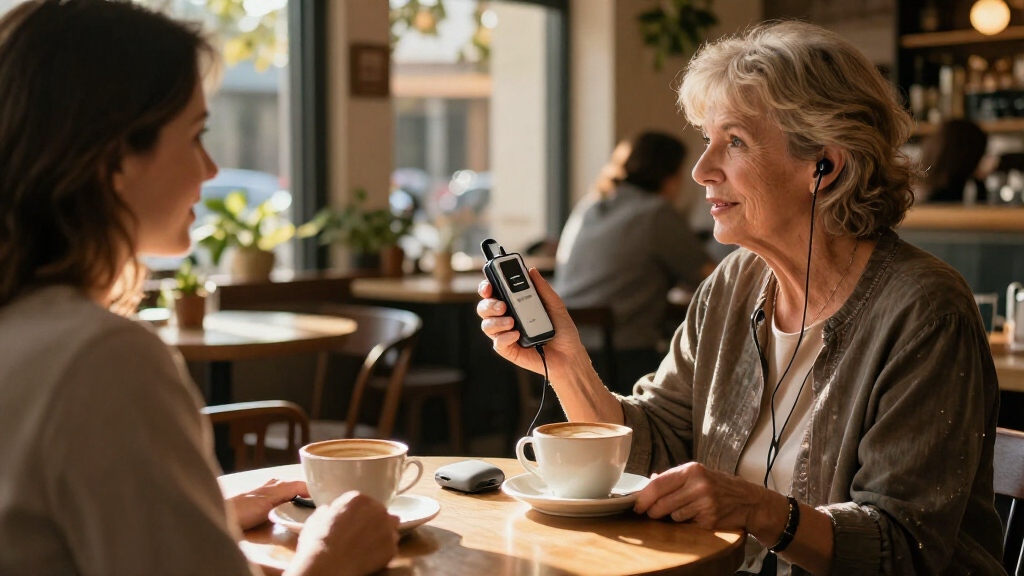

This checklist is for people who are deaf or hard of hearing, and for anyone helping them choose assistive listening accessories. It covers several ways to hear speech and media more comfortably, while recognizing that needs and compatible devices vary.

Get everyday helpers delivered free with Prime
- Fast, free delivery on millions of items
- Prime Video, Amazon Music and more included
- Member-only deals all year
The sections are organized by listening situation: television, one-to-one conversations, induction loops, Bluetooth streaming, phone calls, and hearing aid charging. Some slots include a named product; others offer selection advice without a specific pick.
Start with the setting that causes the most difficulty, then check device compatibility and the controls you’ll use day to day. Treat the product names as a starting point, and confirm details such as supported connections, included components, and hearing aid compatibility before choosing.
Television Listening
A dedicated TV listening setup can make it easier to follow programs without relying on the room’s speakers alone. The named pick is the Avantree Duet Aura Dual Wireless TV Headphones with HDMI ARC. Its title signals a wireless headphone system and an HDMI ARC connection, but it does not establish compatibility with every television or describe how the system is configured. Check your TV’s available audio outputs and instructions before deciding whether it fits your setup.A common buying mistake is focusing only on the headphones and overlooking how audio reaches them. Confirm that your television supports the connection you plan to use, and check whether other equipment in the chain—such as a soundbar or receiver—affects setup. Consider who will use the system, whether two listeners need headphones at once, and whether each person needs independent volume control; the product name alone does not confirm those functions. Also consider comfort and controls you can operate without strain. Before purchase, verify the included accessories and the manufacturer’s setup guidance so you know what will be needed to connect and use the system.
What to look for:
- Confirm your TV has a compatible HDMI ARC connection and setup path.
- Check whether the system supports the number of listeners you need.
- Verify how headphone volume is adjusted and whether controls are easy to reach.
- Review what cables and accessories are included.
- Consider fit and comfort for the length of your usual viewing sessions.
Avantree Duet Aura Dual Wireless TV Headphones with HDMI ARC
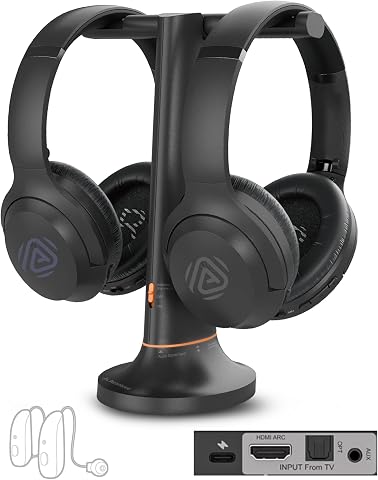
The Avantree Duet Aura includes two wireless over-ear headphones and a transmitter with a charging dock, letting two people listen to the same TV at separate volume levels. It supports HDMI ARC, optical, and AUX connections, with Clear Voice EQ modes, volume boost, and Auracast audio sharing.
Pros:
- Two headphones let listeners set different volume levels.
- Clear Voice EQ modes and volume boost can help dialogue stand out.
- Includes a charging dock and supports HDMI ARC, optical, and AUX.
- Supports Auracast sharing with compatible devices.
Cons:
- HDMI cable is not included.
- HDMI ARC may mute TV speakers depending on the TV and its settings.
- Additional Auracast devices are sold separately; hearing aid compatibility should be checked.
Best for: TV viewers checking an HDMI ARC headphone option
Not ideal for: Households unable to confirm a compatible TV connection
Bottom line: Check your television’s connection and the system’s included components before choosing the Avantree Duet Aura.
Personal Sound Amplification
A personal sound amplifier can be considered for conversations or other nearby sounds when a compact listening aid is useful. The named pick is the Pocketalker 2.0 Personal Sound Amplifier Kit with Batteries. The title identifies a personal sound amplifier and says batteries are included, but it does not specify microphone style, controls, compatibility, or what other components come in the kit. Review the product details against the situations where you expect to use it.One common mistake is treating amplification as a substitute for hearing aids or assuming that more amplification will always make speech clearer. Think about whether you need to hear one nearby speaker, follow conversation in different environments, or connect to another listening device. Check how the microphone is positioned, how volume is adjusted, and whether the controls are manageable for the intended user. For fit and handling, consider the device’s size, how it is carried, and whether the supplied accessories suit the listener’s routine. Confirm battery type, replacement availability, and included contents in the product information rather than inferring them from the kit name. If hearing needs or device compatibility are uncertain, ask an audiologist or hearing care professional for guidance before buying.
What to look for:
- Check microphone placement options for your usual listening situations.
- Review how volume and other controls are operated.
- Confirm the kit contents and battery type.
- Consider portability and how the device will be carried.
- Ask a hearing care professional about suitability for the intended listener.
Pocketalker 2.0 Personal Sound Amplifier Kit with Batteries

The Pocketalker 2.0 amplifies nearby voices for conversations, TV listening, and other one-on-one situations. It includes headphones, earbuds, a plug-in microphone, a 12-foot extension cord, a lanyard, and 10 AAA batteries, and offers volume and tone controls, a built-in T-coil, and an external microphone jack.
Pros:
- Large volume and tone knobs make adjustments simple.
- Built-in T-coil works with hearing loop systems.
- Includes headphones, earbuds, microphone, TV extension cord, and batteries.
- Can use rechargeable NiMH AAA batteries.
Cons:
- Rechargeable batteries and the optional charging kit are not included.
- Designed for nearby listening and one-on-one conversations.
Best for: Listeners considering a standalone personal sound amplifier
Not ideal for: Anyone expecting the product name alone to establish hearing aid compatibility
Bottom line: Compare the Pocketalker’s confirmed controls, microphone setup, and kit contents with the listener’s needs.
Induction Loop Listening
Induction loops can provide a way to access audio in equipped venues when the listener and their hearing device support the loop system. There is no product pick for this slot, so begin by checking the places where you want to listen: ask whether a loop is installed, which areas it covers, and whether staff can explain how to use it. Availability and coverage can differ from one venue to another, so confirm locally rather than assuming a whole building is served.A frequent mistake is assuming that any hearing aid will automatically receive loop audio. Check the device’s documentation or consult your hearing care professional to determine whether telecoil support is present and how it is enabled. If you use a separate receiver, verify what type of receiver the venue provides and whether it suits your hearing setup. Ask about seating or coverage guidance, since the listening experience may depend on where you are in the space. For regular use, consider how easy it is to identify loop-equipped venues and switch the relevant device setting. A little advance checking can help you arrive knowing what equipment is available and what steps you may need to take.
What to look for:
- Ask venues whether an induction loop is installed and where it works.
- Confirm telecoil support and activation steps for your hearing device.
- Check whether a venue receiver is available and compatible with your setup.
- Ask staff for coverage or seating guidance.
- Find out how to recognize and select the loop setting on your device.
Bluetooth Audio Streaming
Bluetooth streaming can be useful when you want audio sent from a compatible source to a hearing device or accessory. The named pick is the Oticon EduMic Streamer Wireless Remote Microphone System for Oticon Pe. The product title identifies a streamer and remote microphone system, but the truncated compatibility wording does not establish which specific hearing devices or source devices it supports. Verify the complete model and compatibility information with the manufacturer or an authorized provider before purchase.A common mistake is assuming that a product described as wireless will pair with every phone, computer, or hearing aid. Check the supported Oticon device models, connection steps, and the audio sources you actually plan to use. If remote microphone use matters, confirm how the microphone is worn or positioned and how it is controlled; the title alone does not answer those questions. Consider the intended wearer’s comfort, the places they expect to use it, and whether they can manage pairing and switching between sources. Also review what is included and whether any additional accessories are required. If you are uncertain about the hearing aid model, consult the audiologist or provider who fitted it before ordering.
What to look for:
- Confirm the complete product model and supported Oticon hearing devices.
- Check compatibility with the phone, computer, or audio source you plan to use.
- Review pairing, switching, and control instructions.
- Confirm how the remote microphone is worn or positioned.
- Verify included accessories and any additional requirements.
Oticon EduMic Streamer Wireless Remote Microphone System for Oticon Pediatric He

The Oticon EduMic is a wireless remote microphone system designed for use with Oticon pediatric hearing aids. It features durable construction, practical sizing, and versatile functionality suitable for various professional and personal applications.
Pros:
- Wireless streaming for convenience
- Durable construction ensures long-term use
- Broad compatibility with standard systems
- Designed for easy use and storage
Cons:
- Limited to Oticon pediatric hearing aids
- No specific technical specifications provided
Best for: Oticon users checking a streamer and remote microphone option
Not ideal for: Buyers who cannot confirm their hearing aid model
Bottom line: Confirm the full model and compatibility details before selecting the Oticon EduMic system.
Phone Call Amplification
Phone call amplification advice should start with the phone and listening devices already in use, since the useful options depend on their compatibility. There is no specific product pick for this section. Identify whether the difficulty is hearing the caller, managing call volume, or using a hearing device with the phone, then check the phone maker’s accessibility settings and the hearing device’s connection guidance. A hearing care professional can help clarify options when the equipment combination is uncertain.A common buying mistake is choosing an amplifier based only on a broad claim that it works with phones. Confirm the phone model, whether calls are made on a mobile or landline, and whether the intended solution uses a headset, a compatible hearing aid connection, or another accessory. Check how volume and call controls work, whether callers can still be heard clearly in the usual environment, and what charging or batteries are required. For fit, make sure any earpiece or headset can be worn comfortably alongside glasses or hearing aids if applicable. Try built-in phone accessibility features first when available, and verify any accessory’s compatibility and return or support details before relying on it for important calls.
What to look for:
- Identify the phone model and whether it is mobile or landline.
- Check hearing aid and phone compatibility guidance.
- Review call volume, answering, and ending controls.
- Consider headset fit alongside glasses or hearing aids.
- Confirm power needs and support options before purchase.
Listening Device Charging
A charger selected for a particular hearing aid family can make keeping listening devices ready for use more straightforward. The named pick is the Dry & Clean Charger for Signia Pure Charge & Go IX/AX Hearing Aids. Its title identifies Signia Pure Charge & Go IX/AX as the intended hearing aid families and describes a dry-and-clean charger, but it does not establish support for every model variant or explain its functions. Match the exact hearing aid model to the manufacturer’s compatibility details before purchasing.A common mistake is assuming that similar names or appearances mean chargers are interchangeable. Check the full model designation, charging contacts, and manufacturer guidance, and confirm whether the charger is intended for the exact devices you own. Review the product’s instructions to understand what cleaning or drying functions it provides, how to load the aids correctly, and what power source or accessories are needed. Consider where the charger will be placed and whether its controls and lid are easy for the user to handle. If the hearing aids were supplied through a provider, ask them to verify compatibility. Keeping the model information handy makes it easier to compare the charger with the hearing aids and avoid an unusable accessory.
What to look for:
- Match the full hearing aid model to the charger’s compatibility list.
- Confirm support for the specific IX or AX variant you own.
- Review how the charging and cleaning functions operate.
- Check required power connections and included accessories.
- Consider placement and ease of loading the hearing aids.
Dry & Clean Charger for Signia Pure Charge & Go IX/AX Hearing Aids

This 2-in-1 drying and charging system is designed specifically for Signia Pure Charge & Go IX and AX hearing aids. It features an integrated dehumidifier to protect devices from moisture, LED indicators for monitoring, and a secure drop-in charging design for easy use.
Pros:
- Combines drying and charging in one device, saving space
- Built-in dehumidifier helps extend hearing aid lifespan
- Easy to monitor with LED indicators
- Secure drop-in design for simple operation
Cons:
- Only compatible with specific Signia models
- Not suitable for other brands or Signia models outside specified ones
Best for: Owners of compatible Signia Pure Charge & Go IX/AX aids
Not ideal for: People whose exact hearing aid model is unknown
Bottom line: Verify the exact Signia model and charger requirements before selecting this Dry & Clean Charger.
If you are prioritizing purchases, start with the listening situation that most often gets in the way of daily life, then confirm compatibility before choosing an accessory. Check existing equipment and available venue support first, especially for phone calls, Bluetooth streaming, and induction loops. Next compare the TV and personal amplification options, and confirm the exact hearing aid model before buying a charger.
You do not need to solve every listening situation at once. A careful check of connections, fit, controls, and device models can help narrow the options to what suits your routine. Use this checklist to guide questions to a provider or manufacturer, and take the next step with confidence and clarity.


