TL;DR
Cognito Therapeutics’ Spectris headset did not significantly slow decline on the trial’s primary measure in a Phase 3 study of 673 people with mild-to-moderate Alzheimer’s. A prespecified analysis found possible benefit on some measures among participants with mild Alzheimer’s, but experts cautioned that the subgroup evidence is not conclusive. The company says it will discuss the results with the FDA.
Cognito Therapeutics’ Spectris headset, which delivers 40 Hz light and sound stimulation, did not significantly slow decline compared with a sham device in a Phase 3 trial involving 673 people with mild-to-moderate Alzheimer’s disease. The result, presented by neurologist Dr. Marwan Sabbagh at the 19th annual Clinical Trials on Alzheimer’s Disease conference in Boston, means the device missed the trial’s main measure of cognitive and daily-function change.

Get everyday helpers delivered free with Prime
- Fast, free delivery on millions of items
- Prime Video, Amazon Music and more included
- Member-only deals all year
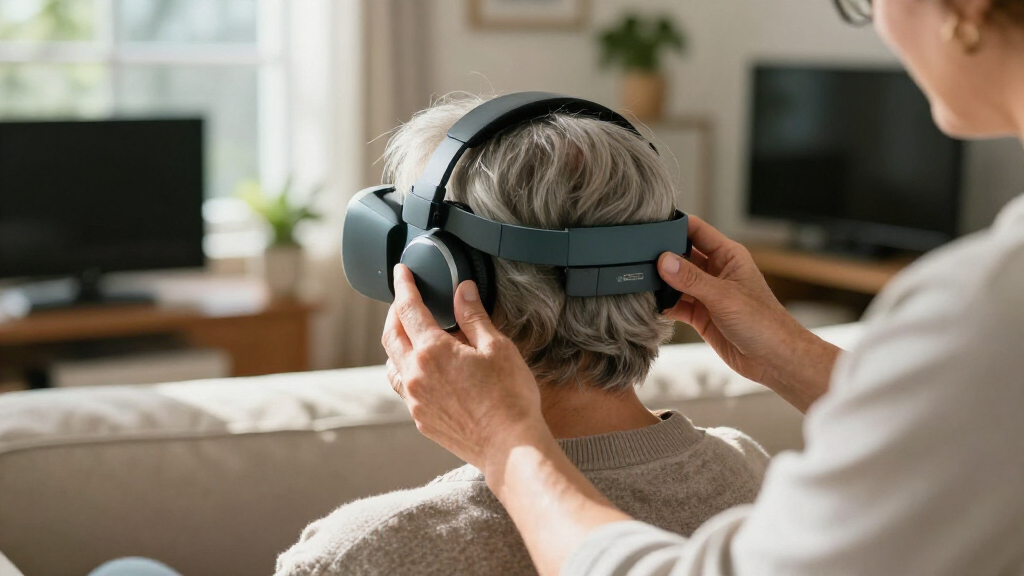
Participants were randomly assigned to use either the active headset or a sham version for 60 minutes a day over one year. The active device delivered light and sound at 40 Hz; the sham did not provide the intended stimulation. Researchers assessed participants’ cognition and ability to manage daily activities at the start of the trial and every three months, with a further safety follow-up one month after treatment ended.
The primary outcome combined cognitive abilities and activities of daily living on a 108-point scale. The active device did not significantly outperform the sham on this measure. Although the trial included 673 people, 403 participants, about 60 percent, completed it, according to the report.
In a prespecified analysis of participants with mild Alzheimer’s, researchers saw a possible signal of benefit on three of five assessed measures. The analysis had been planned before the trial, but researchers did not adjust for the multiple analyses. That can raise the chance that an apparent positive result occurs by chance, particularly when the overall trial result is negative.
The Primary Trial Result
The main result leaves the headset’s clinical benefit unestablished for the broader mild-to-moderate Alzheimer’s population studied. The device is based on the idea that 40 Hz light and sound may encourage gamma rhythms, fast patterns of electrical activity associated with memory and attention. The trial did not show that this approach significantly slowed decline on its primary combined measure.
The mild-disease subgroup finding could inform further research, but it is not equivalent to a positive overall trial. Robert Alexander, chief scientific officer of the Alzheimer’s Prevention Initiative at Banner Alzheimer’s Institute, told Being Patient that the subgroup data “isn’t very convincing.” Dr. Andrea Bozoki of the University of North Carolina at Chapel Hill said the apparent effects seemed to concern daily function rather than cognition, and that the mechanism behind any such effect was uncertain.
The device was described as well tolerated, with no unanticipated side effects reported. Headaches occurred in 5.7 percent of active-device participants and 3.9 percent of those using the sham. A favorable safety profile may support further study, but it does not establish effectiveness or determine whether the device will be authorized.
Products Worth Considering

Samsung 27-Inch Odyssey G5 QHD Gaming Monitor (G50F)

Apple MacBook Air 15-inch Laptop with M5 Chip, 24GB Memory, 1TB SSD, Midnight

Apple Watch SE 3 GPS 40mm Smartwatch
As an affiliate, we earn on qualifying purchases.
From Phase 2 to HOPE
The Phase 3 HOPE trial followed an earlier Phase 2 study. That earlier trial did not show a significant effect on a composite of cognition and function, though it produced some signs that the device might slow decline and brain shrinkage. Those observations helped motivate the larger pivotal study; they did not establish that the headset works.
Cognito’s approach uses flickering light and sound at 40 Hz, intended to influence gamma-wave activity. The scientific rationale includes earlier research suggesting gamma rhythms may be disrupted in Alzheimer’s. Foundational work in mice and early-stage research involving similar stimulation devices provided a basis for investigation, but findings from animal or early-stage studies cannot substitute for evidence of benefit in a large clinical trial.
The HOPE study tested daily use for a year in people with mild-to-moderate Alzheimer’s, comparing the active device with a sham. Its principal test was whether the active treatment slowed decline on a combined cognition and daily-function scale. It did not meet that benchmark.
“isn’t very convincing”
— Robert Alexander, chief scientific officer of the Alzheimer’s Prevention Initiative at Banner Alzheimer’s Institute, speaking to Being Patient
Questions About the Subgroup Signal
It is not clear whether the apparent effects among participants with mild Alzheimer’s reflect a real treatment benefit. The subgroup analysis was prespecified, but the reported results covered several measures without adjustment for multiple comparisons. The overall primary result was negative, and experts quoted by Being Patient urged caution about interpreting the subgroup findings.
The reasons that about 40 percent of participants did not complete the study were not detailed in the report. The device was generally tolerated and no unanticipated side effects were reported, but that alone does not explain the level of non-completion. The available information also does not establish whether adherence differed between the active and sham groups or how missing data affected the analysis.
Further details about the trial’s full results, the company’s regulatory discussions and any decision to conduct another study remain pending. The report does not say whether the FDA will consider the data sufficient for an application or what additional evidence the agency may request.
FDA Discussions and Further Testing
Cognito Therapeutics said in a press release that it plans to engage with the FDA to discuss whether the trial data are sufficient to file for medical-device approval. The company’s next regulatory steps, and any FDA response, were not specified in the report.
Experts cited by Being Patient said a confirmatory study focused on people with mild symptomatic Alzheimer’s could help test the subgroup finding. Such a study would need to determine whether any effect is reliable and whether it concerns cognition, daily function, or both. Bozoki also called for better participant retention and treatment adherence in any future trial. No follow-up study has been confirmed in the source material.
Key Questions
Did the Spectris headset succeed in the Phase 3 trial?
No. It did not significantly outperform a sham device on the trial’s primary measure combining cognition and daily activities in participants with mild-to-moderate Alzheimer’s.
Was there any sign of benefit?
A prespecified analysis found a possible signal on three of five measures among participants with mild Alzheimer’s. The finding is uncertain, and experts cautioned that it is not convincing proof of benefit.
How was the headset tested?
The trial assigned 673 participants to use the active 40 Hz audiovisual headset or a sham device for 60 minutes daily over one year. Researchers measured cognition and daily function during the study.
Were safety problems reported?
The report says the device was well tolerated and that there were no unanticipated side effects. Headaches were reported by 5.7 percent of participants using the active device and 3.9 percent using the sham.
What happens next for the device?
Cognito said it will discuss with the FDA whether the results could support a medical-device approval filing. The company has not confirmed a further trial in the source material, though experts said a confirmatory study in mild Alzheimer’s could clarify the subgroup finding.
Source: beingpatient.com