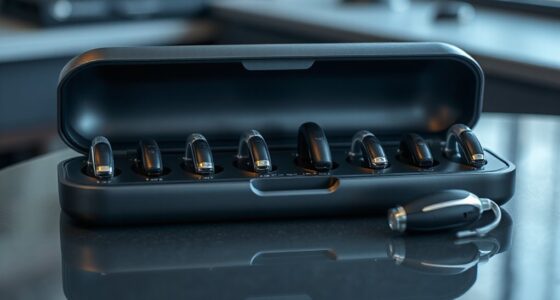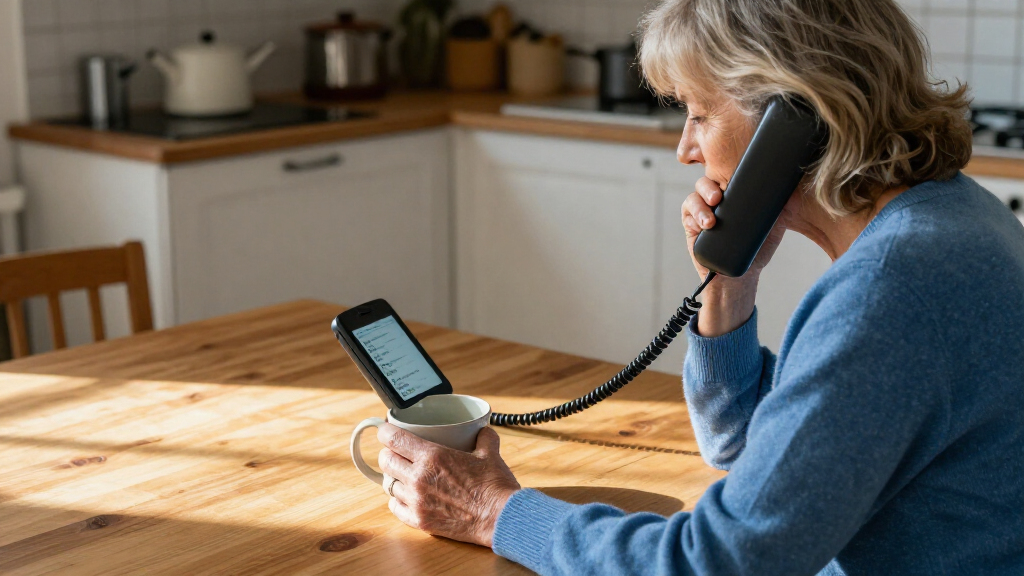
For conversations you need to read as well as hear, the Hamilton CapTel 2400iSPNBT is my best overall pick because its captioning and large touchscreen put spoken dialogue into text. The Hamilton CapTel 840i is a simpler captioned alternative with large buttons, while the Clarity E814CC suits callers who mainly need amplification rather than captions. The central tradeoff is that captioned phones provide text support, while many amplified and big-button models focus on louder sound, easier dialing, or emergency features instead. Setup needs, internet or service requirements, and how much support you want from a handset can also shape the right choice. Read on for the full comparison and a guide to choosing the phone that matches your hearing and calling needs.

Get everyday helpers delivered free with Prime
- Fast, free delivery on millions of items
- Prime Video, Amazon Music and more included
- Member-only deals all year
Key Takeaways
- Only the Hamilton CapTel models in this lineup are dedicated captioned phones; most other picks amplify calls, simplify dialing, or add safety features without displaying captions.
- The CapTel 2400iSPNBT leads for caption-focused use with its large touchscreen, while the 840i offers a more button-forward way to access captioned calls.
- Amplification is not the same as captioning: Clarity’s amplified models can help make speech louder, but they do not replace text when speech remains difficult to understand.
- Big buttons and photo memory solve a different problem from hearing loss alone; they are most useful when dialing, memory, or dexterity also affects calling.
- Feature-rich cordless bundles and emergency options involve different tradeoffs: extra handsets and pendants can add convenience, but they do not make a phone caption-capable.
| Serene Innovations High Definition Amplified Corded Phone |  | Best for Maximum Sound Amplification | Model: SI-HD-60 | Phone type: Corded | Incoming sound amplification: 55+ dB | VIEW LATEST PRICE | See Our Full Breakdown |
| SOS Big Button Landline Phone with Wireless Emergency Pendant |  | Best for Emergency Calling | Phone type: Corded landline | Dialing options: Big buttons, picture dial, wireless pendant SOS button | Compatible lines: Analog, landline, and VoIP | VIEW LATEST PRICE | See Our Full Breakdown |
| Hamilton CapTel 2400iSPNBT Captioned Telephone with Large Touchscreen |  | Best Overall for Captioned Calls | Model: 2400iSPNBT | Phone type: Corded captioned telephone | Captioning: Real-time captions; automated or live operator assistance | VIEW LATEST PRICE | See Our Full Breakdown |
| Hamilton CapTel 840i Captioned Telephone with Large Buttons |  | Best for Button-Based Caption Navigation | Model: LHS-775/002503 | Phone type: Corded captioned telephone | Captioning modes: Automatic or assisted with live operator support | VIEW LATEST PRICE | See Our Full Breakdown |
| Clarity E814CC Amplified Corded Phone for Hearing Impaired Users |  | Best for Expandable Home Calling | Phone type: Corded base; expandable with cordless handsets | Incoming sound amplification: Up to 40 dB | Tone settings: 4 | VIEW LATEST PRICE | See Our Full Breakdown |
| Clarity BT914 Cordless Phone with Expandable Handset for Severe Hearing Loss |  | Best Cordless Pick for Strong Amplification | Technology: DECT 6.0 (1.9 GHz) | Maximum amplification: 40 dB | Expandable handsets: Up to 5 | VIEW LATEST PRICE | See Our Full Breakdown |
| Big-Button Speakerphone Dialer with Photo Memory Keys |  | Best for Photo-Based One-Touch Dialing | Memory keys: 10 photo keys | Dialing modes: Normal and one-touch | Speakerphone: Two-way with slide volume control | VIEW LATEST PRICE | See Our Full Breakdown |
| Sangyn Big Button Corded Landline Phone with Picture Speed Dial and SOS Button |  | Best for Simple Emergency and Picture Dialing | Telephone type: Corded | Keypad: Large buttons with 9 replaceable picture buttons | Handset volume: 3 adjustable levels | VIEW LATEST PRICE | See Our Full Breakdown |
| GOWENIC Large-Button Corded Phone for Seniors, White |  | Best for Preset Family and Help Calls | Telephone type: Corded | Material: ABS plastic | Power source: Description says phone line; product field conflicts | VIEW LATEST PRICE | See Our Full Breakdown |
| Clarity P300 Amplified Photo Phone, White |  | Best Corded Pick for Adjustable Listening | Telephone type: Corded | Amplification: Up to 10 times normal sound | Tone enhancement: One-touch tone enhancement | VIEW LATEST PRICE | See Our Full Breakdown |
| Clarity XLC3.4+ Cordless Phone Bundle with Two XLC3.6+ Handsets |  | Best for Multi-Room Cordless Coverage | Telephone type: Cordless | Technology: DECT 6.0 | Frequency: 1.9 GHz | VIEW LATEST PRICE | See Our Full Breakdown |
| Swissvoice Premium 3355 Big Button Phone with Answering Machine and Cordless Handset |  | Best for Photo-Based Calling and Emergency Shortcuts | Phone type: Corded and cordless combo | Handsets: 2 | Photo memory buttons: 4, including SOS button | VIEW LATEST PRICE | See Our Full Breakdown |
| captioned phones for hearing loss | Answering system | Phone type |
|---|---|---|
| Serene Innovations High Defini | Digital; 17-minute recording capacity | Corded |
| SOS Big Button Landline Phone | — | Corded landline |
| Hamilton CapTel 2400iSPNBT Cap | Digital; 18-minute recording capacity | Corded captioned telephone |
| Hamilton CapTel 840i Captioned | Digital | Corded captioned telephone |
| Clarity E814CC Amplified Corde | — | Corded base; expandable with cordless handsets |
| Clarity BT914 Cordless Phone w | Digital; 18-minute recording capacity | — |
| Big-Button Speakerphone Dialer | — | — |
| Sangyn Big Button Corded Landl | Digital; 16-minute recording capacity | — |
| GOWENIC Large-Button Corded Ph | — | — |
| Clarity P300 Amplified Photo P | Digital; 16-minute recording capacity | — |
| Clarity XLC3.4+ Cordless Phone | — | — |
| Swissvoice Premium 3355 Big Bu | Digital; records up to 30 minutes | Corded and cordless combo |
More Details on Our Top Picks
Serene Innovations High Definition Amplified Corded Phone
For callers who can hear speech better when it is louder and tuned to their needs, I’d put the Serene Innovations SI-HD-60 ahead of the other non-captioning phones here. Its incoming sound amplification reaches 55+ dB, with adjustable digital tone controls to help tailor speech clarity; the Clarity E814CC offers up to 40 dB and four tone settings instead. This is an amplified phone, not a captioned phone: it does not display spoken words, so it won’t solve the problem of following calls through text. Large keys, 12 one-touch memory buttons, and front-and-side visual ring flashers make dialing and noticing calls easier, while the loud adjustable ringer adds another alert. The tradeoff is a substantial, corded base and a 3.5 mm headset jack that may need an assistive accessory. I’d choose it for sound support, not for captions.
Pros:- Incoming sound amplification of 55+ dB with adjustable digital tone controls
- Jumbo keypad and 12 programmable one-touch memory buttons
- Two visual ring flashers plus an adjustable 95+ dB ringer
- Battery backup can support operation during a power outage
Cons:- Does not provide real-time captions, unlike the Hamilton CapTel 2400iSPNBT and 840i
- Backup batteries are not included
- The 3.5 mm headset jack may require a separate compatible assistive accessory
Best for: People who want strong, adjustable amplification and large, direct-dial controls on a fixed landline phone.
Not ideal for: Callers who need on-screen captions to understand speech, or anyone seeking a cordless handset or an out-of-box headset connection.
- Model:SI-HD-60
- Phone type:Corded
- Incoming sound amplification:55+ dB
- Ringer volume:95+ dB
- Memory buttons:12 programmable one-touch buttons
- Visual ring indicators:Two flashers: front and side
- Battery backup:Yes; batteries not included
- Answering system:Digital; 17-minute recording capacity
- Headset jack:3.5 mm
Our verdict“Choose the SI-HD-60 if adjustable, high-level sound amplification matters more than seeing captions during calls.”
SOS Big Button Landline Phone with Wireless Emergency Pendant
The main reason I’d rank this SOS phone differently from the amplified and captioned models is its wireless emergency pendant. It can call saved contacts in sequence, with a recipient acknowledging by pressing 0, which gives this phone a safety function the Hamilton CapTel models and Clarity E814CC do not list. Large buttons and picture dialing also reduce the steps needed to call familiar people. The description says the phone has amplified sound, but provides no amplification figure or caption display; buyers who need text to follow speech should look instead at the Hamilton CapTel 840i or touchscreen 2400iSPNBT. Its line compatibility includes analog and VoIP, but it remains a single-line corded phone without conference calling. I’d favor it for emergency access and simpler dialing, not as a captioning solution.
Pros:- Wireless pendant can start emergency calls from around the home
- Calls saved contacts in sequence until a recipient acknowledges
- Large buttons and picture dialing simplify everyday calling
- Compatible with analog, landline, and VoIP lines
Cons:- Does not provide a caption display or a specified amplification level
- Requires a compatible phone line and two AAA batteries
- Single-line operation and no conference calling
Best for: Older adults or people with hearing difficulties who use a compatible landline and want a wearable one-touch emergency calling option.
Not ideal for: Callers who need real-time captions, conference calls, or a phone that works without a compatible phone line.
- Phone type:Corded landline
- Dialing options:Big buttons, picture dial, wireless pendant SOS button
- Compatible lines:Analog, landline, and VoIP
- Line operation:Single line
- Power:Corded electric; two AAA batteries required
- Standby time:24 hours
- Conference calling:No
- Dimensions:7 x 7 x 3 inches
- Weight:1.5 pounds
Our verdict“Pick this model for pendant-based emergency calling and easy dialing, but choose a Hamilton CapTel if captions are your priority.”
Hamilton CapTel 2400iSPNBT Captioned Telephone with Large Touchscreen
For this roundup’s central need—following phone conversations through text—the Hamilton CapTel 2400iSPNBT is my strongest all-around pick. Its large touchscreen shows real-time captions for incoming and outgoing calls, and buyers can choose automated captions or live operator assistance. Compared with the button-led Hamilton CapTel 840i, the touchscreen offers a more direct, screen-centered way to read captions, while both models add captioned voicemail and up to 40 dB of amplification. This model also supports hearing aids and includes an answering machine, giving callers options beyond reading the display. The tradeoff is setup: it needs high-speed internet and electrical power, and telephone service may also be required. Captioning service is limited to eligible US residents with hearing loss who register. I’d pick it over a standard amplified phone when captions—not just louder audio—are the deciding feature.
Pros:- Large touchscreen displays real-time captions for incoming and outgoing calls
- Offers automated captions or live operator assistance
- Up to 40 dB amplification and hearing aid compatibility
- Captioned voicemail and digital answering machine
Cons:- Requires high-speed internet and standard electrical power
- Telephone service may also be required
- Captioning service requires registration and is limited to eligible US residents with hearing loss
Best for: Eligible US residents with hearing loss who want live call captions on a large touchscreen and can provide internet and power.
Not ideal for: People without reliable high-speed internet or electrical power, or callers outside the captioning service’s eligibility and registration requirements.
- Model:2400iSPNBT
- Phone type:Corded captioned telephone
- Captioning:Real-time captions; automated or live operator assistance
- Amplified gain:Up to 40 dB
- Hearing aid compatible:Yes
- Compatible services:VoIP, analog, digital cable, DSL, FIOS
- Answering system:Digital; 18-minute recording capacity
- Conference calling:3-way
- Dimensions and weight:3.64 x 12.56 x 9.54 inches; 3 pounds
Our verdict“Choose the 2400iSPNBT if you want a touchscreen captioning experience with both amplified audio and voicemail captions.”
Hamilton CapTel 840i Captioned Telephone with Large Buttons
I’d steer buyers toward the Hamilton CapTel 840i when they want captions but would rather use physical buttons than a touchscreen. It displays captions for incoming and outgoing calls, with adjustable caption size and tone, while the CapTel 2400iSPNBT puts more emphasis on touchscreen interaction. Both Hamilton models offer up to 40 dB amplification, captioned voicemail, and automatic or live-operator captioning, so the choice is mainly about how the caller prefers to navigate and read. Large buttons and a large screen make the 840i a more familiar format, but it still depends on high-speed internet, telephone service, and electrical power. Captioning also requires registration and eligibility for the US service. Its plastic enclosure is a modest build, and it offers fewer screen-centered controls than the 2400iSPNBT.
Pros:- Real-time captions for incoming and outgoing calls
- Large screen with adjustable caption size and tone
- Up to 40 dB amplification and automatic or live-operator captioning
- Captioned voicemail with an 18-minute recording capacity
Cons:- Requires high-speed internet, telephone service, and electrical power
- Captioning requires registration and is limited to eligible US residents with hearing loss
- Plastic enclosure and button-based interface offer a less screen-focused experience than the CapTel 2400iSPNBT
Best for: Eligible US residents with hearing loss who want real-time captions and prefer physical buttons for phone controls.
Not ideal for: Callers seeking a touchscreen interface, or households that cannot provide internet, telephone service, and electrical power.
- Model:LHS-775/002503
- Phone type:Corded captioned telephone
- Captioning modes:Automatic or assisted with live operator support
- Amplified gain:Up to 40 dB
- Voicemail recording capacity:18 minutes
- Answering system:Digital
- Requirements:High-speed internet, telephone service, and standard electrical power
- Dimensions:7.5 x 9 x 6.5 inches
- Weight:2 pounds
Our verdict“Choose the 840i if you want captioned calls with physical-button navigation rather than a touchscreen.”
Clarity E814CC Amplified Corded Phone for Hearing Impaired Users
The Clarity E814CC makes the most sense for someone building a home phone setup that may later need additional handsets. Its corded base supports up to four compatible D703HS cordless handsets, while its speakerphone, answering machine, visual ringer, and high-contrast display cover everyday calling needs. Four tone settings and up to 40 dB of amplification give users some control over how speech sounds; the Serene Innovations SI-HD-60 offers stronger stated amplification at 55+ dB, but lacks the E814CC’s listed handset expansion. This is still not a captioned phone: its large display does not show live call captions. The base also remains corded, and cordless use depends on acquiring compatible extra handsets. I’d choose it for expandable calling and practical audio features, not when text captioning is needed to understand speech.
Pros:- Up to 40 dB incoming sound amplification with four tone settings
- Supports up to four compatible D703HS cordless handsets
- Large high-contrast display and keypad
- Digital answering machine, speakerphone, and visual ringer
Cons:- Does not provide live captions, unlike the Hamilton CapTel models
- The base is corded; cordless use requires additional compatible handsets
- Its stated amplification is lower than the 55+ dB Serene Innovations SI-HD-60
Best for: Households that want an amplified corded base with the option to add compatible cordless handsets in other rooms.
Not ideal for: Callers who need real-time captions, want cordless use without buying extra handsets, or need more than 40 dB of stated amplification.
- Phone type:Corded base; expandable with cordless handsets
- Incoming sound amplification:Up to 40 dB
- Tone settings:4
- Maximum expandable handsets:4 compatible D703HS handsets
- Answering machine:Digital
- Display:Large high-contrast caller ID display
- Speed dial buttons:5
- Dimensions:5.5 x 7.5 x 9 inches
- Weight:3 pounds
Our verdict“Choose the E814CC for an expandable amplified home phone setup, but select a Hamilton CapTel if you need captions.”
Clarity BT914 Cordless Phone with Expandable Handset for Severe Hearing Loss
The Clarity BT914 is the strongest fit here for callers who need substantial handset amplification but want a cordless setup. Its up to 40 dB of amplification, adjustable tone control, and T-coil compatibility offer more hearing-focused call adjustment than the photo-dial models, including the corded Clarity P300. Bluetooth pairing for up to two devices and expansion to five handsets add flexibility around the home. The tradeoff is that this is an amplified phone, not a captioned phone: it does not display a live transcript of the caller’s speech. Its one-line LCD is also limited for anyone who wants a larger, easier-to-read screen, and the four AAA batteries add a replacement task. Choose it for adjustable audio and mobility, not on-screen captions.
Pros:- Up to 40 dB of amplification with adjustable tone control
- T-coil compatibility supports use with compatible hearing aids
- Bluetooth pairs with up to two phones, headsets, or accessories
- Expandable to five handsets for use in multiple rooms
Cons:- Does not provide on-screen captions of calls
- One-line LCD offers limited space for readable information
- Requires four AAA batteries
Best for: People with severe hearing loss who prefer cordless calling, use a T-coil hearing aid, and want extra handsets around the home.
Not ideal for: Callers who specifically need live captions or a large text display, or who prefer a phone that does not require separate batteries.
- Technology:DECT 6.0 (1.9 GHz)
- Maximum amplification:40 dB
- Expandable handsets:Up to 5
- Bluetooth pairing:Up to 2 phones, headsets, or accessories
- Answering system:Digital; 18-minute recording capacity
- Display:1-line LCD
- Batteries:4 AAA batteries required
Our verdict“Choose the BT914 for adjustable, amplified cordless calls, but choose a true captioned telephone if reading the conversation is essential.”
Big-Button Speakerphone Dialer with Photo Memory Keys
This photo-key speakerphone is aimed at a different need from the amplified Clarity BT914: it makes choosing and dialing a contact straightforward, rather than boosting sound for severe hearing loss. Ten photo memory keys can help a caller identify family or other frequent contacts without reading a number, while adjustable speaker volume and a visual ringer indicator provide some accessibility support. It can also dial through another phone on the same line, and its phone-jack power means no batteries or AC adapter are needed. Those conveniences come with limits: the product is a single-line landline dialer, and the description does not specify strong amplification or live captions. I’d shortlist it for simpler dialing and visible call cues, but not as a substitute for a captioned telephone or a high-amplification model.
Pros:- Ten photo keys support one- or two-touch dialing
- Adjustable speaker volume helps tailor hands-free calls
- Visual ringer and in-use lights add non-audio call cues
- Uses phone-jack power and can be wall-mounted
Cons:- Does not provide live captions or specified high-level amplification
- Requires a landline connection and supports one line only
- Speakerphone-only design may not suit callers who prefer a handset
Best for: Landline users who rely on familiar photos to call a small group of frequent contacts and benefit from visual ringer cues.
Not ideal for: People who need live call captions, substantial hearing-loss amplification, cordless mobility, or more than one phone line.
- Memory keys:10 photo keys
- Dialing modes:Normal and one-touch
- Speakerphone:Two-way with slide volume control
- Ringer volume:Off, low, or high
- Visual indicators:Ringer LED and in-use LED
- Power source:Telephone jack; no batteries or AC adapter required
- Line operation:Single-line
- Mounting:Wall-mountable
Our verdict“Pick this for photo-guided landline dialing and visual indicators, not for captioning or powerful audio amplification.”
Sangyn Big Button Corded Landline Phone with Picture Speed Dial and SOS Button
The Sangyn combines oversized keys, nine replaceable picture buttons, and a red SOS button in a straightforward corded setup. Those choices make it more oriented toward quick visual identification and one-touch contact dialing than the cordless Clarity BT914, which instead offers stronger specified amplification and T-coil compatibility. Three handset volume levels give callers a basic way to adjust listening volume, but the product data does not specify amplification strength or live captioning. That distinction matters for this roundup: the Sangyn may simplify dialing for someone with hearing loss, but it does not turn spoken calls into readable text. It also needs a landline connection and stays tethered to its base. I’d favor it for a user who values picture dialing and an emergency-call button over cordless range or detailed audio controls.
Pros:- Nine replaceable picture buttons support one-touch calls
- Oversized keys are easier to see and press
- Three handset volume levels provide basic listening adjustment
- Corded operation requires no batteries
Cons:- Does not provide live captions or a stated amplification level
- Requires a landline connection and remains tethered to the base
- Single-line plastic construction offers limited flexibility
Best for: Landline users who want large keys, recognizable photo speed-dial buttons, and a dedicated SOS button for quick calling.
Not ideal for: People who need live captions, substantial specified amplification, cordless use, or a phone that works without a landline.
- Telephone type:Corded
- Keypad:Large buttons with 9 replaceable picture buttons
- Handset volume:3 adjustable levels
- Emergency feature:Red SOS button
- Power source:Corded electric; no batteries required
- Line operation:Single-line
- Answering system:Digital; 16-minute recording capacity
- Dimensions:9 x 2.6 x 9 inches
Our verdict“Choose the Sangyn for picture-based dialing and its SOS button, but look elsewhere if captions or stronger hearing adjustments are needed.”
GOWENIC Large-Button Corded Phone for Seniors, White
The GOWENIC stands out for its combination of nine photo spaces and preset access to home, SOS, and meal-order numbers. That makes it a contact-access option for callers who may find memorized numbers or standard keypads difficult. Compared with the Sangyn, it also lists preset service numbers, but the available information gives fewer details about volume adjustment and does not specify an SOS button design. Neither model is described as providing live captions or strong call amplification, so this is a choice about dialing access rather than reading speech or making quiet voices louder. The phone draws power from the phone line according to its description, though the listed power-source field conflicts with that description. I’d choose it only after verifying the power setup and landline compatibility for the intended home.
Pros:- Nine keypad spaces can display photos of familiar contacts
- Preset home, SOS, and meal-order numbers simplify frequent calls
- Description says it draws power from the phone line, so batteries are not required
- Single-key dialing supports quick access to stored numbers
Cons:- Does not provide live captions or a stated amplification level
- Requires a phone line and supports one line only
- Power-source information is inconsistent between the listing fields and description
Best for: Landline users who want photos for frequent contacts and preset access to home, SOS, or meal-order numbers.
Not ideal for: People who need live captions, specified amplified audio, cordless calling, or a product with clearly consistent power details.
- Telephone type:Corded
- Material:ABS plastic
- Power source:Description says phone line; product field conflicts
- Preset numbers:Home, SOS, and meal-order numbers
- Photo buttons:Space for 9 photos
- Dialer type:Single key
- Line operation:Single-line
- Recording capacity:18 minutes
Our verdict“Consider the GOWENIC for photo-guided and preset landline dialing only after confirming its power setup; it is not a captioning phone.”
Clarity P300 Amplified Photo Phone, White
The Clarity P300 pairs nine photo speed-dial buttons with one-touch amplification and tone enhancement, making it a better fit for callers who want both contact cues and adjustable listening on a corded phone. Its stated boost of up to 10 times normal sound and hearing-aid compatibility give it a clearer hearing-loss focus than the photo-key speakerphone dialer, which lists adjustable speaker volume but no comparable amplification detail. Against the cordless Clarity BT914, the P300 gives up mobility and the BT914’s 40 dB rating, but keeps a simpler corded format and adds large, high-contrast keys and a bright visual ringer. It is still not a captioned telephone: it amplifies speech rather than displaying a transcript. The required four AA batteries and single-line design are practical limits to weigh.
Pros:- One-touch amplification and tone enhancement support clearer listening
- Hearing-aid compatible
- Nine photo speed-dial buttons help identify frequent contacts
- Large high-contrast keys and a bright visual ringer aid visibility
Cons:- Does not display live captions
- Requires four AA batteries
- Single-line corded design limits mobility and line flexibility
Best for: People with hearing loss who prefer a corded phone, want photo speed dialing, and can benefit from one-touch amplification and tone adjustment.
Not ideal for: Callers who need live captions, cordless mobility, or a phone without separate AA batteries.
- Telephone type:Corded
- Amplification:Up to 10 times normal sound
- Tone enhancement:One-touch tone enhancement
- Hearing aid compatibility:Yes
- Speed-dial buttons:9 photo buttons
- Power and batteries:Corded electric; 4 AA batteries required
- Answering system:Digital; 16-minute recording capacity
- Dimensions:12.25 x 10.25 x 2.75 inches
Our verdict“Choose the P300 for corded calls with amplification, tone adjustment, and photo dialing, but choose a true captioned phone if you need speech displayed as text.”
Clarity XLC3.4+ Cordless Phone Bundle with Two XLC3.6+ Handsets
I’d choose this bundle when hearing aid compatibility and access to a phone in several rooms matter more than on-screen captions. The base plus two cordless handsets lets household members answer calls without returning to one fixed spot, while talking caller ID announces who is calling. Compared with the corded Hamilton CapTel 840i, this Clarity set offers more freedom to move around, but it does not provide the live call captions that define a captioned phone. Its dual power battery backup adds resilience during a power interruption, though the set requires nine AAA batteries, so battery management is part of ownership. The plastic enclosure is a practical rather than premium build. I’d pick it for a home needing multiple accessible call points, not for someone whose main need is reading speech as text.
Pros:- Includes a base phone and two additional cordless handsets for answering in multiple rooms.
- Hearing aid compatible for use with compatible hearing aids.
- Talking caller ID announces incoming caller information aloud.
- Dual power battery backup provides backup power support.
Cons:- Does not provide live call captions, unlike the Hamilton CapTel 840i.
- Requires nine AAA batteries, adding battery replacement and upkeep.
- Plastic enclosure may feel less substantial than a more solidly built phone.
Best for: Households with hearing aid users who want cordless access and caller announcements in several rooms.
Not ideal for: People who need live captions to follow conversations, or buyers who want a corded phone with fewer batteries to manage.
- Telephone type:Cordless
- Technology:DECT 6.0
- Frequency:1.9 GHz
- Handsets included:Base phone plus two XLC3.6+ handsets
- Hearing aid compatible:Yes
- Caller ID:Talking caller ID
- Power backup:Dual power battery backup
- Batteries required:9 AAA batteries
Our verdict“Choose this Clarity bundle for hearing aid compatibility and multi-room cordless convenience, but pick a CapTel model if reading live captions is the priority.”
Swissvoice Premium 3355 Big Button Phone with Answering Machine and Cordless Handset
The Swissvoice Premium 3355 is a strong fit for someone who benefits from visible, familiar contact cues rather than navigating a conventional keypad. Its four photo memory buttons, including an SOS button, make selected calls easier to initiate, and the large keys support dialing at the base. The corded base and extra cordless handset offer a useful middle ground: a dependable place to answer calls plus some freedom to move around. Compared with the Clarity XLC3.4+ bundle, it has fewer handsets but adds photo shortcuts, call blocking, and an answering machine with up to 30 minutes of recording. The adjustable ringer reaches 90 dB, though a loud ringer is not the same as live captioning. Skip it if reading call speech is essential or if you need more than three extra handsets.
Pros:- Four photo memory buttons, including an SOS button, provide quick visual shortcuts to selected contacts.
- Large dialing keys make base-phone dialing easier to see and use.
- Adjustable ringer reaches up to 90 dB, and the phone is hearing aid compatible.
- Includes a corded base handset, a cordless handset, and a digital answering system with 30 minutes of recording.
Cons:- Does not caption live calls, unlike the Hamilton CapTel 2400iSPNBT.
- Cordless handset requires two AAA batteries.
- Expansion is limited to up to three additional handsets.
Best for: People who want large dialing keys, photo-labeled shortcuts for close contacts, and both a corded base and cordless handset.
Not ideal for: Callers who require live captions, or larger households that need more than three additional handsets.
- Phone type:Corded and cordless combo
- Handsets:2
- Photo memory buttons:4, including SOS button
- Maximum ringer volume:90 dB
- Hearing aid compatible:Yes
- Answering system:Digital; records up to 30 minutes
- Call blocking:Yes
- Expandable handsets:Up to 3 additional handsets
Our verdict“Choose the Swissvoice Premium 3355 for photo-based calling shortcuts and a loud adjustable ringer, not for live captions or extensive handset expansion.”
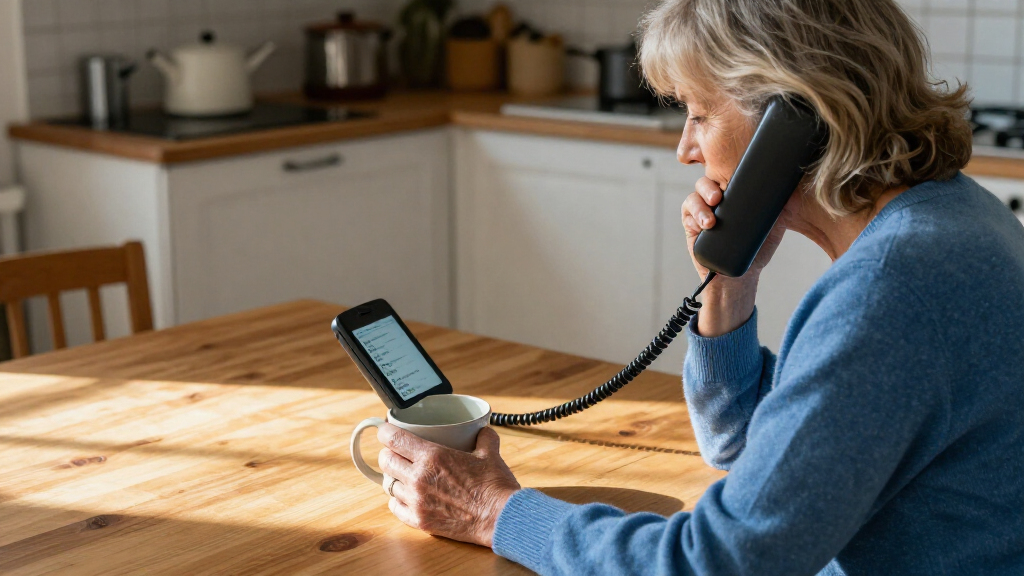
How We Picked
I ranked these phones by how directly they address the needs implied by captioned phones for hearing loss: access to readable call captions, understandable audio, ease of setup and use, and practical fit for home calling. Captioning receives the most weight because it is the defining feature of this search. That puts the Hamilton CapTel 2400iSPNBT and 840i ahead of phones that offer amplification or accessible dialing but no captions.
Within the rest of the lineup, I compared the kind of support each product offers, including amplification, large controls, photo dialing, cordless reach, emergency features, and answering-machine functions. I also considered whether the feature set adds useful flexibility or complexity. The ranking is not a claim that one type suits every person: an amplified corded phone may be a better practical choice than a captioning model for someone who hears speech well when it is louder, while a large-button phone may matter more to someone who struggles to dial. Buyers should confirm current service, network, compatibility, and setup requirements for any captioning option before choosing.
| captioned phones for hearing loss | Phone type | Answering system |
|---|---|---|
| Serene Innovations High Defini | Corded | Digital; 17-minute recording capacity |
| SOS Big Button Landline Phone | Corded landline | — |
| Hamilton CapTel 2400iSPNBT Cap | Corded captioned telephone | Digital; 18-minute recording capacity |
| Hamilton CapTel 840i Captioned | Corded captioned telephone | Digital |
| Clarity E814CC Amplified Corde | Corded base; expandable with cordless handsets | — |
| Clarity BT914 Cordless Phone w | — | Digital; 18-minute recording capacity |
| Big-Button Speakerphone Dialer | — | — |
| Sangyn Big Button Corded Landl | — | Digital; 16-minute recording capacity |
| GOWENIC Large-Button Corded Ph | — | — |
| Clarity P300 Amplified Photo P | — | Digital; 16-minute recording capacity |
| Clarity XLC3.4+ Cordless Phone | — | — |
| Swissvoice Premium 3355 Big Bu | Corded and cordless combo | Digital; records up to 30 minutes |
Factors to Consider When Choosing Captioned Phones For Hearing Loss
Before choosing, separate the problem you want the phone to solve from the features that happen to be included. Reading captions, hearing louder audio, and placing calls more easily are different needs, and one feature does not automatically cover the others. These factors can help narrow the field before comparing individual models.
Decide Whether You Need Captions or Louder Audio
Think about what makes a call hard to follow: insufficient volume, unclear speech, or difficulty distinguishing words even when the sound is loud enough. Amplification raises call volume, but it cannot provide a written record of what the other person said. Captioning presents spoken dialogue as text, which can help when listening alone is not enough. Some callers may benefit from using captions alongside audio, while others may find an amplified phone sufficient. A common mistake is buying the loudest phone when the actual need is text support. If possible, identify the problem across different calls before deciding which feature deserves priority.
Check Captioning Service and Connection Requirements
A caption-capable handset is only one part of the setup: the captioning service and connection must also work in your home. Confirm eligibility, service availability, internet or network needs, and any registration steps directly with the provider before purchase. Do not assume a phone will caption calls simply because it has a screen or is described as accessible. Ask whether captions are available for the calls you make, how the service is activated, and what happens if the connection is interrupted. If you are buying for someone else, include setup help in your plan rather than treating it as a minor detail. This check can prevent a feature mismatch that no handset specification can fix.
Match Controls to Vision, Dexterity, and Memory
Large keys, clear labels, and picture-dial buttons address different barriers from hearing loss, but they can make everyday calling much easier. Photo memory keys reduce the steps needed to call familiar contacts, while high-contrast, well-spaced buttons can help with low vision or limited dexterity. Consider whether the user can read a touchscreen comfortably or would rather have physical buttons. A screen may be helpful for captions yet less convenient for someone who prefers tactile controls. Also check whether important functions, such as speakerphone or volume adjustment, are easy to find without navigating menus. Choose the control style the caller can use independently, not the one with the longest feature list.
Choose Corded or Cordless Around the Calling Routine
A corded phone stays in one place and avoids the need to keep a handset charged, while a cordless model lets the caller move around the home. Think about where calls happen and whether a handset needs to travel before choosing a format. Cordless bundles can provide extra reach or handsets in more than one room, but each added handset brings charging and placement needs. A corded model may be easier to keep ready beside a chair or bed, especially when the phone is used as a fixed point for calls. Do not assume cordless convenience is worth it if the caller rarely moves during conversations. For households with more than one user, consider whether each person needs a dedicated handset or just an accessible phone in a shared location.
Weigh Safety Features Separately from Hearing Support
An emergency pendant, SOS button, or speed-dial key may be useful, but it does not make a phone a captioning device. Check what the safety feature actually contacts and how it works, including whether it requires a charged pendant, a nearby base, or a particular setup. A one-button emergency function can reduce dialing steps, yet it should not be treated as a substitute for a personal emergency plan. Ask whether the user can wear, reach, and operate the accessory comfortably. If safety is a main reason for buying, compare the phone’s alert method with the person’s needs and household arrangements. Keep safety requirements distinct from call-comprehension requirements so one feature does not distract from the other.
Pay for Useful Flexibility, Not a Longer Feature List
Extra handsets, answering-machine functions, touchscreens, and memory keys are worthwhile only when they fit the caller’s routine. Spend more attention on the feature that removes the main barrier than on secondary conveniences that may go unused. A captioning model may be the right investment when written text is needed, while a simpler amplified phone may make more sense when louder audio solves the problem. Conversely, choosing a basic phone solely for simplicity can leave a caller without the text support they need. Consider who will install and maintain the device, whether settings are easy to change, and whether the household needs more than one handset. The best fit is the phone the caller can use reliably, not the one with the most functions.
Frequently Asked Questions
Are all of the phones in this roundup captioned phones?
No. The Hamilton CapTel 2400iSPNBT and Hamilton CapTel 840i are the dedicated captioned options in this lineup. The other models focus on features such as amplified sound, large buttons, photo dialing, cordless handsets, or emergency access. Those features may help with calling, but they do not provide the same written conversation support. Check the product’s captioning function and service requirements rather than relying on general labels such as “for hearing loss.”
Will an amplified phone work if I still cannot understand speech?
It may help if low call volume is the main difficulty, but louder sound does not always make speech easier to understand. If words remain unclear even at a comfortable volume, a captioning service may be a better match because it adds text to the call. Some people may prefer both audible speech and captions, depending on their hearing and the calling situation. Before buying, identify whether volume or word recognition is the main issue. If you are unsure, seek guidance from an audiologist or hearing-care professional.
Do I need internet service for a captioned phone?
Some captioning phones rely on an internet connection or other service arrangements, so requirements vary by model and provider. Do not assume that plugging the phone into a landline is enough to activate captions. Confirm the current connection, service availability, registration, and eligibility requirements with the manufacturer or captioning provider before purchase. Also ask what features remain usable if the connection is unavailable. That information matters particularly for a buyer who needs captions on most calls rather than only occasional access.
Should I choose a touchscreen captioned phone or one with physical buttons?
The better control style depends on how the caller sees and operates a phone. A touchscreen can make displayed captions easier to view, while physical buttons may feel more familiar and easier to locate by touch. Consider screen readability, button spacing, comfort with menus, and whether the caller can adjust settings independently. If captions are the priority, check how text is presented and whether it can be read comfortably from the usual calling position. Ask the intended user to try the interface when possible; a feature is only helpful if they can use it confidently.
Can a phone with an SOS button replace a captioning phone?
No. An SOS feature is for making an emergency contact easier; it does not display spoken dialogue as text. A phone with an emergency button may suit someone who needs quick access to a contact, but a caller who cannot reliably follow speech may still need captioning or another communication aid. Review what the SOS function contacts and what setup it requires, then evaluate hearing support separately. If both needs matter, look for a setup that addresses each one rather than treating either feature as a substitute for the other.
Conclusion
Best overall: I recommend the Hamilton CapTel 2400iSPNBT for buyers who want a dedicated captioned phone with a large touchscreen. Best for a more button-forward captioning experience: the Hamilton CapTel 840i is the alternative to compare. Best value for a simpler hearing-support need: the Clarity E814CC is a practical direction when louder audio matters more than captions, while the Clarity P300 suits someone who also wants photo dialing. Best for beginners who want straightforward dialing: consider a large-button or photo-memory model, such as the GOWENIC or Clarity P300, after confirming it meets the caller’s hearing needs. Best for specific needs: choose the SOS Big Button phone when its emergency pendant and dialing style fit the household, or the Clarity XLC3.4+ bundle when multiple cordless handsets are useful. My main recommendation is to decide first whether captions are necessary; if they are, prioritize a captioned model and verify its service setup before weighing convenience features.