
Flashing smoke alarms for deaf residents vary in how they connect, how they handle power outages, and whether they alert beyond the room where smoke is detected. My best overall pick is the First Alert BRK 7020BSL, a hardwired smoke alarm with an LED strobe designed for hearing-impaired residents. The BRK 120V AC/DC model stands out for its sealed battery backup, while the Sonic Alert HomeAware II suits buyers seeking a broader alerting system. The main tradeoff is between a direct, room-level strobe and a connected system that may cover more of the home but adds setup considerations. Read on for how these six options compare and which type of alert fits your household.

Get everyday helpers delivered free with Prime
- Fast, free delivery on millions of items
- Prime Video, Amazon Music and more included
- Member-only deals all year
Key Takeaways
- The BRK 7020BSL leads this group for a straightforward hardwired smoke alarm with a dedicated LED strobe for hearing-impaired residents.
- The BRK 120V AC/DC model adds a sealed 10-year battery backup, which may reduce battery replacement tasks while keeping backup power part of the decision.
- The Kidde hardwired strobe alarm and the BRK models share a direct-alarm approach; buyers should compare compatibility and installation needs rather than assume all hardwired alarms interconnect.
- The First Alert 7030BSL combines smoke and carbon monoxide detection with a strobe, trading a single-purpose alarm for two types of detection in one unit.
- The SLED177 is a strobe light component, and HomeAware II is a starter kit; these serve different roles from a standalone smoke alarm and call for careful system planning.
| First Alert BRK 7020BSL Hardwired Smoke Alarm with LED Strobe for Hearing-Impaired Residents |  | Best Overall for Smoke-Only Coverage | Brand: First Alert | Model: 7020BSL | Power: Hardwired with sealed 10-year battery backup | VIEW LATEST PRICE | See Our Full Breakdown |
| BRK 120V AC/DC Smoke Alarm with LED Strobe and 10-Year Sealed Lithium Battery Backup |  | Best for a Basic Backup-Power Upgrade | Brand: First Alert | Manufacturer: BRK | Model number: 1036168 | VIEW LATEST PRICE | See Our Full Breakdown |
| Kidde Hardwired Smoke Detector with LED Strobe and 10-Year Battery Backup |  | Best for Kidde Alarm Systems | Brand and model: Kidde 50SA10-S | Power: 120V AC with built-in 10-year battery backup | Alarm volume: 85 dB | VIEW LATEST PRICE | See Our Full Breakdown |
| First Alert 7030BSL Hardwired Combination Smoke and Carbon Monoxide Alarm with LED Strobe | 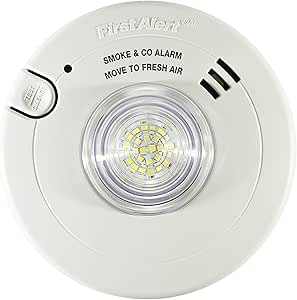 | Best Combination Smoke and CO Alarm | Brand and model: First Alert 7030BSL | Alarm types: Smoke and carbon monoxide | Power: Corded electric with 10-year battery backup | VIEW LATEST PRICE | See Our Full Breakdown |
| First Alert SLED177 Hardwired LED Strobe Light for Hearing Impaired |  | Best Add-On Visual Alert | Light output: 177 candela | Power: 120 VAC hardwired | Wiring: Quick-connect | VIEW LATEST PRICE | See Our Full Breakdown |
| Sonic Alert HomeAware II Basic Starter Kit |  | Best for Multi-Sensory Alerts Without Replacing Existing Alarms | Brand: Sonic Alert | Model: HA360MBK | Alert types: Strobe, bed shaker, audio tones, scrolling text display | VIEW LATEST PRICE | See Our Full Breakdown |
| flashing smoke alarms for deaf | Power | Brand | Dimensions |
|---|---|---|---|
| First Alert BRK 7020BSL Hardwi | Hardwired with sealed 10-year battery backup | First Alert | 2.3 × 5.2 × 5.2 in |
| BRK 120V AC/DC Smoke Alarm wit | 120V AC/DC | First Alert | — |
| Kidde Hardwired Smoke Detector | 120V AC with built-in 10-year battery backup | — | — |
| First Alert 7030BSL Hardwired | Corded electric with 10-year battery backup | — | 2.5 × 5.4 × 6.8 in |
| First Alert SLED177 Hardwired | 120 VAC hardwired | — | — |
| Sonic Alert HomeAware II Basic | — | Sonic Alert | 5 x 6 x 6.5 in |
More Details on Our Top Picks
First Alert BRK 7020BSL Hardwired Smoke Alarm with LED Strobe for Hearing-Impaired Residents
Distinct smoke and CO flash patterns give this First Alert a useful advantage when it is part of a compatible, interconnected setup: the light can help residents tell which hazard triggered the alarm. Its 177-candela synchronized strobe is a more complete visual alert than the Kidde 50SA10-S, whose listed strobe flashes three times for smoke but does not identify a CO signal. A sealed 10-year backup battery also reduces routine battery changes during outages. The tradeoff is scope: this model detects smoke only, while the First Alert 7030BSL combines smoke and carbon monoxide detection. It also needs hardwired installation and compatible devices for interconnection, so it suits a planned alarm network better than a quick standalone replacement.
Pros:- 177-candela LED strobe provides a bright visual alert
- Separate flash patterns distinguish smoke and carbon monoxide alerts
- Sealed 10-year battery backup
- Strobes synchronize with compatible interconnected units
Cons:- Requires hardwired installation
- Detects smoke only, unlike the First Alert 7030BSL combination alarm
- Interconnection depends on compatible devices
Best for: Households with compatible First Alert or BRK hardwired alarms that want distinct visual signals for smoke and carbon monoxide alerts
Not ideal for: Buyers who need carbon monoxide detection in the same unit or cannot install a hardwired alarm
- Brand:First Alert
- Model:7020BSL
- Power:Hardwired with sealed 10-year battery backup
- Sensor:Photoelectric
- Strobe:177-candela synchronized LED
- Alarm signals:Separate strobe patterns for smoke and carbon monoxide
- Interconnection:Up to 18 compatible devices, including up to 12 smoke alarms
- Dimensions:2.3 × 5.2 × 5.2 in
Our verdict“Choose this smoke-only model for a compatible hardwired First Alert network where distinct visual smoke and CO signals matter.”
BRK 120V AC/DC Smoke Alarm with LED Strobe and 10-Year Sealed Lithium Battery Backup
This BRK model pairs a 120V AC/DC connection with a sealed lithium backup designed for 10 years, giving it a straightforward appeal for buyers replacing an existing powered smoke alarm. Like the First Alert BRK 7020BSL, it includes an LED strobe and long-life backup; the 7020BSL offers more documented detail, including a 177-candela output, distinct smoke and CO flash patterns, and specified interconnection capacity. The sparse information here makes it harder to judge how the strobe behaves or which alarms can connect to it. It may fit a buyer who already knows the model suits their wiring and system, but those choosing a visual alarm from scratch have less to compare and confirm.
Pros:- Includes an LED strobe for a visual warning
- Sealed lithium backup is designed for 10 years
- Supports 120V AC/DC power
Cons:- Product details do not specify strobe brightness or flash pattern
- Installation requirements and compatible alarm models are not listed
- No carbon monoxide detection is specified
Best for: Homeowners replacing a compatible 120V hardwired smoke alarm who want an LED strobe and sealed long-life backup
Not ideal for: Buyers who need confirmed strobe brightness, interconnection compatibility, or distinct smoke and CO alert patterns before choosing
- Brand:First Alert
- Manufacturer:BRK
- Model number:1036168
- Power:120V AC/DC
- Alarm type:Smoke alarm with LED strobe
- Battery backup:Sealed lithium battery designed for 10 years
Our verdict“Consider it as a replacement when its fit with your existing wiring and alarm system is confirmed.”
Kidde Hardwired Smoke Detector with LED Strobe and 10-Year Battery Backup
The Kidde 50SA10-S gives buyers 85 dB audible and visual alerts in one hardwired smoke detector, with a built-in 10-year backup for outages. Its listed three-flash smoke signal is clear and direct, but less informative than the separate smoke and CO patterns on the First Alert BRK 7020BSL. That distinction matters for households relying on a visual signal to identify the hazard. This Kidde makes more sense where compatible Kidde alarms are already installed and a matching connection is practical; interconnection depends on the specific alarm model. Listed standards and a 10-year limited warranty add useful product information, though hardwired installation still rules it out as a simple battery-powered addition.
Pros:- Combines an 85 dB audible alarm with a high-intensity LED strobe
- Built-in 10-year battery backup
- Can interconnect with compatible Kidde alarms
- Listed as meeting UL 217 10th Edition and UL 1638 standards
Cons:- Requires a 120V AC hardwired connection
- Three flashes indicate smoke but do not distinguish smoke from carbon monoxide
- Interconnection depends on compatible alarm models
Best for: Households with compatible Kidde hardwired alarms seeking a smoke detector with both audible and visual alerts
Not ideal for: Buyers who need a standalone battery-powered alarm or separate visual signals for smoke and carbon monoxide
- Brand and model:Kidde 50SA10-S
- Power:120V AC with built-in 10-year battery backup
- Alarm volume:85 dB
- Visual alert:High-intensity LED strobe flashes 3 times for smoke
- Interconnection:Hardwired connection to compatible Kidde alarms
- Standards:ETL Listed; meets UL 217 10th Edition, UL 1638, and FCC standards
- Warranty:10-year limited warranty
- Included components:Dust cover, mounting plate, screws, detector, user guide, wiring harness
Our verdict“Pick this for a compatible Kidde setup when a smoke alert with both sound and a three-flash visual signal fits your needs.”
First Alert 7030BSL Hardwired Combination Smoke and Carbon Monoxide Alarm with LED Strobe
For buyers who want smoke and carbon monoxide detection in one device, the 7030BSL has a broader role than the smoke-only BRK 7020BSL. Both list a photoelectric sensor, a 10-year backup, and separate synchronized flash patterns for the two hazards, so this combination model can reduce the number of alarms needed in a compatible system. Its listed strobe output is inconsistent: product information says 177 candela, while item details say 77. I would not choose it on an assumed brightness advantage until that specification is confirmed. The hardwired connection and compatibility requirements also make it less suited to renters or homes without an existing alarm circuit.
Pros:- Combines smoke and carbon monoxide detection
- Separate synchronized flash patterns identify each hazard
- Includes a 10-year battery backup
- Photoelectric smoke sensor
Cons:- Requires a hardwired electrical connection
- Strobe output is listed as both 77 and 177 candela
- Interconnection depends on compatible units
Best for: Homeowners replacing a hardwired alarm who want smoke and carbon monoxide detection with distinct visual signals
Not ideal for: Buyers who need a battery-only unit or require confirmed strobe brightness before selecting an alarm
- Brand and model:First Alert 7030BSL
- Alarm types:Smoke and carbon monoxide
- Power:Corded electric with 10-year battery backup
- Smoke sensor:Photoelectric
- Strobe:LED; listed as 177 candela in product description and 77 candela in item details
- Flash patterns:Separate patterns for smoke and carbon monoxide; strobes synchronize across multiple units
- Dimensions:2.5 × 5.4 × 6.8 in
- Warranty:10-year limited warranty
Our verdict“Choose this combination alarm when one hardwired unit for smoke and CO suits your setup and you can confirm the strobe specification.”
First Alert SLED177 Hardwired LED Strobe Light for Hearing Impaired
The SLED177 is a dedicated visual alert light, not a smoke detector, so it makes sense for buyers extending an existing alarm arrangement rather than replacing an alarm. Its 177-candela output, quick-connect wiring, and synchronized flashes across multiple units give it a clear role alongside compatible detection equipment. By comparison, the First Alert 7030BSL combines a strobe with smoke and CO sensing in the same device, while the SLED177 leaves detection to other alarms. That separation can suit a planned system, but it means this light cannot alert anyone unless a compatible alarm setup triggers it. It also requires 120 VAC hardwiring, which can limit where it can be installed.
Pros:- 177-candela LED flash provides a visual warning
- Multiple units can synchronize their flashes
- Quick-connect wiring
- Can mount on a ceiling or wall
Cons:- Does not detect smoke or carbon monoxide on its own
- Requires 120 VAC hardwired installation
- Relies on a compatible alarm system to trigger the light
Best for: Homeowners adding a synchronized visual alert light to an existing hardwired alarm system
Not ideal for: Anyone seeking a complete smoke or carbon monoxide detector in a single device
- Light output:177 candela
- Power:120 VAC hardwired
- Wiring:Quick-connect
- Synchronization:Multiple units flash in unison
- Mounting:Ceiling or wall
- Standards:Meets UL standards and Americans with Disabilities Act requirements
Our verdict“Choose this add-on when your alarm system already provides detection and you need a separate synchronized visual alert.”
Sonic Alert HomeAware II Basic Starter Kit
The Sonic Alert HomeAware II Basic Starter Kit suits buyers who want alerts beyond a flashing light: it can pair a strobe, bed shaker, audio tones, and scrolling text. Unlike the First Alert BRK 7020BSL, which is a hardwired smoke alarm with an LED strobe, this system listens for an existing smoke or carbon monoxide alarm and relays its sound. That makes it a flexible option for adding vibration and text alerts, but it does not detect smoke or carbon monoxide itself. It needs to be placed in the same room as the alarm and tested regularly so the sound trigger works as intended. App-based cellphone notifications and a landline connection add phone alerts, though they take setup. Choose it for a multi-sensory alerting layer; skip it if you need a standalone detector.
Pros:- Combines a flashing strobe, bed shaker, audio tones, and scrolling text.
- Can display cellphone calls and texts through the HomeAware app.
- Can connect to a landline to display incoming calls.
- Rechargeable battery backup can help maintain alerts during a power outage.
Cons:- Relies on existing alarms and does not detect smoke or carbon monoxide directly.
- Must be placed in the same room as the alarms it listens for, with regular testing.
- Phone alerts require app setup or a landline connection.
Best for: Deaf or hard-of-hearing people who want bed-shaker and text alerts alongside an existing smoke or carbon monoxide alarm.
Not ideal for: Buyers who need a standalone smoke or carbon monoxide detector, or who cannot place and regularly test the unit in the same room as their existing alarms.
- Brand:Sonic Alert
- Model:HA360MBK
- Alert types:Strobe, bed shaker, audio tones, scrolling text display
- Sensor type:Acoustic
- Connectivity:Bluetooth app connection; landline phone connection
- Power source:Corded electric
- Battery backup:Rechargeable
- Dimensions:5 x 6 x 6.5 in
- Weight:1.8 lb
Our verdict“Choose this kit if you want vibration and text alerts layered onto existing alarms; choose a dedicated strobe smoke alarm if you need direct detection.”
How We Picked
I ranked these products around the question that matters most for this use case: how directly and dependably can a household receive a visible warning when an alarm sounds? I gave priority to an integrated strobe, the alarm’s power arrangement, the scope of detection, and how much planning a buyer may need for installation or system compatibility. A hardwired alarm with a purpose-built strobe ranks ahead of a separate alerting component when the goal is a direct replacement or addition at an alarm location.
That puts the BRK 7020BSL first for its focused role, with the BRK backup-battery model close behind for buyers who value backup power and reduced battery maintenance. The Kidde and First Alert combination alarm follow because their fit depends more on home wiring, detection priorities, and compatibility. The SLED177 and HomeAware II fill more specialized roles: one is a strobe component, and the other is a wider alerting starter system. These differences affect setup and coverage, so neither is a universal substitute for an alarm with an integrated strobe.
| flashing smoke alarms for deaf | Brand |
|---|---|
| First Alert BRK 7020BSL Hardwi | First Alert |
| BRK 120V AC/DC Smoke Alarm wit | First Alert |
| Kidde Hardwired Smoke Detector | — |
| First Alert 7030BSL Hardwired | — |
| First Alert SLED177 Hardwired | — |
| Sonic Alert HomeAware II Basic | Sonic Alert |
Factors to Consider When Choosing Flashing Smoke Alarms For Deaf
Choosing a visible alarm is a household safety decision, not just a comparison of flashing lights. I would start with how warnings need to reach each person, then check the home’s wiring, current alarms, and the type of alert coverage you need.
Match the warning to where people sleep and spend time
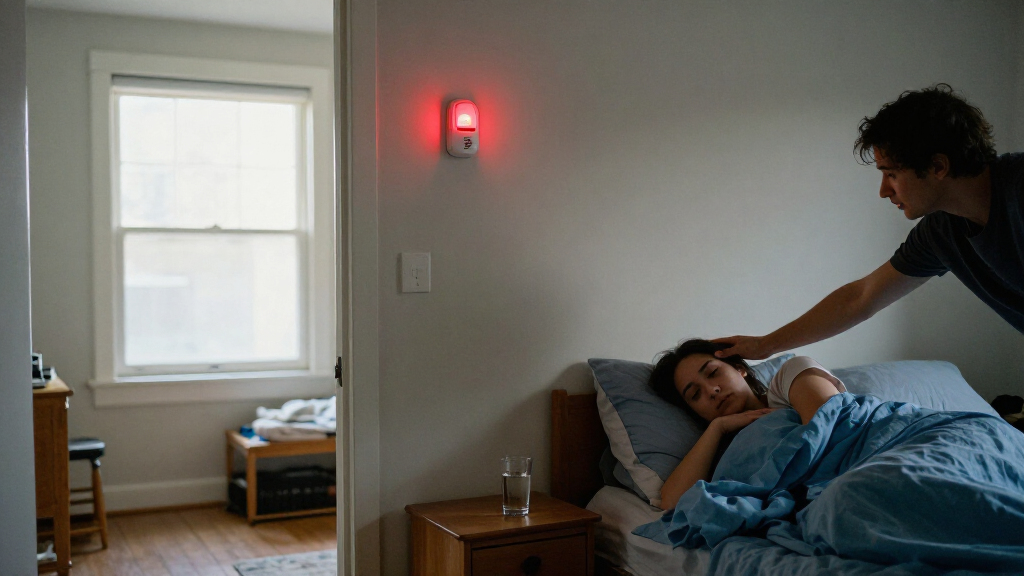
A strobe in a hallway may be easy to see during the day yet miss someone with a closed bedroom door at night. Map the rooms where household members sleep and regularly spend time before deciding how many alert points are needed. A single alarm can cover a limited area, while a connected or broader alert system may be better suited to multiple rooms. Avoid assuming that hearing the alarm’s sound in other rooms means its visual alert will be visible there. Plan placement around sightlines, doors, and how the home is used.
Check wiring and interconnection before choosing a hardwired unit
Hardwired models can simplify ongoing power management, but their installation depends on the home’s existing wiring and the alarm’s connection type. A replacement may not be compatible just because the old unit was also hardwired. Check the installation documentation and the existing alarm system before buying, especially if you expect alarms in other rooms to trigger together. Treat interconnection as a separate feature from having a strobe on the unit itself. If the wiring or compatibility is unclear, have a qualified installer assess it before relying on the new setup.
Decide how much backup power and maintenance you want
Power backup matters because a hardwired alarm still needs to operate during an outage. Battery types differ in how often they call for attention and whether the battery is replaceable, so compare the maintenance routine with what your household can manage. A sealed long-life backup can reduce routine battery changes, but it does not remove the need to check the alarm and follow its replacement schedule. Confirm whether a backup battery is included and what the manufacturer says about end-of-life replacement. Pick a setup whose maintenance steps are practical for the people responsible for the home.
Separate smoke detection from carbon monoxide coverage
A combination alarm can reduce the number of devices while adding carbon monoxide detection at the same location. That convenience does not automatically provide the right coverage throughout the home, since smoke and carbon monoxide risks may call for alarms in different locations. Check the placement guidance for both hazards and determine whether a combination unit meets each need. Also confirm that the visual alert applies to the alarm conditions you care about. Do not assume that one combination alarm replaces every separate detector in a home.
Know whether you need an alarm or a larger alerting system
An integrated strobe alarm offers a direct visual warning at its installed location. A separate strobe light or starter kit may make sense when you are building on a compatible system or want alerts to reach beyond one alarm point. Before selecting components, check what triggers them, how they communicate, and whether additional parts are needed for the coverage you expect. A common mistake is treating a strobe accessory as a complete smoke alarm. Write down the alerts and rooms you need covered, then verify that the full system—not just one component—provides them.
Plan installation and upkeep as part of the purchase
Strobe placement and installation can affect whether a visual warning is useful, so consider sightlines, mounting location, and access for maintenance. Hardwired installation may require electrical work, while a system with separate components may involve pairing or configuration. Check the instructions for testing the visual alert as well as the detector, and make a recurring schedule that household members can follow. Do not rely on a one-time setup check: alarms and alerting devices need ongoing testing and replacement according to their instructions. If you rent or share responsibility for the property, agree in advance on who handles installation and upkeep.
Frequently Asked Questions
Can one flashing smoke alarm alert me in every room?
Usually, a strobe can only help when it is visible from where you are, so walls, closed doors, and room layout matter. Check whether the alarm interconnects with other alarms and whether that interconnection activates visual alerts at those units. A sound that carries through the home does not guarantee a flash will be visible in a bedroom. For overnight coverage, plan around sleeping locations and confirm the alert method reaches the people who need it. A larger alerting system may be appropriate if one alarm location cannot provide the coverage you need.
Will a hardwired alarm work during a power outage?
That depends on whether the particular model has backup power and whether its backup is installed and maintained. The BRK 120V AC/DC option in this roundup specifies a sealed 10-year lithium battery backup, while buyers should check the documentation for the other models rather than infer their backup arrangements from the word hardwired. Backup power helps keep an alarm operating when household power is interrupted, but it does not replace routine testing. Review the manufacturer’s instructions for battery status and end-of-life signals. Also consider how any connected alert components are powered.
Can I replace my existing hardwired alarm with any model that has a strobe?
No; matching the power type alone does not confirm that a new alarm will fit the existing wiring, mounting arrangement, or interconnection system. Check the model’s installation guide and compatibility information against the alarm you are replacing. If other alarms are connected, verify that the new unit works with them and that the visual alerts behave as you expect. A qualified installer can help assess uncertain wiring or compatibility. Confirm the complete system after installation by following the test instructions.
Should I choose a smoke-only strobe alarm or a smoke and carbon monoxide combination?
Choose based on the detection coverage your home needs and where the unit will be installed. A combination model can bring smoke and carbon monoxide detection together at one point, but it may not cover every location needed for either hazard. Review placement guidance for both types of detection and account for existing devices before replacing anything. Also check that the strobe provides the visible warning you need for the alarm conditions in question. The simplest device count is not always the best coverage plan.
When does a separate strobe or alerting kit make more sense than an alarm with a built-in strobe?
A separate component or starter kit may fit when you need alerts across a broader area or are adding to an existing compatible alerting setup. It can also suit a household whose needs go beyond a single alarm location. The tradeoff is that you must confirm which alarms trigger the system, what additional components are needed, and how everything is powered and maintained. A standalone strobe light should not be mistaken for a smoke detector. If you want the simplest direct alarm-and-flash arrangement, an integrated strobe model is generally easier to evaluate.
Conclusion
Best overall: I would start with the First Alert BRK 7020BSL if you want a hardwired smoke alarm with a dedicated strobe. Best for backup power: the BRK 120V AC/DC model is the clearest fit when its sealed battery backup matches your maintenance priorities. Best for a combination need: the First Alert 7030BSL brings smoke and carbon monoxide detection together. For buyers who want a broader alerting setup, the Sonic Alert HomeAware II is the specialist option to examine; the SLED177 makes more sense when you need a strobe component for a compatible system. I would compare the Kidde model with the BRK choices when the home’s wiring and alarm compatibility point that way. Beginners seeking a direct replacement should focus on the integrated-strobe alarms and confirm installation fit first.