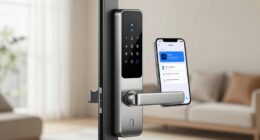
AI-powered haptic alerts are transforming how you receive notifications, using personalized vibrations that adapt to your environment and habits. Instead of relying on sounds or visuals, these alerts communicate critical information through meaningful tactile feedback. From detecting smoke to notifying you about doorbells, the system creates discreet, effective cues that suit your routines. Keep exploring to discover how this innovative tech makes everyday alerts smarter, more intuitive, and seamlessly integrated into your life.
Key Takeaways
- AI-powered haptic alerts deliver tailored vibrations for various notifications, from safety signals like smoke detection to doorbell rings.
- Personalized feedback adapts to user context, ensuring alerts are noticeable yet unobtrusive across different environments.
- Critical alerts use distinct, strong vibrations for immediate recognition, while routine notifications employ gentle taps.
- Integrating AI enhances responsiveness, reducing false alarms and improving the overall user experience.
- This technology creates a seamless, human-centered communication system across wearables and smart home devices.

Haptic alerts powered by AI are transforming how we receive notifications, making them more intuitive and responsive. Instead of generic vibrations or sounds, these alerts use tactile feedback to deliver specific, meaningful cues directly to your body. This technology allows your devices to communicate in a way that feels natural and immediate, helping you stay connected without distractions. With AI integration, haptic feedback becomes smarter, adapting to your habits, environment, and preferences to deliver the right alert at the right moment. Imagine your smart home notifying you of a visitor with a gentle tap on your wrist or your phone signaling an important message through a distinct vibration pattern. That’s the power of AI-enhanced tactile feedback, elevating your interaction with technology from simple alerts to seamless, intuitive communication.
The core of this innovation lies in tactile feedback, which replaces or supplements traditional notification methods. Instead of hearing a chime or seeing a pop-up, you feel a subtle, purposeful vibration that indicates what’s happening. AI integration takes this a step further by analyzing context, learning from your behaviors, and customizing the tactile signals accordingly. For instance, if you’re in a noisy environment, your device might deliver a more intense or patterned vibration for critical alerts. Conversely, in quiet settings, the feedback might be softer or differ in rhythm to convey urgency or type. This personalized approach ensures you’re always aware of important updates without disrupting your focus or daily routine. Additionally, skin sensitivity varies among individuals, so adaptive feedback helps prevent discomfort or irritation.
AI personalizes tactile alerts by analyzing context and behaviors, providing subtle, adaptive vibrations for important notifications.
As you go about your day, AI-driven tactile feedback can adapt dynamically. It learns your preferences—how you respond to different alerts—and fine-tunes the sensations to better suit your lifestyle. When a smoke detector alerts you, it might produce a strong, distinctive vibration pattern that’s unmistakable, even if you’re in another room. When someone rings your doorbell, a gentle tap on your wrist or device can notify you discreetly. This level of AI integration makes these alerts not just smarter but more meaningful, reducing false alarms and ensuring you don’t miss essential notifications. Plus, the versatility of tactile feedback means it can be used across various devices — from wearables to smart home systems — creating a cohesive, responsive ecosystem.
In essence, AI-powered haptic alerts redefine how you experience notifications. They shift the focus from intrusive sounds or screens to subtle, intelligent tactile cues that keep you informed without overwhelming you. This fusion of tactile feedback and AI isn’t just about convenience; it’s about creating a more intuitive, accessible way to stay connected, whether you’re at home, work, or on the move. As this technology continues to evolve, expect your devices to become more perceptive, delivering notifications that are not just smarter but more human-centered, making everyday interactions smoother and more natural.

Retevis RB48 FRS Walkie Talkies Long Range, Rugged & IP67 Waterproof, Mil-Standards 810H Two Way Radio, Heavy-Duty, NOAA, Rechargeable, 20hr Battery, Emergency Radio(2 Pack)
Military-Grade Durability-Built to Survive the Harshest Conditions;Tested to MIL-STD-810H, RB48 shrugs off drops, dust, vibration, heat, cold, and...
As an affiliate, we earn on qualifying purchases.
Frequently Asked Questions
How Accurate Are Ai-Driven Haptic Alerts in Different Environments?
AI-driven haptic alerts are generally accurate, but their precision depends on proper sensor calibration and minimizing environmental interference. In controlled environments, you can expect high accuracy, as sensors reliably detect signals. However, in noisy or unpredictable settings, environmental interference may cause delays or false alerts. Regular calibration and advanced filtering techniques help improve accuracy across different environments, ensuring you receive timely, dependable haptic alerts regardless of surroundings.
Can Haptic Alerts Be Customized for Individual User Preferences?
Yes, haptic alerts can be customized for your preferences, making them as unique as your fingerprint. You can choose personalization options like vibration intensity, patterns, and timing to suit your comfort level. This guarantees you stay alert without feeling overwhelmed, turning technology into a seamless extension of yourself. By tailoring alerts, you enhance user comfort, creating a more intuitive and pleasant experience that responds precisely to your needs and lifestyle.
What Privacy Measures Are in Place for Ai-Powered Haptic Data?
You should know that privacy measures for AI-powered haptic data include data encryption, which secures your information from unauthorized access, and user consent, ensuring you’re in control of what data is collected and how it’s used. These measures protect your personal preferences and activity details, giving you peace of mind while enjoying customized alerts. Always review privacy policies to understand how your data is managed and protected.
How Long Does It Take to Develop a New Haptic Alert System?
Developing a new haptic alert system typically takes several months, depending on complexity. You’ll start with design iterations, refining the concept based on initial feedback. Then, you conduct user testing to guarantee the alerts are effective and comfortable. Each phase helps identify improvements, so the process may extend if adjustments are needed. Overall, expect a development timeline of around 4 to 6 months, with ongoing refinements to optimize user experience.
Are There Any Health Risks Associated With Prolonged Haptic Feedback Use?
Are you aware of the potential health risks from prolonged haptic feedback? While generally safe, extended use can lead to muscle fatigue and skin irritation in some users. If you’re constantly exposed, you might experience discomfort or strain. To mitigate risks, take regular breaks and adjust feedback intensity settings. Staying mindful of your body’s signals helps ensure you enjoy the benefits without adverse effects.

Radioddity HD-1 IP67 Waterproof Floating Walkie Talkies, Heavy Duty Long Range Two Way Radio w/ 2400mAh Battery One-Key Group Call, Vibrate Alert, SOS, Dual PTT, for Construction Hunting, 4 Packs
Floating, Waterproof & Dustproof: With IP67 protection, the HD-1 resists water submersion up to 30 minutes and blocks...
As an affiliate, we earn on qualifying purchases.
Conclusion
As you embrace this new era, think of AI-driven haptic alerts as your modern-day Oracle, whispering essential messages through subtle vibrations. Like Pandora’s box opening to reveal endless possibilities, these innovations transform simple notifications into powerful, intuitive signals. You’re not just receiving alerts—you’re engaging with technology that anticipates your needs, guiding you through a world where every buzz and tap becomes a trusted messenger, connecting you seamlessly to what matters most.

2-Wired video intercom system,Video Doorbell Camera with Monitor, 1080P 7-inch Touch Screen, video door phone,Night Vision, 130° Wide Angle, Tuya App Remote Unlock, Waterproof, No Monthly Fees
Smart Wired Security & Entry System: This complete home security solution is a smart, wired video doorbell and...
As an affiliate, we earn on qualifying purchases.

Ring Battery Doorbell (newest model), Home or business security with Head-to-Toe video, Live View with Two-Way Talk, and Motion Detection & Alerts, Venetian Bronze
See more at your home or business — Get 66% more vertical coverage with the latest version of...
As an affiliate, we earn on qualifying purchases.