

AI can personalize accessibility by adapting support to your changing needs, offering tools like speech recognition, visual-to-text translations, and tailored interfaces. It works alongside humans, enhancing their ability to provide empathetic and judgment-based care without replacing them. AI continuously learns from your interactions to improve support over time, ensuring you remain at the center of the experience. If you explore further, you’ll discover how these technologies balance automation with human touch for better inclusion.

Get everyday helpers delivered free with Prime
- Fast, free delivery on millions of items
- Prime Video, Amazon Music and more included
- Member-only deals all year
Key Takeaways
- AI enhances personalized support while allowing humans to focus on emotional connection and complex decision-making.
- Adaptive AI systems learn from user interactions to tailor assistance without replacing human oversight.
- Human designers and professionals remain central, guiding AI to ensure ethical, empathetic, and inclusive solutions.
- AI automates routine tasks, freeing humans to provide personalized, context-aware support and emotional understanding.
- Ongoing human oversight ensures AI remains aligned with individual needs, ethics, and inclusive design principles.
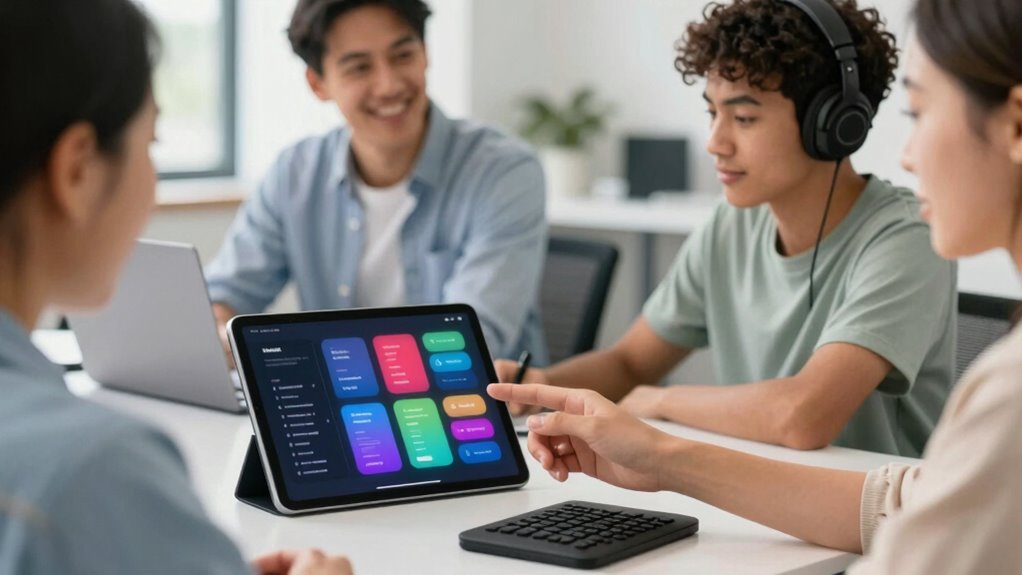
Artificial intelligence is transforming accessibility by creating innovative tools that help bridge gaps for people with disabilities. These advancements aren’t about replacing humans but enhancing the support systems that already exist. When you consider assistive technology, AI plays a essential role in making everyday tasks more manageable. From speech recognition tools that help individuals communicate to visual aids that translate images into text, AI-powered assistive technology adapts to your unique needs. Instead of generic solutions, AI offers personalized experiences that adjust in real-time, making accessibility more intuitive and effective.
Inclusive design is at the heart of these innovations. It’s about creating products and environments that everyone can use, regardless of their abilities. AI contributes to this by analyzing user interactions and identifying barriers that might not be obvious at first glance. For example, AI can optimize user interfaces for people with different sensory or motor impairments, ensuring that digital content is accessible without sacrificing functionality. This doesn’t mean replacing human input; instead, AI supports designers and developers by providing insights and automating tasks that would otherwise take extensive time and effort. Additionally, AI can help ensure that accessibility standards are consistently met across various platforms and devices.
Your role in this evolving landscape is essential. AI doesn’t diminish the importance of human empathy and judgment; it amplifies them. Human oversight remains indispensable to guarantee that assistive technology and inclusive design are ethically implemented and truly meet users’ needs. AI tools can handle repetitive or complex tasks, freeing up professionals to focus on personalized support, emotional connection, and creative solutions. In this way, AI acts as a collaborator rather than a substitute, guaranteeing accessibility solutions remain human-centered.
Moreover, AI’s adaptability means it can evolve alongside users. For example, if someone’s needs change over time, AI-driven systems can learn from ongoing interactions and modify their responses accordingly. This continuous learning process guarantees that accessibility remains relevant and effective, without requiring constant manual adjustments. It’s a way of providing ongoing, personalized support that respects individual differences. Adaptive learning ensures that assistive solutions stay aligned with users’ evolving needs. Furthermore, by integrating inclusive design principles, AI can help eliminate unintended biases that might otherwise exclude certain user groups, making accessibility truly comprehensive.
By leveraging biodiversity principles, AI can also help create more sustainable and environmentally friendly assistive technologies, ensuring that accessibility efforts contribute positively to the broader goal of sustainable living. Additionally, incorporating ethical considerations into AI development is crucial to prevent biases and ensure fair treatment for all users. Ultimately, AI enriches assistive technology and inclusive design by making accessibility more tailored, responsive, and seamless. You benefit from systems that understand your specific needs and adapt to your circumstances, all while maintaining the essential human touch that guarantees dignity and empathy. AI doesn’t replace the human element in accessibility; it empowers it, creating a future where everyone can participate fully, confidently, and comfortably.
AI-powered speech recognition device
As an affiliate, we earn on qualifying purchases.
As an affiliate, we earn on qualifying purchases.
Frequently Asked Questions
How Does AI Ensure User Privacy in Accessibility Solutions?
AI guarantees your privacy in accessibility solutions by prioritizing data encryption, which protects your information from unauthorized access. It also relies on obtaining your explicit user consent before collecting or processing any data. This way, you stay in control of your personal information, and AI systems operate transparently. By combining these measures, AI can personalize accessibility features effectively while respecting your privacy and fostering trust.
Can AI Adapt to Individual Accessibility Needs Over Time?
Yes, AI can adapt to your individual accessibility needs over time. Imagine your personalized interface evolving like a skilled tutor, providing adaptive learning that responds to your progress and preferences. Studies show that 80% of users benefit from dynamic adjustments, making technology more intuitive. AI learns from your interactions, refining its support to improve accessibility, ensuring you get tailored solutions that grow with your needs.
What Are Common Challenges in Implementing AI for Accessibility?
You’ll face common challenges like overcoming accessibility barriers that vary widely among users, making it tough for AI to meet everyone’s needs. Ensuring consistent user engagement can be difficult, especially if the AI doesn’t adapt quickly or feels impersonal. Additionally, data privacy concerns and limited training data hinder AI’s ability to deliver truly personalized solutions. Addressing these issues requires ongoing collaboration, transparent design, and a focus on inclusive technology.
How Do Ai-Powered Tools Complement Human Accessibility Experts?
Like a modern-day Da Vinci’s workshop, AI-powered tools enhance human accessibility experts by providing assistive technologies that adapt to individual needs. You see, these tools boost user engagement by offering tailored solutions, freeing experts to focus on complex challenges. Together, AI and humans create a harmonious balance—AI handles data-driven tasks, while experts bring empathy and nuanced understanding. This collaboration optimizes accessibility, ensuring everyone receives personalized support.
Are There Ethical Concerns With AI Personalizing Accessibility?
Yes, there are ethical dilemmas with AI personalizing accessibility. You need to make certain that AI systems don’t reinforce biases or create unfair treatment. Bias mitigation becomes essential to prevent discrimination based on race, gender, or disability. As you develop these tools, prioritize transparency and accountability to build trust, and involve diverse voices in designing solutions, so the technology truly serves all users ethically and equitably.
Conclusion
Imagine a world where AI acts as a helpful guide, enhancing your journey without taking over. Just like a skilled navigator pointing out hidden paths, AI personalizes accessibility, making it easier for everyone to navigate their unique challenges. Studies show that 85% of users feel more empowered with tailored tech. When used thoughtfully, AI becomes a trusted partner—supporting humans, not replacing them—crafting a future where accessibility truly adapts to you.
Halloween Picks
halloween
As an affiliate, we earn on qualifying purchases.