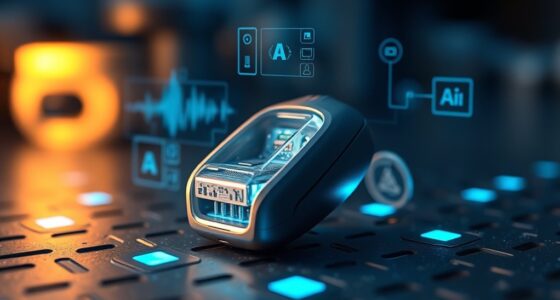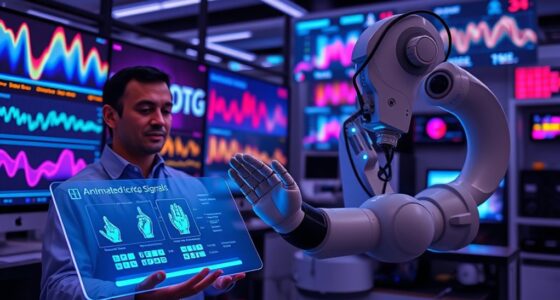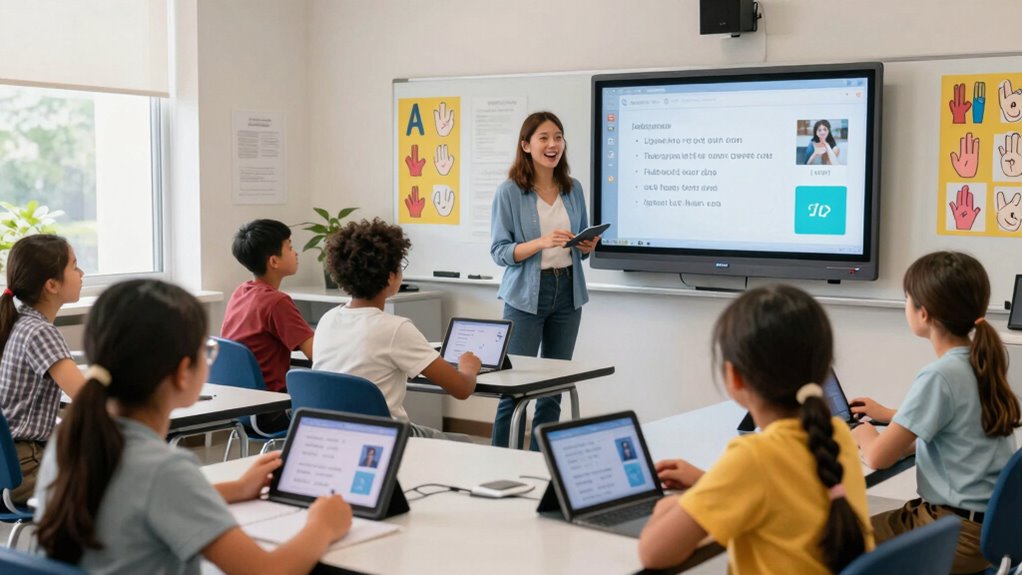
AI can support you by offering real-time sign language translation and captioning, making communication with teachers and classmates easier. These tools instantly convert spoken words into captions or signs, helping you participate fully and confidently in class. They are accessible on smartphones, tablets, and specialized devices, creating inclusive learning environments. As AI continues to improve, it becomes more reliable and personalized, so you can rely on these solutions more each day. Keep exploring to discover how this technology can transform your learning experience.
Key Takeaways
- AI-powered sign language translation enables real-time, seamless communication between deaf students and teachers or peers.
- Real-time AI captioning transcribes spoken content instantly, ensuring deaf students access all classroom information.
- Integration of AI tools on familiar devices promotes accessibility and inclusive learning environments.
- Continuous AI development improves translation accuracy, fostering confidence and personalized support for students.
- AI enhances participation and academic success by creating more equitable, accessible, and engaging educational experiences.
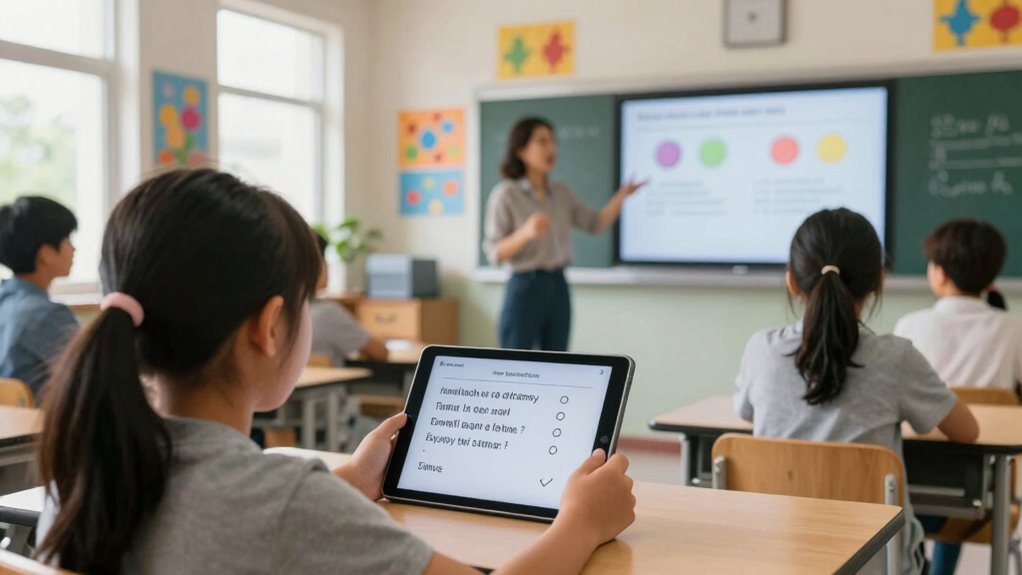
Advancements in artificial intelligence are opening new opportunities to support deaf and hard of hearing students in educational settings. These innovations are transforming how you access information and participate fully in classroom activities. One of the most impactful tools is AI-powered sign language translation. This technology enables real-time conversion of sign language into spoken or written words, allowing you to communicate seamlessly with teachers and classmates. Instead of struggling to interpret gestures or rely on limited human interpreters, you can now receive instant translations directly on your device. This not only enhances your understanding but also promotes independence and confidence during lessons. AI-driven sign language translation systems are becoming more accurate and adaptable, meaning they can recognize various signs and dialects, which helps you stay engaged regardless of your specific communication style.
Alongside sign language translation, real-time captioning powered by artificial intelligence plays a vital role. As a student, you can benefit from captions that instantly transcribe spoken lectures, discussions, or multimedia content. These captions appear on your screen or device, giving you immediate access to spoken information without delay. Unlike traditional captions that are prepared beforehand, AI-generated captions are dynamic, updating continuously as the speaker talks. This guarantees you don’t miss out on essential details and can follow along with the flow of the class. The accuracy of AI captioning has improved greatly, making it a reliable support tool, especially when combined with other assistive technologies. Real-time captioning helps level the playing field, allowing you to participate actively in discussions, take notes more effectively, and stay engaged with the curriculum. Additionally, the integration of AI in education is making these tools more accessible and user-friendly, ensuring they meet diverse student needs. As these assistive technologies become more widespread, they will further promote an inclusive learning environment. Furthermore, ongoing research and development in AI are continuously enhancing the accuracy of AI translation, leading to more reliable communication support. This progress also contributes to increased user confidence in utilizing these tools effectively, fostering greater independence in learning.
Both sign language translation and real-time captioning are designed to integrate smoothly into your learning environment. They can be accessed via smartphones, tablets, or specialized devices, making them highly portable and flexible for different classroom settings. These tools also encourage inclusivity by enabling you to interact more naturally with teachers and peers, fostering a more equitable educational experience. As AI continues to evolve, these technologies will become even more sophisticated, offering personalized support tailored to your needs. Additionally, the accuracy of AI translation is continually improving, ensuring more reliable communication assistance. Overall, AI-driven solutions are breaking down communication barriers, empowering you to learn confidently, participate actively, and succeed academically. The future of education for deaf and hard of hearing students looks promising, with AI at the forefront of creating more accessible, inclusive classrooms.
AI sign language translator device
As an affiliate, we earn on qualifying purchases.
As an affiliate, we earn on qualifying purchases.
Frequently Asked Questions
Can AI Assist With Sign Language Translation in Real-Time?
Yes, AI can assist with sign language translation in real-time. Through sign language recognition technology, AI can interpret gestures instantly and convert them into spoken or written language, enabling seamless communication. This real-time translation helps deaf and hard of hearing students participate actively in conversations and classroom activities. As AI continues to improve, its ability to accurately and quickly translate sign language will become even more reliable, fostering greater inclusion.
How Affordable Are AI Tools for Schools and Students?
AI tools are becoming more affordable, slicing through accessibility barriers like a hot knife through butter. A thorough cost analysis shows prices dropping, making these tools accessible for schools and students alike. While some high-end options still carry a hefty price tag, many practical AI solutions are now budget-friendly, opening doors for more deaf and hard of hearing students to access quality education without breaking the bank.
Do AI Solutions Work Equally Well for All Types of Hearing Impairments?
AI solutions don’t work equally well for all hearing impairments due to personalization challenges and accessibility limitations. You might find that some tools effectively assist those with mild hearing loss, but struggle with more complex impairments. To maximize benefits, you need to select AI tools tailored to individual needs. Continual improvements are necessary to address these limitations, ensuring everyone gains equitable support regardless of their specific hearing challenges.
What Are Privacy Concerns Related to AI Data Collection?
Did you know that over 80% of data breaches involve weak security? Privacy concerns with AI data collection focus on data security and consent management. You need to guarantee personal information is protected through robust data security measures, and consent is obtained transparently. Without proper safeguards, sensitive data risks misuse or exposure, undermining trust and violating privacy rights. Prioritizing these aspects helps safeguard your information and maintain ethical AI use.
Can AI Replace Human Interpreters in Educational Settings?
AI can’t fully replace human interpreters in educational settings because it lacks emotional support and cultural sensitivity. You need interpreters who understand nuanced communication, emotional cues, and cultural contexts to foster a supportive learning environment. While AI can assist with basic translation, it can’t replicate the empathy and cultural awareness that human interpreters provide, which are essential for creating a comfortable and inclusive atmosphere for deaf and hard of hearing students.
Conclusion
AI acts like a bridge, connecting deaf and hard of hearing students to a world of knowledge and communication. It breaks down barriers, making learning more accessible and inclusive. As you embrace this technology, you’ll find that education becomes a smoother, more connected journey—like a river flowing freely without obstructions. With AI by your side, you’re not just overcoming challenges; you’re opening doors to limitless possibilities and brighter futures.