Federated learning allows your hearing devices to improve and personalize without sharing your raw data. Your device trains locally on your environment and interactions, then only shares model updates with a central server. This process keeps sensitive listening information on your device, boosting privacy and reducing data breach risks. As a result, your hearing aid adapts in real-time while protecting your privacy. If you continue exploring, you’ll discover how this technology shapes smarter, more personalized hearing experiences.
Key Takeaways
- Federated learning allows hearing devices to improve through local data training without sharing raw user information.
- It enables secure aggregation of device updates to enhance overall model accuracy and personalization.
- The approach supports real-time, on-device adjustments, ensuring privacy while adapting to individual environments.
- Federated learning balances personalized hearing aid performance with strong privacy protections against data breaches.
- This technology fosters smarter, more adaptable hearing solutions that evolve with user needs while maintaining data confidentiality.

Have you ever wondered how hearing devices can become smarter without compromising your privacy? Advances in federated learning make this possible by allowing your hearing aids to improve their performance while keeping your personal data secure. Traditional machine learning models often require sharing raw data with external servers, which raises significant privacy concerns. With federated learning, your device trains its own local model using your interactions and environment, then shares only the updated model parameters—not your raw data—with a central server. This approach addresses privacy concerns because sensitive information, like what you hear or how you respond, stays on your device. The server aggregates these local updates from many users to create a more accurate, generalized model that benefits everyone. This way, your hearing device becomes smarter through collective learning, but your personal listening habits stay private.
Federated learning enables smarter hearing devices while keeping your personal listening data private.
Model personalization is a key benefit of federated learning in hearing technologies. No two users have identical hearing needs or environments, so a one-size-fits-all model falls short. Federated learning enables your device to personalize itself continuously. It learns from your specific experiences—such as how you respond to certain sounds or how you adjust volume—without sending that data elsewhere. Instead, your device locally updates its model based on your interactions, then shares these improvements in a secure, privacy-preserving way. Over time, this process tailors the device’s performance to your unique listening preferences and environments. The result is a hearing aid that adapts more effectively to your daily life, delivering clearer sound, better noise reduction, and more natural hearing experiences.
This decentralized approach also means that your device can adapt quickly to new environments or changes in your hearing needs. Since the learning happens locally, updates happen in real-time, providing immediate enhancements without waiting for cloud-based processing or risking data breaches. Your device becomes a personalized assistant that evolves as you do, offering improved sound quality without exposing your private moments to potential breaches or misuse. The collaborative model of federated learning ensures that all users benefit from collective insights while maintaining individual privacy.
In essence, federated learning transforms hearing technology by balancing the need for smarter, more personalized devices with the imperative to protect your privacy. You get a device that learns from your experiences without ever exposing sensitive data, ensuring your listening environment remains confidential. This innovative approach makes your hearing aids not only more intelligent but also more trustworthy, aligning cutting-edge AI with your right to privacy. As this technology continues to develop, expect your hearing device to become a seamless extension of your daily life—smarter, more personal, and more private than ever before.

Audien Atom One OTC Hearing Aids – Wireless, Rechargeable, and Comfortable | Clear Sound in a Small, Discreet Design for Seniors & Adults with Hearing Loss
Hear What Matters Most: Hearing isn’t one-size-fits-all. That’s why our adjustable frequency system lets you personalize your sound…
As an affiliate, we earn on qualifying purchases.
As an affiliate, we earn on qualifying purchases.
Frequently Asked Questions
How Does Federated Learning Improve Hearing Aid Personalization?
Federated learning improves hearing aid personalization by enabling your device to learn from your usage without sharing sensitive data, increasing user engagement. It allows the system to adapt more accurately to your specific environment and preferences. Plus, it offers technical scalability, as models update across many devices simultaneously, ensuring personalized performance improves over time without overloading servers, giving you a seamless and tailored hearing experience.
What Privacy Concerns Exist With Federated Learning in Hearing Tech?
Did you know that over 60% of users worry about their data security? In hearing tech, privacy concerns include potential data breaches and misuse. Federated learning helps by keeping your raw data on your device, enhancing data security. However, ensuring user consent remains essential, so you’re always aware of what data is being shared. Staying informed and choosing devices that prioritize privacy can help protect your personal information.
Can Federated Learning Adapt in Real-Time to User Environment Changes?
Yes, federated learning can adapt in real-time to your environment changes. It enables hearing devices to respond quickly by continuously updating models with your data locally, without needing to send information to a central server. This environment responsiveness guarantees your hearing technology stays optimized as your surroundings change, offering a seamless experience. Real-time adaptation improves clarity and comfort, making your hearing device more intelligent and attuned to your daily activities.
How Does Federated Learning Handle Diverse Hearing Impairment Types?
Imagine you’re designing a hearing aid for users with different impairments. Federated learning handles this by promoting model generalization across diverse data sources. It learns from varied hearing loss patterns without exposing sensitive data, effectively managing data heterogeneity. For example, a model trained across users with sensorineural and conductive losses improves its adaptability, ensuring better personalized performance while respecting privacy. This approach guarantees your hearing tech works well for everyone.
What Are the Cost Implications of Implementing Federated Learning?
Implementing federated learning involves significant cost analysis and infrastructure investment, which can be substantial upfront. You’ll need to fund secure servers, robust network systems, and ongoing maintenance. While the initial costs may seem high, you conserve long-term by avoiding data centralization expenses and enhancing privacy. Overall, consider whether the benefits of personalized hearing solutions outweigh these setup costs, and plan your budget accordingly to ensure smooth deployment.
Audien Atom One OTC Hearing Aids – Wireless, Rechargeable, and Comfortable | Clear Sound in a Small, Discreet Design for Seniors & Adults with Hearing Loss
Hear What Matters Most: Hearing isn’t one-size-fits-all. That’s why our adjustable frequency system lets you personalize your sound…
As an affiliate, we earn on qualifying purchases.
As an affiliate, we earn on qualifying purchases.
Conclusion
Federated learning transforms hearing technologies like a symphony conductor directing diverse instruments in harmony. By enabling devices to learn collaboratively without sharing sensitive data, you guarantee privacy while improving performance. This approach is like weaving a rich tapestry from multiple threads—each device contributes its unique pattern. As you embrace federated learning, you open smarter, more personalized hearing solutions that adapt seamlessly to your needs, shaping a future where technology listens as attentively as you do.

Rechargeable Hearing Aids for Seniors, OTC Hearing Aids with Digital Chips, Smart Noise Reduction, Comfortable and Invisible Wearing, Drying Function, 120H Case Capacity, 4 Scene Modes
Portable & Rechargeable Design: Magnetic charging provides 30 hours of playback per charge, with a 120-hour total capacity…
As an affiliate, we earn on qualifying purchases.
As an affiliate, we earn on qualifying purchases.
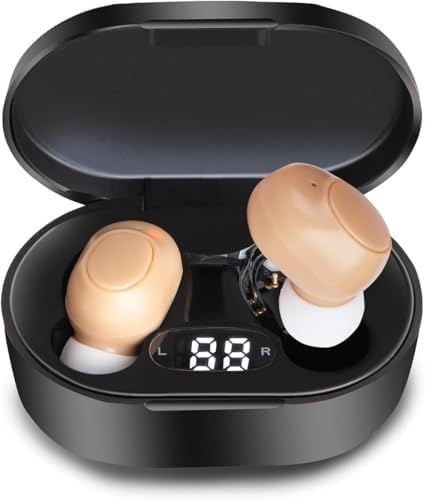
Hearing Aids, Miniature Hearing Amplifiers for Adults with Noise Cancelling, Rechargeable Hearing Aids for Seniors with Crystal Clear Sound, and LED Power Display (skin)
A MUST HAVE FOR YOUR LOVER-This hearing aid is a small electronic device that you wear in your…
As an affiliate, we earn on qualifying purchases.
As an affiliate, we earn on qualifying purchases.