
To turn on live captioning on your smartphone, go to your device’s accessibility or sound settings. For Android, enable “Live Caption”; on iPhones, turn on “Live Listen” via Accessibility. Make sure your device is updated and your microphone works properly. Adjust settings for better accuracy, especially in noisy environments. If you follow these steps, you’ll stay connected and never miss a word—keep going to discover how to get the most out of live captioning.
Key Takeaways
- Access Live Caption settings via “Accessibility” or “Sound & Vibration” on Android or iPhone.
- Toggle “Live Caption” or “Captioning” to enable real-time speech-to-text captions.
- Adjust language and dialect settings for improved caption accuracy.
- Use noise-canceling headphones and optimal device positioning for better recognition.
- Keep your device updated and troubleshoot issues like noise or delays for seamless captioning.

LIVELY Jitterbug Smart4 Smartphone for Seniors – Cell Phone for Seniors – Not Compatible with Other Wireless Carriers – No SIM Needed – Must Be Activated Phone Plan
Only Compatible with Lively Phone Service: The Jitterbug Smart4 is only compatible with Lively phone service; plans include…
As an affiliate, we earn on qualifying purchases.
As an affiliate, we earn on qualifying purchases.
Why Live Captioning Can Make Conversations Easier
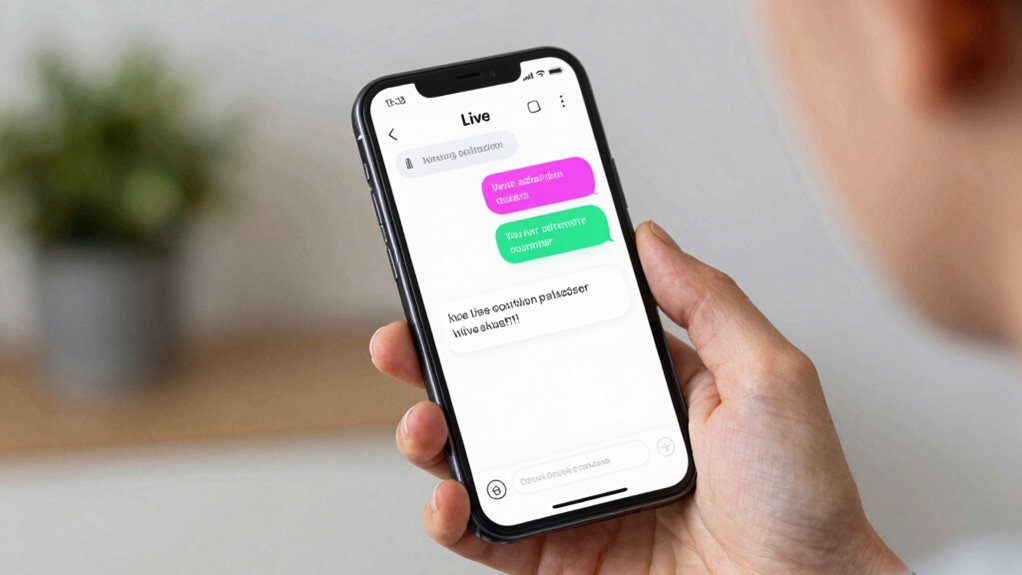
Live captioning can considerably ease conversations, especially in noisy environments or when speaking with someone who has a hearing impairment. It uses speech recognition technology to convert spoken words into text instantly, making communication smoother. speech recognition technology enhances the speed and accuracy of captioning, ensuring the messages are reliable. These accessibility features guarantee you don’t miss important details, even in loud settings or when accents are hard to understand. Live captioning helps you stay engaged without asking others to repeat themselves. It’s particularly useful during meetings, phone calls, or casual chats where background noise can interfere with hearing. By providing real-time text, live captioning bridges communication gaps and promotes inclusive communication. This tool empowers you to participate fully, regardless of auditory challenges, making everyday conversations more accessible and less frustrating. European cloud innovation supports the development of advanced speech recognition systems that enhance live captioning accuracy and reliability. Additionally, ongoing advancements in cloud-based processing contribute to faster and more precise captioning performance. Furthermore, continuous improvements in artificial intelligence are driving the evolution of more natural and context-aware captioning systems.
![2 in 1 iPhone Microphone Adapter for Live-Streaming [MFi Certified], Lightning to 3.5mm Audio Jack and Charger Lightning Splitter, Apple Dongle Headphone Jack and Charger for iPhone 14/13/12/11/ iPad](https://m.media-amazon.com/images/I/41r4i5pVi6L._SL500_.jpg "Live Captioning on Smartphones: Turn It On and Never Miss a Word 5")
2 in 1 iPhone Microphone Adapter for Live-Streaming [MFi Certified], Lightning to 3.5mm Audio Jack and Charger Lightning Splitter, Apple Dongle Headphone Jack and Charger for iPhone 14/13/12/11/ iPad
Excellent Compatibility – This iphone splitter for charging and headphone is compatible with iPhone 14/14 Plus/14 Pro/14 Pro…
As an affiliate, we earn on qualifying purchases.
As an affiliate, we earn on qualifying purchases.
How to Enable Live Captioning on Your Smartphone
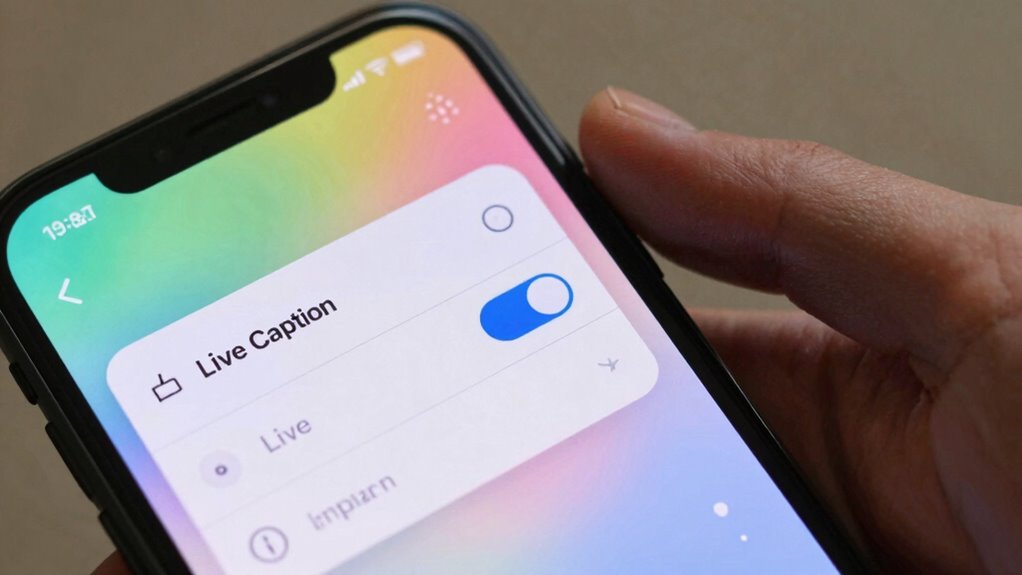
Enabling live captioning on your smartphone is a straightforward process that can enhance your communication experience instantly. First, go to your device’s settings. On Android devices, tap on “Accessibility” or “Sound & Vibration,” then select “Live Caption” or “Captioning,” and toggle it on. For iPhones, enable Live Caption through the “Accessibility” menu under “Hearing,” then turn on “Live Listen” or similar features. Keep in mind, privacy concerns may arise because captions are generated on your device or in the cloud, depending on your settings. Additionally, caption accuracy can vary based on background noise and speech clarity. Adjust your settings to optimize performance and be aware of how your device handles your data to ensure your privacy remains protected. Understanding smartphone accessibility features can give you insights into how personal data and device capabilities work together to improve your user experience. Leveraging assistive technology can further enhance your overall communication and accessibility.

ProCase Noise Reduction Ear Muffs, Sound Proof Ear Protection, NRR 28dB Noise Cancelling Headphones for Adults Kids Autism, Hearing Protection for Mowing -Black
Constructed by solid ABS shell and thickened foam, the ear muffs achieve NRR 28 dB (SNR 34 dB)…
As an affiliate, we earn on qualifying purchases.
As an affiliate, we earn on qualifying purchases.
Tips for Using Live Captioning Effectively in Any Situation
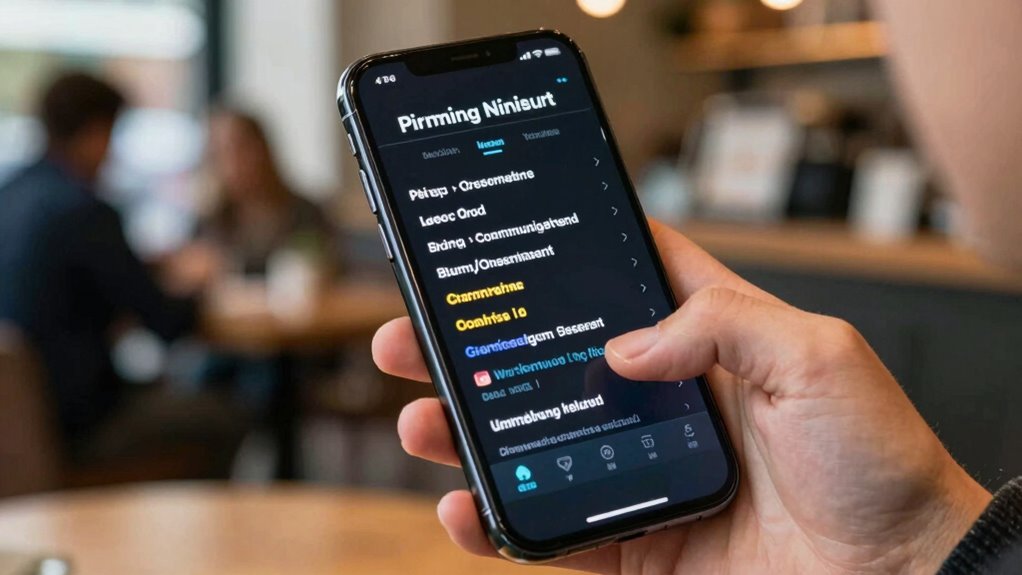
To get the most out of live captioning across different settings, it helps to understand how to adjust the feature for peak clarity. Use customization options to tailor captions for better accuracy, such as changing font size or background color for visibility. Be mindful of privacy considerations—turn off live captioning in sensitive situations to protect your conversations. To maximize effectiveness, consider these tips:
- Adjust caption language and dialect settings for better accuracy
- Use noise-canceling headphones to improve audio input
- Position your device at an ideal angle for clearer speech recognition
- Keep your device updated to access the latest features
- Be aware of background noise that might interfere with captioning quality
- Modern translation techniques can also enhance captioning accuracy in multilingual environments.
- Regularly review and calibrate your device’s microphone to ensure optimal speech recognition performance. Additionally, exploring speech recognition calibration methods can further improve captioning clarity.
- Ensuring your device has an optimized microphone setup can significantly boost caption accuracy in various conditions.
- Utilizing adaptive captioning settings allows you to better customize captions based on your environment and needs.
Implementing these tips ensures clear, private, and reliable captioning in any scenario.

AI Smart Recorder with Simultaneous Interpretation & Real-timeTranscription,64GB AI Speech Processor Powered by ChatGPT with App Control for Business/Education/Interviews (Black)
UNIQUE DUE TO SIMULTANEOUS INTERPRETATION :GELAMI acts as your personal AI assistant, offering distinct advantages such as SIMULTANEOUS…
As an affiliate, we earn on qualifying purchases.
As an affiliate, we earn on qualifying purchases.
Troubleshooting Common Live Captioning Problems
When live captioning doesn’t work as expected, identifying the root cause can save you time and frustration. Audio distortion is a common issue that can interfere with accurate captions. If the sound quality from your device or source is poor, try moving to a quieter environment or using headphones to improve clarity. Caption delay is another frequent problem, often caused by slow processing or weak internet connections. To reduce delays, ensure your device has a strong Wi-Fi or cellular signal and close unnecessary apps that might be slowing it down. Restarting your device or updating your captioning app can also help. Additionally, understanding the style of captioning used can help you adjust your expectations and troubleshooting approach. Being aware of your device’s processing capabilities can help you better diagnose and resolve issues. Adjusting your audio settings can also improve the overall caption accuracy and synchronization. Ensuring that your device’s privacy settings do not restrict microphone access can also resolve some captioning problems. Paying attention to load calculations related to your device’s resources can help prevent processing delays and improve caption performance. By troubleshooting these issues, you’ll improve caption accuracy and synchronization, making live captioning more reliable and effective.
Benefits You’ll Enjoy When You Use Live Captioning
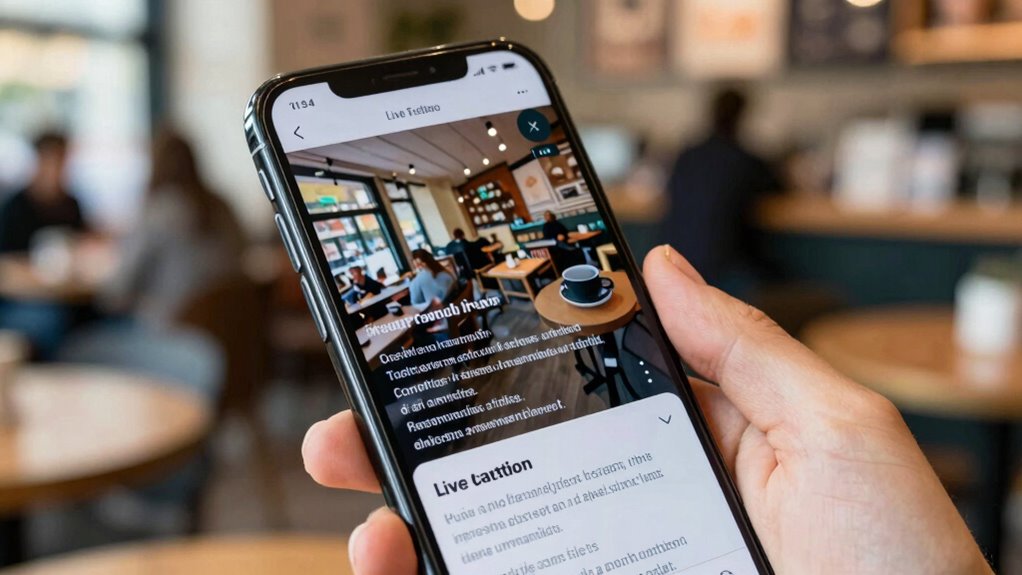
Using live captioning enhances your communication by providing real-time text of spoken words, making conversations more accessible and inclusive. It offers several benefits, including improved accessibility for those with hearing impairments and the ability to understand speech in noisy environments. Additionally, live captioning can aid in language translation, helping you follow conversations in different languages. When you activate this feature, you’ll enjoy: — Better understanding during calls and videos — Increased accessibility for diverse needs — Support for multilingual conversations — Improved comprehension in noisy settings — Enhanced learning and note-taking capabilities. Engaging with live captioning can also reduce listening fatigue, allowing you to focus more on the content rather than straining to hear.
Frequently Asked Questions
Does Live Captioning Work for All Languages?
Live captioning doesn’t work for all languages because of accessibility features’ language limitations. While it covers many popular languages, some less common or regional dialects might not be supported. You can activate this feature to improve your experience, but keep in mind that its accuracy and availability depend on the language you use. For the best results, check your device’s supported languages and updates regularly.
Can Live Captioning Transcribe Multiple Speakers Simultaneously?
Yes, live captioning can transcribe multiple speakers simultaneously, especially with multilingual support. Your device uses speaker differentiation to tell who’s speaking, making conversations clearer. This feature works well in meetings or group chats, ensuring you catch every word. Keep in mind, accuracy depends on audio quality and the number of speakers. But overall, live captioning helps you follow multi-person discussions effortlessly, no matter the language.
Is Live Captioning Available on All Smartphone Models?
Live captioning isn’t available on all smartphone models. You should check your device’s accessibility features, as some phones offer built-in live captioning with language support for various languages. If your phone doesn’t have this feature, you might need to update your software or consider a newer model that includes extensive accessibility options. Always verify compatibility to ensure you can use live captioning effectively for your needs.
How Does Live Captioning Handle Background Noise?
Live captioning handles background noise by using noise suppression technology, which filters out ambient sounds to focus on speech. You’ll notice it adapts to different environments, minimizing interference from background chatter or environmental noise. This way, you can still clearly see captions of conversations or media audio, even in noisy settings. Noise suppression and ambient sound management help guarantee you don’t miss important words, making communication more effective no matter where you are.
Can I Customize the Appearance of Captions on My Device?
Did you know over 60% of users prefer customizing captions for better readability? You can easily personalize your caption appearance on your device by adjusting font size and style. Most smartphones allow you to access caption settings where you can change font size, color, and background for clarity. This way, you make captions more comfortable to read, ensuring you never miss a word, even in noisy environments.
Conclusion
Now that you know how to turn on and use live captioning, you’ll find it’s like having a personal translator right in your pocket. It’s funny how a simple feature can turn everyday conversations into easier, more confident interactions. As you start using it, you might discover unexpected moments where live captioning saves the day — just like it did when you thought you’d miss that important detail. Embrace it, and enjoy the seamless connection it offers.