To keep up with Gen Z signs in sign language slang, watch for quick gestures, abbreviations, and expressive facial cues that make conversations faster and more playful. Younger signers often develop new shortcuts and exaggerated expressions to show humor, sarcasm, or emotion. These slang terms reflect their social connections and creativity. As sign language evolves to stay lively and relevant, exploring these trends can help you understand the dynamic ways they communicate—there’s always more to discover beyond the basics.

Get everyday helpers delivered free with Prime
- Fast, free delivery on millions of items
- Prime Video, Amazon Music and more included
- Member-only deals all year
Key Takeaways
- Gen Z sign language slang incorporates quick gestural abbreviations for more efficient, spontaneous communication.
- Facial expressions and non-verbal cues are crucial in conveying tone, emotion, and nuances among young signers.
- Sign language evolves with slang and abbreviations, reflecting current social trends and group identities.
- Younger signers develop personalized expressive cues, enhancing creativity and community connection.
- Visual elements like color and exaggerated gestures help keep sign language lively, relatable, and engaging for younger generations.
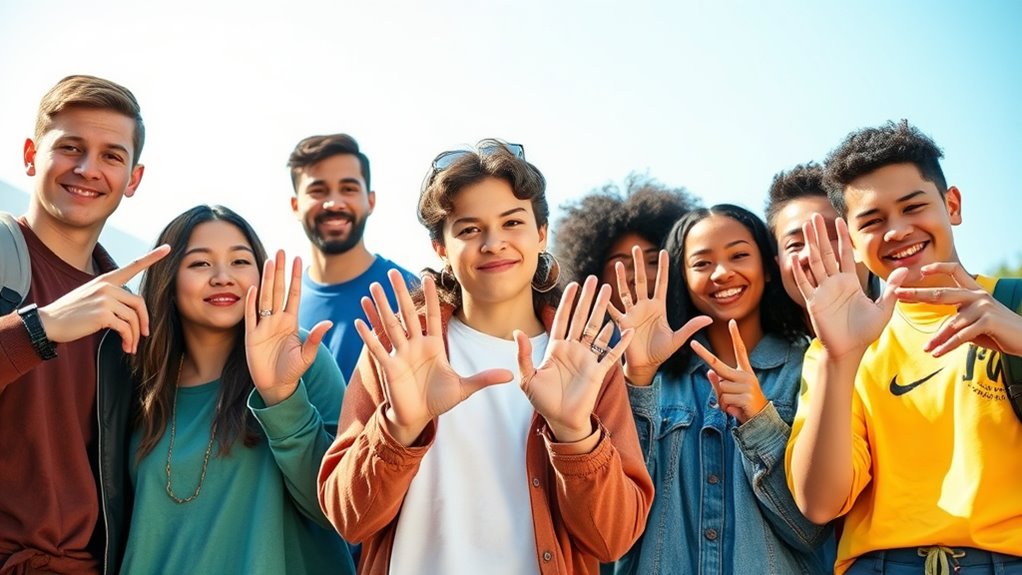
Have you ever wondered if sign language has its own slang like spoken languages do? It’s a fascinating thought because, just like spoken slang, sign language evolves over time, especially among younger generations. One way this happens is through gestural abbreviations—shortcuts that make signing faster and more efficient. Instead of spelling out a full word or phrase each time, signers might use a quick, simplified gesture that conveys the meaning immediately. For example, instead of signing “goodbye” in a lengthy way, a quick wave of the hand or a specific gesture might serve as a shorthand. These gestural abbreviations help keep conversations flowing smoothly, especially in casual settings or among friends.
But sign language isn’t just about the hand movements. It’s also highly expressive, relying on facial cues to add nuance and emotion. When you’re keeping up with Gen Z signs, you’ll notice that expressive facial cues are often integrated into the gestures themselves. For instance, raising your eyebrows or narrowing your eyes can change the meaning of a sign, turning a simple statement into a question or emphasizing sarcasm. These facial cues act as non-verbal punctuation, giving depth and clarity to the message. Younger signers might develop their own set of facial expressions that become part of their slang, making conversations more dynamic and personal.
This combination of gestural abbreviations and expressive facial cues creates a vibrant, evolving language that reflects how people communicate today. It’s not just about the signs you learn in a classroom; it’s about how signers adapt language for their social circles, making it more relatable and fun. For example, a quick, exaggerated facial expression paired with a simple hand gesture can quickly convey a joke or an inside joke among friends. These signs become shorthand, allowing for faster, more playful exchanges.
As you keep up with Gen Z signs, you’ll see how this slang fosters a sense of community and identity. It’s a way for young signers to stand out and show their creativity within the language. This evolution of sign language highlights how living languages adapt and thrive, blending traditional gestures with modern slang and expressive cues. For instance, understanding the importance of color accuracy can enhance your appreciation of the visual richness in sign language. So, whether you’re learning sign language or just observing it, understanding these gestural abbreviations and facial cues offers a window into a lively, ever-changing form of communication.
sign language learning flashcards
As an affiliate, we earn on qualifying purchases.
As an affiliate, we earn on qualifying purchases.
Frequently Asked Questions
How Does Sign Language Slang Differ Across Regions?
You might notice that sign language slang varies across regions due to regional dialects and cultural influences. Different communities develop unique signs and expressions, reflecting local customs and experiences. This diversity enriches the language, making it dynamic and adaptable. When you communicate with others from different areas, be mindful of these regional differences, as they can affect understanding and connection, highlighting the vibrant cultural tapestry within sign language.
Are There Age-Specific Variations in Sign Language Slang?
You might notice age-related slang adoption affects how different generations communicate, including sign language. Younger people tend to create and adopt new signs quickly, reflecting generational communication differences. As a result, older sign language users may not be familiar with recent slang, leading to potential misunderstandings. Staying updated with evolving signs helps bridge these gaps and keeps conversations inclusive across ages. Recognizing these variations fosters better understanding and connection.
How Quickly Do Sign Language Slang Terms Evolve?
Sign language evolution is like a river constantly changing course, and slang adoption rate can be surprisingly swift. You might notice new signs popping up within weeks as trends spread through social media and communities. Staying current requires quick adaptation, because slang can shift rapidly, reflecting cultural shifts and generational influences. To keep pace, you need to immerse yourself in these communities and embrace continuous learning, just like catching a flowing current.
Can Sign Language Slang Be Misunderstood or Misinterpreted?
You might find that sign language slang can be misunderstood or misinterpreted due to contextual misunderstandings or cultural differences. When signs are used casually or in new ways, they might not carry the same meaning for everyone. You should stay aware that signs can have different connotations across communities, so always clarify if you’re unsure. This helps prevent miscommunication and ensures respectful, accurate use of sign language.
What Are the Most Common Signs That Have Become Slang?
Imagine you’re in the 90s, but now, signs like “lit,” “savage,” and “yeet” have become popular slang. You should know that cultural influences and technological integration drive these signs, making them more dynamic and relatable. You might notice signs for “okay,” “awesome,” or “cool” evolving, often mimicking spoken slang to stay current. Staying aware helps you understand and communicate effectively with younger generations.
Conclusion
Did you know that over 60% of Gen Z uses slang, including sign language, to express themselves daily? Staying updated with these signs helps you connect better and shows you’re in tune with current trends. As language evolves, embracing sign language slang keeps your communication fresh and inclusive. So, keep practicing and exploring these signs—you’ll be surprised how quickly you’ll start understanding and even using them yourself!
Fall Picks
fall essentials
As an affiliate, we earn on qualifying purchases.