

Guide dogs for deafblind people are vital assistive partners that help improve your independence, safety, and mobility. They are specially trained to interpret sounds, signals, and obstacles, assisting you in steering through various environments confidently. These dogs also serve as trusted companions, alerting you to important environmental cues. Working effectively with a guide dog relies on proper training and a strong bond. If you’d like to discover more about how these incredible partnerships work, keep exploring the details below.
Key Takeaways
- Guide dogs for deafblind individuals are specially trained to assist with navigation and alerting to environmental sounds.
- Training programs focus on communication, obstacle avoidance, and environmental alerts to promote independence.
- Reputable organizations provide matching, ongoing support, and training for both guide dogs and handlers.
- These guide dogs serve as trusted companions, enhancing safety, confidence, and daily mobility.
- They improve quality of life by helping deafblind people navigate complex environments and stay connected.
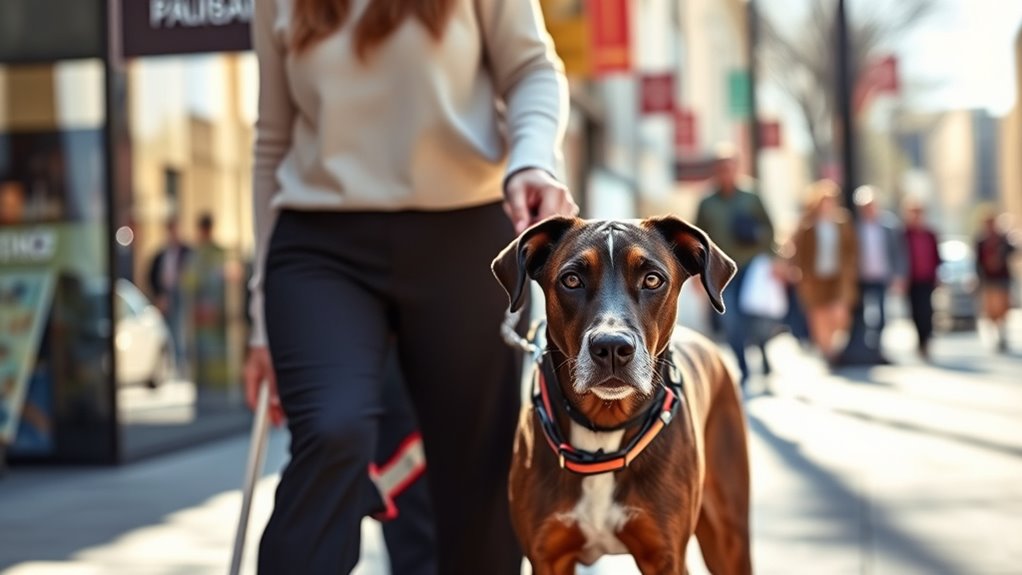
Have you ever wondered how deafblind individuals navigate the world with greater independence? Many rely on assistive technology and specialized training programs to do so, but one of the most impactful tools is a guide dog trained specifically to support someone who is both deaf and blind. These dogs serve as more than just mobility aids; they become trusted companions who help their handlers stay connected to their surroundings, alerting them to important sounds and environmental cues. The key to successful integration of a guide dog into a deafblind person’s life begins with understanding the role of assistive technology and extensive training programs.
Assistive technology, in this setting, extends beyond electronic devices to include the skills and tools that help a deafblind individual communicate and move safely. Guide dogs are a form of assistive technology that, when paired with proper training, can dramatically enhance independence. These dogs are specially trained to recognize and respond to specific commands, environmental sounds, and signals, making them an invaluable aid in daily life. The training programs involved are rigorous, starting with basic obedience and progressing to tasks that teach the dog to navigate obstacles, stop at curbs, and alert their handler to sounds like doorbells, alarms, or a ringing phone. Additionally, specialized training programs ensure that both the dog and handler are prepared for real-world scenarios, facilitating a seamless partnership.
Training programs are essential because they prepare both the dog and the handler for their partnership. For the dog, training involves learning how to interpret and react to a variety of cues, ensuring the dog can guide confidently and safely. For the person, training involves learning how to communicate effectively with their guide dog, understand its signals, and use the dog’s assistance to navigate different environments. This process often includes orientation and mobility lessons, which teach the individual how to work with their guide dog in real-world scenarios.
Your role in this process is fundamental. When you seek out reputable organizations that provide guide dogs, you’re also engaging in an extensive training program that ensures a successful partnership. These programs often include ongoing support, allowing the handler to learn how to maximize their guide dog’s assistance and troubleshoot any issues that arise. The combination of assistive technology—your guide dog—and targeted training programs creates a powerful synergy, ultimately empowering you to move through the world with confidence and independence.
In essence, guide dogs are an indispensable component of assistive technology for deafblind individuals. With proper training, your guide dog becomes a trusted partner, helping you navigate daily life more freely and safely. It’s a partnership rooted in carefully designed training and mutual understanding, opening doors to new levels of independence that might seem out of reach otherwise.
Frequently Asked Questions
How Do Guide Dogs Assist Deafblind Individuals in Daily Communication?
You rely on guide dogs to assist with daily communication through tactile signaling, where the dog gently touches you to get your attention or relay messages. They also interpret environmental cues, like sounds or changes around you, and alert you accordingly. This helps you stay connected and safe, ensuring you can navigate your surroundings confidently and receive important information through these tactile and environmental cues.
What Are the Criteria for Qualifying for a Deafblind Guide Dog?
You might think only those with total deafblindness qualify, but eligibility requirements are more nuanced. To get a deafblind guide dog, you’ll need to undergo an assessment process that evaluates your communication needs, mobility, and overall independence. If you meet the criteria, you could be a great candidate. The process helps guarantee the dog will truly enhance your daily life, making independence more achievable and communication easier.
How Long Does Training Typically Take for a Deafblind Guide Dog?
Training duration for a deafblind guide dog typically takes about 18 to 24 months. During this time, the dog undergoes extensive training to develop skills for safe navigation and effective communication. You’ll also participate in the certification process, where the dog’s abilities are evaluated to guarantee they meet required standards. This thorough training ensures the dog is fully prepared to assist you confidently and safely in daily activities.
Are There Specific Breeds Best Suited for Deafblind Guide Dogs?
Brilliant breeds bring balance and bravery to deafblind guide dogs. Labrador Retrievers, Golden Retrievers, and German Shepherds top the list because of their temperament considerations and breed suitability. These breeds are known for their gentle nature, intelligence, and adaptability, making them ideal for guiding and alerting. You’ll find their friendly, focused, and faithful demeanor fosters a strong, supportive bond, ensuring safety and security every step you take together.
What Support Is Available After Receiving a Deafblind Guide Dog?
After receiving your deafblind guide dog, you’ll find emotional support through specialized training programs and therapy options. Community resources, like local support groups and organizations, help you connect with others facing similar challenges. These services provide ongoing guidance, companionship, and encouragement, ensuring you’re never alone. Your guide dog’s training team also offers continued assistance, helping you adapt and thrive with your new partner.
Conclusion
While some might think Guide Dogs for DeafBlind people aren’t necessary, they truly transform lives by providing independence and safety. These specially trained dogs bridge the gap between silence and sound, offering confidence in everyday activities. Don’t overlook their incredible impact—investing in a guide dog means empowering someone to navigate the world with freedom and dignity. If you’re considering supporting or learning more, remember: every step forward starts with understanding and compassion.