
Haptic communication and wearables for deafblind individuals allow you to interpret your environment through vibrations, pressure, and tactile signals. These devices are lightweight, customizable, and designed to deliver alerts for obstacles, calls, or social cues directly to your skin. By learning to interpret different tactile patterns, you gain more independence and confidence in everyday situations. As technology advances, these tools become even more seamless and intuitive—your perfect companions for greater freedom and connection.
Key Takeaways
- Wearable haptic devices translate environmental sounds and social cues into tactile signals for DeafBlind users.
- These devices utilize vibrations, pressure, and tactile patterns to convey notifications, alerts, and obstacle information.
- Personalization of tactile feedback enables users to develop intuitive communication and environmental awareness.
- Advances in haptic technology improve signal precision, responsiveness, and unobtrusiveness of wearables.
- Haptic wearables enhance independence, social interaction, and environmental navigation for DeafBlind individuals.

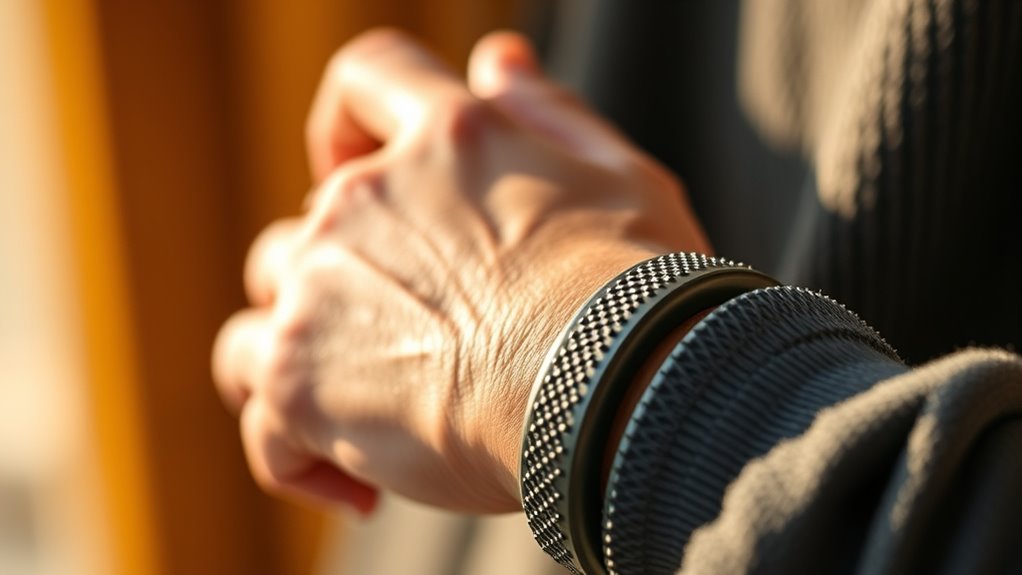
Haptic communication and wearable technologies are transforming how DeafBlind individuals connect with the world around them. With these innovations, you no longer have to rely solely on traditional methods like tactile signing or guide dogs. Instead, you can leverage tactile feedback through wearable devices designed to send information directly to your body. These devices use vibrations, pressure, or other tactile signals to convey messages, alerts, or environmental data, allowing you to interpret your surroundings more independently. For example, a wristband or belt equipped with sensors can alert you to approaching obstacles or incoming calls by vibrating in specific patterns. This immediate, physical sensation becomes a crucial bridge, translating digital or environmental cues into a form you can feel.
Wearable tactile devices help DeafBlind individuals interpret their environment independently through vibrations and pressure signals.
Wearable devices are at the heart of this technological shift. They’re lightweight, customizable, and can be worn comfortably throughout your day. Many incorporate sensors that detect sound, motion, or proximity, converting these inputs into tactile signals. Imagine walking down a busy street and feeling a gentle tap on your wrist when traffic is approaching or sensing a subtle pressure change when someone calls your name. These devices turn complex data into simple, intuitive signals, empowering you to navigate your environment with greater confidence. They also sync with smartphones or other digital tools, expanding their capabilities. For instance, a wearable might vibrate to notify you of a text message or a calendar reminder, keeping you connected without needing visual or auditory cues.
The use of tactile feedback in wearables isn’t just practical; it’s also adaptable. You can learn to interpret different vibration patterns, intensities, or locations on your body, creating a personal language that suits your needs. Over time, this tactile language becomes second nature, allowing you to receive notifications, environmental alerts, or even social cues seamlessly. These devices are designed to be discreet yet effective, integrating into your daily routine without drawing unwanted attention. Plus, advancements in haptic technology are continually improving the range and precision of tactile signals, making these tools more intuitive and responsive.
Furthermore, integrating psychological research into the development of these devices ensures that the feedback mechanisms are optimized for comfort and effectiveness, fostering better user engagement. Ultimately, wearable devices harnessing tactile feedback are revolutionizing how DeafBlind individuals experience the world. They provide a direct, physical connection to information that was previously inaccessible, fostering independence and confidence. As these technologies evolve, they open up new possibilities for communication, navigation, and social interaction, turning tactile feedback into a powerful tool for greater freedom and engagement in everyday life.
haptic feedback wearable for deafblind
As an affiliate, we earn on qualifying purchases.
As an affiliate, we earn on qualifying purchases.
Frequently Asked Questions
How Affordable Are These Haptic Wearables for Most Users?
Haptic wearables vary in cost, but generally, they’re becoming more affordable as technology advances. A cost analysis shows that prices are decreasing, making them more accessible for most users. Market accessibility is improving, with more options available at different price points. While some high-end devices may still be costly, entry-level models offer an affordable way to experience these innovations, helping many DeafBlind individuals access better communication tools.
What Are the Battery Life Expectations for These Devices?
Ever wondered how long your wearable’s battery lasts? Most haptic devices offer a battery longevity of around 8-12 hours on a single charge, depending on usage. Effective power management features help extend this time, ensuring you stay connected longer without frequent recharging. Wouldn’t you prefer a device that keeps up with your day? With smart power management, these wearables are designed to balance performance and battery life seamlessly.
Can These Devices Be Customized for Individual Sensory Preferences?
Yes, these devices can be customized for your individual sensory preferences. You can adjust settings for sensory customization, such as vibration intensity, patterns, and feedback types, to match what feels most comfortable and effective for you. By tailoring these features, you guarantee the device communicates in a way that aligns with your unique needs, making the experience more intuitive and supportive of your daily interactions.
How Do These Wearables Perform in Noisy or Crowded Environments?
In noisy or crowded environments, these wearables often face challenges with noise interference, but they excel through sensory adaptation. Imagine feeling subtle vibrations that cut through the chaos, helping you focus on essential signals. The devices are designed to filter out background noise, allowing you to stay connected and aware despite the crowd. With proper calibration, you can rely on these wearables for consistent, effective communication even in the busiest settings.
Are There Any Potential Health Risks Associated With Long-Term Use?
Long-term exposure to haptic wearables might cause skin irritation or discomfort if you don’t take proper care. While these devices are generally safe, wearing them for extended periods could lead to skin sensitivity or irritation. To minimize risks, make certain your devices are clean, fit properly, and give your skin regular breaks. If you experience persistent irritation, consult a healthcare professional to avoid potential health issues.

Caiyao Hearing Impaired Medical Alert ID Bracelets Blood THINNER Diabetic Type 1/2 Rubber Medical Awareness Emergency Warning Wristbands Bracelet-Hearing Impaired
Medical Alert Bracelets Material:Soft silicone medical alert ID is corrosion resistant, high temperature resistant, waterproof, suitable for daily…
As an affiliate, we earn on qualifying purchases.
As an affiliate, we earn on qualifying purchases.
Conclusion
As you explore the potential of haptic communication and wearables, the future holds exciting possibilities. Imagine a world where deafblind individuals experience seamless connection and independence like never before. But what breakthroughs lie just beyond the horizon? With ongoing innovation, you’re on the brink of transforming lives—yet the full impact remains hidden, waiting to be uncovered. Are you ready to witness the next leap in sensory technology? The journey has only just begun.
tactile navigation device for deafblind
As an affiliate, we earn on qualifying purchases.
As an affiliate, we earn on qualifying purchases.
assistive haptic device for environmental awareness
As an affiliate, we earn on qualifying purchases.
As an affiliate, we earn on qualifying purchases.