
You, as a DeafBlind person, use touch to access information through tactile communication, such as sign language on the hands or body, feeling textures for spatial awareness, and exploring tactile maps and graphics. Vibrating alerts and haptic feedback help you detect sounds and environmental cues, while trained skills enhance navigation and safety. With the right tools and practice, touch becomes your primary sense for understanding the world around you—discover more about these fascinating methods as you continue.

Get everyday helpers delivered free with Prime
- Fast, free delivery on millions of items
- Prime Video, Amazon Music and more included
- Member-only deals all year
Key Takeaways
- DeafBlind individuals use tactile sign language by feeling hand movements and shapes through touch for communication.
- They interpret tactile graphics and raised-line maps to understand visual information and spatial layouts.
- Sensory substitution devices convert auditory or visual signals into tactile feedback for environmental awareness.
- Tactile tools like vibratory alerts notify users of environmental sounds, enhancing safety and responsiveness.
- Training in tactile skills improves navigation, object recognition, and effective use of tactile communication methods.
For DeafBlind people, touch is an essential gateway to the world around them, allowing them to access information that others often take for granted. You might not realize how much you rely on sight and sound to steer your environment, but for someone who is DeafBlind, touch becomes the primary sense through which they interpret their surroundings. Sensory substitution plays an integral role here, transforming information typically received through vision or hearing into tactile experiences. This process enables individuals to interpret signals, recognize objects, and understand their environment without relying on sight or sound.
Tactile communication is at the heart of how DeafBlind individuals connect and gather information. You might have seen someone using a tactile sign language—where signs are felt rather than seen—allowing communication through touch. This form of tactile communication bridges language gaps that would otherwise be insurmountable, giving DeafBlind people access to conversations, instructions, and social interactions. They often place their hands on a signer’s or speaker’s hands, feeling the movements and shapes to understand what’s being communicated. This method demands a high level of skill and sensitivity, but it creates a rich, direct connection that sighted or hearing people might take for granted. Additionally, tactile language is continuously evolving to improve clarity and expressiveness for DeafBlind users.
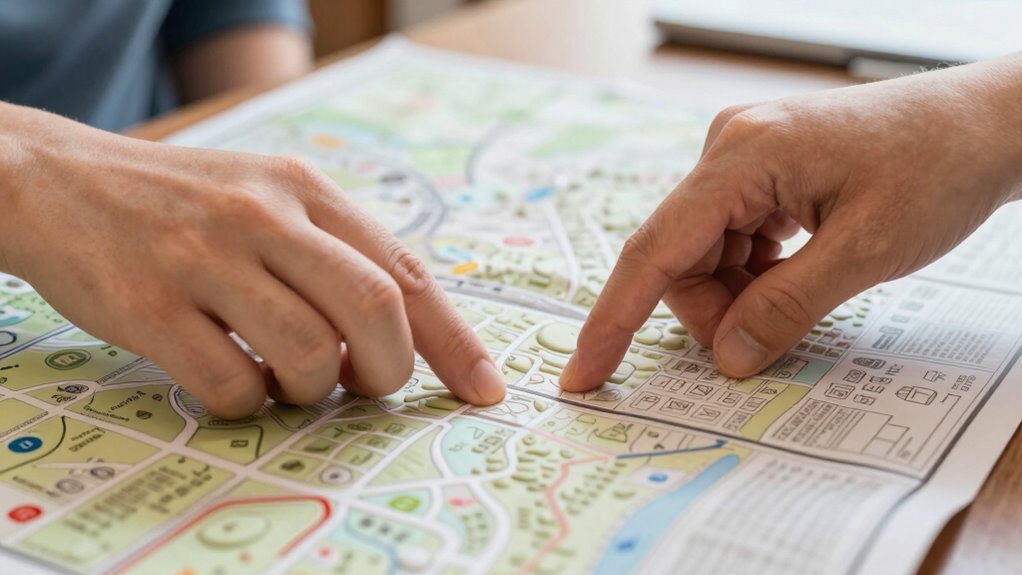
Beyond communication, touch is also used to explore and understand physical objects. You may have encountered tactile maps or raised-line drawings, which translate visual information into three-dimensional textures. These tools help DeafBlind individuals navigate spaces, identify objects, or read information like street layouts or diagrams. Tactile graphics serve as sensory substitutes for visual images, providing spatial and contextual clues through texture and shape. With practice, they learn to interpret these textures swiftly, gaining independence and confidence in unfamiliar environments. Tactile tools are essential for enhancing spatial awareness and environmental understanding for DeafBlind individuals. Additionally, ongoing research into innovative sensory substitution devices continues to expand the ways touch can be used to interpret complex information more efficiently. This research aims to develop more intuitive and accessible ways to convert sensory data into tactile formats.
Moreover, assistive devices incorporate sensory substitution to deliver information through touch. For example, vibrating alerts or haptic feedback systems notify users of sounds or alerts in their environment—like a doorbell or an approaching vehicle—by translating auditory signals into tactile sensations. These tools empower DeafBlind people to respond quickly and appropriately to their surroundings, enhancing safety and autonomy.
In all these ways, touch is not just a sense but a full system for sensory substitution and tactile communication. It allows you, as a DeafBlind individual, to perceive the world in a meaningful way, filling in the gaps left by the absence of sight or sound. Training in tactile skills is crucial for maximizing the benefits of these tools and techniques, enabling greater independence and confidence in navigating diverse environments. With training and the right tools, touch becomes your most powerful means of understanding, connecting, and navigating the world.
tactile sign language communication device
As an affiliate, we earn on qualifying purchases.
As an affiliate, we earn on qualifying purchases.
Frequently Asked Questions
How Do Deafblind People Learn Tactile Communication Methods?
You learn tactile communication methods through sensory integration and tactile literacy. This involves practicing touch-based signals, like tactile sign language or braille, to understand and convey information. Guides or teachers help you develop these skills by providing consistent, hands-on experiences. Over time, you build confidence in interpreting tactile cues, which enhances your ability to communicate effectively with others and access information through touch.
What Tools Assist Deafblind Individuals in Accessing Information Through Touch?
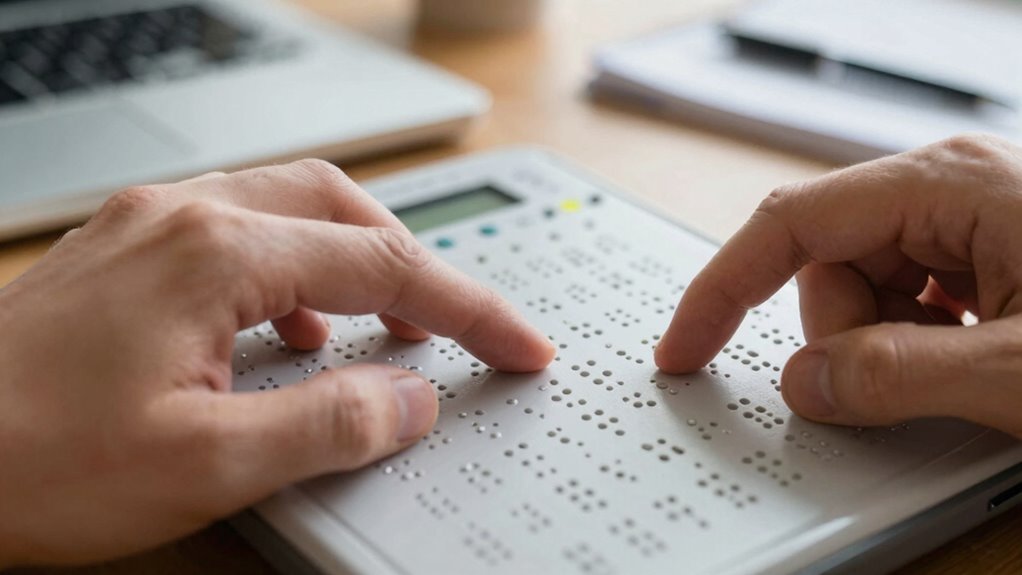
Tools like tactile tablets, Braille displays, and sensory substitution devices assist you in accessing information through touch. These tools transform visual and auditory data into tactile sensations, making communication clearer. Tactile storytelling allows you to feel stories through raised images and textures. By using these tools, you can explore, engage, and understand your environment more effectively, turning sensations into meaningful, accessible experiences.
How Do Deafblind People Navigate Unfamiliar Environments Using Touch?
You navigate unfamiliar environments using touch through sensory substitution and environmental mapping. By feeling textures, surfaces, and objects, you build a mental map of your surroundings. Tools like tactile maps or guide rails help you identify spaces and obstacles. As you move, you rely on your sense of touch to interpret sensory cues, allowing you to confidently explore new places and avoid hazards through active environmental mapping.
Are There Specific Training Programs for Tactile Information Access?
Are there specific training programs for tactile information access? Yes, many programs focus on sensory integration and tactile literacy, helping you develop skills to interpret touch cues effectively. These training sessions teach you how to use your hands and fingers to gather crucial information about your environment, enhancing independence. Wouldn’t mastering tactile literacy open a new world of understanding? With dedicated practice, you can confidently navigate and access information through touch.
How Does Technology Enhance Tactile Communication for Deafblind Users?
Technology enhances tactile communication for deafblind users through haptic feedback and sensory substitution. You feel vibrations or taps that convey information, making interactions more intuitive. Devices like tactile smartphones or wearable tech translate visual or auditory cues into tactile sensations, allowing you to access messages, alerts, or environmental data seamlessly. This integration empowers you to navigate your surroundings and communicate more independently, bridging gaps caused by sensory limitations effectively.
Conclusion
You now see how essential touch is for DeafBlind individuals to access information. By using tactile sign language and Braille, they navigate the world with independence. Did you know that over 90% of DeafBlind people are also deaf and blind? This highlights the significance of tactile communication methods. Understanding and supporting these techniques helps bridge the gap, empowering DeafBlind individuals to connect, learn, and thrive in their daily lives.
Halloween Picks
halloween
As an affiliate, we earn on qualifying purchases.