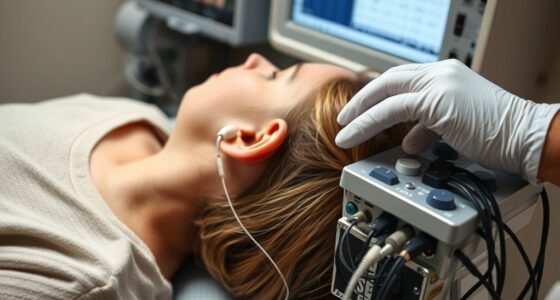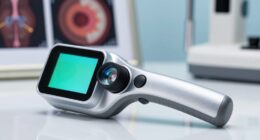
Modern ear exams have advanced from traditional otoscopes to digital imaging and AI-driven tools that improve accuracy and speed. High-resolution cameras capture detailed images, allowing clear visualization of ear structures. Computer-Aided Diagnostics and AI analyze these images for subtle issues, reducing errors. These innovations make procedures more comfortable and efficient, offering better care and faster results. Keep exploring to discover how these cutting-edge technologies are transforming ear health assessments for better patient outcomes.
Key Takeaways
- Traditional otoscopy provides direct visualization but has limitations in image sharing and detecting subtle issues.
- Digital ear imaging offers high-resolution photos, improving diagnostic accuracy and documentation.
- Computer-Aided Diagnostics (CAD) and AI analyze images for precise, consistent detection of ear abnormalities.
- Modern technology enhances patient comfort with non-invasive procedures and faster, clearer diagnoses.
- Future trends include AR and 3D imaging, offering detailed views and improved ear health assessments.
The Traditional Otoscope: The Foundation of Ear Examination

The traditional otoscope remains the cornerstone of ear examinations, providing clinicians with a direct view of the ear canal and eardrum. With this device, you can carefully inspect the ear canal’s health and assess eardrum condition. Proper ear hygiene is essential to prevent infections and maintain essential hearing health, and the otoscope helps identify issues like wax buildup or inflammation early. By gently examining the ear canal, you can determine whether cleaning or further treatment is necessary. The otoscope’s magnification and light allow for a clear, detailed view, making it easier to spot problems that might otherwise go unnoticed. This simple yet effective tool continues to be crucial in routine ear assessments, ensuring your ears stay healthy and functional.
Limitations of Conventional Ear Inspection Methods
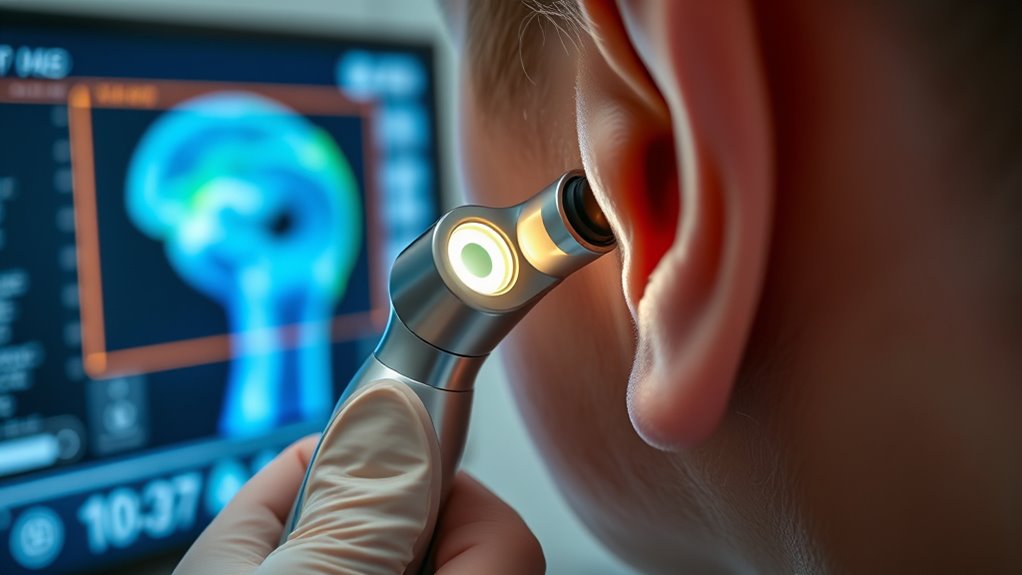
While the traditional otoscope provides a valuable view of the ear canal and eardrum, it has limitations that can affect the accuracy and thoroughness of an ear examination. It offers a limited perspective, making it difficult to detect subtle issues or abnormalities. You might also face challenges with patient comfort, especially if cultural considerations influence their tolerance for invasive procedures. Additionally, the technique relies heavily on the examiner’s skill, which can vary. This affects patient education, as some may not fully understand their condition without clearer visuals. Moreover, traditional methods don’t allow for documentation or sharing images for second opinions. These constraints highlight the need for more advanced, exhaustive inspection methods to improve diagnostic accuracy and patient engagement. Incorporating AI imaging technology can provide more comprehensive and precise assessments, overcoming many of these limitations.
Emergence of Digital Ear Imaging Devices

Digital ear imaging devices offer you better visualization of the ear canal and eardrum, making inspections clearer and more accurate. They also help streamline your diagnostic process, saving time and reducing errors. As a result, these innovations improve both your efficiency and patient outcomes.
Enhanced Visualization Capabilities
As technology advances, digital ear imaging devices have revolutionized how healthcare professionals visualize the ear canal and eardrum integrity. These devices provide high-resolution images, allowing you to see detailed structures previously hidden in traditional exams. You can now detect issues like blockages, perforations, or infections more accurately. Enhanced visualization improves diagnostic confidence and helps track changes over time. With real-time imaging, you get immediate insights, reducing the need for guesswork. The clarity offered by digital devices benefits both practitioners and patients, making exams more informative and less invasive. Incorporating science‑based insights into device design ensures these tools are grounded in validated research, improving their reliability and effectiveness.
Streamlined Diagnostic Workflow
The adoption of digital ear imaging devices has considerably simplified the diagnostic process by providing immediate, high-quality visuals of the ear canal and eardrum. With clear images, you can quickly identify issues like infections, blockages, or damage, streamlining the decision-making process. This efficiency is especially helpful when fitting hearing aids, as you can assess ear canal anatomy accurately and ensure proper placement. Digital images allow for easy sharing with specialists or insurance providers, reducing appointment times and avoiding repeated examinations. You save time and improve patient comfort by minimizing invasive procedures. Overall, these devices create a more efficient workflow, enabling you to deliver faster, more accurate diagnoses while enhancing patient satisfaction and optimizing the management of hearing health. Additionally, the use of color accuracy in imaging ensures that subtle details are captured precisely, further aiding in accurate assessment and diagnosis.
How High-Resolution Cameras Enhance Ear Visualization
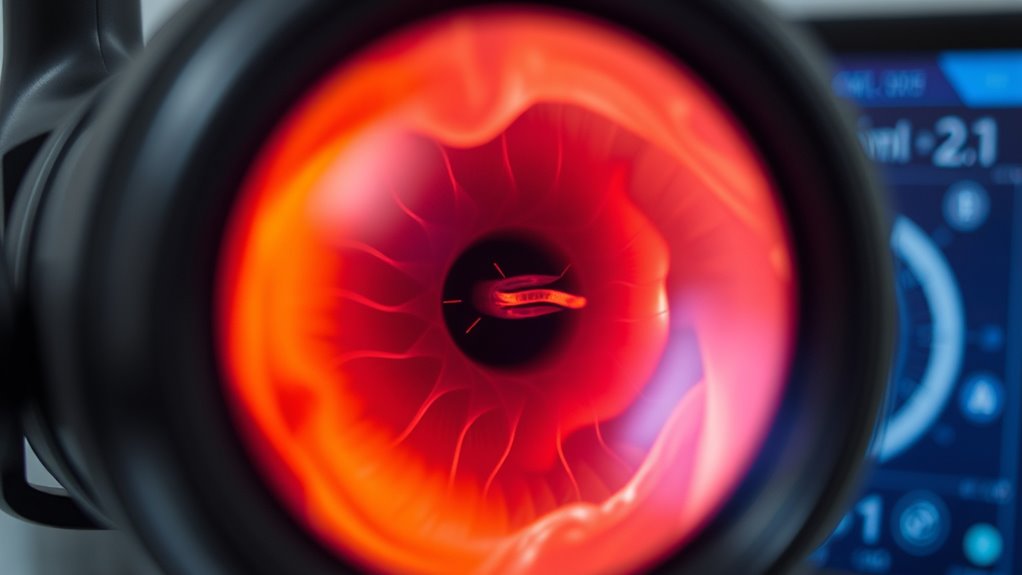
High-resolution cameras give you crystal-clear images of the ear, making it easier to see every detail. This improved visualization helps you identify subtle issues in ear anatomy that were hard to detect before. As a result, your diagnoses become more accurate and reliable. Moreover, enhanced imaging technology can facilitate diagnostic accuracy, ultimately leading to better patient outcomes.
Superior Image Clarity
High-resolution cameras markedly improve ear visualization by capturing minute details with exceptional clarity. This allows you to see earwax buildup clearly, making earwax removal safer and more effective. During audiology testing, crisp images help identify subtle issues like early signs of infections or abnormalities. The enhanced detail reduces guesswork, improving diagnosis accuracy. With superior image clarity, you can better assess the ear canal’s condition and ensure thorough examinations. These cameras also facilitate precise documentation for future reference or specialist consultations. The benefits include:
- Clearer identification of earwax buildup
- Improved detection of infections
- Accurate assessment of ear canal health
- Better visualization during earwax removal procedures
- Enhanced diagnostic confidence in audiology testing
High-resolution imaging significantly contributes to more precise and detailed ear examinations, supporting better patient outcomes.
Detailed Ear Anatomy
Using high-resolution cameras allows you to see the intricate structures of the ear with remarkable detail. You can clearly observe the ear canal’s walls, noting any signs of inflammation, debris, or abnormalities. The camera’s clarity also reveals the tympanic membrane, showing its color, transparency, and any perforations or fluid behind it. This detailed view helps you understand the ear’s anatomy more precisely, making it easier to identify issues that might be missed with less advanced equipment. With sharper images, you can differentiate normal structures from pathology, improving your overall understanding of ear health. High-resolution visualization provides a thorough look at these key parts, giving you a clearer picture of what’s happening inside the ear. Additionally, noise levels of modern heat pumps are designed with quieter operation in mind, ensuring that the equipment does not disturb the patient during examinations.
Improved Diagnostic Accuracy
With detailed images of the ear’s structures, clinicians can identify subtle abnormalities that might be missed with standard equipment. High-resolution cameras provide clear, magnified views, improving diagnostic accuracy for conditions like ear infections and hearing loss. This enhanced visualization allows you to detect early signs of issues, such as small perforations or fluid buildup, that aren’t visible with traditional otoscopes. Moreover, best anime movies can inspire innovative imaging techniques used in medical visualization, further advancing diagnostic tools.
The Role of Computer-Aided Diagnostics in Ear Care

As technology advances, computer-aided diagnostics are becoming increasingly essential in ear care. These tools help you identify issues like ear infections and hearing loss more accurately and quickly. By analyzing high-resolution images and data, computer algorithms assist in detecting abnormalities that might be missed during traditional exams. This guarantees you get a precise diagnosis, leading to more effective treatment plans. Computer-aided diagnostics also reduce human error and improve consistency across different practitioners. With real-time analysis, you can track changes over time and monitor the progress of ear conditions. Additionally, organization and storage of diagnostic data facilitate ongoing care and follow-up assessments. Ultimately, these systems empower you to make better-informed decisions, providing a higher standard of ear care. They’re transforming how ear health issues are diagnosed, making the process faster, more reliable, and less invasive.
Integrating Artificial Intelligence Into Ear Imaging
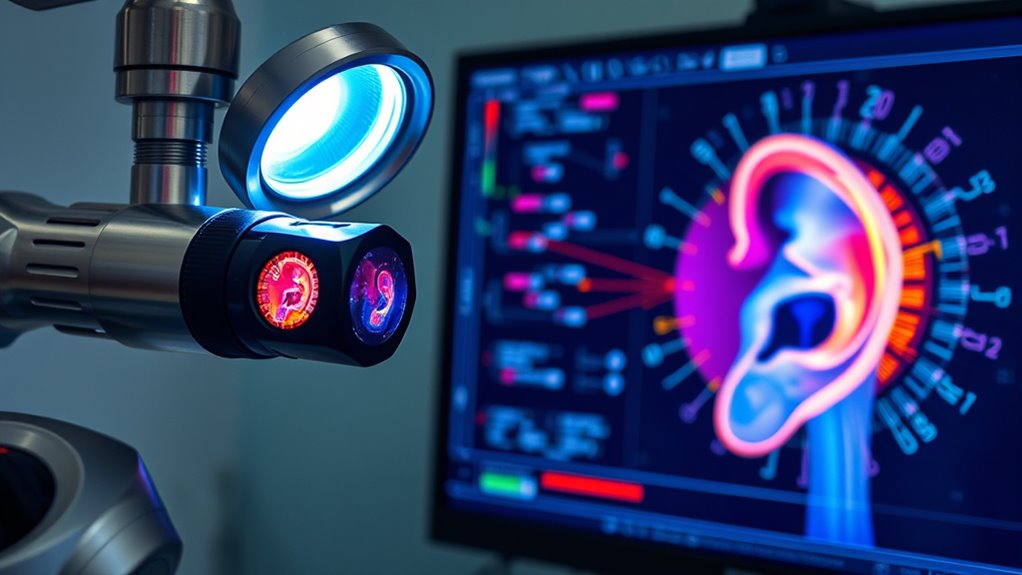
Integrating artificial intelligence into ear imaging revolutionizes how practitioners diagnose and monitor ear conditions. With AI, you’ll gain faster, more accurate insights into issues like ear infections and hearing assessments. AI algorithms analyze high-resolution images to detect subtle signs that might be missed manually, improving diagnostic confidence. This technology helps streamline your workflow and enhances patient care. Key benefits include:
- Rapid identification of ear infections
- Precise hearing assessment analysis
- Automated image interpretation
- Consistent diagnostic results
- Better tracking of condition progression
Additionally, incorporating wall organization systems can help keep your diagnostic tools and images well-organized, reducing clutter and increasing efficiency.
Benefits of AI-Powered Ear Examinations for Clinicians

AI-powered ear examinations offer clinicians significant advantages by enhancing diagnostic accuracy and efficiency. With advanced imaging analysis, you can quickly identify issues that might be missed with traditional methods, reducing misdiagnoses. These tools also streamline workflow, saving time during each exam and allowing you to see more patients daily. Improved accuracy encourages better patient compliance because patients trust the precise results. Additionally, AI systems can lower costs by reducing the need for repeat exams or referrals to specialists. The automation of image interpretation minimizes human error and ensures consistent, reliable diagnoses. Overall, integrating AI into ear exams helps you provide higher-quality care while maintaining cost effectiveness, benefiting both your practice and your patients.
Patient Experience and Comfort With Modern Ear Diagnostics
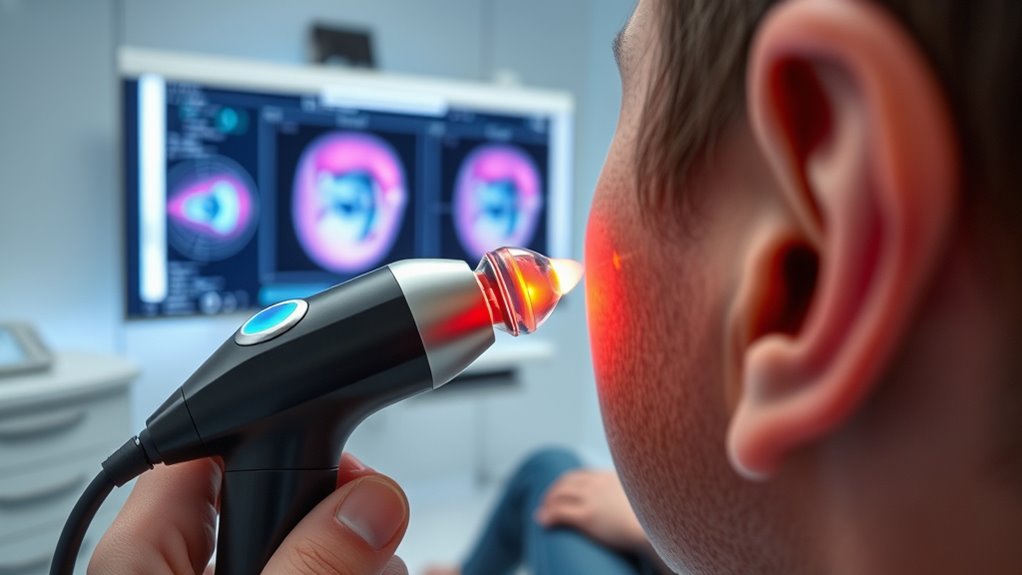
Modern ear diagnostics are designed with patient comfort in mind, making the exam process smoother and less stressful. These advancements help reduce discomfort and anxiety, encouraging greater patient engagement. You’ll notice that modern tools are quicker and less invasive, creating a more relaxed experience.
Some benefits include:
- Reduced exam time, minimizing discomfort
- Clearer explanations to involve you in the process
- Non-invasive procedures that are gentle on your ears
- Less noise and discomfort during imaging
- Visual feedback that helps you understand your condition
This focus on patient comfort fosters trust and keeps you more engaged in your care. When you feel at ease during diagnostics, you’re more likely to cooperate and share valuable information, leading to better outcomes.
Future Trends: Augmented Reality and 3D Ear Imaging
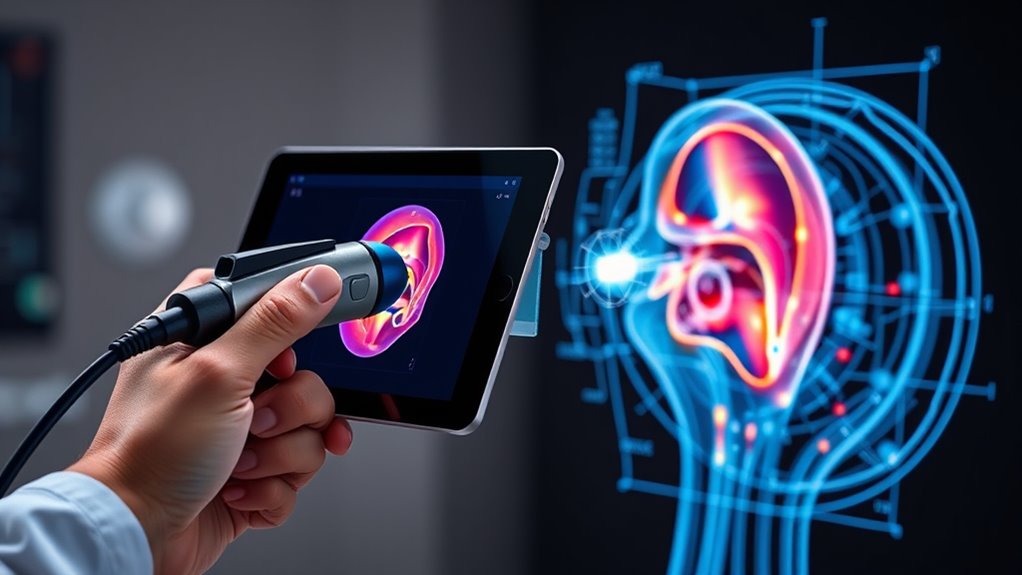
Future ear exams will leverage augmented reality and 3D imaging to give you clearer, more detailed views of the ear. These tools will seamlessly integrate with existing diagnostic equipment, making assessments faster and more accurate. As a result, your doctor can diagnose and treat ear issues more effectively than ever before. Incorporating advanced imaging techniques will further enhance the precision of these examinations.
Enhanced Visualization Capabilities
Enhanced visualization technologies like augmented reality (AR) and 3D ear imaging are set to revolutionize ear exams by providing clinicians with more detailed and accurate views of the ear’s anatomy. These tools help you see inside the ear canal clearly, making it easier to identify issues such as earwax accumulation or structural abnormalities. With AR overlays, you can visualize the ear’s internal structures in real-time, improving diagnosis precision. 3D imaging offers extensive views that reveal subtle details often missed with traditional methods.
- Better identification of earwax buildup
- Precise mapping of ear canal structures
- Faster diagnosis and treatment planning
- Reduced need for multiple procedures
- Improved patient understanding and communication
Integration With Diagnostic Tools
Integrating augmented reality (AR) and 3D ear imaging into diagnostic tools promises to transform how you assess ear health. These technologies enhance accuracy by providing real-time, detailed visuals, making sensor calibration vital for precise measurements. As you adopt AR and 3D imaging, guarantee data privacy remains a priority; sensitive patient information must be securely handled. These advancements allow you to overlay digital models onto real-world views, improving diagnosis and treatment planning. They also streamline workflows, reducing the need for multiple devices. As technology evolves, expect seamless integration with existing diagnostic systems, enabling more complete assessments. Staying mindful of sensor calibration and data privacy will help you leverage these innovations effectively, ultimately improving patient outcomes and pushing ear health diagnostics into a new era.
The Impact of Technological Advances on Ear Disease Management
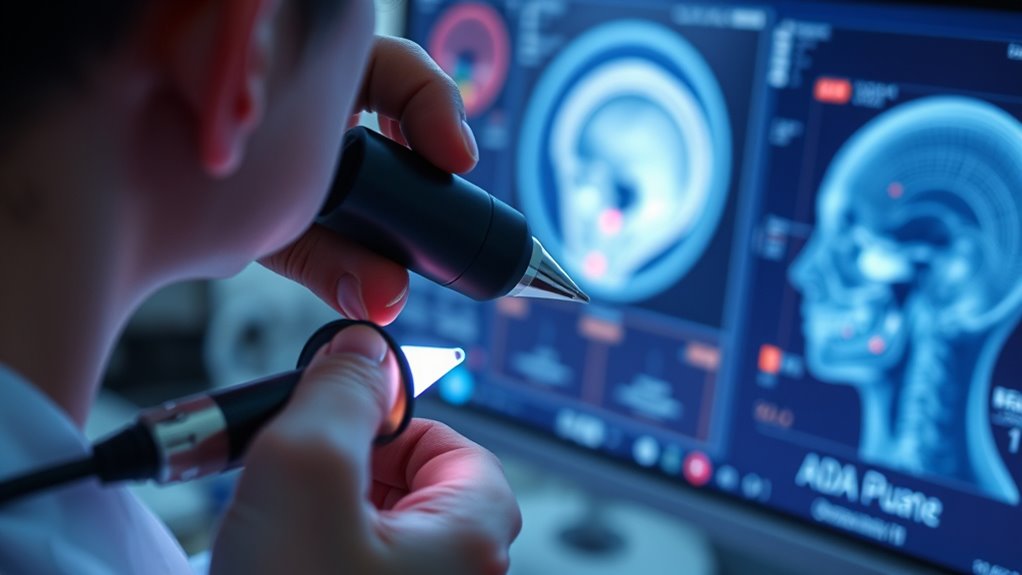
Technological advances have revolutionized how ear diseases are diagnosed and managed, making procedures more accurate and less invasive. You can now detect ear infections and hearing loss earlier, improving treatment outcomes. With digital otoscopy, you see clearer images of the ear canal and eardrum, aiding precise diagnosis. AI-powered imaging analyzes ear structures quickly, identifying issues that might be missed visually. Telemedicine allows remote consultations, expanding access to expert care. Additionally, advanced audiometry provides detailed hearing assessments, guiding personalized treatment plans. These innovations help you:
- Detect ear infections early
- Differentiate between types of hearing loss
- Monitor disease progression remotely
- Reduce the need for invasive procedures
- Improve patient outcomes through precise diagnostics
Frequently Asked Questions
How Accurate Are AI Diagnostics Compared to Traditional Methods?
You might wonder about the diagnostic accuracy of AI compared to traditional methods. Overall, AI reliability has improved markedly, often matching or surpassing manual diagnosis in certain cases. AI tools analyze vast data quickly, reducing human error and offering consistent results. While AI diagnostics show great promise, they still complement traditional exams rather than replace them entirely. Trust in AI reliability continues growing as technology advances, making it a valuable aid in modern ear health assessments.
Are Digital Ear Imaging Devices Affordable for Clinics?
You’ll find digital ear imaging devices becoming more affordable for clinics, especially when considering cost analysis and equipment longevity. These devices often require a higher initial investment, but their durability and improved diagnostic capabilities can save you money long-term. As technology advances, prices tend to decrease, making them a practical choice for clinics aiming to enhance patient care while managing costs effectively.
How Do AI Tools Affect Clinician Training and Skill Development?
You’re on the right track by considering AI tools’ impact on training and skill retention. These tools act as a double-edged sword—enhancing training benefits by providing real-time feedback and improving diagnostic accuracy. They also help you stay sharp and retain skills longer through interactive practice. However, over-reliance might dull your diagnostic instincts. Use AI as a supplement, not a crutch, to keep your skills finely tuned and ready for any situation.
What Are Data Privacy Concerns With Ai-Powered Ear Exams?
You might wonder about data privacy concerns with AI-powered ear exams. You should guarantee patient consent is obtained before collecting or sharing any data. Data security measures are vital to protect sensitive health information from breaches. Without proper safeguards, personal data could be exposed or misused. Staying compliant with privacy laws and implementing robust security protocols helps safeguard patient trust and maintains confidentiality in AI-enabled ear examinations.
Can AI Imaging Detect Rare or Atypical Ear Conditions?
Imagine peering into a detailed, glowing map of your ear, where AI imaging acts like a skilled explorer. It can often detect rare conditions and analyze atypical cases that even seasoned specialists might miss. While not infallible, AI’s ability for rare condition detection and atypical case analysis enhances diagnosis accuracy, offering a valuable second opinion. This technology boosts confidence in identifying unusual ear issues early, leading to better treatment outcomes.
Conclusion
As you explore the evolution from traditional otoscopy to AI-driven imaging, you’ll find it’s like upgrading from a flashlight to a lighthouse—guiding you with clarity and precision. These technological advances not only improve diagnostic accuracy but also enhance patient comfort and engagement. Embracing these innovations means you stay ahead in ear care, ensuring better outcomes. The future of ear examinations shines brightly, illuminating a path as clear and reliable as a well-lit beacon.