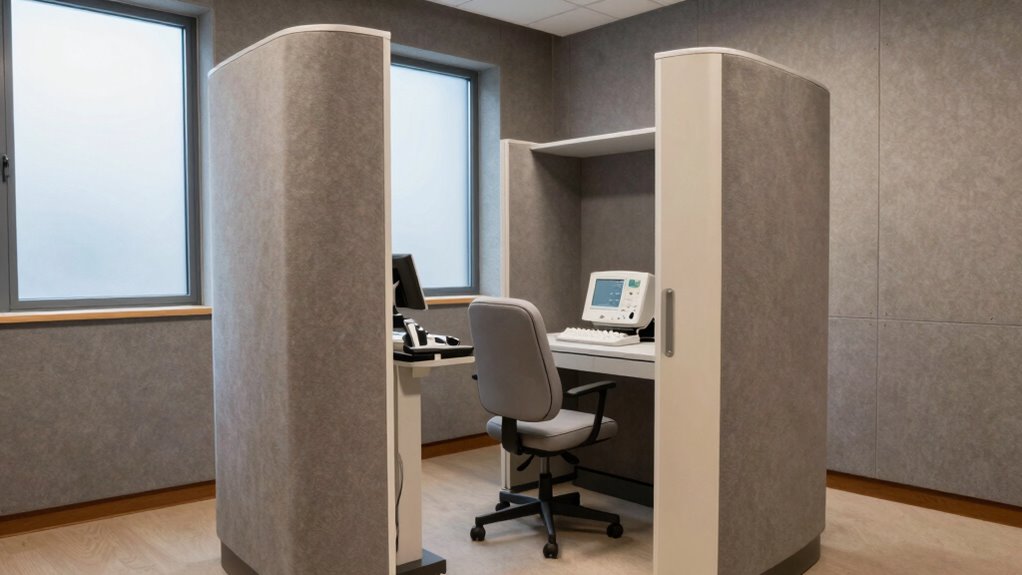
A good hearing test environment is quiet, comfortable, and professionally equipped. You want a space that minimizes external noise to guarantee accurate results, with soundproofing and well-maintained equipment. It should also feel welcoming, with soft lighting, comfortable seating, and a controlled temperature to help you relax. When these elements come together, you get reliable, stress-free testing. Keep exploring to discover how each detail plays a crucial role in your hearing health.

Get everyday helpers delivered free — and shop member deals
- Fast, free delivery on millions of items
- Access to Prime Big Deal Days deals on October 6–7
- Prime Video, Amazon Music and more included
Key Takeaways
- A sound-treated space minimizes external noise and prevents interference during testing.
- Regular calibration and maintenance ensure equipment accuracy and reliable results.
- Comfortable seating, appropriate lighting, and temperature control create a relaxing environment.
- Effective soundproofing blocks external noise sources, maintaining test integrity.
- Using high-quality, professional-grade equipment supports precise and consistent hearing assessments.
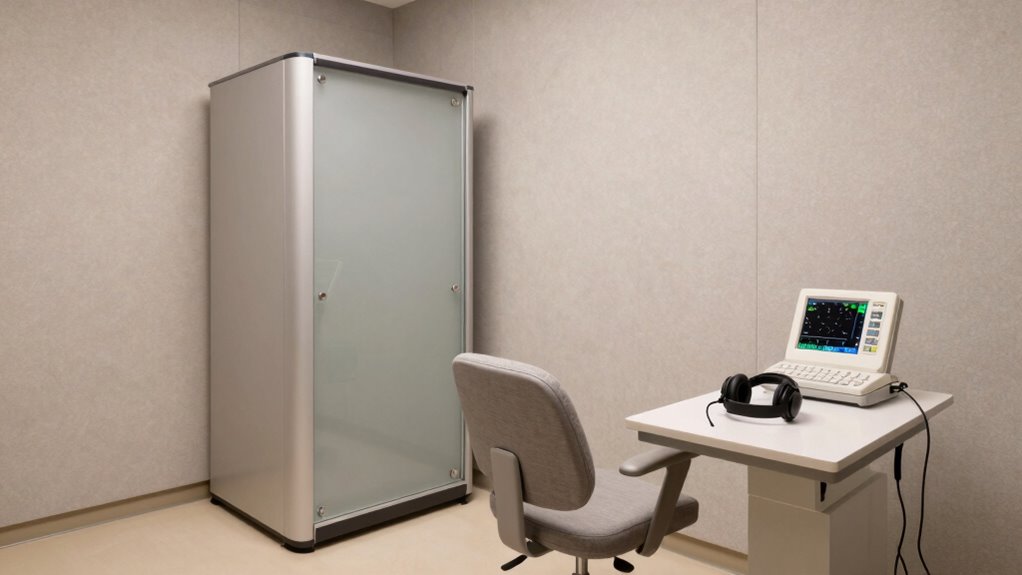
A good hearing test environment is indispensable for obtaining accurate results and guaranteeing your comfort throughout the process. When you step into the testing room, you want to be confident that external factors, like background noise, won’t interfere with the assessment. Excessive noise can mask the sounds the audiologist plays, making it difficult to determine your true hearing thresholds. That’s why a quiet, sound-treated space is critical. The room should be designed to minimize external sounds, so you don’t have to worry about distractions or misinterpreted hearing levels. This controlled environment helps the audiologist get clear, reliable results, giving you confidence in your hearing health.
A quiet, sound-treated room ensures accurate hearing test results and a comfortable experience.
Another key aspect of a good hearing test environment is proper test equipment calibration. The audiologist’s instruments must be precisely calibrated to produce accurate sound levels. If the equipment isn’t calibrated correctly, the test results could be misleading—either overestimating or underestimating your hearing ability. Regular calibration ensures that the sound levels delivered during the test are consistent and accurate, which is essential for diagnosing hearing issues correctly. When the equipment is properly maintained and calibrated, you can trust that the results reflect your actual hearing capabilities, not inaccuracies caused by faulty instruments.
Comfort also plays a significant role in a good hearing test environment. You should feel at ease in the space, with enough room to sit comfortably and minimal distractions. The lighting should be soft but sufficient, and the temperature should be comfortable so you’re not distracted or tense. An environment that promotes relaxation helps you stay still and focused during the test, which leads to more precise measurements. The audiologist should create a welcoming atmosphere, explaining each step of the process so you know what to expect, easing any anxiety you might have. Additionally, ensuring the environment is free from external noise interference enhances the accuracy of the assessment. Creating a calm and professional setting can also help reduce test anxiety, making the entire process smoother for you. Incorporating soundproofing measures is essential to maintain a controlled environment free from unwanted noise.
Finally, a good hearing test environment is equipped with professional-grade test equipment that’s regularly maintained and tested for accuracy. The space should be free from interruptions, with soundproofing measures in place to block out external noise. When these elements come together—quiet surroundings, calibrated equipment, comfort, and professionalism—they create the ideal setting for a reliable hearing assessment. Your hearing test becomes not only more accurate but also a smoother, less stressful experience. You get clear results, which are the foundation for effective treatment and peace of mind about your hearing health.
soundproof room for hearing tests
As an affiliate, we earn on qualifying purchases.
As an affiliate, we earn on qualifying purchases.
Frequently Asked Questions
How Often Should I Get a Hearing Test?
You should get a hearing test at least once every two years, or more often if you notice issues like difficulty hearing or ringing. During the test, proper hearing aid calibration is essential for accurate results, which depends on the test environment acoustics. Regular testing guarantees your hearing aids are well-adjusted and your hearing health is maintained, especially if you’re exposed to loud sounds or experience changes in hearing ability.
Can I Wear Hearing Aids During the Test?
Yes, you can wear hearing aids during the test, but it’s important to discuss hearing aid compatibility with your audiologist beforehand. They may ask you to remove or adjust your hearing aids to guarantee accurate results. Hearing aid adjustments might be necessary afterward to optimize your device’s performance. Wearing your hearing aids during the test helps your audiologist understand how they work with your hearing, leading to better hearing aid fitting and adjustments.
What Is the Typical Duration of a Hearing Test?
A hearing test usually takes about 30 to 60 minutes, depending on your needs. Think of it like a journey through different soundscapes, guided by advanced test equipment inside a soundproof booth. The quiet environment guarantees accurate results, and the process flows smoothly. During this time, you’ll respond to various tones, helping your audiologist understand your hearing health. It’s a brief visit, but essential for your well-being.
Are There Age-Specific Hearing Test Considerations?
Yes, there are age-specific hearing test considerations. For pediatric assessments, you should use child-friendly techniques, like engaging games or story-based tests, to keep their attention. For seniors, consider their hearing needs by allowing extra time, minimizing background noise, and using hearing aids if needed. Customizing the environment ensures accurate results, whether you’re testing a child’s developmental hearing or addressing age-related hearing loss in seniors.
How Do I Prepare for My Hearing Test Appointment?
To prepare for your hearing test appointment, avoid loud noises beforehand and bring any previous hearing or medical records. Wear comfortable, clean hearing protection if you’re sensitive to noise, but don’t wear anything that could interfere with the test. Arrive early to settle into the test environment, and follow the technician’s instructions carefully. Staying relaxed helps guarantee accurate results, giving you the clearest picture of your hearing health.
Conclusion
Remember, a good hearing test environment isn’t just about silence—it’s about creating a space where your ears can truly listen. Imagine stepping into a room that whispers calm and clarity, guiding you to your best hearing. When the environment is just right, you’re not just taking a test—you’re revealing the soundscape of your life. So, seek out that perfect space, and let your ears do the talking—they deserve nothing less.
Fall Picks
fall essentials
As an affiliate, we earn on qualifying purchases.