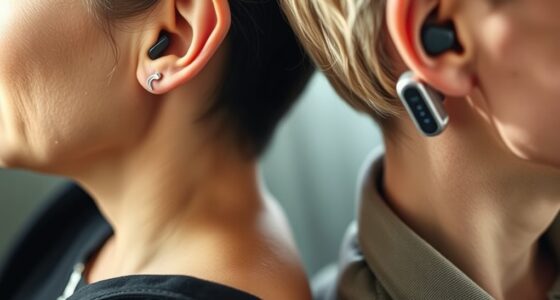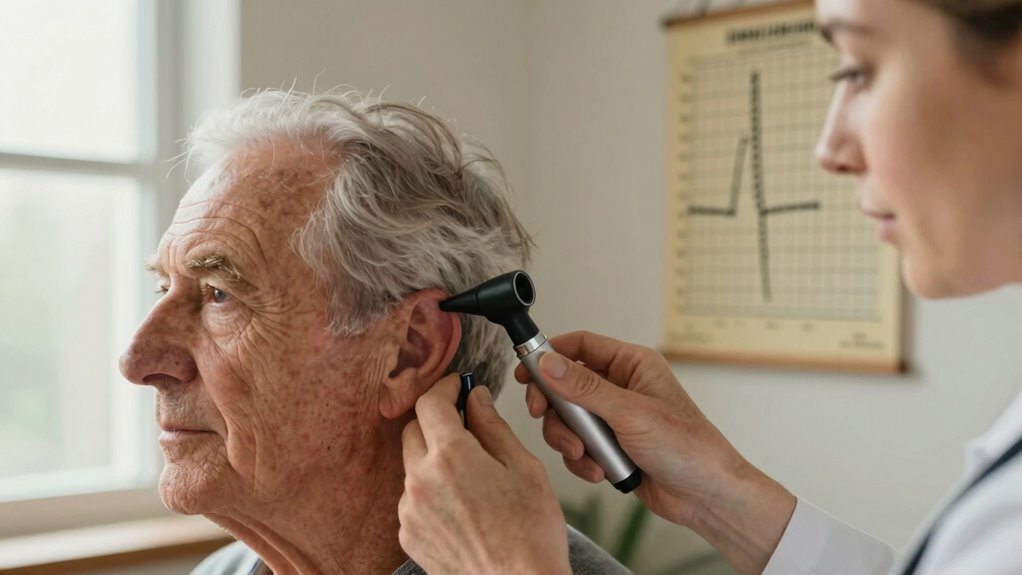

Your hearing history helps your care provider understand your unique challenges, such as when your difficulties started and how they’ve changed. It reveals experiences, symptoms, and previous treatments, guiding personalized solutions like hearing aids or tinnitus management. By tracking your progress over time, your provider can make timely adjustments. This ongoing process guarantees your treatment remains effective, improving your overall quality of life. Keep exploring to learn more about how your hearing history shapes better care.

Get everyday helpers delivered free with Prime
- Fast, free delivery on millions of items
- Prime Video, Amazon Music and more included
- Member-only deals all year
Key Takeaways
- Identifies individual hearing challenges and patterns for personalized treatment planning.
- Guides effective hearing aid selection by understanding the severity and type of hearing loss.
- Enables tailored tinnitus management strategies based on specific triggers and experiences.
- Facilitates ongoing monitoring and adjustments to ensure optimal hearing and tinnitus care.
- Ensures treatment remains responsive to changing needs through regular updates of the hearing profile.
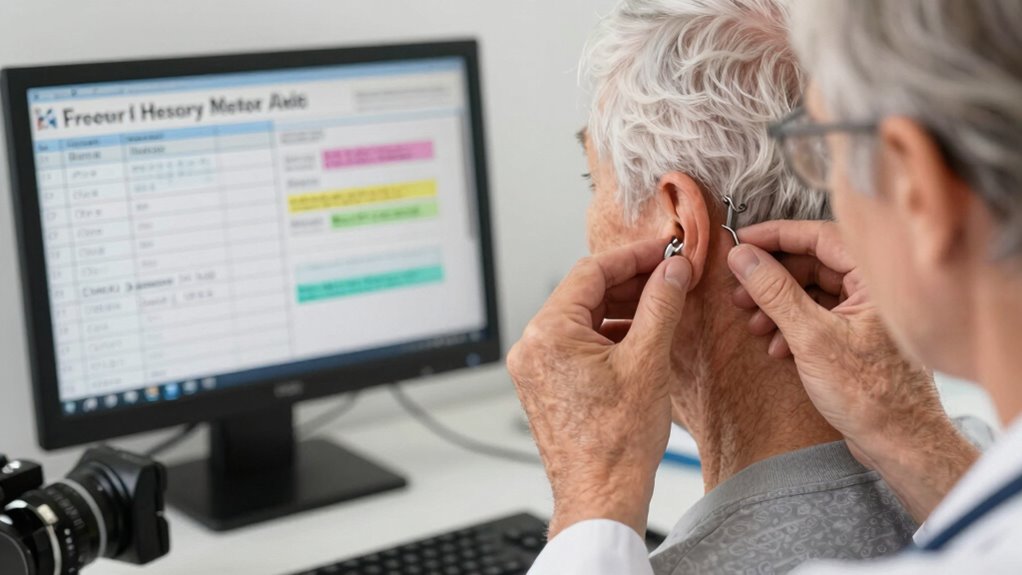
Understanding your hearing history is essential for providing better care, as it helps identify patterns and specific challenges you may face. When you share your experiences, symptoms, and previous treatments, your healthcare provider can develop a clearer picture of your needs. This detailed history guides decisions about the most effective interventions, whether that’s fitting you with hearing aids or managing tinnitus. Knowing when your hearing difficulties started, how they’ve progressed, and what situations worsen or improve your hearing allows for tailored solutions that truly address your unique circumstances.
Sharing your hearing experiences helps tailor effective treatments and improves your overall hearing health journey.
Hearing aids are often a cornerstone of hearing care, but their success depends heavily on understanding your specific hearing profile. Your history reveals the severity and type of hearing loss, which helps determine the right style and technology for your devices. For example, if you’ve experienced rapid hearing decline or specific challenges in noisy environments, your provider can choose hearing aids equipped with advanced features like noise reduction or directional microphones. By reviewing your history, they can also set realistic expectations, ensuring you understand how hearing aids will function in different settings and what adjustments might be necessary over time. Additionally, understanding your history of hearing loss progression can help anticipate future needs and plan for ongoing support.
Tinnitus management is another critical aspect influenced by your hearing history. Many people with hearing loss also experience tinnitus—those persistent ringing, buzzing, or hissing sounds. Your history helps identify potential triggers or patterns, such as increased tinnitus in quiet environments or during stressful times. With this insight, your provider can recommend specific strategies, including sound therapy or counseling, to lessen the impact of tinnitus on your daily life. Sometimes, managing tinnitus involves combining hearing aids with features like tinnitus masking, which can provide relief by generating soothing sounds. Your detailed history allows for a personalized approach, incorporating therapies that address both hearing loss and tinnitus simultaneously. Recognizing how hearing loss affects your tinnitus can improve the effectiveness of your treatment plan.
Furthermore, your hearing history informs ongoing care. As your hearing changes over months or years, revisiting your history helps track progress and adjust treatments accordingly. It also fosters a collaborative relationship with your provider, where your feedback guides future interventions. Being open about your experiences ensures that your care remains responsive and effective, whether you’re adapting to new hearing aids or refining tinnitus management techniques. A comprehensive hearing assessment can also uncover other related issues that may influence your overall well-being. Recognizing the importance of comprehensive hearing history can significantly improve your overall treatment outcomes and quality of life. Regularly updating your hearing profile ensures your care adapts to your evolving needs, maximizing benefits over time.
hearing aids with noise reduction
As an affiliate, we earn on qualifying purchases.
As an affiliate, we earn on qualifying purchases.
Frequently Asked Questions
How Often Should I Update My Hearing History?
You should update your hearing history at least once a year or whenever you notice changes in your hearing, tinnitus, or how your hearing aids fit and function. Regular updates help your audiologist fine-tune your hearing aids and improve tinnitus management. Staying current guarantees you get the best possible care and keeps your devices working effectively, providing comfort and clarity in your daily life.
Can Hearing History Detect Early Signs of Hearing Loss?
Think of your hearing history as a lighthouse guiding you through foggy waters. Yes, it can detect early signs of hearing loss, acting as an early warning system. By identifying subtle changes, it enables early detection and helps you adopt preventive strategies. Regular updates keep the lighthouse shining bright, ensuring you catch issues early, so you can preserve your hearing and enjoy life’s sounds without interruption.
What Specific Questions Are Included in a Hearing History?
A hearing history includes questions about your hearing difficulties, exposure to loud noises, and overall health. You’re asked about your use of hearing aids, if any, and your family’s hearing history. These questions help your audiologist understand your needs, guiding audiogram analysis and recommending appropriate hearing aids. By discussing these details, you enable better care tailored to your hearing loss, ensuring more effective treatment and support.
Is Hearing History Useful for Children or Only Adults?
A hearing history is essential for children, not just adults, because it’s the foundation for understanding their unique needs in pediatric audiology. Think of it as a roadmap guiding child development, helping professionals identify hearing issues early. This early insight allows for tailored interventions, ensuring your child’s communication skills and overall growth stay on course. In pediatric audiology, a thorough hearing history is the key to nurturing healthy development.
How Does Hearing History Influence Personalized Treatment Plans?
Your hearing history directly influences personalized diagnostics and treatment customization. By sharing detailed information about your hearing experiences, symptoms, and lifestyle, you help your audiologist identify specific issues and underlying causes. This tailored approach guarantees the treatment plan fits your unique needs, whether through hearing aids, therapies, or other interventions. Ultimately, a thorough hearing history allows for more precise, effective care, improving your overall hearing health and quality of life.
Conclusion
By sharing your hearing history, you’re planting seeds for a brighter, clearer future. It’s like opening a window to your unique story, allowing caregivers to tune into your needs with precision. Together, you and your provider can navigate the symphony of your hearing health, ensuring every note plays in harmony. Remember, your history isn’t just a record; it’s the compass guiding you toward better care and a life filled with sound and connection.
Halloween Picks
halloween
As an affiliate, we earn on qualifying purchases.