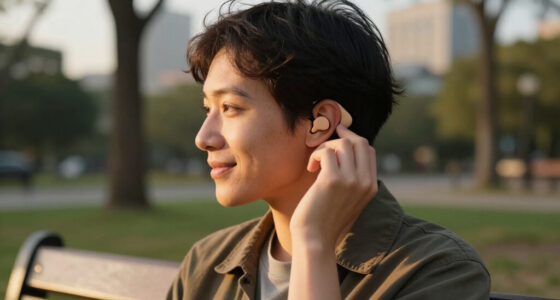
If you have single-sided hearing loss, CROS hearing aids help by wirelessly transmitting sound from your deaf side to your better ear, but they don’t restore natural sound localization or spatial awareness. Alternatives like bone-anchored devices or cochlear implants can provide more natural hearing and improve your ability to identify sound direction. To find the right solution for you, exploring your options and consulting with an audiologist is key—more details wait ahead.

Get everyday helpers delivered free with Prime
- Fast, free delivery on millions of items
- Prime Video, Amazon Music and more included
- Member-only deals all year
Key Takeaways
- CROS hearing aids transmit sound wirelessly but do not improve spatial awareness or sound localization.
- Alternatives like bone-anchored systems and cochlear implants can restore more natural hearing.
- Innovative devices with AI and advanced technology offer better clarity and environmental adaptation.
- Choosing the right solution requires comprehensive assessment and personalized consultation with an audiologist.
- Multiple options beyond CROS can address the emotional, social, and functional challenges of single-sided hearing loss.
As an affiliate, we earn on qualifying purchases.
What Is Single-Sided Hearing Loss and Its Challenges

Have you ever wondered how losing hearing in just one ear affects your daily life? Single-sided hearing loss can make it harder to locate sounds, so you might struggle to tell where a noise is coming from. Your brain has to work overtime to process auditory information, which can lead to difficulties in noisy environments. The emotional impact is significant too; you might feel isolated or frustrated because you miss out on subtle cues and social cues. Over time, this can influence your confidence and overall well-being. Recognizing these challenges helps you understand why managing one-sided hearing loss requires effective solutions tailored to your needs. Additionally, understanding the role of sound localization in hearing health highlights the importance of choosing appropriate assistive devices. Exploring innovative sound processing technologies can further enhance your ability to navigate your environment confidently.
Some modern hearing solutions aim to restore sound localization abilities, helping you regain a sense of spatial awareness.
How Do CROS Hearing Aids Work, and What Are Their Limits?

When traditional hearing aids aren’t effective for single-sided hearing loss, CROS (Contralateral Routing of Signal) devices offer an alternative. They work by wirelessly transmitting sounds from your poorer ear to your better ear, so you can hear sounds that come from the side of the deaf ear. This setup helps you detect sounds and speech, but it doesn’t restore natural sound localization, meaning you may still struggle to determine where sounds originate. CROS devices rely on wireless connectivity to route sound efficiently, but they don’t provide amplification on the deaf side. Their main limit is the inability to recreate the spatial cues necessary for true sound localization, which can affect your overall awareness of your environment. While helpful, CROS isn’t a perfect solution for all your hearing needs. Additionally, some users may find that these devices do not fully address the nuances of sound localization, and may require supplementary strategies for comprehensive hearing improvement. Incorporating advanced signal processing features can sometimes help improve overall auditory perception, but they still do not replace the natural cues lost with unilateral hearing loss.
What Are the Best Alternatives to CROS Hearing Aids?

If CROS hearing aids don’t fully meet your needs, several effective alternatives can help improve your hearing experience. One option is a bone-anchored hearing system, which transmits sound directly to your inner ear, enhancing auditory processing and making it easier to understand speech. Another approach is a cochlear implant, suitable for severe cases, restoring more natural hearing and improving speech comprehension. You might also consider a hearing aid for the better ear combined with auditory training, which strengthens your brain’s ability to process sounds from your affected side. These alternatives often provide better spatial awareness and clarity, especially in noisy environments. Incorporating design principles into your hearing solutions can help make your environment more comfortable and accessible. Additionally, understanding the types of hearing loss can guide you toward the most effective treatment options for your condition. Exploring hearing technology advancements can also offer newer options tailored to your specific needs, ensuring you get the best possible hearing support. Discussing your specific needs with an audiologist can help determine the most suitable solution to improve your overall hearing and communication.
Bone-Anchored Devices and Other Innovative Hearing Technologies

Bone-anchored devices and other innovative hearing technologies offer promising solutions for those with one-sided hearing loss who seek alternatives beyond traditional hearing aids. These devices use bone conduction and implant technology to transmit sound directly to your inner ear, bypassing the damaged ear. A small titanium implant is surgically placed into your skull, allowing a sound processor to send vibrations through the bone. This method delivers clearer sound and better localization compared to some traditional options. Bone conduction systems are discreet, durable, and often more comfortable for long-term wear. Other advanced technologies, like middle-ear implants, also harness implant technology to improve hearing. These innovative solutions can considerably enhance your ability to hear from your affected side, offering a more natural hearing experience. Smart hearing devices incorporate AI to adapt to different environments, further improving overall hearing clarity and convenience.
How to Decide Which Hearing Solution Is Right for You

Choosing the right hearing solution depends on understanding your specific needs, lifestyle, and the nature of your hearing loss. Start by scheduling thorough hearing assessments, which help determine the severity and type of your loss. These assessments guide you through various treatment options, such as CROS devices, bone-anchored systems, or other innovative technologies. Consider how each solution fits into your daily routine, communication preferences, and comfort level. Some options may be more suitable for active lifestyles, while others focus on simplicity or discreetness. By evaluating your hearing assessment results alongside your personal needs, you can make an informed choice about which treatment options will give you the best hearing experience and improve your quality of life. Additionally, understanding inner wisdom can help you select the best cleaning devices for maintaining a healthy environment. Being aware of the latest advancements in natural pool systems can also influence your decision if you prefer eco-friendly options that align with your lifestyle. Exploring hearing device compatibility ensures your chosen technology integrates seamlessly with other equipment you use daily, enhancing overall convenience and satisfaction.
Consulting an Audiologist: Next Steps to Find Your Perfect Fit

Scheduling a consultation with an audiologist is a critical next step after understanding your hearing needs. During the appointment, they’ll perform a thorough hearing assessment to pinpoint the specifics of your one-sided hearing loss. This evaluation helps determine the most effective solutions tailored to your situation. Your patient preferences also play an essential role; whether you’re concerned about comfort, technology, or aesthetics, sharing these priorities guides the audiologist’s recommendations. They’ll discuss available options, including traditional and alternative devices beyond CROS systems, to find what feels right for you. An audiologist can answer your questions, clarify the benefits of each solution, and help you make an informed decision. Taking this step guarantees you find a hearing solution that best fits your lifestyle and needs, especially considering the various hearing device options available beyond CROS systems.
Frequently Asked Questions
Can One-Sided Hearing Loss Affect Your Balance or Spatial Awareness?
Yes, one-sided hearing loss can affect your balance and spatial awareness. When your brain receives limited sound input from one side, it struggles to accurately judge where sounds are coming from, leading to compromised spatial awareness. Additionally, the imbalance in auditory signals can impact your sense of balance, making you more prone to falls or dizziness. Addressing this hearing loss helps restore better spatial perception and balance stability.
Are There Any Risks or Side Effects Associated With Bone-Anchored Hearing Devices?
Think of a bone-anchored hearing device like planting a sturdy tree—it’s generally safe, but risks like bone-anchored risks and device complications can occur. Some people may experience skin irritation, infection, or device failure. While these risks are low, it’s essential to discuss them with your audiologist. Proper care and regular check-ups help minimize complications, ensuring your device works smoothly and safely.
How Does Age Impact the Effectiveness of Different Hearing Loss Treatments?
Age-related factors can influence how effective different hearing loss treatments are for you. As you get older, your ear health, cognitive abilities, and overall physical condition may affect treatment efficacy. You might find that some options, like hearing aids or implants, work better when tailored to your age and needs. Consulting with a specialist helps determine the most suitable approach, ensuring you get the best possible hearing improvement at any age.
Can Hearing Loss in One Ear Worsen Over Time Without Intervention?
Yes, your hearing loss in one ear can worsen over time if you don’t seek intervention. Untreated loss may lead to increased tinnitus, difficulty localizing sound, and social isolation. To manage these issues, consider tinnitus management strategies and explore hearing aid accessories that improve hearing. Early intervention can slow deterioration and enhance your quality of life, so don’t delay in consulting a hearing professional.
What Are the Costs and Insurance Options for Advanced Hearing Solutions?
Getting advanced hearing solutions can feel like finding a needle in a haystack, but understanding costs and insurance options helps. Insurance coverage varies widely, so check with your provider for specific benefits. Cost comparison is key—some devices may be pricey upfront but offer long-term value. Many plans now include coverage for high-tech hearing aids, making it more affordable. Don’t hesitate to explore financing options or assistance programs to ease the financial burden.
Conclusion
Choosing the right solution for single-sided hearing loss is like finding the perfect key to release your world of sound. While CROS aids might seem straightforward, exploring alternatives can open new doors to clarity and connection. Don’t settle for a one-size-fits-all approach—your hearing journey deserves a personalized touch. Consult with an audiologist, and together, you’ll discover the device that transforms your hearing experience from a murky haze into a vibrant symphony.
Evergreen bestsellers Picks
bestsellers
As an affiliate, we earn on qualifying purchases.