Ototoxic medications can harm your hearing by damaging the inner ear, leading to issues like hearing loss, tinnitus, or balance problems. Drugs such as certain antibiotics, chemotherapy agents, NSAIDs, and high-dose aspirin can increase your risk, especially with prolonged use or high doses. Staying aware of these risks, monitoring symptoms, and communicating with your healthcare provider can help protect your hearing. If you’re interested in learning more about how to reduce these risks, there’s useful information ahead.
Key Takeaways
- Certain medications like aminoglycoside antibiotics and cisplatin chemotherapy can damage inner ear structures, leading to hearing loss.
- Monitoring hearing through regular tests is recommended for patients on ototoxic drugs to detect early signs of damage.
- High doses, prolonged use, and combined ototoxic medications increase the risk of hearing impairment.
- Symptoms of ototoxicity include tinnitus, hearing decline, dizziness, and balance issues, requiring prompt medical attention.
- Healthcare providers can minimize risks by adjusting medication doses or choosing alternative treatments when necessary.
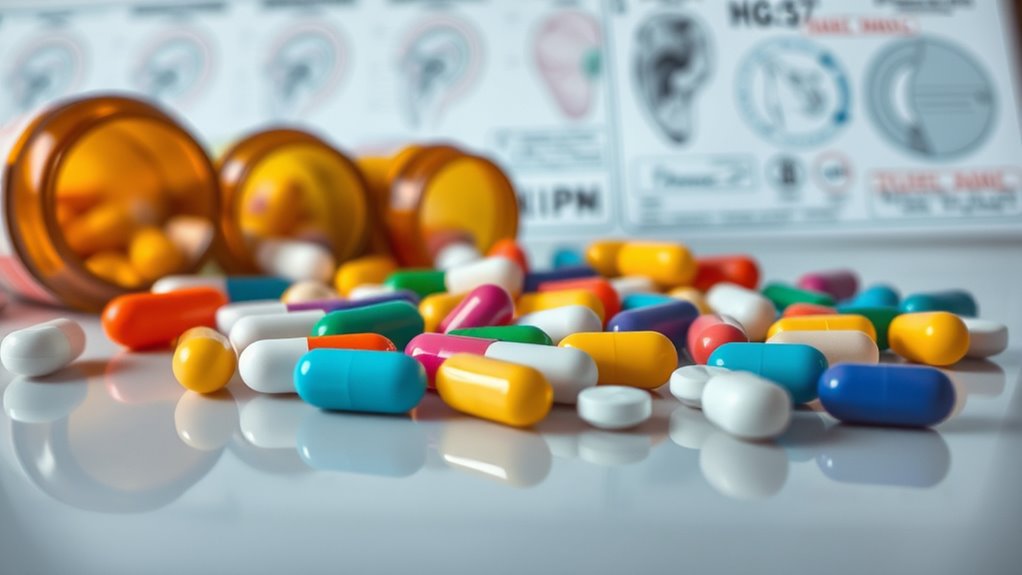
Have you ever wondered how certain medications can harm your hearing? It’s a question many people overlook until they experience the consequences firsthand. Some drugs, while effective for treating specific conditions, come with potential medication side effects that could damage your auditory system. Knowing which medications pose risks and how to protect yourself is essential for hearing loss prevention. When you start a new medication, it’s essential to be aware of the possible side effects, especially those related to your ears. Ototoxic medications are drugs known to cause damage to the inner ear, leading to hearing loss, tinnitus, or balance issues. These side effects may develop gradually or suddenly, so staying informed can help you catch problems early. For instance, certain antibiotics, like aminoglycosides, and chemotherapy agents such as cisplatin are notorious for their ototoxic potential. Non-steroidal anti-inflammatory drugs (NSAIDs), some diuretics, and high doses of aspirin can also contribute to hearing problems if used improperly or over long periods. The key to hearing loss prevention involves understanding which medications carry these risks and working closely with your healthcare provider. Always ask about the potential ototoxic effects of any new medication you’re prescribed. If you’re taking drugs that could harm your hearing, your doctor might suggest regular hearing tests to monitor any changes. Additionally, they could recommend adjusting the dosage or exploring alternative treatments that pose fewer risks. It’s also important to never self-medicate or increase your dose without professional guidance, as misuse can intensify side effects. Another essential aspect of hearing loss prevention is being vigilant about symptoms. If you notice ringing in your ears, a sudden decrease in hearing, or imbalance, seek medical advice promptly. Early detection can prevent further damage and help you take measures to protect your hearing. Remember that cumulative exposure to ototoxic medications increases the risk, especially if combined with other factors like noise exposure or aging. Staying informed about medication side effects empowers you to make better decisions about your health. Always communicate openly with your healthcare providers about your concerns, and don’t hesitate to ask about alternative therapies if you’re worried about hearing health. Ultimately, understanding the connection between medications and hearing health enables you to take proactive steps to safeguard your auditory well-being. Protecting your hearing is an ongoing process that involves awareness, regular check-ups, and responsible medication use. By staying educated and vigilant, you can enjoy better hearing health now and in the future.

InvisiHear Symphony ITC Custom-Molded, 128 DSP Channel Programmable Hearing Aids for Adults with Mobile App Hearing Test | Hearing Aids for Seniors with Bluetooth | USA-Made Multi Core Processor (128
TAKE ADVANTAGE of our SALE to celebrate Blaids coming to Amazon! Blaids Hearing Aids were previously only available…
As an affiliate, we earn on qualifying purchases.
As an affiliate, we earn on qualifying purchases.
Frequently Asked Questions
Are There Natural Alternatives to Ototoxic Medications?
Yes, you can explore natural alternatives like herbal remedies and dietary adjustments to support your health. Incorporate herbs such as ginkgo biloba and garlic, which may promote circulation and overall ear health. Additionally, eating a balanced diet rich in antioxidants, omega-3 fatty acids, and vitamins can help reduce reliance on ototoxic medications. Always consult a healthcare professional before making changes to your treatment plan.
How Can I Tell if My Medication Is Damaging My Hearing?
You might notice ringing in your ears or muffled sounds if your medication damages your hearing. To catch issues early, schedule regular hearing tests and monitor symptoms closely. Imagine your ears as delicate instruments; if you notice changes, it’s like a subtle crack forming. Stay vigilant, and if you detect anything unusual, consult your healthcare provider promptly to prevent further damage and protect your hearing health.
What Are the Long-Term Effects of Ototoxic Drugs?
Long-term use of ototoxic drugs can cause hearing deterioration that worsens over time, leading to permanent hearing loss if untreated. You might also experience balance issues since these medications can affect your inner ear functions. The damage often accumulates silently, so regular hearing checkups are vital, especially if you’re on ototoxic medications for an extended period. Early detection can help minimize long-term effects and preserve your hearing health.
Can Ototoxicity Be Reversed Once Detected?
Like trying to turn back a river’s flow, reversing ototoxicity is often challenging once damage occurs. While early detection offers some reversibility prospects, significant damage may be permanent. Prevention is key; stopping the medication early can prevent further harm. If you suspect ototoxic effects, consult your healthcare provider immediately to explore options for damage prevention and possibly mitigate lasting hearing loss. Acting swiftly is your best defense.
Are Certain Age Groups More at Risk for Medication-Induced Hearing Loss?
Yes, certain age groups are more at risk for medication-induced hearing loss. You’re more vulnerable if you’re older due to age-related vulnerability, which can weaken your ear’s resilience to ototoxic effects. Conversely, pediatric susceptibility is also high because children’s auditory systems are still developing, making them more prone to damage. Both age groups require careful monitoring of ototoxic medications to prevent lasting hearing impairment.

Hearprotek Concert Ear Plugs, 2Pairs Reusable high Fidelity Musician Ear Plugs for Concerts Loud Music-Noise Reduction Ear Protection earplugs for Rave,Festival,Music,Tinnitus Relief
High Fidelity: Hearprotek Music ear plugs do an effective job of bringing down the overall volume, blocking background…
As an affiliate, we earn on qualifying purchases.
As an affiliate, we earn on qualifying purchases.
Conclusion
To protect your hearing, always discuss potential side effects of medications with your doctor. For example, imagine you’re prescribed an antibiotic known for ototoxicity; staying aware and monitoring your hearing can prevent long-term damage. If you notice ringing or hearing loss, seek medical advice promptly. Being informed and proactive guarantees your hearing health stays intact, even when taking necessary medications. Your ears deserve care—don’t hesitate to ask questions and stay vigilant.

Audien Atom One OTC Hearing Aids – Wireless, Rechargeable, and Comfortable | Clear Sound in a Small, Discreet Design for Seniors & Adults with Hearing Loss
Hear What Matters Most: Hearing isn’t one-size-fits-all. That’s why our adjustable frequency system lets you personalize your sound…
As an affiliate, we earn on qualifying purchases.
As an affiliate, we earn on qualifying purchases.
ototoxic medication monitoring device
As an affiliate, we earn on qualifying purchases.
As an affiliate, we earn on qualifying purchases.