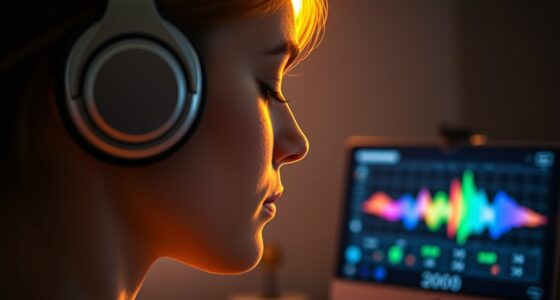

To prevent noise-induced hearing loss, you should always wear ear protection like earplugs or earmuffs in loud environments, and keep the volume at 60% or lower on your devices. Take regular breaks to give your ears a rest and avoid prolonged exposure to loud sounds. Recognizing risky noise levels and adopting good listening habits can save your hearing long-term. Continue exploring for simple, effective ways to protect your hearing today.
Key Takeaways
- Always wear appropriate ear protection like earplugs or earmuffs in loud environments.
- Keep personal device volume at 60% or lower and take regular listening breaks.
- Limit exposure time to loud sounds to prevent gradual hearing damage.
- Recognize and avoid environments with noise levels above 85 decibels.
- Educate yourself on safe listening habits to maintain long-term auditory health.
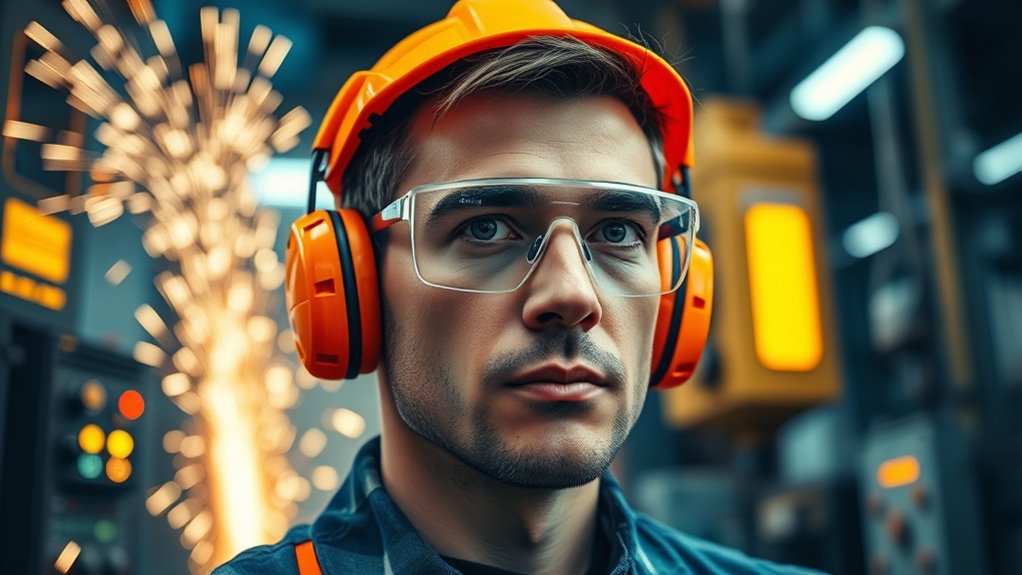
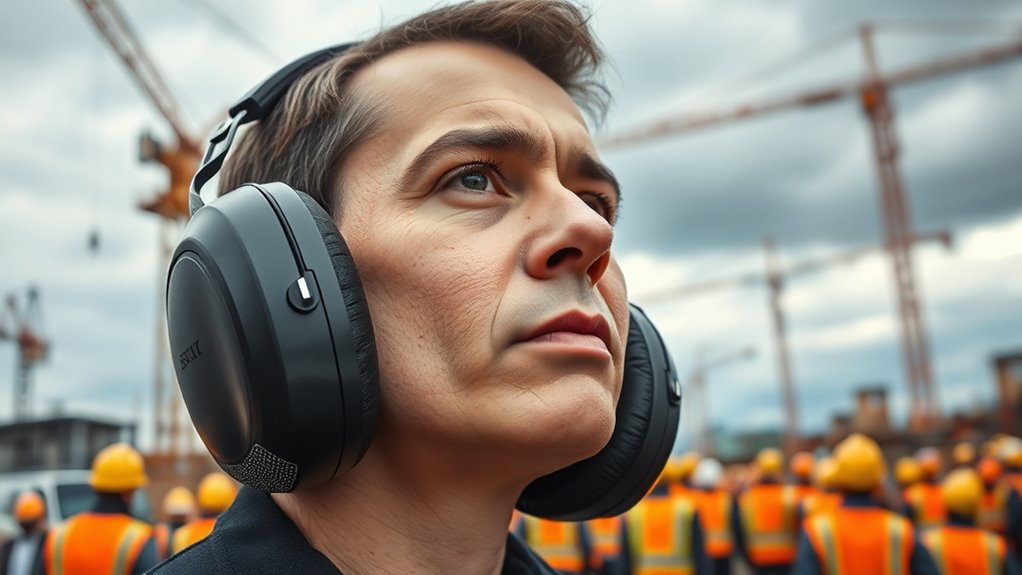
Noise-induced hearing loss is a common but preventable problem that affects millions of people worldwide. If you’re exposed to loud sounds regularly, you need to prioritize your ear protection and practice safe listening habits. The good news is that you can considerably reduce your risk of hearing damage by taking simple steps to shield your ears. One of the most effective ways to do this is by using ear protection whenever you’re in noisy environments, whether it’s at concerts, construction sites, or during loud hobbies. Ear protection, such as earplugs or earmuffs, acts as a barrier that reduces the intensity of sound reaching your eardrum. When properly used, these devices can cut down noise levels by a notable margin, helping preserve your hearing over time. Remember, it’s not just about wearing ear protection; it’s about ensuring they fit well and are appropriate for the noise level you’re exposed to.
Safe listening isn’t just about ear protection devices; it’s about managing how loud and how long you’re exposed to sound. Listening to music or watching videos at high volumes through headphones can cause damage just as easily as loud environments. To protect your hearing, keep the volume at 60% or lower, and take frequent breaks to give your ears a rest. For example, if you’re at a concert, try to step away from the speakers periodically or use ear protection designed specifically for music lovers. Additionally, set limits on how long you listen at high volumes, especially with personal devices. This proactive approach helps prevent the gradual deterioration of your hearing that often happens without obvious symptoms until it’s too late. Recognizing the importance of hearing conservation can make a significant difference in maintaining your auditory health.
Understanding the importance of ear protection and safe listening practices can make a substantial difference. The earlier you adopt these habits, the better your chances of avoiding irreversible hearing loss. Be mindful of your environment and recognize when noise levels are dangerously high. When in doubt, use ear protection and reduce your exposure time. Education plays a key role—knowing that sound levels above 85 decibels can cause damage helps you make smarter choices. Whether you’re working, attending a concert, or enjoying recreational activities, always prioritize your ear health. By taking these precautions, you’re actively safeguarding your ability to hear clearly in the future. Remember, preventing noise-induced hearing loss isn’t complicated—just stay aware, use ear protection when necessary, and practice safe listening habits consistently. Your ears will thank you for it.

Mack's Ultra Soft Foam Earplugs, 50 Pair – 33dB Highest NRR, Comfortable Ear Plugs for Sleeping, Snoring, Travel, Concerts, Studying, Loud Noise, Work | Made in USA
ULTRA COMFORTABLE – Made with super low-pressure, slow release, Comfy Cush Comfort Foam. Their user preferred color is…
As an affiliate, we earn on qualifying purchases.
As an affiliate, we earn on qualifying purchases.
Frequently Asked Questions
Can Hearing Loss Be Reversed Once Caused by Noise Exposure?
Hearing loss caused by noise exposure effects isn’t usually reversible. Once your hair cells in the inner ear are damaged, hearing recovery is unlikely. However, early intervention can help prevent further loss. Protect your ears from loud noises, and if you notice hearing issues, see a professional promptly. While some temporary threshold shifts may recover, permanent damage often remains, emphasizing the importance of prevention.
Are There Specific Brands of Hearing Protection More Effective?
Think of hearing protection brands as a toolbox; some tools are sharper and more reliable. You’ll find that brands like Howard Leight, 3M, and Etymotic often lead in product comparisons, offering high effectiveness and comfort. Brand effectiveness varies based on your needs—whether earplugs or earmuffs. Do your research and read reviews, because selecting the right brand guarantees your ears stay safe, like a fortress guarding your hearing.
How Often Should I Get My Hearing Checked if Exposed to Loud Noise?
You should get your hearing checked at least once a year if you’re regularly exposed to loud noise, following occupational guidelines. Regular frequency monitoring helps catch early signs of hearing loss. If your work involves intense noise, consider more frequent checks, such as every six months. Staying proactive guarantees you protect your hearing health effectively, and your healthcare provider can recommend the best schedule based on your exposure levels.
Do Earplugs Interfere With Normal Hearing or Communication?
Wearing earplugs is like wearing sunglasses; they protect you without blocking all clarity. While some worry about earplug comfort and sound quality, many modern designs minimize interference, allowing you to communicate effectively. You might notice a slight reduction in ambient noise, but most find that well-fitted earplugs preserve speech clarity. With the right pair, you stay safe without sacrificing comfort or the ability to hear what’s important.
What Are Early Signs of Noise-Induced Hearing Damage?
You might notice early signs of noise-induced hearing damage if you experience tinnitus symptoms like ringing or buzzing in your ears. Also, watch for increased hearing sensitivity, making everyday sounds seem painfully loud, or difficulty understanding speech in noisy environments. These signs indicate your ears are being affected, and it’s important to reduce exposure and seek audiological evaluation promptly to prevent further damage.

ProCase Noise Reduction Ear Muffs, Sound Proof Ear Protection, NRR 28dB Noise Cancelling Headphones for Adults Kids Autism, Hearing Protection for Shooting Gun Range Mowing -Red
Constructed by solid ABS shell and thickened foam, the ear muffs achieve NRR 28 dB (SNR 34 dB)…
As an affiliate, we earn on qualifying purchases.
As an affiliate, we earn on qualifying purchases.
Conclusion
To protect your hearing, think of your ears as delicate flowers that need careful tending. Avoid loud noises whenever possible, wear ear protection in noisy environments, and keep volume levels in check. Remember, once your hearing is damaged, it’s like trying to unbreak glass — impossible. Take action now to shield your ears from noise-induced harm, so you can enjoy life’s sounds without regret. Guard your hearing today; your future self will thank you.

MEE audio KidJamz KJ55 Personalized USB-C Safe Listening Wired Headphones for Kids with Custom LED-Backlit Design, Volume Limiter, & Microphone for iPhone 15, iPad, & USB Type C Devices (Lavender)
CUSTOM LIGHT-UP DESIGN: Customizable LED-backlit artwork lets you personalize the KidJamz for a unique design that’s fun for…
As an affiliate, we earn on qualifying purchases.
As an affiliate, we earn on qualifying purchases.
ProCase Noise Reduction Ear Muffs, Sound Proof Ear Protection, NRR 28dB Noise Cancelling Headphones for Adults Kids Autism, Hearing Protection for Shooting Gun Range Mowing -Red
Constructed by solid ABS shell and thickened foam, the ear muffs achieve NRR 28 dB (SNR 34 dB)…
As an affiliate, we earn on qualifying purchases.
As an affiliate, we earn on qualifying purchases.