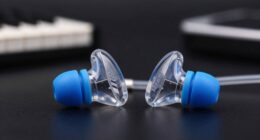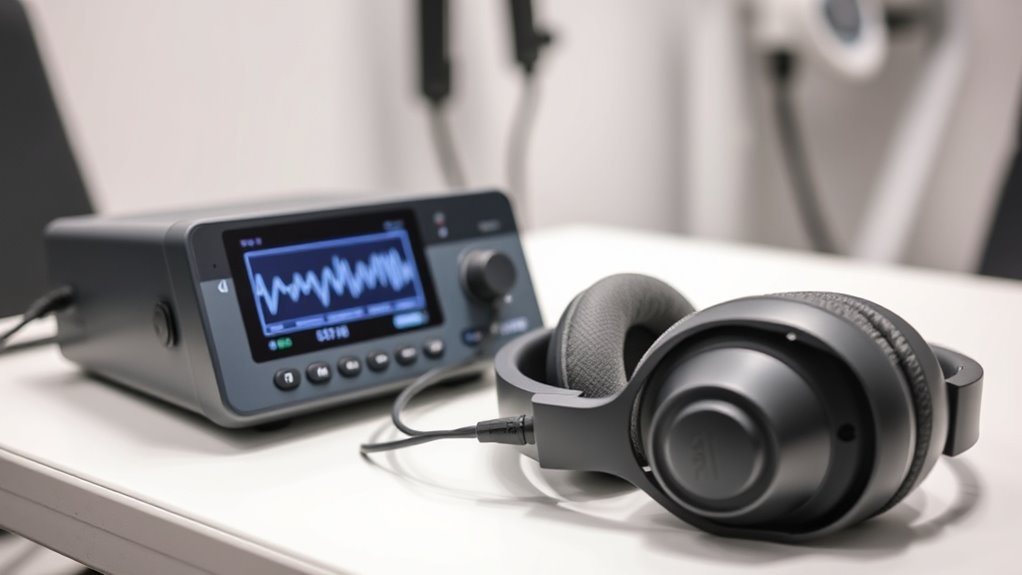

Speech audiometry, including SRT and WRS tests, shows how well you understand speech beyond just hearing sounds. SRT measures the softest level at which you can recognize speech, while WRS assesses how many words you can correctly repeat at comfortable levels. These tests help identify if your issues are with hearing sensitivity or processing speech. To understand more about how these tests can reveal your hearing health, keep exploring the details below.
Key Takeaways
- Speech audiometry assesses speech perception by measuring the Speech Reception Threshold (SRT) and Word Recognition Score (WRS).
- SRT determines the softest level at which speech can be understood, using simple words at decreasing intensities.
- WRS evaluates how well a person recognizes words presented at a comfortable loudness level, indicating speech processing ability.
- Together, SRT and WRS differentiate between hearing sensitivity and neural or central processing issues.
- These tests guide interventions like hearing aids and help diagnose auditory processing disorders.
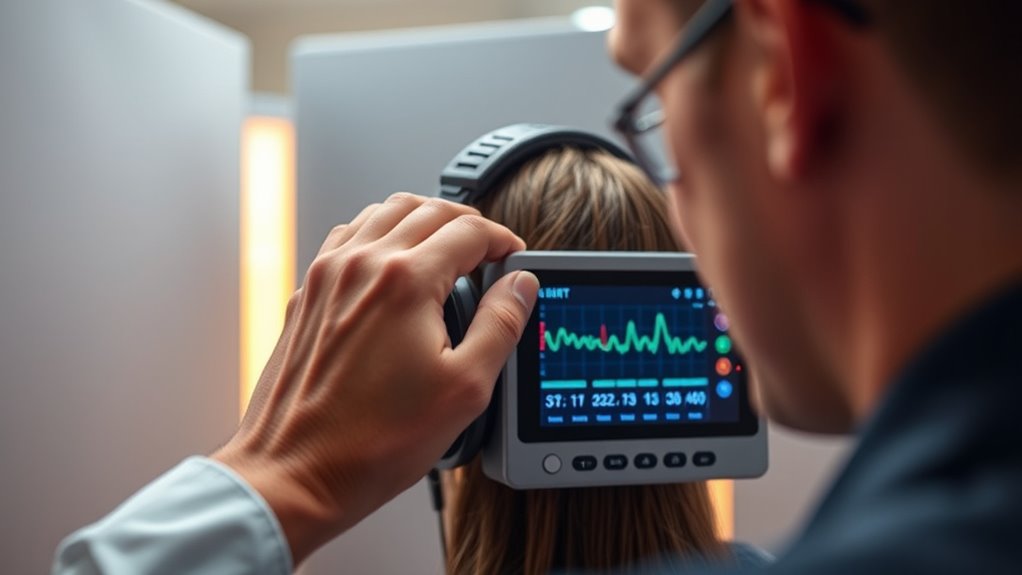
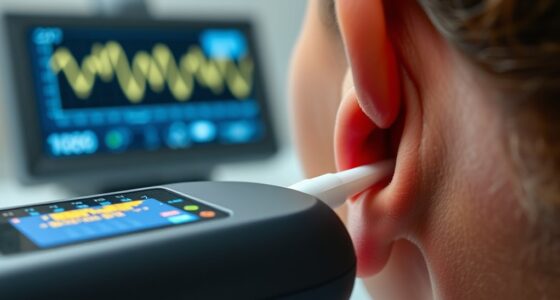
Speech audiometry primarily involves two tests: Speech Reception Threshold (SRT) and Word Recognition Score (WRS). The SRT determines the softest level at which you can understand speech, usually using simple words like “banana” or “car.” During this test, you listen to words presented at gradually decreasing intensities and indicate when you can reliably repeat them. This helps establish your baseline auditory processing efficiency and provides a clear picture of your hearing sensitivity for speech. It’s particularly useful for detecting if there’s a mismatch between pure-tone thresholds and how speech is perceived, which can point to central processing issues or other auditory processing disorders. Understanding the auditory processing involved in speech perception allows audiologists to better interpret test results and recommend targeted interventions.
Speech Reception Threshold (SRT) measures the softest level to understand speech, revealing hearing sensitivity and processing efficiency.
The Word Recognition Score adds another layer to the evaluation. Here, you listen to a list of words presented at a comfortable loudness level, usually above your hearing threshold, and repeat what you hear. The percentage of words correctly identified reveals how well your auditory system processes and perceives speech sounds. Even if your hearing thresholds are normal, a low WRS may suggest difficulties with speech perception, possibly due to issues in auditory processing pathways or neural deficits. This test is essential because it helps differentiate between peripheral hearing loss and problems related to how your brain interprets speech signals.
Together, SRT and WRS give a thorough view of your auditory processing capabilities. They allow audiologists to pinpoint whether the problem lies in hearing sensitivity, speech perception, or both. This detailed understanding guides appropriate treatment plans, whether it’s hearing aids, auditory training, or other interventions. By focusing on speech perception, these tests reveal how well your brain can decode sounds into meaningful words, which is crucial for effective communication. So, when you undergo speech audiometry, you’re not just testing your ears—you’re also examining how your brain processes the sounds it receives, ensuring a detailed assessment of your hearing health.
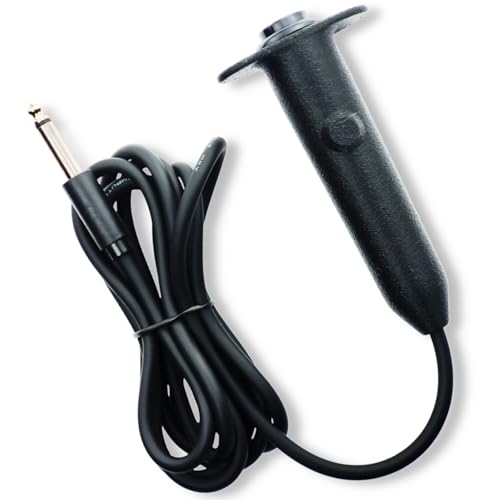
Audiometer Patient Response Button for Hearing Tests | Audiologist-Trusted Audiometry Switch | Rated 500,000+ Clicks | Universal 1/4" Plug | Magnetic for Sound Booths
Designed by a hearing professional for real-world clinical use.
As an affiliate, we earn on qualifying purchases.
As an affiliate, we earn on qualifying purchases.
Frequently Asked Questions
How Do SRT and Word Recognition Tests Differ in Clinical Application?
You use SRT to assess speech clarity at a basic level, focusing on your ability to recognize familiar words in quiet environments. Word recognition tests, however, evaluate linguistic complexity by measuring how well you identify words in various listening conditions, revealing more detailed information about your speech processing abilities. Both tests help determine hearing loss severity and guide appropriate intervention, but they serve different clinical purposes.
What Factors Influence the Accuracy of Speech Audiometry Results?
Imagine standing in a quiet room, focused on hearing clearly—your test environment greatly influences your results. If there’s background noise or distractions, accuracy drops. Listener fatigue also plays a role; after long sessions, your concentration wanes, skewing results. To guarantee precise speech audiometry, keep the environment ideal, short testing sessions, and allow breaks. Your comfort and focus directly impact how accurately your hearing abilities are measured.
Can Speech Audiometry Be Used for Non-Native Language Speakers?
Yes, speech audiometry can be used for non-native speakers, but you need to be aware of language barriers and cultural differences. These factors might affect test results because non-native speakers may not fully understand the words or phrases used. To get accurate results, you should consider using culturally appropriate test materials, guarantee clear communication, and possibly involve interpreters or bilingual audiologists to minimize misunderstandings.
How Is Speech Audiometry Adapted for Pediatric Patients?
Imagine a world where every child’s voice is heard. You adapt speech audiometry for pediatric patients through child-friendly testing, making the process engaging and less intimidating. Using adaptive speech tasks, you tailor difficulty levels, ensuring accurate results while keeping children comfortable. This approach transforms testing into a positive experience, fostering cooperation and reliable data, ultimately helping you uncover their true hearing capabilities and give them the support they deserve.
What Are Common Challenges Faced During Speech Audiometry Testing?
You might face challenges like background noise, which can make it hard for the patient to hear and respond accurately. Patient fatigue also affects their concentration and performance, leading to unreliable results. To overcome these issues, guarantee testing occurs in a quiet environment and schedule sessions when the patient is alert. Clear instructions and frequent breaks help maintain focus and improve the accuracy of speech audiometry testing.

Blue Tree Publishing Audiogram Anatomical Chart Laminated Card for Audiologist and Hearing
Laminated Chart, 11" tall and 8.5" wide Dry erase Compatible
As an affiliate, we earn on qualifying purchases.
As an affiliate, we earn on qualifying purchases.
Conclusion
Speech audiometry acts as your guiding compass through the world of sound, helping you navigate hearing abilities with clarity. By understanding SRT and word recognition, you gain access to a map that pinpoints your hearing strengths and challenges. Think of it as tuning a musical instrument—you fine-tune your hearing to hit the perfect note. With this knowledge, you’re better equipped to address hearing concerns and enjoy life’s sounds more fully, like a symphony that’s finally in perfect harmony.

Auditory Processing Disorder Workbook
As an affiliate, we earn on qualifying purchases.
As an affiliate, we earn on qualifying purchases.

FLYSOUND Nature Pro (Upgraded Version) OTC Bluetooth Hearing Aids with FDA Registration for Seniors & Adults | Customized Hearing via APP & Tinnitus Masking | Up to 60dB Gain&Bluetooth Streaming
👉 Hear Better. Hear Clearly – Our rechargeable OTC hearing aids deliver clear, natural sound for adults with…
As an affiliate, we earn on qualifying purchases.
As an affiliate, we earn on qualifying purchases.