
Somatic tinnitus arises when musculoskeletal issues in your neck and jaw affect nerve pathways and muscle tension, influencing how you perceive sounds. Movements or tension in these areas can worsen or trigger tinnitus by irritating nerves or increasing muscle pressure near your auditory system. Addressing neck and jaw problems with proper posture, relaxation, or physical therapy can markedly reduce symptoms. Keep going to discover more about how these interactions can impact your tinnitus and ways to manage it effectively.
Key Takeaways
- Somatic tinnitus is influenced by musculoskeletal factors, especially neck and jaw muscle tension impacting auditory pathways.
- Movements or muscle contractions in the neck and jaw can alter nerve signals, affecting tinnitus perception.
- Misalignments or dysfunctions in cervical spine or temporomandibular joint (TMJ) can trigger or worsen somatic tinnitus.
- Muscle tension, clenching, or repetitive jaw actions increase nerve irritation, contributing to tinnitus severity.
- Managing neck-jaw health through posture, exercises, and dental care can reduce somatic tinnitus symptoms.
Understanding the Basics of Tinnitus and Its Types

Tinnitus is the perception of ringing, buzzing, or other sounds in the ears or head without an external source. It occurs when auditory pathways in your brain interpret abnormal signals originating from the inner ear or nerve pathways. The inner ear contains tiny hair cells that convert sound waves into electrical signals sent to your brain. When these signals malfunction or become disrupted, your brain perceives sounds that aren’t there. There are various types of tinnitus, including subjective tinnitus, which only you can hear, and objective tinnitus, which can sometimes be heard by a healthcare provider. Understanding these basics helps you recognize that tinnitus isn’t a disease itself but a symptom of underlying auditory or neurological issues affecting your auditory pathways.
The Role of Musculoskeletal Factors in Tinnitus
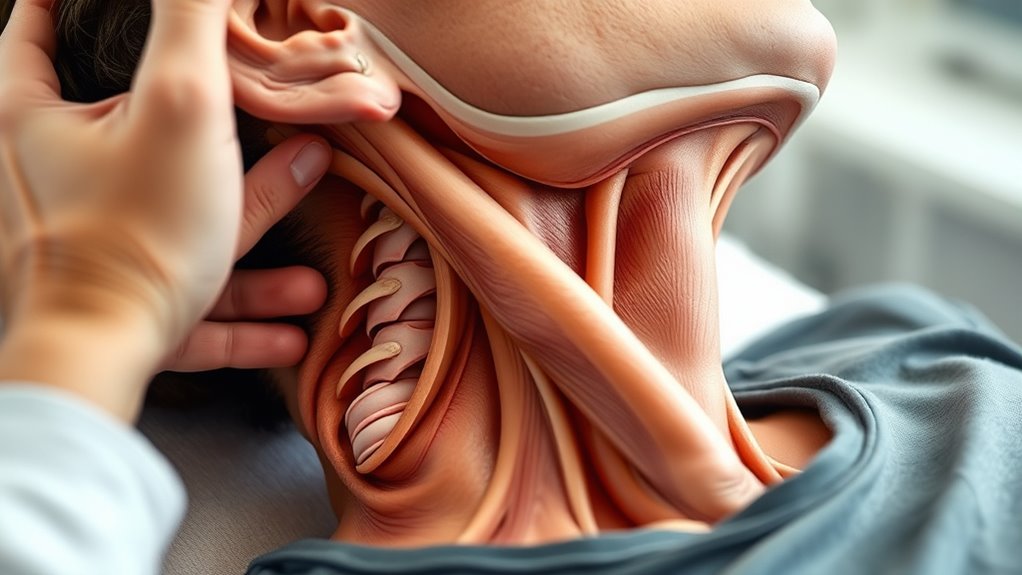
Beyond the inner ear and nervous system, your musculoskeletal system can influence tinnitus symptoms. Muscle tension in your neck, jaw, and shoulders can put pressure on nerves and joints, affecting auditory pathways. Tight muscles may also alter the alignment of your jaw or cervical spine, leading to joint dysfunction. These issues can trigger or worsen tinnitus by disrupting normal nerve signals or creating abnormal muscle activity. Addressing muscle tension through targeted therapy or relaxation techniques can reduce pressure and improve symptoms. Similarly, correcting joint dysfunction through physical therapy or chiropractic care may help restore proper joint and nerve function. Recognizing the connection between your musculoskeletal health and tinnitus is essential for a holistic approach to managing your symptoms effectively. Additionally, understanding how scenic views and natural beauty in camping locations promote relaxation may indirectly benefit stress-related tinnitus symptoms.
How Neck and Jaw Movements Can Influence Tinnitus

Your jaw and neck movements can directly affect tinnitus symptoms. When you change your jaw position or move your neck, it can alter the tension in surrounding muscles and nerves. These changes may make your tinnitus louder or softer, depending on how your body’s musculoskeletal system responds. Some movements may also influence Dog names, which can be a helpful distraction or comfort during episodes.
Jaw Movements and Tinnitus
Movements of the jaw and neck can directly influence tinnitus symptoms, as these areas are closely connected to the muscles and nerves that impact auditory perception. When you clench your jaw or grind your teeth, it creates increased muscle tension around your jaw and temples. This tension can irritate nerves linked to the ear, potentially worsening tinnitus. Repetitive jaw movements, like chewing or wide opening, may also trigger or intensify symptoms by overstimulating these muscles and nerves. You might notice that relaxing your jaw or avoiding clenching helps reduce the loudness or persistence of your tinnitus. Understanding how jaw movements influence tinnitus can guide you to adopt habits that minimize muscle tension and potentially alleviate symptoms. Additionally, high refresh rates in visual displays can help reduce eye strain, which sometimes contributes to muscle tension around the head and neck, indirectly affecting tinnitus symptoms.
Neck Posture Effects
Have you ever noticed how adjusting your neck posture can impact your tinnitus? Poor posture can strain neck muscles and compress nerves, worsening tinnitus symptoms. By practicing posture correction and making ergonomic adjustments, you can reduce muscle tension and improve nerve function. Keeping your neck aligned with your spine helps minimize stress on surrounding tissues, potentially easing tinnitus. Simple changes like adjusting chair height, supporting your back, and avoiding forward head positions can make a difference. Regularly stretching and strengthening neck muscles also helps maintain proper posture. These ergonomic adjustments not only support overall neck health but may also lessen somatic tinnitus triggered or worsened by poor posture. Staying mindful of your neck alignment promotes better function, which can contribute to tinnitus relief. Additionally, understanding relationships – personality test can help you recognize how emotional factors may influence physical symptoms like tinnitus.
The Nervous System Connection Between Muscles and Ear Perception
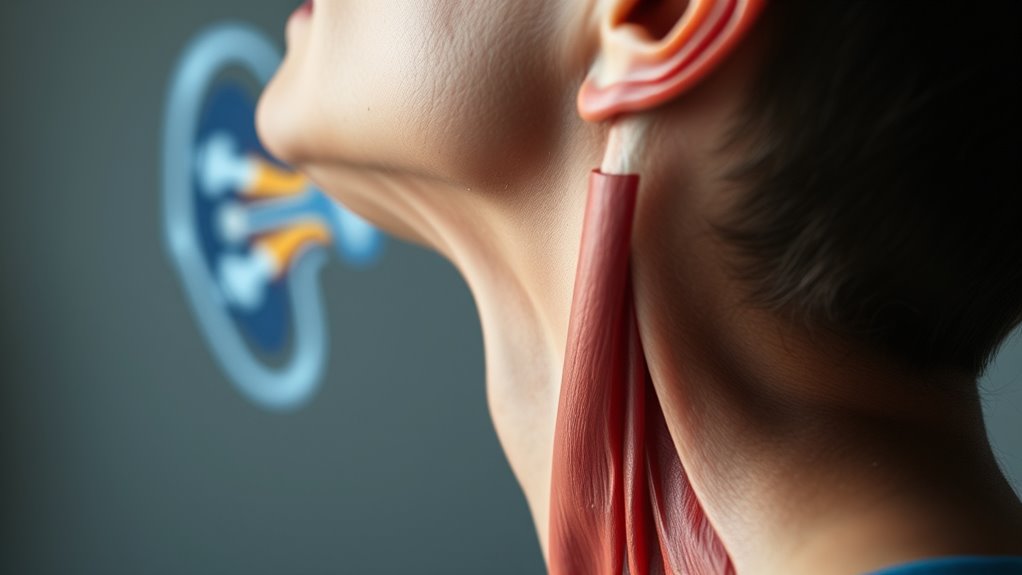
Because the muscles around the ear and jaw are closely linked to the nervous system, their activity can directly influence how you perceive sound. The nerve pathways connecting these muscles to your brain allow signals to travel rapidly, affecting your auditory perception. When muscles tense or misfire, they send muscle feedback to the nervous system, which can alter how sounds are processed. This connection works in three key ways: 1. Nerve pathways transmit signals between muscles and auditory centers. 2. Muscle feedback can modify nerve activity, impacting ear perception. 3. Disruptions in these pathways may lead to abnormal sound sensations, like tinnitus. Additionally, homeostasis regulation of these muscles plays a role in maintaining normal auditory processing. Understanding this link helps clarify how muscle activity influences ear perception and highlights the nervous system’s role in somatic tinnitus.
Common Conditions That Contribute to Somatic Tinnitus
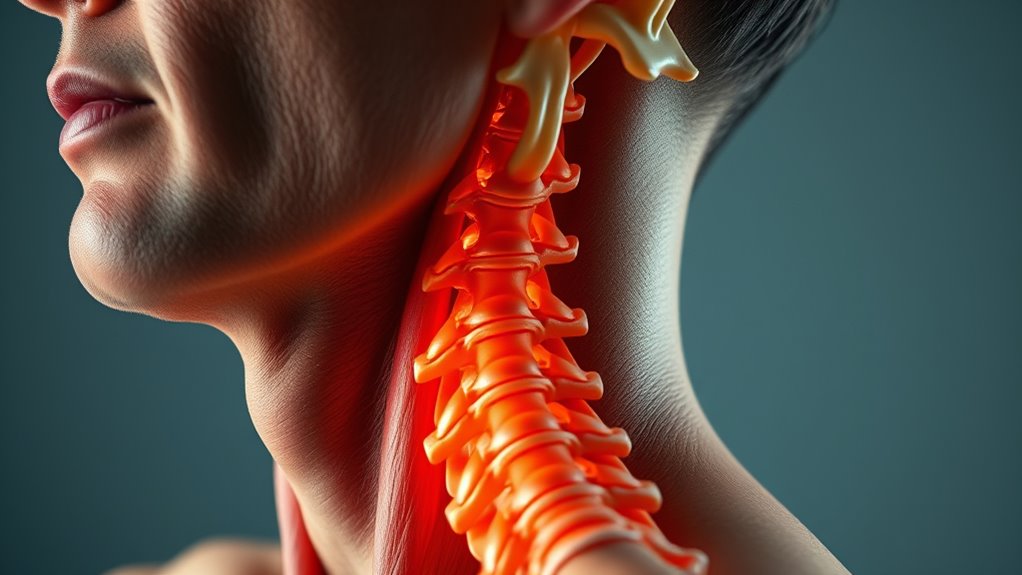
Musculoskeletal disorders and dental or jaw issues can considerably influence somatic tinnitus. When these conditions affect your muscles or joints, they may trigger or worsen ringing in your ears. Recognizing these common contributors helps you better understand potential causes and seek appropriate treatment.
Musculoskeletal Disorders
Many musculoskeletal disorders can contribute to somatic tinnitus by affecting the muscles, joints, and tissues around your head and neck. These conditions often lead to increased muscle tension, which can influence auditory pathways. To address this, focus on: 1. Identifying areas of muscle tension through careful assessment. 2. Implementing targeted posture correction to reduce strain on neck and shoulder muscles. 3. Incorporating regular stretches and strengthening exercises to improve musculoskeletal health. Additionally, creating a comfortable and supportive environment, such as a bedroom that promotes relaxation, can aid in reducing overall muscle tension.
Dental and Jaw Issues
Dental and jaw issues, such as temporomandibular joint (TMJ) disorders and bite misalignments, can directly influence somatic tinnitus by affecting the muscles and nerves around your jaw. Poor dental health or orthodontic issues may lead to muscle tension and nerve irritation that trigger or worsen tinnitus symptoms. Misaligned teeth or an improper bite can strain jaw muscles, creating abnormal stimuli that affect auditory pathways. Addressing these problems through dental care or orthodontic treatment can help reduce tinnitus. Being aware of how your dental health impacts your overall well-being is vital. Correcting bite issues or managing TMJ disorders not only improves jaw function but can also alleviate associated tinnitus, highlighting the importance of maintaining good dental and oral health. Additionally, some research suggests that certain best anime movies can serve as effective stress relievers, indirectly supporting overall ear health.
Approaches to Managing and Treating Neck-Jaw-Related Tinnitus

Addressing neck and jaw issues can markedly reduce or even eliminate somatic tinnitus symptoms. To do this, you can try several approaches. First, consider biofeedback techniques to help you gain awareness and control over muscle tension in your neck and jaw. Second, relaxation therapies like deep breathing or progressive muscle relaxation can ease stress and reduce muscle strain. Third, physical therapy focused on neck and jaw exercises can improve posture, decrease tension, and restore proper function. Combining these methods often yields the best results. Regular practice enhances their effectiveness, helping to break the cycle of muscle tension and tinnitus. Additionally, understanding the role of sleep and maintaining good sleep hygiene can significantly impact tinnitus symptoms, as quality sleep supports overall neural health. By actively managing neck and jaw health, you’re more likely to see reductions in your tinnitus symptoms.
Frequently Asked Questions
Can Lifestyle Changes Reduce Somatic Tinnitus Symptoms?
You can often reduce somatic tinnitus symptoms with lifestyle changes. Stress management techniques, like meditation or deep breathing, help lower tension that worsens symptoms. Dietary modifications, such as reducing caffeine and salt, may also improve your condition. Regular exercise and maintaining good posture support overall ear and neck health. By actively making these adjustments, you may find relief and better control over your tinnitus.
Are There Specific Exercises to Alleviate Neck-Jaw Tension Related to Tinnitus?
You can try specific exercises to ease neck-jaw tension linked to tinnitus. Focus on jaw relaxation techniques, like gently opening and closing your mouth or massaging jaw muscles. Incorporate neck stretches, such as slowly tilting your head side to side or forward and backward. Doing these regularly helps reduce muscle strain, which may alleviate tinnitus symptoms. Always consult a healthcare professional before starting new exercises to guarantee they’re safe for you.
How Do Emotional or Psychological Factors Influence Somatic Tinnitus?
Imagine you’re under significant emotional stress, and suddenly your tinnitus worsens. Emotional stress directly impacts the mind-body connection, intensifying somatic tinnitus symptoms. Psychological factors like anxiety or depression can heighten tension in neck and jaw muscles, worsening tinnitus. Recognizing this link helps you understand that managing emotional stress through relaxation techniques or therapy can reduce tinnitus severity, emphasizing the powerful influence of the mind-body connection on your symptoms.
Is Somatic Tinnitus Temporary or Can It Become Chronic?
Somatic tinnitus can be temporary or become chronic, depending on factors like duration variability and progression factors. If you experience persistent symptoms and underlying issues like neck or jaw tension aren’t addressed, it’s more likely to become chronic. Early intervention and managing contributing factors can prevent it from lasting long-term. Stay proactive by seeking treatment, as addressing the root causes helps reduce the risk of chronic somatic tinnitus.
What Role Do Dental Issues Play in Neck-Jaw Linked Tinnitus?
Did you know that up to 60% of TMJ disorders are linked to dental misalignment? Dental issues can markedly influence neck-jaw linked tinnitus by affecting jaw positioning and muscle tension. TMJ disorders often result from improper dental alignment, which can irritate nerves and muscles connected to the ear, leading to tinnitus. Addressing dental problems may reduce or even eliminate tinnitus symptoms, highlighting the importance of dental health in managing this condition.
Conclusion
Understanding how neck and jaw interactions influence tinnitus can empower you to seek targeted treatments. While some might think these connections are minor, addressing musculoskeletal issues often provides significant relief. Don’t overlook the importance of consulting specialists who can identify underlying causes beyond just ear health. By actively engaging in your treatment plan, you increase your chances of reducing tinnitus symptoms and regaining control over your quality of life.