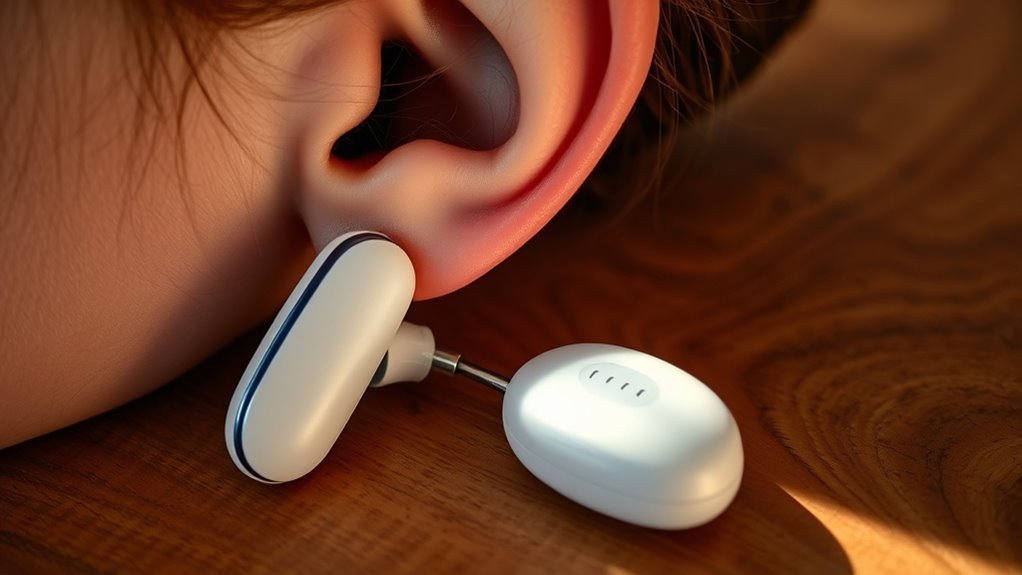

Hearing aids can play a key role in managing tinnitus by not only amplifying sounds to improve hearing but also offering sound therapy features that mask ringing or buzzing. Many modern devices generate calming background noise or white noise tailored to your preferences, helping distract your brain from tinnitus signals. Proper calibration and adjustments are essential for maximum relief, and working with an audiologist guarantees the settings suit your needs. Keep exploring to discover how these features can enhance your comfort.
Key Takeaways
- Modern hearing aids incorporate sound therapy features that generate calming noises to mask tinnitus.
- Proper calibration ensures effective masking and improved hearing clarity tailored to individual needs.
- Sound therapy programs can be customized for different environments or times to enhance tinnitus relief.
- Collaboration with an audiologist is essential for fine-tuning masking sounds and optimizing device performance.
- High-quality sound generation in hearing aids enhances the effectiveness of tinnitus masking and overall comfort.
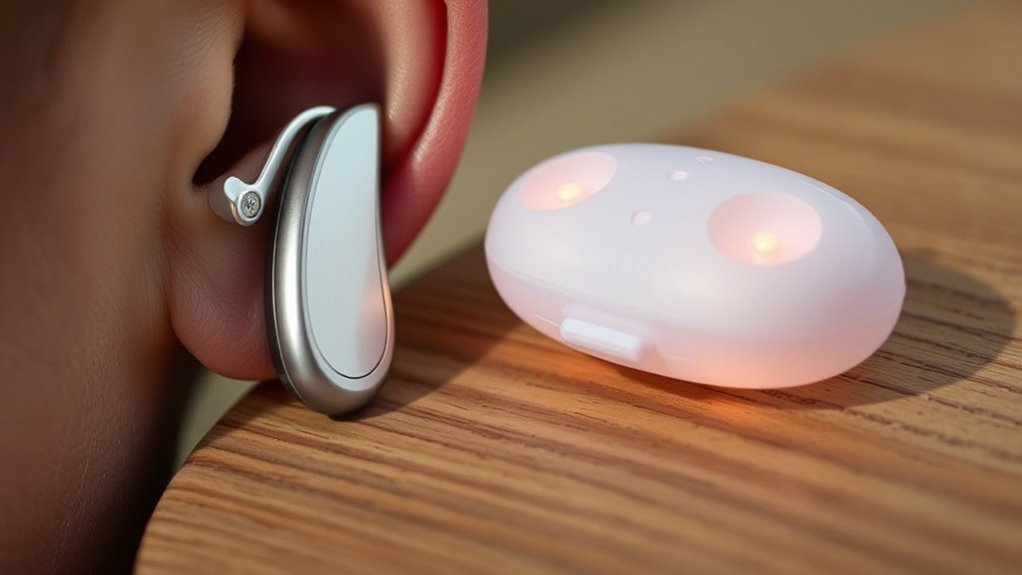
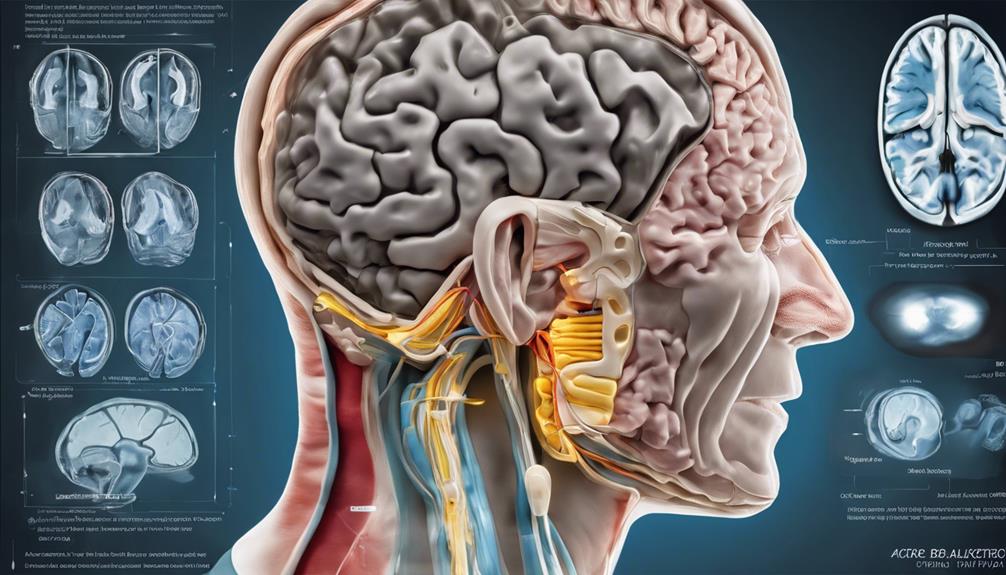
If you experience tinnitus alongside hearing loss, hearing aids can be more than just amplifiers—they may also help mask the ringing or buzzing sounds. Modern hearing aids often incorporate sound therapy features designed to reduce the perception of tinnitus. These devices don’t simply amplify external sounds; they can generate calming noises or white noise that blend with your tinnitus, making it less noticeable. This approach can provide considerable relief, especially when combined with proper device calibration. Calibration ensures your hearing aid is finely tuned to your unique hearing profile, enhancing sound delivery and maximizing comfort. When your device is accurately calibrated, it delivers the right amount of amplification across various frequencies, which helps in masking tinnitus more effectively and improves overall hearing clarity.
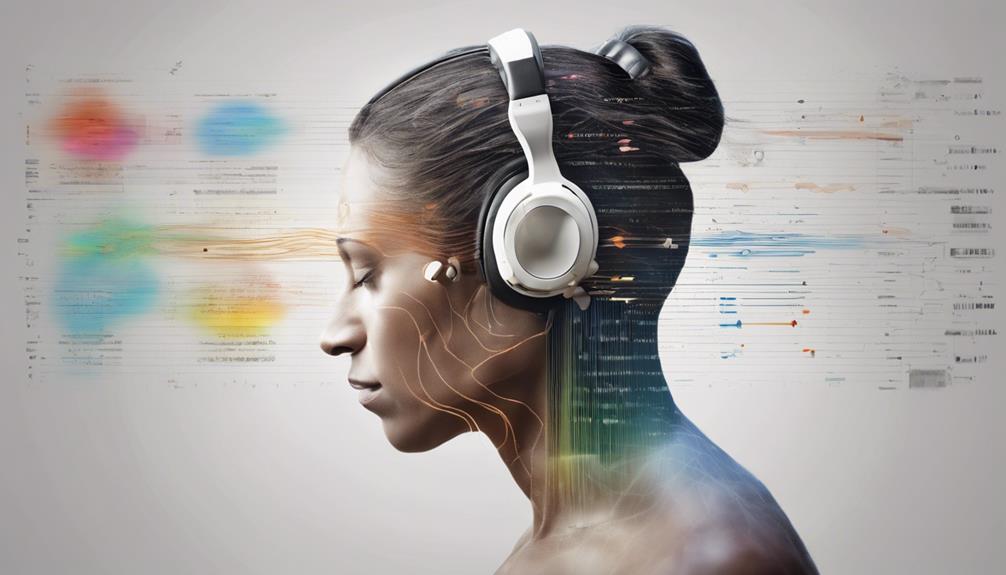
Sound therapy plays an essential role in managing tinnitus with hearing aids. It involves introducing gentle, soothing sounds that distract your brain from focusing on the ringing or buzzing. Many hearing aids now have built-in sound generators that produce relaxing background noises, which can be customized based on your preferences and needs. Regularly engaging in sound therapy can help retrain your brain to ignore tinnitus signals, reducing their prominence over time. Because tinnitus varies from person to person, the effectiveness of sound therapy depends on personalized adjustments. Proper device calibration ensures that these sounds are not overwhelming or inaudible but are instead balanced in harmony with your natural hearing environment.
You should work closely with your audiologist to fine-tune your hearing aids for ideal tinnitus masking. They will adjust the device’s settings, including sound therapy options, to match your specific tinnitus pattern and hearing loss profile. This process involves iterative testing to find the right balance between amplification and masking sounds. When your hearing aids are carefully calibrated, you experience more consistent relief, which can markedly improve your quality of life. Keep in mind that some devices offer multiple sound therapy programs, allowing you to select the most comfortable or effective sounds for different environments or times of day. Additionally, understanding the role of high-quality sound generation can help you choose devices that provide more effective tinnitus relief.
Amazon Product B0F74DH64V
As an affiliate, we earn on qualifying purchases.
Frequently Asked Questions
Can Hearing Aids Completely Eliminate Tinnitus?
Hearing aids can’t completely eliminate tinnitus, but they can markedly reduce its perception. Modern hearing aid technology uses sound therapy to mask or distract from the ringing, making it less noticeable. You might find relief as the devices amplify background sounds and customize your listening experience. While they won’t cure tinnitus, hearing aids can improve your overall hearing and help manage the condition effectively, making daily life more comfortable.
Are There Specific Hearing Aid Features for Tinnitus Masking?
Yes, there are specific hearing aid features for tinnitus masking. You might worry these features aren’t effective, but modern hearing aids include tinnitus masking options that produce soothing sounds to distract you from ringing. These tinnitus masking features can be customized to suit your preferences, helping you manage tinnitus more comfortably. By leveraging these features, you can improve your overall hearing experience and reduce the impact of tinnitus on your daily life.
How Long Does It Take to Notice Tinnitus Relief With Hearing Aids?
You might notice tinnitus relief within a few days to weeks of using hearing aids, but it varies based on individual factors. Sound therapy integrated into your hearing devices gradually masks tinnitus, and many patients report improvements over time. Your experience depends on consistent use and the severity of your tinnitus. Stay patient and communicate with your audiologist to adjust your settings for ideal results, as consistent use enhances sound therapy benefits.
Can Hearing Aids Cause or Worsen Tinnitus?
Hearing aids can sometimes cause or worsen tinnitus, especially if you’re sensitive to hearing aid noise or experience increased tinnitus perception. It’s a common misconception that they always make tinnitus worse, but with proper adjustment, many find relief. You should consult your audiologist if you notice a spike in tinnitus perception. Remember, with patience and expert help, what seems like a hurdle might turn into a helpful solution.
Are Hearing Aids Effective for All Types of Tinnitus?
Hearing aids are not effective for all types of tinnitus. They work best with personalized fitting and sound customization, which help mask your specific tinnitus sounds. If your tinnitus results from hearing loss, hearing aids can be very helpful. However, if your tinnitus is caused by other factors, they might not provide significant relief. It is crucial to consult with an audiologist to determine the most suitable treatment for your condition.

Resound Multi Mic
Extends the hearing range by up to 25 metres (80 feet).
As an affiliate, we earn on qualifying purchases.
Conclusion
Did you know that over 60% of people with tinnitus find relief using hearing aids? If you’re struggling with ringing or buzzing, these devices can do more than just improve your hearing—they can mask tinnitus sounds and bring relief. Don’t wait to explore this option; hearing aids might be your best chance at regaining comfort and focus. Take action today and discover how technology can make a real difference in your quality of life.
Amazon Product B0F74DKPKB
As an affiliate, we earn on qualifying purchases.

Audien Atom One OTC Hearing Aids - Wireless, Rechargeable, and Comfortable | Clear Sound in a Small, Discreet Design for Seniors & Adults with Hearing Loss
Hear What Matters Most: Hearing isn’t one-size-fits-all. That’s why our adjustable frequency system lets you personalize your sound...
As an affiliate, we earn on qualifying purchases.