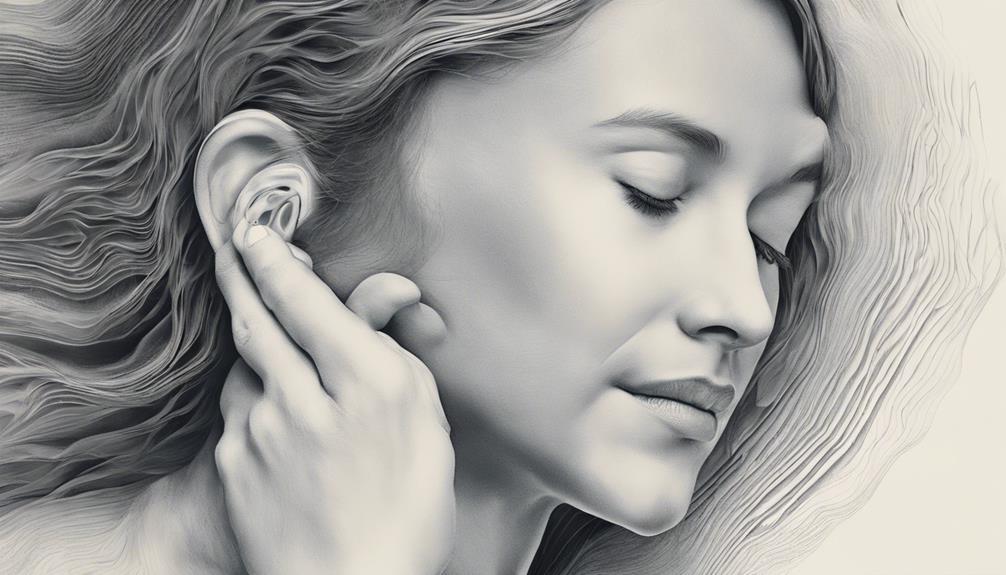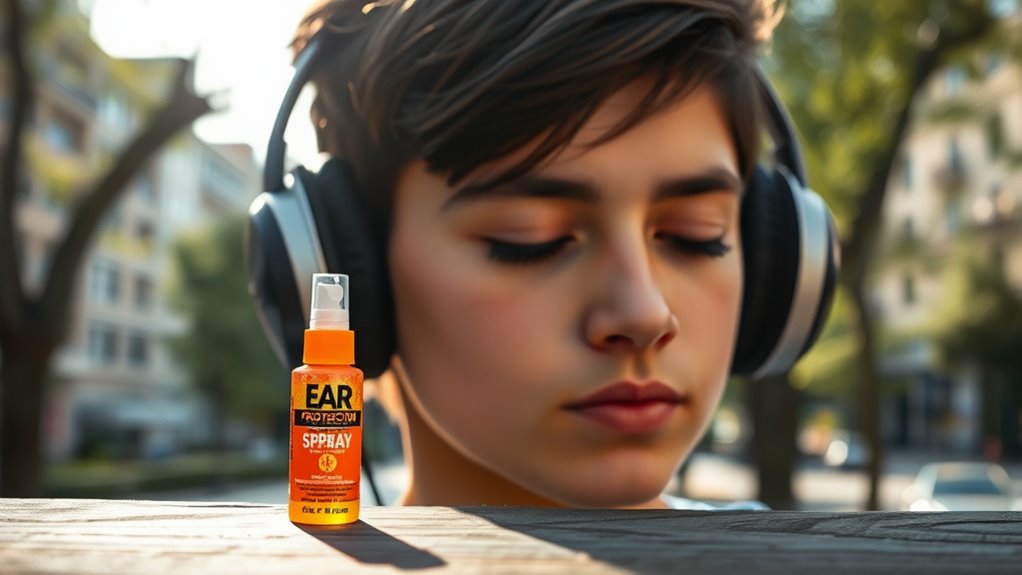

To prevent tinnitus from noise exposure, always protect your ears with earplugs or noise-canceling earmuffs in loud environments. Keep volume levels on your devices at safe levels and take regular breaks to give your ears a rest. Be mindful of the duration of exposure and avoid prolonged listening at high volumes. Consistently practicing these habits can help preserve your hearing health—continue to explore ways you can best shield your ears.
Key Takeaways
- Always wear ear protection like earplugs or earmuffs in noisy environments.
- Keep volume levels on headphones and devices within safe limits.
- Limit exposure time to loud sounds and take regular breaks to rest ears.
- Maintain a safe distance from loudspeakers and industrial machinery.
- Schedule regular hearing check-ups to monitor ear health and catch early signs of damage.

Exposure to loud noise can cause lasting damage to your hearing, leading to tinnitus—a persistent ringing or buzzing in the ears. This condition isn’t just annoying; it can impact your quality of life, making it harder to concentrate, sleep, or enjoy social activities. The good news is that you can take simple steps to prevent this damage. Prioritizing ear protection is vital for maintaining your hearing health, especially in noisy environments like concerts, construction sites, or even loud workplaces. Wearing earplugs or noise-canceling earmuffs reduces the intensity of sound reaching your ears, giving your auditory system a much-needed break. These devices are affordable, portable, and easy to use, making them an effective barrier against harmful noise levels. Remember, it’s not just about high-volume events; prolonged exposure to moderate noise can also gradually damage your hearing over time. Consistently protecting your ears helps preserve your hearing health and reduces the risk of developing tinnitus later in life.
Understanding noise levels and your exposure duration is key. If you’re regularly around loud sounds, take breaks to give your ears a rest. The longer your ears are exposed to high decibel levels, the greater the risk of damage. You should also be mindful of the volume on personal devices, such as headphones or earbuds. Listening at high volumes for extended periods can be just as harmful as being at a loud concert without ear protection. Setting volume limits and taking regular breaks can considerably reduce your risk. Additionally, maintaining a safe distance from loudspeakers and machinery can make a noticeable difference. Always wear the appropriate ear protection when working in noisy environments, and don’t neglect to educate yourself about safe noise exposure levels. Being aware of noise levels and exposure can help you make smarter choices to protect your hearing. Protecting your hearing health is an ongoing process, not a one-time effort.
Incorporating these habits into your daily routine helps safeguard your ears from unnecessary harm. It’s important to recognize that once damage occurs, it can be irreversible, so prevention is always better than treatment. Regular hearing check-ups can help catch early signs of damage and ensure your ear protection strategies are effective. If you notice any ringing, muffled sounds, or hearing difficulty, seek professional advice promptly. By actively taking steps to shield your ears from loud noise, you’re investing in your long-term hearing health and reducing the chances of developing tinnitus. Remember, your ears are delicate, and protecting them is vital for maintaining clear, healthy hearing throughout your life.

Lenicany 30Pair Soft Foam EarPlugs, 32dB Disposable Sound Blocking Noise Cancelling Ear Plugs for Sleeping/Concerts Loud Music/Shooting Guns/Work Construction, Hearing Safety Protection (Blue)
【Soft-Comfortable】The ear plugs are made of PU foam material, clean and safe.30 Pairs reusable ear plugs.
As an affiliate, we earn on qualifying purchases.
As an affiliate, we earn on qualifying purchases.
Frequently Asked Questions
Can Tinnitus Be Completely Cured Once It Starts?
Tinnitus can’t usually be completely cured once it starts, but effective tinnitus management can help you cope better. You should focus on hearing loss prevention and protecting your ears from further damage. Using sound therapy, counseling, or medications might reduce your symptoms. While a full cure isn’t guaranteed, early intervention and proper care can improve your quality of life and prevent tinnitus from worsening.
Are There Specific Ages More at Risk for Noise-Induced Tinnitus?
You’re more at risk for noise-induced tinnitus during your teenage years and your 50s, when age groups face heightened vulnerability. The risk factors include exposure to loud sounds, lack of ear protection, and prolonged noise exposure. These ages are like the epicenter of a storm for tinnitus risk, so you should be extra cautious. Protect your ears, especially during these times, to dodge this unwelcome sound storm in your ears.
How Effective Are Over-The-Counter Ear Protection Options?
Over-the-counter ear protection options vary in earplug effectiveness, but many offer decent hearing protection if properly fitted. You should choose earplugs designed for noise reduction, ensuring they fit snugly without discomfort. While they’re effective at reducing noise exposure, they might not block out all sounds. For best results, use high-quality hearing protection consistently in noisy environments, and always follow the manufacturer’s instructions for proper insertion and use.
Does the Duration of Noise Exposure Affect Tinnitus Risk?
Yes, the duration of noise exposure directly affects your tinnitus risk. Longer noise duration increases your exposure risk, making you more likely to develop tinnitus. Even short bursts of loud sounds can be harmful if repeated frequently. To protect your hearing, limit exposure time and take breaks in quieter environments. Using ear protection during prolonged noise exposure can also considerably reduce your risk of tinnitus.
Can Lifestyle Changes Reduce Tinnitus Symptoms After Noise Exposure?
A stitch in time saves nine, and that applies to managing tinnitus symptoms. You can reduce your symptoms by making lifestyle changes like diet modification and stress management. Eating anti-inflammatory foods and avoiding caffeine helps, while practicing relaxation techniques lowers stress levels. These steps won’t cure tinnitus, but they can ease your symptoms and improve your quality of life, reminding you that small changes can make a big difference.

ProCase Noise Reduction Ear Muffs, Sound Proof Ear Protection, NRR 28dB Noise Cancelling Headphones for Adults Kids Autism, Hearing Protection for Shooting Gun Range Mowing -Red
Constructed by solid ABS shell and thickened foam, the ear muffs achieve NRR 28 dB (SNR 34 dB)…
As an affiliate, we earn on qualifying purchases.
As an affiliate, we earn on qualifying purchases.
Conclusion
By taking simple steps to protect your ears, you might just prevent tinnitus from sneaking up on you. Wearing earplugs at loud events or turning down the volume could unexpectedly save your hearing and keep that ringing at bay. Sometimes, the smallest precautions, like avoiding prolonged noise, happen to align perfectly with your everyday habits. So, you never know—your quiet choice today might be the reason you enjoy peace and silence tomorrow.
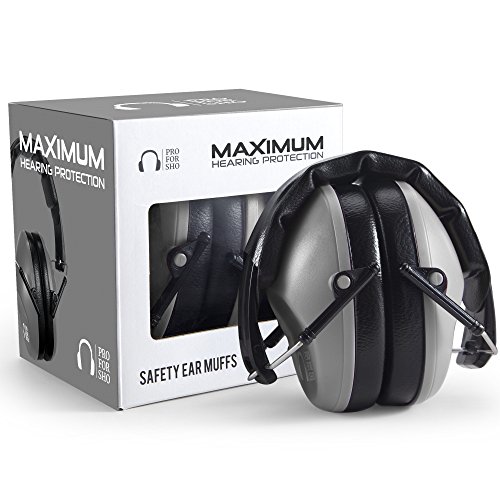
Pro For Sho 34dB NRR Hearing Protection Ear Muffs – Highest NRR Compact Design Ear Protection for Loud Events & Sensory Use (Grey)
34 dB NRR — Proven, Compact & Trusted for Over 10 Years: Since 2013, we’ve designed sleeker, lighter…
As an affiliate, we earn on qualifying purchases.
As an affiliate, we earn on qualifying purchases.

Hearprotek Concert Ear Plugs, 2Pairs Reusable high Fidelity Musician Ear Plugs for Concerts Loud Music-Noise Reduction Ear Protection earplugs for Rave,Festival,Music,Tinnitus Relief
High Fidelity: Hearprotek Music ear plugs do an effective job of bringing down the overall volume, blocking background…
As an affiliate, we earn on qualifying purchases.
As an affiliate, we earn on qualifying purchases.