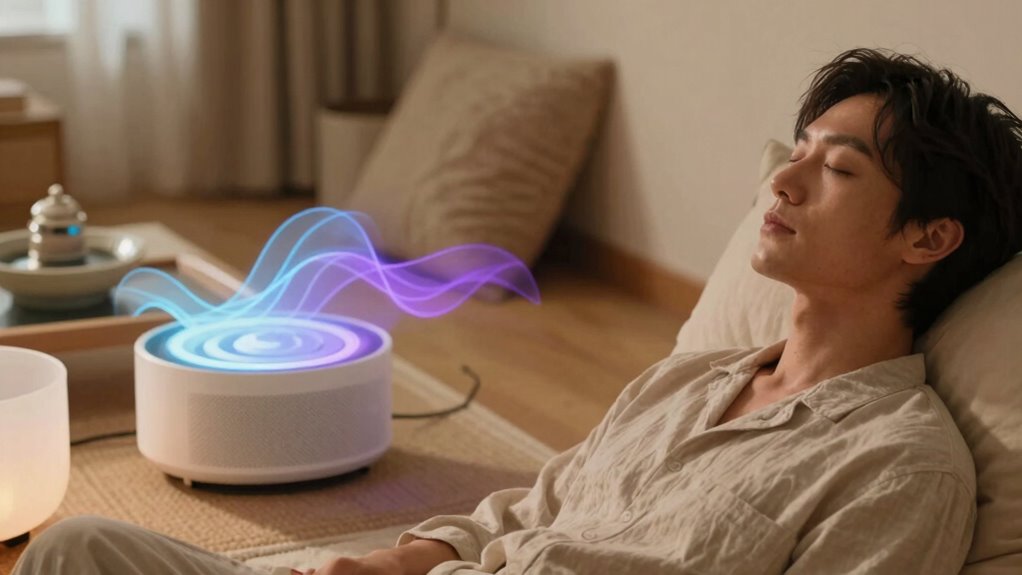
Sound therapy helps manage tinnitus by providing your brain with calming, structured sounds that promote neural rewiring and long-term relief, not just masking. Unlike simple masking devices that hide the noise temporarily, sound therapy encourages your brain to adapt and differentiate tinnitus from external sounds. This process can reduce tinnitus loudness over time and improve your comfort. To discover more about how advanced sound therapy techniques can help you, keep exploring these options.
Key Takeaways
- Masking only provides temporary relief without addressing the root causes of tinnitus.
- Long-term sound therapy promotes neural rewiring, reducing tinnitus perception over time.
- Personalized sound therapy can improve neural differentiation between tinnitus and external sounds.
- Relying solely on masking may delay effective strategies that foster brain adaptation.
- Combining sound therapy with other approaches enhances overall tinnitus management and long-term relief.

Sound Oasis® Bluetooth Tinnitus Sound Therapy System® Alarm Clock – Sleep Better, Manage and Mask Tinnitus, 30 Built-in Sounds for Tinnitus Relief, Sleep-Friendly Lighting, Travel Friendly (BST-150T)
✅ 30 SOUNDS HELP YOU MANAGE YOUR TINNITUS. Manage your tinnitus with the same Sound Oasis sounds used…
As an affiliate, we earn on qualifying purchases.
As an affiliate, we earn on qualifying purchases.
How Sound Therapy Helps Manage Tinnitus

Sound therapy helps manage tinnitus by providing your brain with alternative sounds that can reduce the perception of ringing or buzzing. Music therapy uses calming melodies and rhythmic patterns to distract your mind from the tinnitus, promoting relaxation. Additionally, soundscapes relaxation involves background sounds like nature noises or gentle waves that create a soothing environment. These sounds help mask the internal noise, making it less noticeable and less distressing. By engaging your auditory system with pleasant, controlled sounds, sound therapy can ease anxiety and improve your overall comfort. Incorporating sound calibration techniques ensures the therapy is tailored to your specific needs, enhancing effectiveness. Personalized sound therapy can further optimize results by adapting to your unique tinnitus profile. Regular use of soundscapes and music therapy can enhance your ability to focus, promote mental calmness, and support long-term tinnitus management. This approach offers a gentle, non-invasive way to regain control over your auditory experience. Utilizing auditory system engagement strategies can maximize the benefits of sound therapy and promote lasting relief. Moreover, understanding how Glycolic Acid benefits for skin can improve skin health demonstrates the importance of targeted interventions in overall well-being. Incorporating sound therapy techniques that are evidence-based can improve outcomes by aligning with scientific understanding of auditory processing.
Sound Oasis® Bluetooth Tinnitus Sound Therapy System® Alarm Clock – Sleep Better, Manage and Mask Tinnitus, 30 Built-in Sounds for Tinnitus Relief, Sleep-Friendly Lighting, Travel Friendly (BST-150T)
✅ 30 SOUNDS HELP YOU MANAGE YOUR TINNITUS. Manage your tinnitus with the same Sound Oasis sounds used…
As an affiliate, we earn on qualifying purchases.
As an affiliate, we earn on qualifying purchases.
Why Masking Isn’t Effective for Long-Term Tinnitus Relief
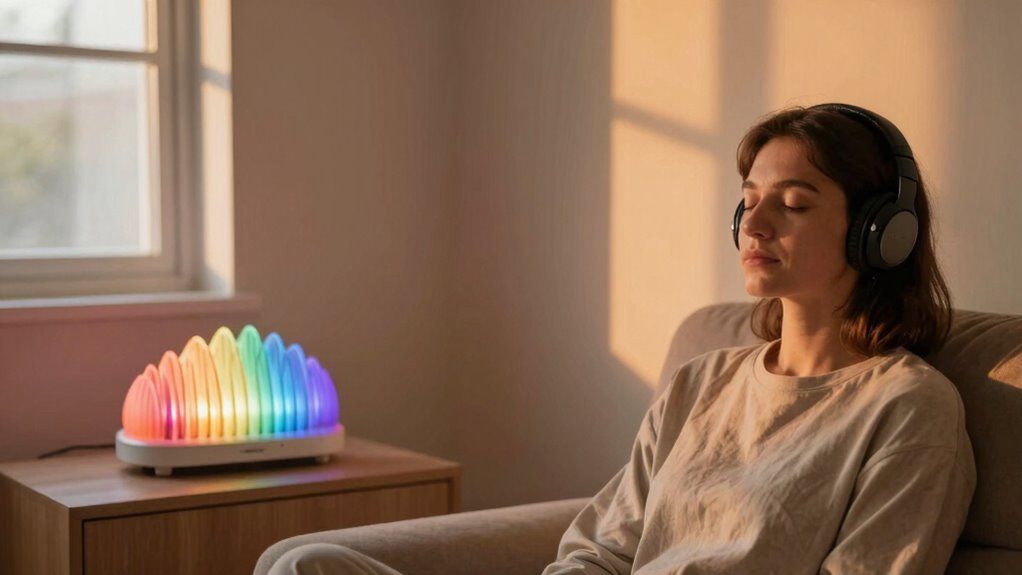
While masking sounds can temporarily hide the ringing or buzzing in your ears, they don’t address the root causes of tinnitus or provide lasting relief. You might notice immediate relief while using masking devices, but this often relies on the placebo effect, making it feel effective even if it isn’t treating the underlying issue. Once you stop masking, the tinnitus usually returns, highlighting its limited long-term benefit. Masking offers only temporary relief, which can lead to dependence without solving the problem. To truly manage tinnitus, you need approaches that target the underlying causes and help your brain adapt, rather than just covering up the sound. Relying solely on masking can give false hope, delaying more effective, lasting solutions. Incorporating sound therapy techniques that promote neural habituation can offer more sustainable relief over time.

5 Natural Sounds for Tinnitus: Rain and White Noise to Help Beat Tinnitus, Beat Insomnia and Sleep All Night
As an affiliate, we earn on qualifying purchases.
As an affiliate, we earn on qualifying purchases.
Exploring Sound Therapy Techniques for Tinnitus Management
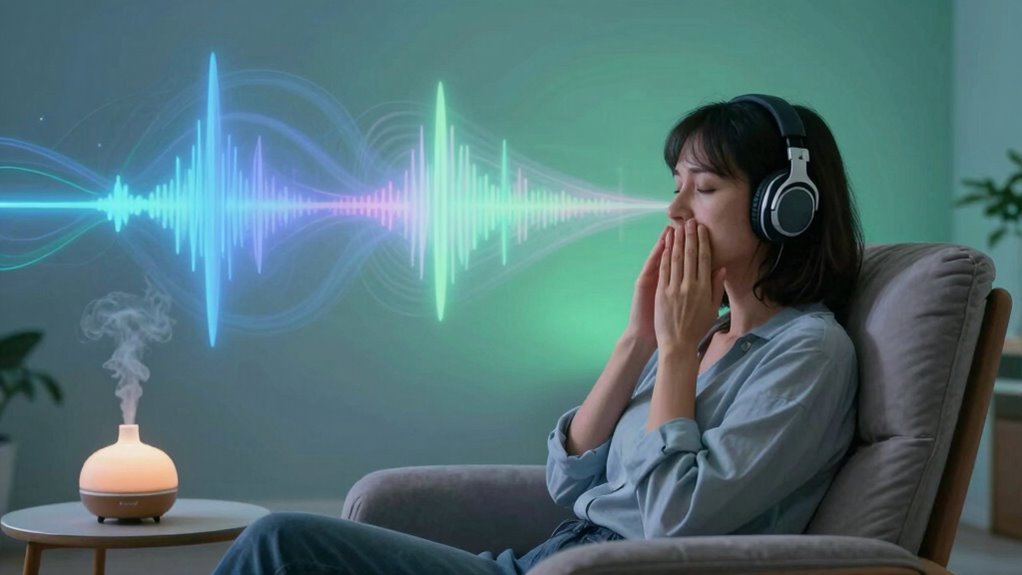
Exploring sound therapy techniques offers a promising approach for managing tinnitus effectively. Musical therapy uses specially designed melodies or sounds to help retrain your brain and reduce the perception of ringing. These therapies often involve listening to calming, structured music that promotes relaxation and distracts from tinnitus. Nature sounds, like flowing water or bird calls, also play a significant role, providing soothing background noise that can mask intrusive sounds naturally. By incorporating these techniques into your daily routine, you may find relief and improve your quality of life. The goal isn’t just masking but gradually shifting your brain’s response to tinnitus, making it less intrusive over time. sound therapy techniques can be tailored to your preferences, enhancing comfort and effectiveness. Additionally, advancements in sound masking devices have made personalized tinnitus management more accessible, offering customized soundscapes that target individual needs.
Sound Oasis® Bluetooth Tinnitus Sound Therapy System® Alarm Clock – Sleep Better, Manage and Mask Tinnitus, 30 Built-in Sounds for Tinnitus Relief, Sleep-Friendly Lighting, Travel Friendly (BST-150T)
✅ 30 SOUNDS HELP YOU MANAGE YOUR TINNITUS. Manage your tinnitus with the same Sound Oasis sounds used…
As an affiliate, we earn on qualifying purchases.
As an affiliate, we earn on qualifying purchases.
Using Sound Therapy to Help Your Brain Adapt and Reduce Tinnitus

By consistently using sound therapy, you can help your brain adapt to tinnitus and reduce its impact over time. This process involves neural adaptation, where your brain learns to ignore or filter out the constant noise. Auditory training plays a key role by gradually exposing you to specific sounds that reinforce healthy neural pathways. Here are three ways sound therapy promotes brain adaptation:
- Rewires neural pathways to lessen tinnitus perception
- Enhances your brain’s ability to differentiate between tinnitus and external sounds
- Supports long-term neural changes that diminish tinnitus loudness and intrusiveness
With regular practice, your brain becomes better at managing tinnitus, leading to a more peaceful, quieter mind.
How to Pick the Best Sound Therapy Devices and Settings for You
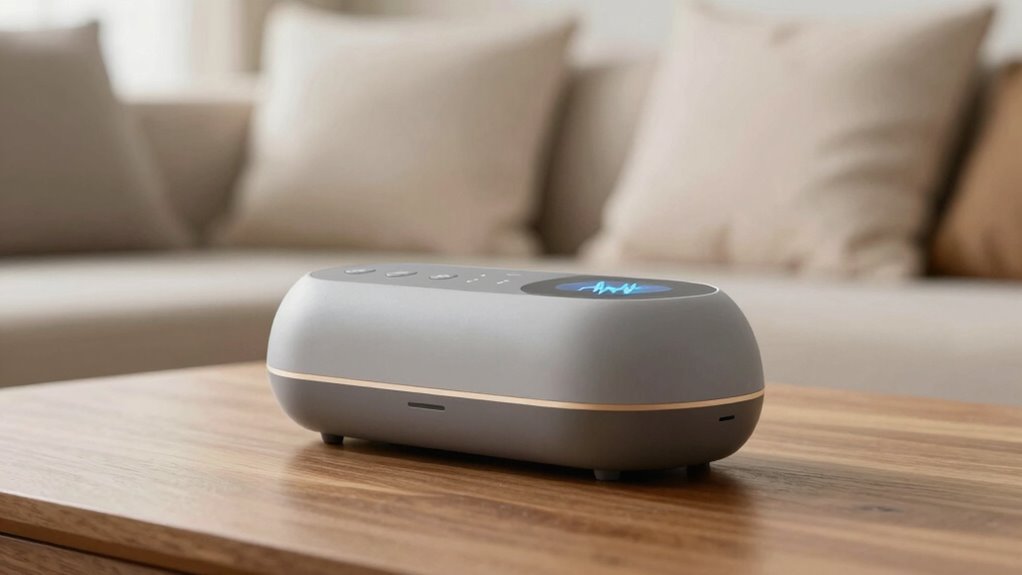
Choosing the right sound therapy device and settings is key to managing your tinnitus effectively. You’ll want to personalize the sound levels and types to suit your comfort and needs. You can also consider characterized sound environments that mimic natural sounds, which have been shown to enhance relaxation and reduce tinnitus perception. By understanding your preferences, you can select a device that fits seamlessly into your daily routine. Incorporating Free Floating sounds can further enhance your experience by creating a more natural and relaxing environment. Additionally, considering the variety of dog breeds and their unique behaviors can help tailor your approach to managing stress and promoting relaxation during therapy sessions. Selecting a device with adjustable sound modulation features allows for more precise control over the therapy experience, ensuring optimal comfort and effectiveness. Being aware of networking hardware options can also help ensure your devices operate smoothly and reliably.
Personalizing Sound Settings
Selecting the right sound therapy device and settings is crucial for effectively managing tinnitus, and it starts with understanding your specific needs and preferences. To personalize your experience, consider these key factors:
- Music preferences – Choose sounds or music that are soothing and enjoyable, making therapy more engaging and easier to stick with. Incorporating sound masking techniques can help create a more effective listening environment.
- Hearing aid integration – If you wear hearing aids, look for devices that synchronize seamlessly, providing combined benefits.
- Adjustable settings – Opt for devices with customizable volume, tone, and masking levels, so you can tailor the sound environment to what feels most comfortable and effective for you.
- Understanding device features – Familiarizing yourself with sound therapy systems and how they work can help you select the most suitable options for your needs. Additionally, exploring customizable sound options can enhance your comfort and outcomes.
- Device connectivity and control – Choosing devices that offer easy control options, such as smartphone apps or remote controls, can make it simpler to adjust settings on the fly and personalize your experience more precisely. It’s also helpful to consider user-friendly interfaces to ensure you can operate your device without frustration.
Choosing the Right Device
How do you find the best sound therapy device for your needs? Start by considering durability—look for a device built to last, especially if you plan to use it daily. Battery life is equally important; a device with long-lasting batteries means fewer interruptions and more consistent therapy. Think about your lifestyle: do you prefer a discreet, portable device or something with advanced features? Read reviews to gauge reliability and ease of use. Check if the device offers adjustable settings to customize your experience. Ultimately, the right device should feel comfortable, be sturdy enough for daily wear, and have sufficient battery life to support your routine. Balancing these factors helps ensure effective, hassle-free tinnitus relief.
Combining Sound Therapy With Other Tinnitus Management Strategies
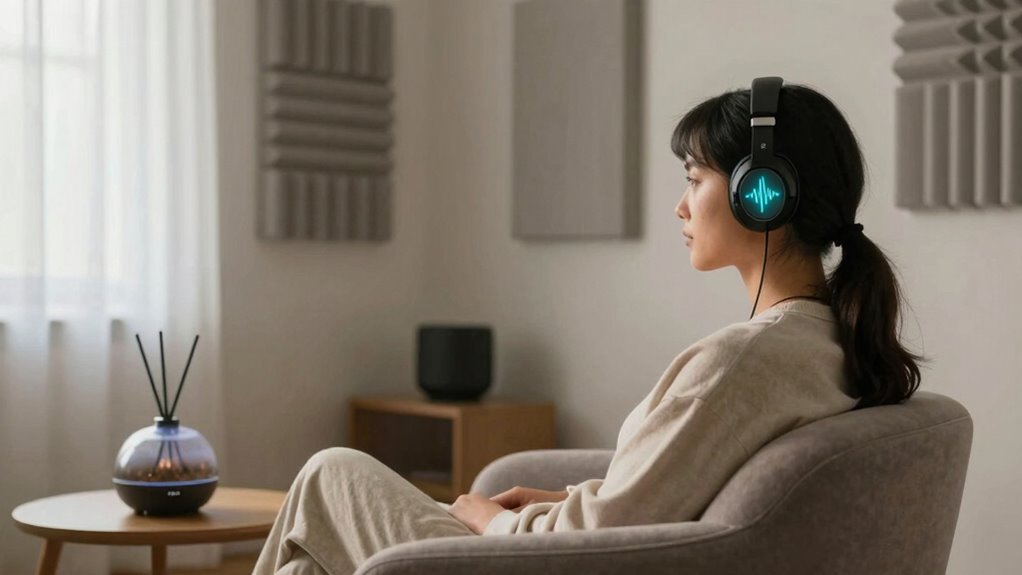
You can enhance your tinnitus management by combining sound therapy with other strategies like cognitive behavioral therapy and lifestyle changes. These approaches can help reduce stress and improve your overall well-being. When you integrate sound with relaxation techniques, you may find greater relief and a more balanced approach to managing your tinnitus. Incorporating educational resources can further empower you to make informed decisions about your treatment options. Additionally, understanding sound masking principles can help tailor your therapy for more effective results. Exploring sound therapy techniques can also optimize your overall approach and effectiveness. Being aware of home environment modifications can further support your tinnitus relief efforts.
Integrating Cognitive Behavioral Therapy
Integrating Cognitive Behavioral Therapy (CBT) with sound therapy can enhance tinnitus management by addressing both the psychological and auditory aspects of the condition. This approach helps you reframe negative thoughts, reducing distress, while sound therapy provides auditory distraction. To maximize benefits, consider these strategies:
- Use soundscape design to create calming environments that support auditory illusions, making tinnitus less intrusive.
- Combine CBT exercises with tailored sound therapy sessions to reinforce positive coping mechanisms.
- Incorporate mindful awareness of sounds, focusing on auditory illusions, to retrain your brain’s response to tinnitus.
Lifestyle Adjustments Benefits
Combining sound therapy with other tinnitus management strategies can substantially improve your overall experience by addressing multiple factors that contribute to tinnitus distress. Making dietary changes, such as reducing caffeine and salt intake, can lessen tinnitus intensity and improve your comfort. Prioritizing sleep hygiene—maintaining a consistent sleep schedule, avoiding screens before bed, and creating a relaxing environment—helps reduce stress and minimizes tinnitus aggravation. These lifestyle adjustments support your sound therapy efforts by lowering overall stress levels and enhancing your resilience. When you manage your diet and sleep habits effectively, you create a more stable foundation for tinnitus relief. This integrated approach empowers you to take control of your condition, making sound therapy more effective and improving your daily quality of life.
Combining Sound With Relaxation
Adding relaxation techniques to sound therapy can considerably enhance its effectiveness by addressing the stress and anxiety often associated with tinnitus. Combining sound therapy with relaxation methods helps calm your mind and reduces the emotional impact of tinnitus. You might explore options like:
- Practicing music therapy, which uses calming music to promote relaxation and distract from tinnitus.
- Utilizing sound masking devices to create a soothing background noise, easing your perception of ringing.
- Incorporating mindfulness or deep breathing exercises alongside sound therapy to lower stress levels.
These strategies work together to foster a more relaxed state, making sound therapy more effective and helping you manage tinnitus more comfortably. By integrating relaxation, you’re addressing not just the sound, but the emotional response it triggers.
What Research Tells Us About Advanced Sound Therapy Methods

Recent research indicates that advanced sound therapy methods can considerably improve tinnitus management, especially when traditional treatments fall short. These approaches harness neural plasticity, encouraging your brain to reorganize and reduce the overactivity in the auditory cortex responsible for tinnitus. Techniques like customized sound enrichment and neuromodulation target specific neural pathways, promoting healthier auditory processing. Studies show that these methods can lead to lasting changes in how your brain perceives sound, decreasing the prominence of tinnitus. By actively engaging neural plasticity, advanced sound therapies help rewire abnormal activity patterns, offering more effective relief than simple masking. This research underscores the potential of innovative sound interventions to produce meaningful improvements in your tinnitus experience. Additionally, understanding the field‑of‑view and imaging‑scale in related imaging setups demonstrates how precise targeting and customization can enhance therapeutic outcomes.
Tips for Incorporating Sound Therapy Into Your Daily Routine
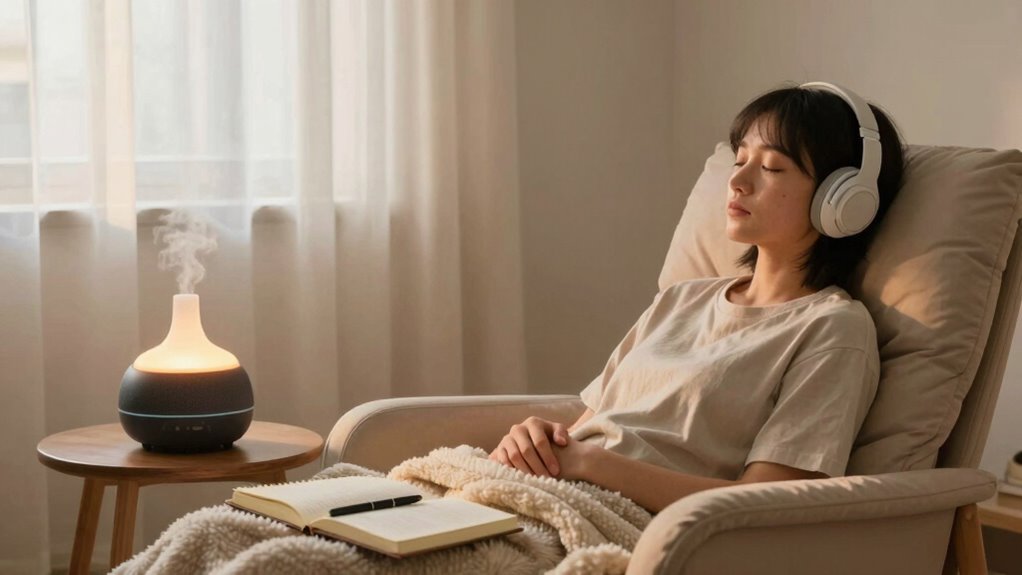
To effectively incorporate sound therapy into your daily routine, consistency is key. Establishing a steady schedule helps your brain adapt and makes the therapy more effective. Here are some tips to get started:
- Pick a consistent time each day—morning, afternoon, or evening—so routine timing becomes natural.
- Use high-quality sound devices or apps that offer superior sound quality, ensuring the therapy feels comfortable and effective.
- Keep sound levels moderate; loud sounds can be counterproductive, so adjust volume to a soothing, gentle level that blends smoothly into your routine.
- Incorporating environmental factors such as background noise can enhance your overall sound therapy experience.
- Consider understanding sound masking techniques to tailor your therapy more effectively and improve your overall comfort.
Sticking to these tips helps you build a dependable routine, maximizing the benefits of sound therapy for tinnitus management.
Common Mistakes to Avoid When Using Sound Therapy for Tinnitus

While establishing a routine is important, many people make common mistakes that can hinder the effectiveness of sound therapy for tinnitus. One mistake is overgeneralization—assuming what works for others will work for you. Every tinnitus experience is unique, so avoid copying someone else’s method blindly. Ignoring side effects is another pitfall; some sounds may cause discomfort or worsen symptoms if not chosen carefully. Make sure to monitor your reactions and adjust accordingly.
| Mistake | Solution |
|---|---|
| Overgeneralization | Personalize your sound therapy plan |
| Ignoring side effects | Pay attention to discomfort, tweak settings |
| Inconsistent use | Stick to a daily routine |
| Relying only on masking | Incorporate varied sound therapies for better relief |
| Neglecting professional advice | Consult audiologists regularly |
Frequently Asked Questions
Can Sound Therapy Completely Eliminate Tinnitus Symptoms?
Sound therapy can critically reduce your tinnitus symptoms, but it won’t completely eliminate them because of masking limitations and underlying causes. You might find relief with specific sounds, yet, if the root issues aren’t addressed, symptoms could persist. It is crucial to combine sound therapy with other treatments and consult a healthcare professional to target the underlying causes, giving you the best chance for long-term relief.
Are There Side Effects Associated With Advanced Sound Therapy Techniques?
Think of advanced sound therapy as a powerful tool, like a finely tuned instrument. While it’s generally safe, potential risks do exist if devices aren’t used correctly. You should always consider device safety and follow professional guidance to minimize side effects. Most people experience no adverse effects, but rare issues like discomfort or hearing changes can occur. Staying informed helps you enjoy the benefits while keeping risks at bay.
How Long Does It Typically Take to Notice Improvements With Sound Therapy?
You might start noticing improvements within a few weeks, but the duration expectations vary due to individual variability. Some people experience relief in as little as two to three weeks, while others may take several months. Consistency is key, so stick with your sound therapy routine and give your ears time to adapt. Remember, patience and persistence often lead to better results in managing tinnitus symptoms.
Is Sound Therapy Effective for All Types of Tinnitus?
Sound therapy can be effective for many types of tinnitus, but it isn’t a one-size-fits-all solution. You’ll get the best results with personalized approaches that consider your specific tinnitus and underlying causes. While some people notice relief quickly, others may need longer-term treatment. By working with a professional, you can develop a tailored plan that targets your unique condition and maximizes your chances of success.
How Do I Know if a Sound Therapy Device Is Medically Approved?
Think of a medically approved sound therapy device as a trusted guide on your journey. To know if it’s legit, check for clinical validation and confirm it meets regulatory standards like FDA or CE approval. These certifications confirm the device has been rigorously tested for safety and effectiveness. Always verify the manufacturer’s credentials and look for third-party reviews—because you deserve a solution backed by science and trusted by professionals.
Conclusion
Don’t let the idea of complex sound therapy overwhelm you. While masking alone isn’t enough, exploring different techniques and customizing your approach can make a real difference. Even if you worry about inconvenience, integrating sound therapy into your daily routine is manageable and worth the effort. With patience and the right tools, you can reduce tinnitus symptoms and regain control over your life. Give it a try—your ears and mind will thank you.