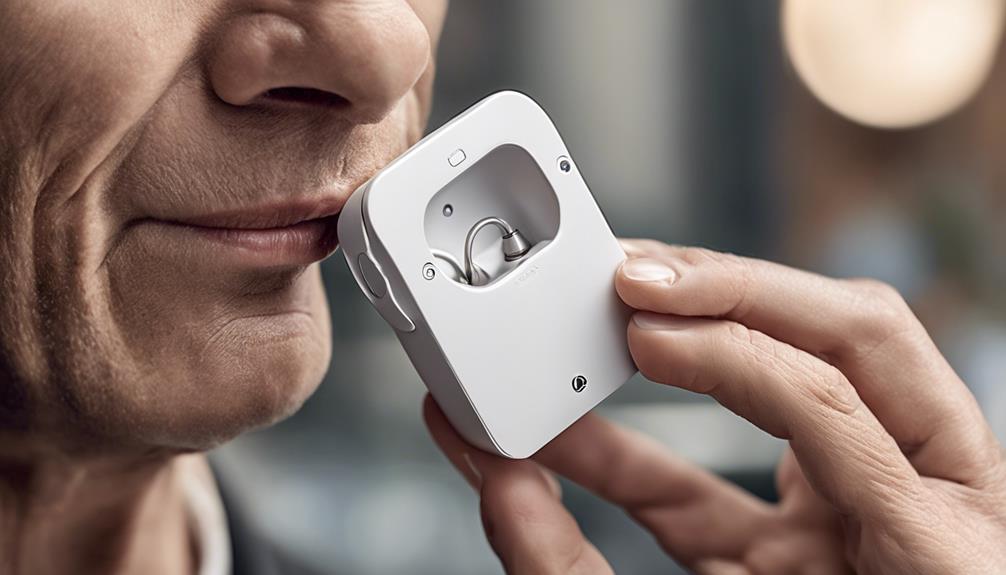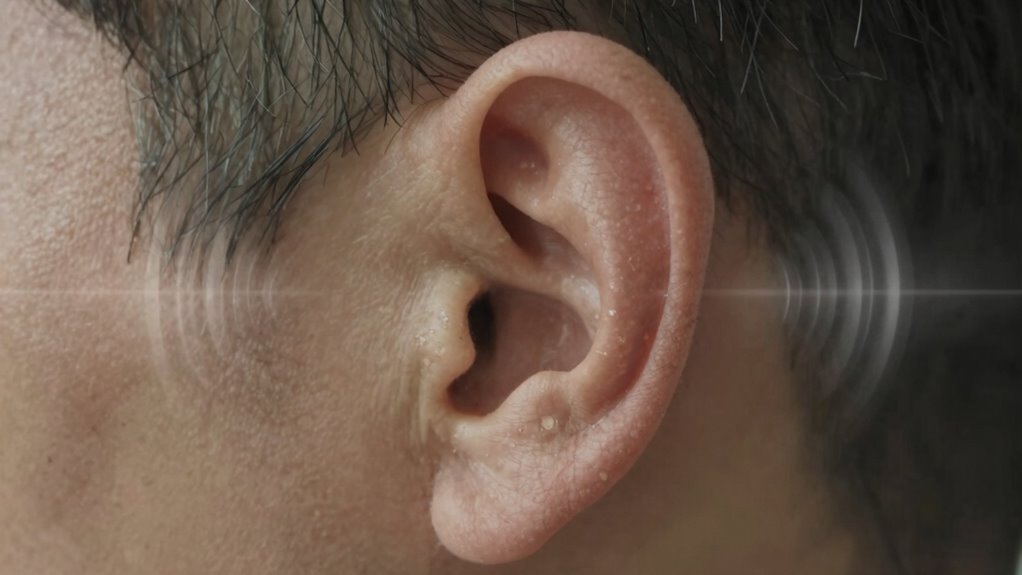

When you experience hearing loss, it often happens alongside tinnitus because both involve damage to your inner ear’s hair cells and auditory nerve. This damage disrupts neural signals between your ear and brain, making sounds unclear and causing unwanted ringing or buzzing. As your hearing worsens, your brain works harder to fill in missing sounds, which can intensify tinnitus. Understanding this link can help you explore how protecting your inner ear might prevent or reduce these issues—keep exploring for more insights.

Get everyday helpers delivered free with Prime
- Fast, free delivery on millions of items
- Prime Video, Amazon Music and more included
- Member-only deals all year
Key Takeaways
- Inner ear damage affects both hair cells and auditory nerve, leading to hearing loss and tinnitus simultaneously.
- Hearing loss increases brain effort to interpret sounds, which can amplify tinnitus perception.
- Disrupted neural signaling from inner ear damage causes both hearing difficulties and phantom sounds.
- Damage to the inner ear’s components impacts the entire auditory pathway, linking tinnitus and hearing loss.
- Shared causes like age and noise exposure damage inner ear structures, resulting in both conditions.
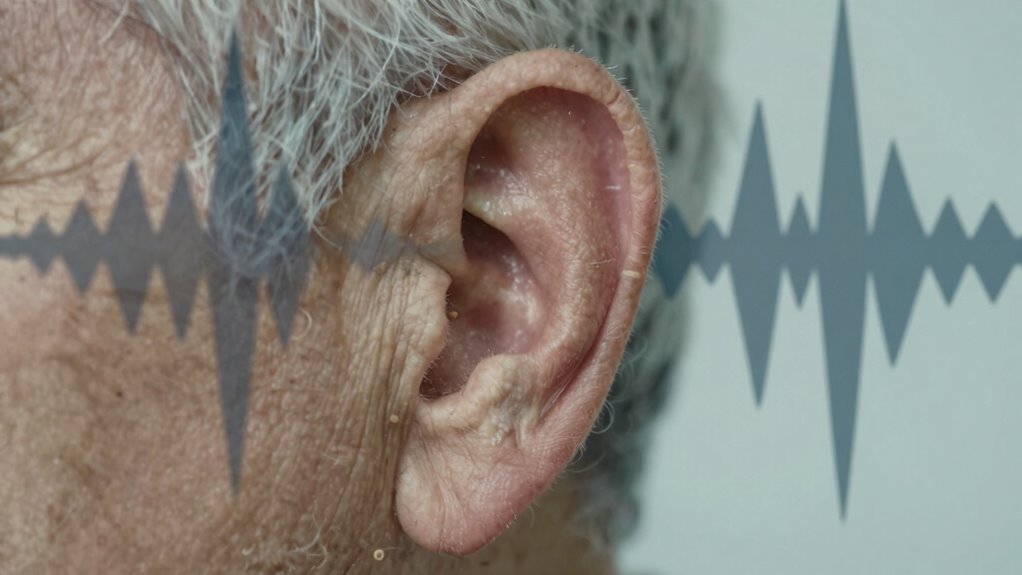
Your auditory nerve acts as the messenger between your inner ear and your brain. If the inner ear isn’t functioning properly, the nerve’s signals become distorted or inconsistent. This miscommunication can cause your brain to interpret the lack of clear sound signals as noise—what you experience as tinnitus. Additionally, when hearing loss occurs, your brain works harder to fill in the missing sounds, which can amplify the perception of tinnitus. This heightened activity in your auditory pathways creates a feedback loop, making the ringing or buzzing seem even more intrusive.
Age-related changes often contribute to damage in the inner ear’s delicate hair cells, which are essential for detecting sound vibrations. Once these cells deteriorate, hearing diminishes, and tinnitus may emerge or worsen. Noise exposure is another common culprit, damaging the hair cells in the inner ear and impairing the auditory nerve’s ability to transmit accurate signals. In both cases, the connection between the inner ear and the auditory nerve becomes compromised, leading to a simultaneous onset or exacerbation of hearing loss and tinnitus. Recognizing the damage to the inner ear and its effects on the entire auditory system can help inform more effective treatments. Furthermore, understanding how inner ear damage impacts neural signaling can aid in developing targeted therapies. Increased awareness of the vulnerability of the auditory system can also promote early intervention strategies.
Understanding the auditory system’s vulnerability to age-related and environmental damage can also promote proactive measures for preservation.
In essence, the inner ear and auditory nerve form a vital system for processing sound. Damage to either component disrupts this process, resulting in hearing difficulties and often the perception of phantom sounds. When you experience hearing loss, it’s not just your ability to hear that’s affected; it’s also your brain’s interpretation of sound signals. This interconnected system explains why tinnitus frequently accompanies hearing loss, as both stem from the same underlying damage to the inner ear and the subsequent impact on the auditory nerve’s function. Understanding this connection can help you seek targeted treatments that address the root cause of both conditions.
hearing aids for tinnitus and hearing loss
As an affiliate, we earn on qualifying purchases.
As an affiliate, we earn on qualifying purchases.
Frequently Asked Questions
Can Tinnitus Cause Permanent Hearing Loss?
Tinnitus itself doesn’t cause permanent hearing loss, but underlying hearing damage from noise exposure might. If you experience loud noises regularly, it can damage your hair cells in the inner ear, leading to hearing loss and tinnitus. Persistent noise exposure worsens this damage over time, so protecting your ears is essential. If you notice hearing changes or ongoing tinnitus, see a healthcare professional promptly to prevent further hearing loss.
Are Certain Ages More Prone to Both Conditions?
Yes, certain ages are more prone to both tinnitus and hearing loss. As you age, age-related decline affects your auditory system, making you more vulnerable. Additionally, genetic predisposition can increase your risk, especially if family members have experienced similar issues. Older adults, typically over 50, are more susceptible due to these factors, but early signs can appear earlier if there’s a family history or exposure to loud noises.
Do Medications Improve or Worsen Tinnitus and Hearing Loss?
Medications can both improve and worsen tinnitus and hearing loss, depending on their effects. Some medications, like certain antibiotics or diuretics, may cause or worsen hearing issues and tinnitus as side effects. However, others can aid in hearing restoration or reduce tinnitus symptoms. Always consult your doctor before starting or stopping medications, as understanding their effects on your hearing health is vital for managing both conditions effectively.
How Common Is It for Tinnitus to Resolve on Its Own?
Tinnitus sometimes whispers away on its own, like a fleeting shadow in the night. While not common, spontaneous resolution or natural recovery does happen, especially if the underlying cause is temporary or mild. You might experience this quieting, but it’s not guaranteed. Keep an eye on your symptoms, stay patient, and consult a healthcare professional if it persists. Sometimes, your ears just need a little time to find their balance again.
Can Lifestyle Changes Reduce Symptoms of Both Conditions?
Yes, lifestyle changes can help reduce symptoms of both tinnitus and hearing loss. You should consider diet modifications, like reducing salt and caffeine, which can lessen tinnitus flare-ups. Stress management techniques, such as meditation or deep breathing, can also improve your overall well-being and lessen symptoms. Consistently applying these changes may not eliminate the conditions but can substantially improve your quality of life and help manage the symptoms more effectively.
Conclusion
If you’re experiencing tinnitus alongside hearing loss, you’re not alone—about 90% of people with tinnitus also have some degree of hearing loss. This connection happens because both issues often stem from damage to the inner ear or auditory nerve. Understanding this link can help you seek timely treatment. Remember, early intervention can make a significant difference in managing your symptoms and improving your quality of life. Don’t wait—your hearing health matters.
Fall Picks
fall essentials
As an affiliate, we earn on qualifying purchases.