
If your child or teen hears ringing, buzzing, or other sounds without an external source, they might have tinnitus, often linked to ear infections or hearing loss. This condition can cause discomfort, anxiety, and concentration issues, especially if it persists after infections heal. Addressing ear health early can help reduce the risk of long-term issues. Keep exploring to understand more about how tinnitus affects young people and what can be done to help.
Key Takeaways
- Tinnitus in children and teens often presents as ringing or buzzing sounds without external sources.
- It is commonly linked to hearing loss or ear infections, which can cause temporary or persistent symptoms.
- Ear infections can lead to muffled hearing and tinnitus, usually resolving after infection treatment.
- Persistent tinnitus may indicate underlying auditory damage requiring prompt medical evaluation.
- Early detection and treatment of ear infections and hearing issues can prevent long-term tinnitus effects.
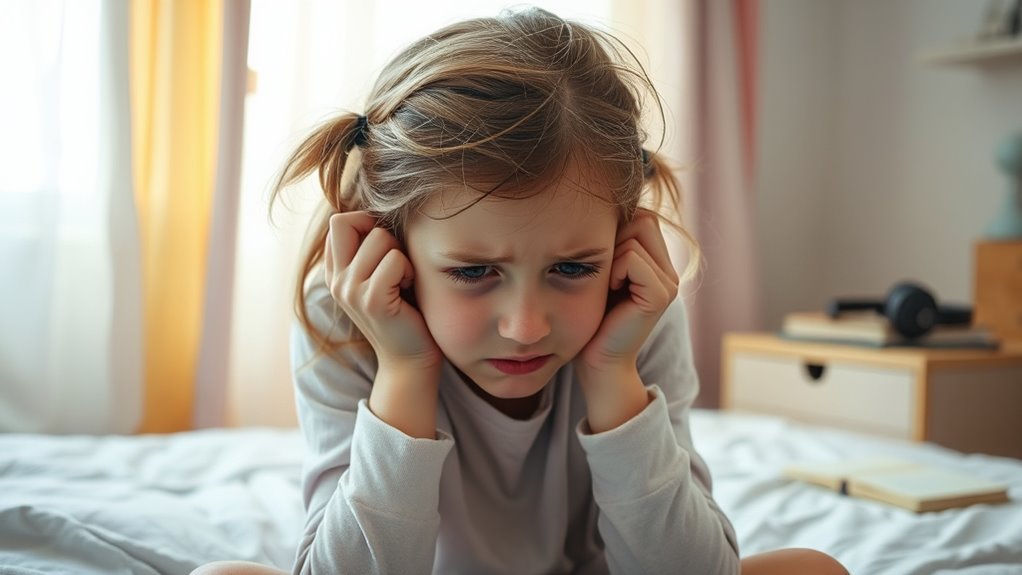
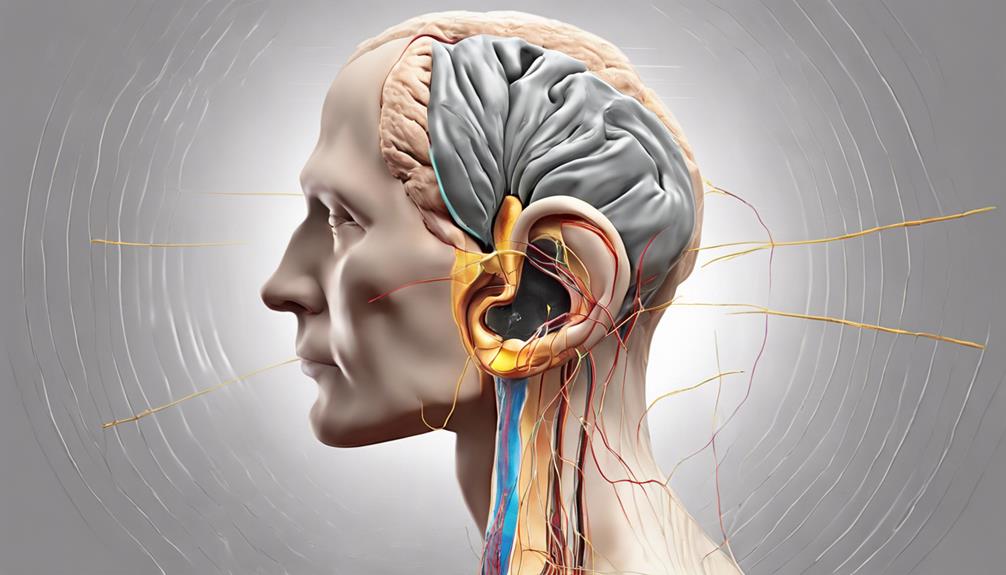
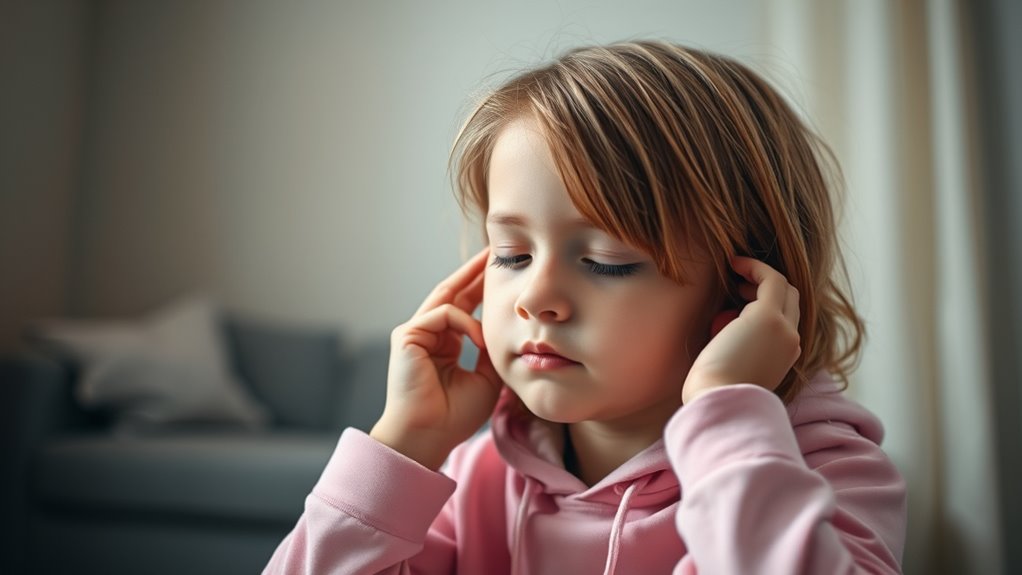
Have you ever wondered what it’s like for children and teens to experience tinnitus? It can be confusing and frightening, especially because young people might not fully understand what they’re feeling or hearing. Tinnitus, the perception of ringing, buzzing, or other sounds without an external source, can sometimes be linked to hearing loss or ear infections, which are common issues in children. Understanding these connections helps you grasp why tinnitus happens and how it affects young lives.
Children and teens may experience confusing, frightening tinnitus linked to hearing loss or ear infections.
Hearing loss is a significant factor that can contribute to tinnitus in children and teens. When sounds are muffled or diminished due to damage in the auditory system, the brain may compensate by creating phantom noises. For kids, this can be particularly distressing because it interferes with their ability to hear clearly, learn, and communicate. Hearing loss may result from various causes, including exposure to loud noises or genetic factors, but ear infections are a common culprit. Ear infections, especially middle ear infections, can cause temporary or sometimes persistent hearing impairment. When the middle ear becomes inflamed or fluid-filled, it can block sound waves from reaching the inner ear properly. This disruption can trigger tinnitus, making children more aware of internal sounds or creating new phantom noises. Often, tinnitus associated with ear infections subsides once the infection heals and hearing returns to normal, but in some cases, the noise persists even after the infection clears.
For children and teens, these symptoms can be confusing. They might not understand why they’re hearing ringing or buzzing, leading to anxiety or difficulty concentrating. Ear infections are particularly troublesome because they tend to happen unexpectedly and can cause discomfort, pain, and temporary hearing loss. When the infection resolves, some children notice that the tinnitus stops, but others might continue to experience it. This lingering tinnitus can be a sign that the auditory system has been affected more deeply or that damage to the ear structures has occurred. Additionally, some research indicates that high refresh rates in audio-visual devices can influence auditory perception, although more studies are needed to understand this connection fully.
Because young people are still developing, early detection and treatment of hearing issues and ear infections are critical. If you notice a child frequently complaining of ringing sounds, muffled hearing, or discomfort, it’s essential to consult a healthcare professional promptly. Addressing ear infections and managing hearing health can reduce the risk of long-term tinnitus. Remember, early intervention not only helps restore hearing but can also prevent tinnitus from becoming a chronic problem that impacts a child’s quality of life.

Natrulo Natural Ear Drops for Kids Ear Infection Treatment – Organic Children Ear Oil Drops Relieves Ear Aches, Itchy Ears, Infections, Swimmer's Ear, & Loosens Wax – Kids Safe, Made in USA
ALL NATURAL KIDS EAR DROPS:
As an affiliate, we earn on qualifying purchases.
As an affiliate, we earn on qualifying purchases.
Frequently Asked Questions
Can Tinnitus in Children Resolve on Its Own Without Treatment?
Yes, tinnitus in children can sometimes resolve on its own due to the self-healing potential of the ear and brain. Spontaneous resolution is possible, especially if the underlying cause is temporary, like ear infections or noise exposure. However, it’s important to monitor symptoms closely. If tinnitus persists or worsens, seeking medical advice ensures appropriate treatment and helps rule out any underlying conditions that may need intervention.
Are There Specific Age Groups More Prone to Tinnitus?
You might be surprised to learn that children aged 6 to 12 are more prone to tinnitus due to age-related vulnerability and developmental factors. During this stage, their auditory systems are still maturing, making them more susceptible to noise exposure and ear infections that can trigger tinnitus. As their auditory development progresses, the risk shifts. Being aware of these age-related vulnerabilities helps you protect kids better against tinnitus.
How Can Parents Differentiate Tinnitus From Normal Childhood Noises?
You can tell if your child’s ear ringing is tinnitus by noticing hearing differences or if they complain about persistent sounds that don’t go away. Unlike normal childhood noises, tinnitus often feels like a constant ringing, buzzing, or humming. Watch for signs like difficulty concentrating or irritability. If these symptoms persist, it’s best to consult a healthcare professional for proper evaluation and to rule out other issues.
What Are the Long-Term Effects of Untreated Tinnitus in Kids?
If you leave your child’s tinnitus untreated, it could impact their emotional well-being and academic performance over time. They might experience increased stress, anxiety, or difficulty concentrating, which can lead to social withdrawal or frustration. Persistent tinnitus may also cause sleep disturbances, further affecting their mood and focus. Addressing the condition early helps protect their overall mental health and supports better school performance as they grow.
Do Dietary Changes Influence Tinnitus Symptoms in Children?
Sure, because all kids love kale and quinoa, right? Dietary modifications can influence tinnitus symptoms in children, as nutritional impacts are real. Cutting back on caffeine, processed foods, and salty snacks might reduce your child’s tinnitus noise. While diet isn’t a cure-all, it can help manage symptoms. So, yes—healthy eating habits could be a simple, supportive step toward easing your child’s ear ringing.
![KIDSBAND Kids Bluetooth Headphones, Sleep Headband [Wireless & Wired Playback 2in1] Foldable Headphones for School/Travel/Tablet/Sleep](https://m.media-amazon.com/images/I/41nGYtzoZqL._SL500_.jpg "Tinnitus in Children and Teens 5")
KIDSBAND Kids Bluetooth Headphones, Sleep Headband [Wireless & Wired Playback 2in1] Foldable Headphones for School/Travel/Tablet/Sleep
Multifunctional Kids Headphones : Kids Headphones & Bluetooth Sleep Mask & Sleep Headphones Headband 3 in 1.10 hurs…
As an affiliate, we earn on qualifying purchases.
As an affiliate, we earn on qualifying purchases.
Conclusion
If you or your child experience ringing or buzzing in the ears, don’t ignore it—think of it like a warning light on your car. Early action can help manage symptoms and prevent future problems. Seek advice from a healthcare professional to understand the cause and explore treatment options. Remember, catching tinnitus early is like fixing a small leak before it floods your home—you can keep your hearing healthy and enjoy life without distraction.

Dr.meter Ear Muffs for Noise Reduction: 27.4SNR Noise Cancelling Headphones for Kids Adults, EM100 Adjustable Hearing Protection Earmuffs for Monster Jam, Autism Sensory, Concerts, Fireworks
【Extremely Comfortable to Wear】: Wrap your child's ears in cloud-like softness! Dr.meter noise cancelling headphone is made of…
As an affiliate, we earn on qualifying purchases.
As an affiliate, we earn on qualifying purchases.

Herb Pharm, Kids Ear Oil, 1 Fl Oz
Disclaimer: Content on this site is for reference purposes and is not a substitute for advice from a…
As an affiliate, we earn on qualifying purchases.
As an affiliate, we earn on qualifying purchases.